


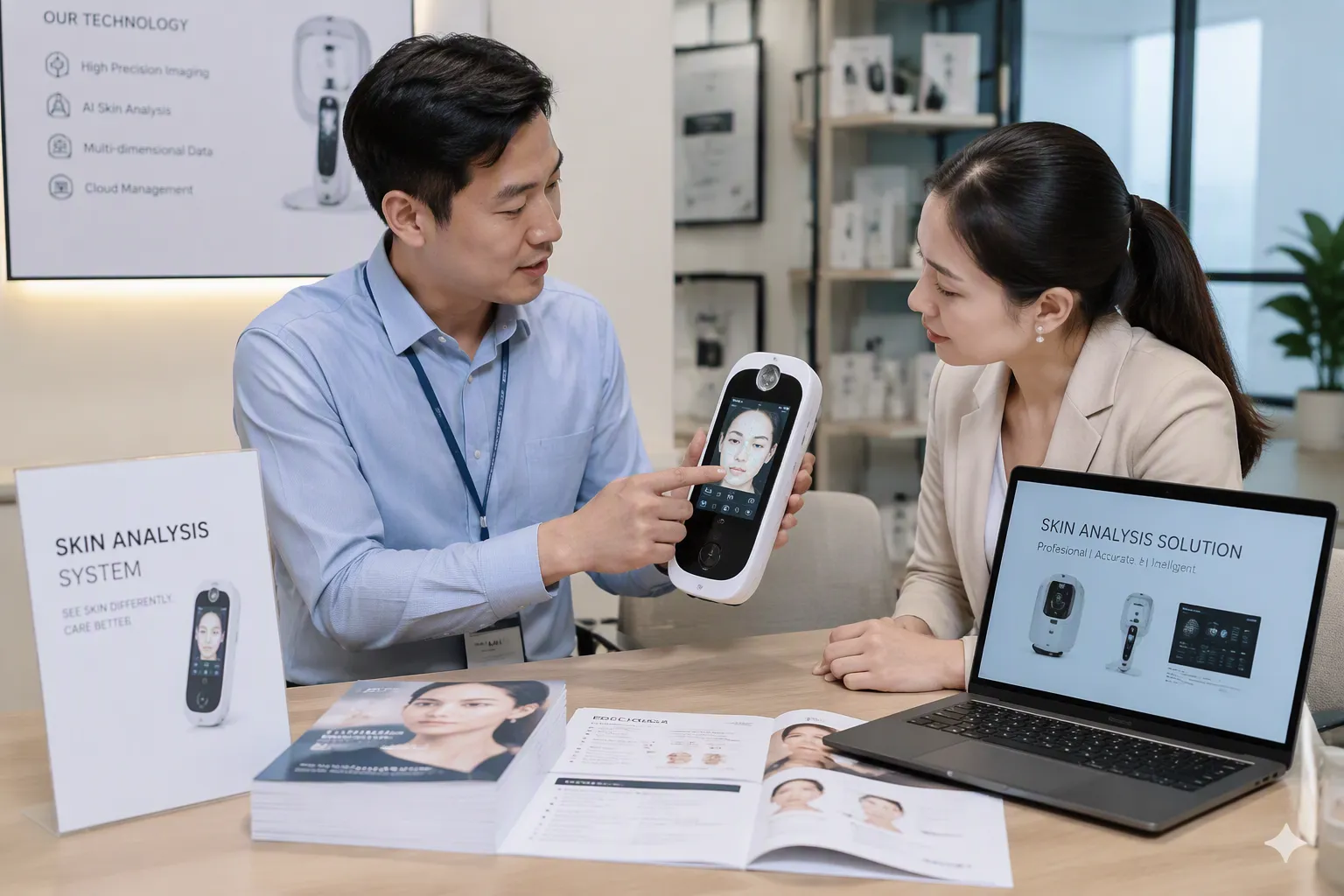
Skin analysis machine makers should give their distributors a full set of marketing tools. This set includes product brochures, demo materials, digital content, training, lead generation tools, co-branding choices, and compliance help. Each type of tool meets a certain need for distributors. Product brochures help build trust. Demo materials show what the machine can do. Digital content helps reach local customers. Training helps sales teams feel ready to talk to buyers. Lead generation tools help bring in new customers. Co-branding choices help make your brand stronger. Compliance help lowers legal risk. This support is very important for distributors to do well in local markets. I want to point out that compliance help is especially useful when entering new markets.
For distributors of skin analysis machines, OEM/ODM support is a big difference maker. It helps show which manufacturers are the best. It lets distributors choose their own branding and packaging. This freedom helps them open new markets. This article talks about the types of support. Use it as a checklist to judge your manufacturer partnerships.
Key Takeaways
●Manufacturers should give a complete sales kit with brochures, demo videos, and ROI tools to help distributors sell faster.
●Training programs should cover how the device works, how to read skin analysis results, and how to talk with clients. This helps distributors feel more confident.
●Digital items like social media posts and ad templates help distributors reach local customers and keep branding the same.
●Shared lead programs and trade show kits keep the distributor’s pipeline full and help them close deals.
●Co-branding choices and help with rules lower risks and help distributors get into new markets faster.
Sales Collateral and Enablement for Skin Analysis Machine
Collateral and Demo Kits
I always tell distributors to ask for a full sales kit they can use right away. A good kit has editable brochures, localized slide decks, product spec sheets, case studies, testimonials, and video demos. These materials help distributors start selling fast. Good supplier support matters just as much as the spec sheet itself. A skin analysis machine is a long-term tool, so buyers need to trust the partnership behind it.
Manufacturers should also give OEM/ODM brochures for private label distributors. Compliance guidance documents lower legal risk in new markets. Revenue opportunity messaging is another key part. Show how the device brings in paid appointments, product sales, and treatment bookings. The scan-to-recommendation loop brings in recurring skincare volume instead of a one-time hardware sale. Role-based training, user manuals, and clinical interpretation guides cut down operator differences and speed up time to value.
Comparison Charts and ROI Tools
Owners want proof that a skin analysis machine pays for itself. I suggest manufacturers provide comparison charts and ROI calculators. These tools should model total cost of ownership, including purchase, consumables, calibration, software subscriptions, maintenance, and training. They should also model clinic-level revenue impacts, like higher client conversion and higher-ticket treatments found through objective analysis.
Case studies and anonymized client ROI models make these numbers real. Treatment conversion acts as the main ROI driver. Visual evidence from scans quickly overcomes patient doubt and turns casual inquiries into booked appointments. Side-by-side progress tracking drives repeat visits and treatment-package signups. One extra scan-driven product sale or treatment upsell per month pays for the whole year several times over. Flat annual pricing beats per-scan models because per-scan fees punish success.
Training Programs and Digital Assets
Tech Training and Interpretation
I believe training is the base of good distribution. Manufacturers should put money into full training programs for distributors. I give both live and recorded training sessions. These sessions cover: device technology, skin analysis interpretation, and client communication.
Device technology training explains how the machine works. I teach distributors about scanning technology and calibration needs. This knowledge helps them answer technical questions with confidence.
Skin analysis interpretation training is harder. I show distributors how to read skin metrics. They learn to explain results to clients. This skill turns a scan into a strong sales tool. I cover common skin conditions and their visual signs. Distributors learn to link findings to treatment recommendations.
Client communication training matters just as much. I teach distributors how to share results without jargon. They learn to guide talks toward treatment options. This builds trust and raises conversion rates.
My training programs include hands-on exercises with the skin analysis machine. Distributors practice scanning volunteers. They go over sample reports together. This hands-on approach speeds up learning.
Social Media and Ad Templates
Digital marketing is key for reaching local customers. I make ready-to-use social media posts for my distributors. These posts cover common skin concerns and machine benefits. Each post has room for the distributor’s branding.
I also give ad creatives for different platforms. Facebook and Instagram ads work well for this market. I write copy that targets specific age groups and skin types. Distributors change the targeting settings themselves.
Email templates save useful time. I write templates for appointment reminders and follow-up messages. These emails build client relationships over time.
SEO tips help distributors get found online. I share advice on local keywords and website structure. A well-optimized website brings in organic traffic.
These digital assets keep branding consistent across markets. Distributors adapt them to local language and culture. This balance between guidance and flexibility drives results. A skin analysis machine benefits from consistent digital messaging.
Lead Gen and Co-Branding for Skin Analysis Machine Distributors
Lead Programs and Event Support
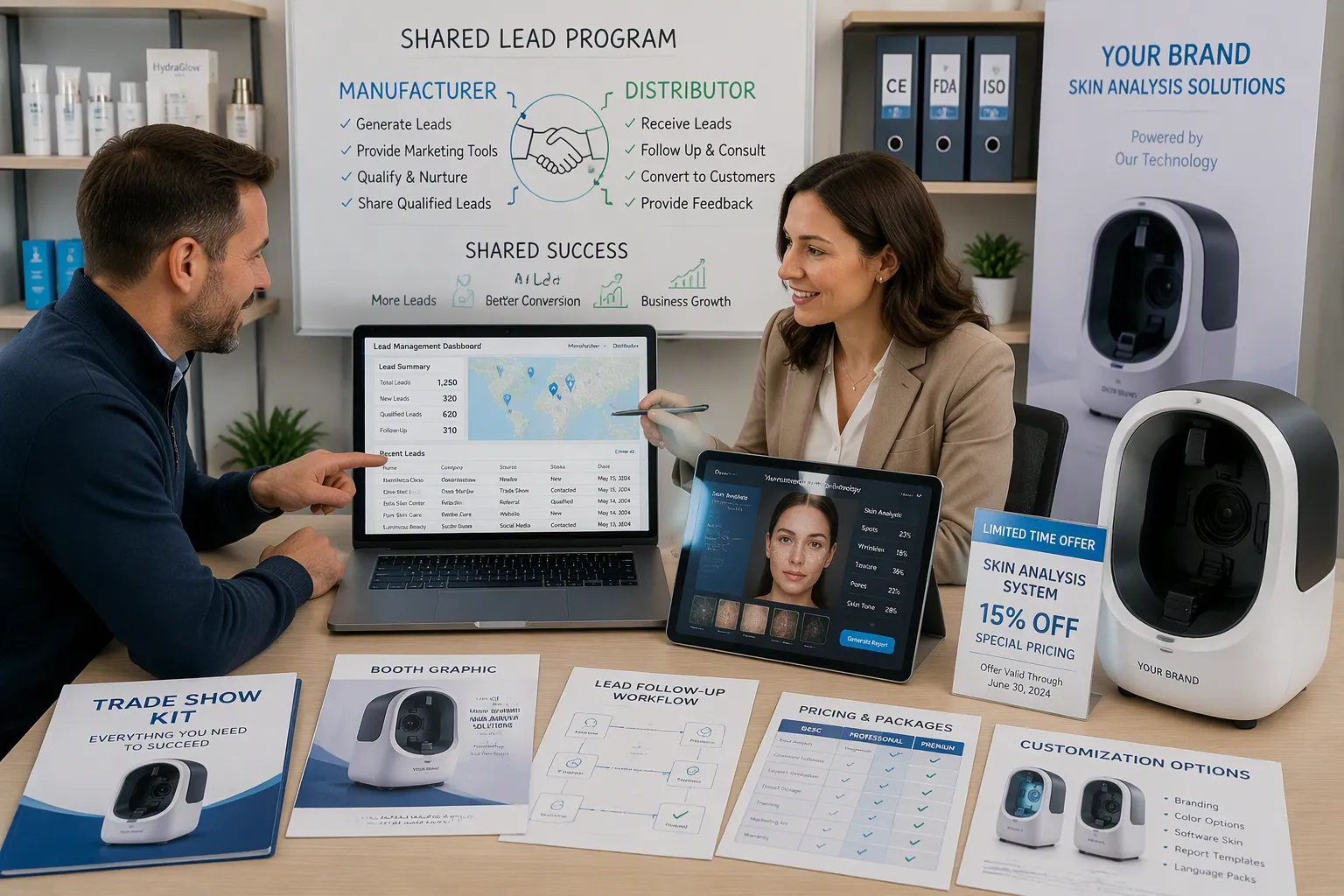
I always tell manufacturers to create shared lead programs with their distributors. Here is how a shared lead program works. The manufacturer gathers inquiries from its website and global ads. Then it sends qualified leads to the right distributor based on region. This keeps the distributor’s pipeline full without spending more on ads.
Trade show kits are also a must-have. I ask for booth graphics, demo units, and printed handouts. These kits help distributors look professional at local expos. Promotional pricing incentives help close the deal. I suggest limited-time discounts or bundled packages for trade show visitors. These offers create urgency and bring more people to the booth.
Localization and Customization Options
Co-branding runs into real barriers. I see high minimum order quantities for custom chassis and printed cartons. Lead times for new molds take a long time. Regulatory labeling and counterfeiting risks add even more friction. Customization options fix these problems. The table below shows how.
| Barrier to Co-Branding | How Customization Options Address It |
|---|---|
| High minimum order quantities (MOQ) for bespoke chassis (50–500 units) and custom-printed cartons (1,000+ units) | OEM/ODM suppliers offer scalable SKU options and negotiate production milestones, pre-production samples, and pilot runs |
| Long lead times (8–16 weeks) for new molds and branded tooling | Customization planning includes clear production timelines and pre-production sample approvals |
| Quality control and acceptance criteria complexity | Custom packaging engineering incorporates validated quality agreements, Certificate of Conformance (CoC), and lot-based traceability |
| Regulatory labeling and multilingual documentation requirements (CE/FDA/ISO alignment) | Customization includes localized manuals, risk-management documents, and packaging integrated into the Technical File |
| Counterfeiting risk in beauty electronics | Custom anti-counterfeit options include holographic seals, tamper-evident tape, custom security inks, and NFC tags |
| Transit damage and warranty claims | Custom multi-layer protective packaging rated to ISTA drop standards reduces returns and warranty costs |
| Distribution channel mismatch | Custom packaging variants for salon/retail and distributor/wholesaler streamline inventory |
I also suggest co-branded materials. Putting your logo on brochures and regional landing pages builds local trust. Referral program templates help distributors turn happy clients into new leads. A skin analysis machine sells better when the brand feels local.
I think full marketing support helps create a strong bond between distributors and manufacturers. Sales tools give distributors what they need to sell with confidence. Training and online materials get their teams ready to teach local customers. Finding new leads and sharing the brand help them grow their customer list. These three things are the base for long-term success.
I tell distributors to ask for this help directly. Use this list to have honest talks with your manufacturer partners. OEM/ODM choices and compliance advice matter most when you enter new markets. They lower risk and help you start faster. Good partnerships begin with clear requests.
FAQ
What should a distributor ask for first?
I advise distributors to start with the sales kit. Ask for brochures you can edit, spec sheets, and demo videos. These tools let you sell quickly. Then ask for training dates and digital files. A full starter pack helps your team start fast.
How do I handle a small local market?
I suggest asking for OEM/ODM options that scale. Manufacturers can give you test runs and flexible product codes. You do not need to order a lot to begin. Co-branded web pages and local content help you look like a big brand in a small area.
Can I get training in my own language?
Yes. I always tell you to ask for training materials in your language. Many manufacturers give you translated manuals and videos with subtitles. Live classes may have trainers from your area. Clear talk in your language helps your sales team learn faster.
What if I need custom branding but have low volume?
I advise talking to your manufacturer about step-by-step production goals. Ask for samples made before full production and test runs. Options for product codes that scale make it easier. Different custom packages for salons or stores also help you fit your market without big promises.
How does compliance support help me enter a new market?
Compliance help cuts down legal risk. I ask manufacturers for manuals in your language and risk-handling papers. They should match CE, FDA, or ISO rules. This support helps you follow labeling laws and start selling sooner in new places.
Post time: Sep-18-2026


