


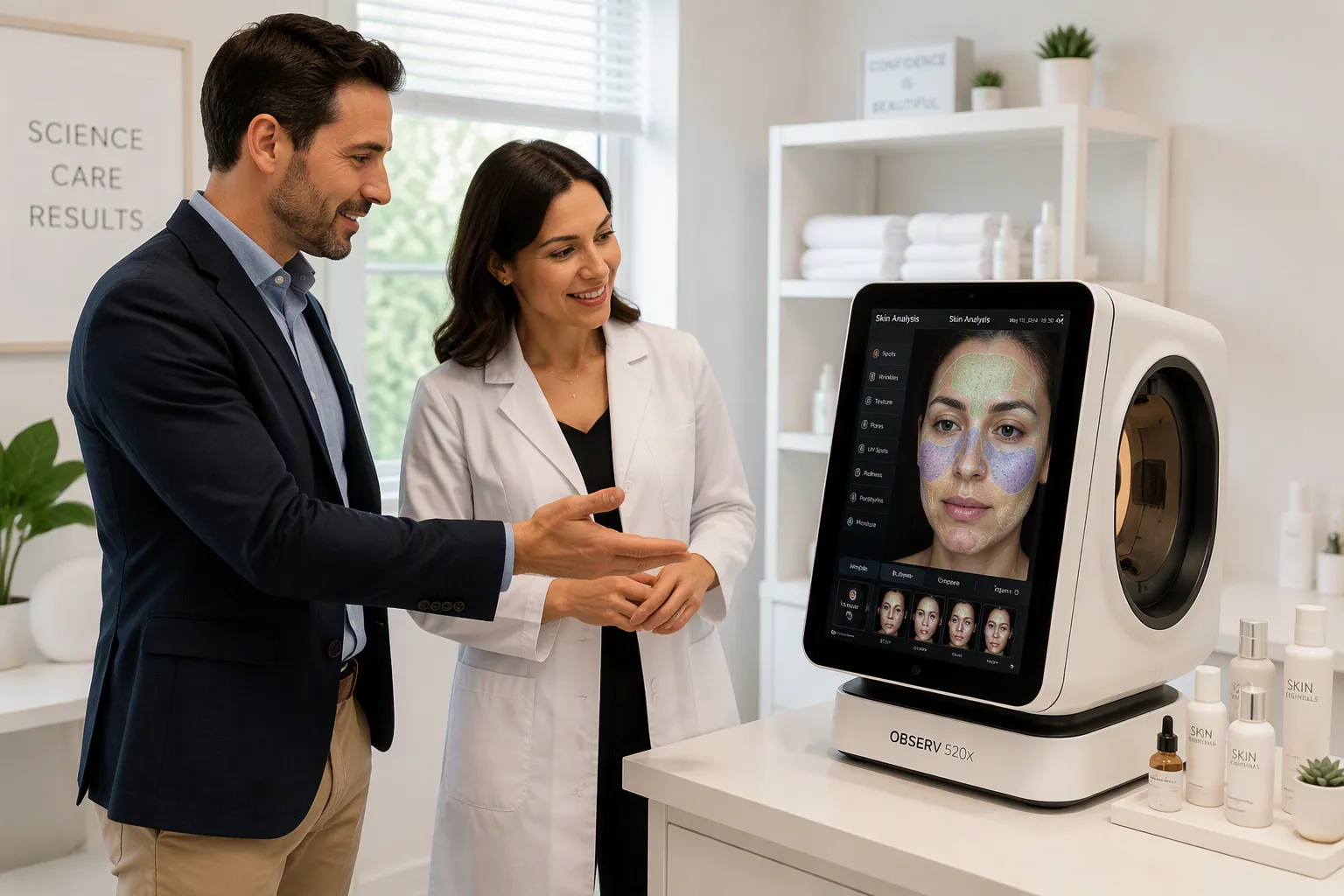
Yes, a skin analysis machine can deliver strong profits. Yet the real money lives in the ecosystem you build around the hardware. I see three critical success factors: choosing the right buyer, creating recurring revenue, and using OEM/ODM support to stand apart. Focus on your bottom line, not product specs.
Key Takeaways
●Build recurring revenue streams like software subscriptions and consumables to exceed the initial hardware profit.
●Use OEM/ODM manufacturer partnerships to cut costs and customize products for higher margins.
●Target med-spas first because they need documented results and pay premium prices.
Market Demand for Skin Analysis Machines
Why Clinics Are Prioritizing Skin Diagnostics
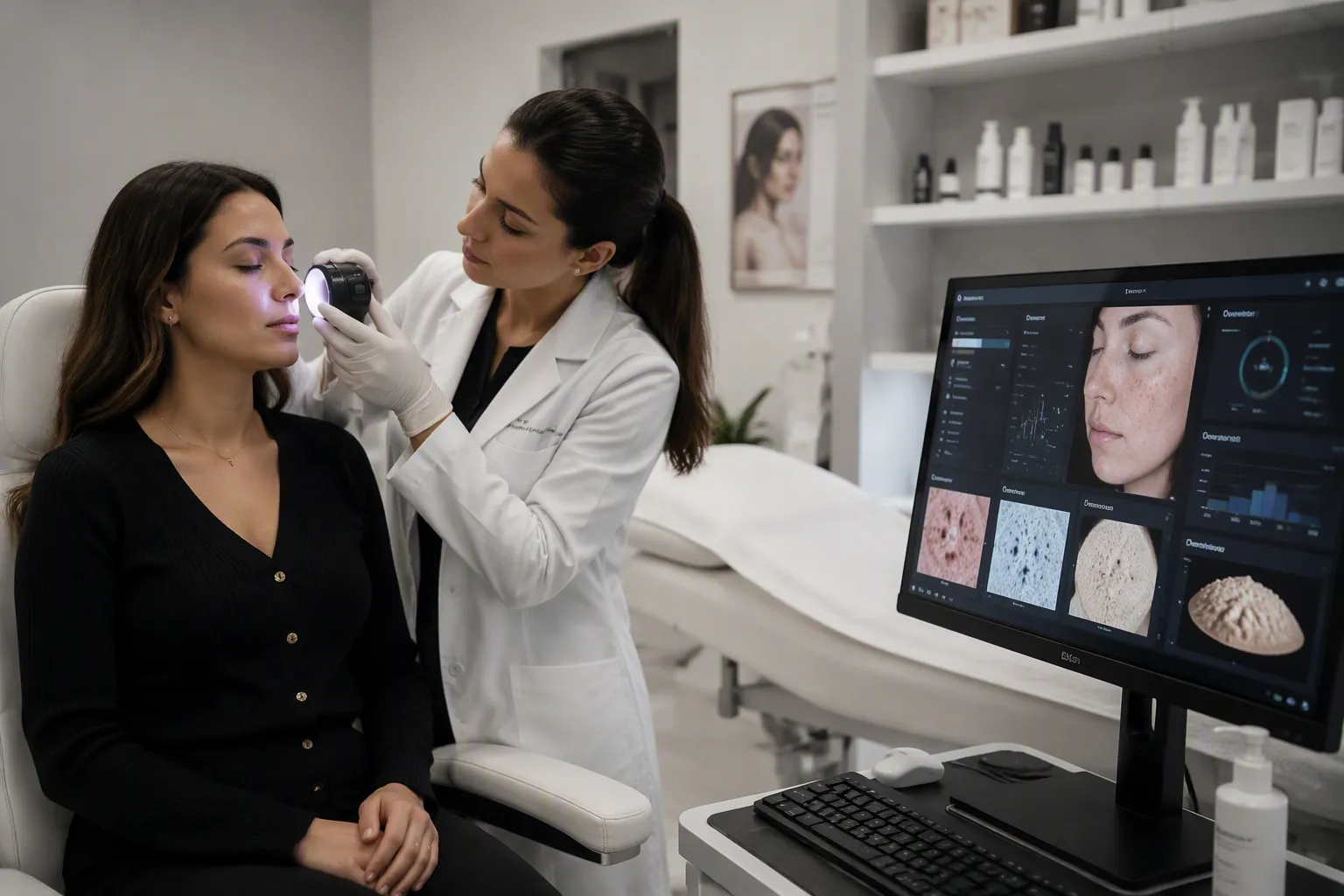
I see a clear reason driving this demand. Clinics need objective data to sell high-margin treatments and products. A client who sees a detailed report of their pores, pigmentation, and wrinkles trusts the professional’s recommendation more. That trust directly boosts conversion rates. The global skin analysis device market reflects this need. It is projected to grow at a compound annual growth rate (CAGR) of 11.5% between 2026 and 2033. A 2022 validation study in GMS Interdisciplinary Plastic and Reconstructive Surgery confirms why. The study tested the VISIA clinical measurement system. It found that 88.9% of measurement correlations across eight skin parameters reached statistical significance. The top 50% of absolute correlations exceeded r=0.945. This level of precision changes how clinics operate. Instead of relying on subjective judgment, they present data-backed recommendations. That data encourages repeat visits. A client returns in three months to see their progress measured again. This cycle strengthens loyalty and revenue. For a distributor, this value proposition is gold. You sell a tool that directly increases your client’s bottom line.
The Shift Toward Personalized Skincare
Consumers now expect products tailored to their unique skin. The customized skincare market confirms this trend. It is forecast to grow at a CAGR of 7.8% from 2025 to 2035, up from a historical CAGR of 5.2% from 2020 to 2025. The personalized skincare market was valued at USD 31.6 billion in 2025. It is estimated to reach USD 34.8 billion in 2026 and project to USD 74.2 billion by 2033, growing at a CAGR of 11.4%. These numbers reveal accelerating demand. Skin analysis machines sit at the center of this shift. They provide the diagnostic foundation for truly personalized regimens.
Consider how brands have already capitalized on this. Haut.AI’s approach shows what happens when you combine skin analysis with product matching. Users see a 2x higher conversion rate and a +31% increase in average order value. Benefit Cosmetics integrated an AI-powered pore analysis tool on their website. Users who interacted with the tool delivered up to 14x uplift in sales. The Body Shop integrated an AI skin analysis tool in-store. That move produced a +50% increase in average basket size.
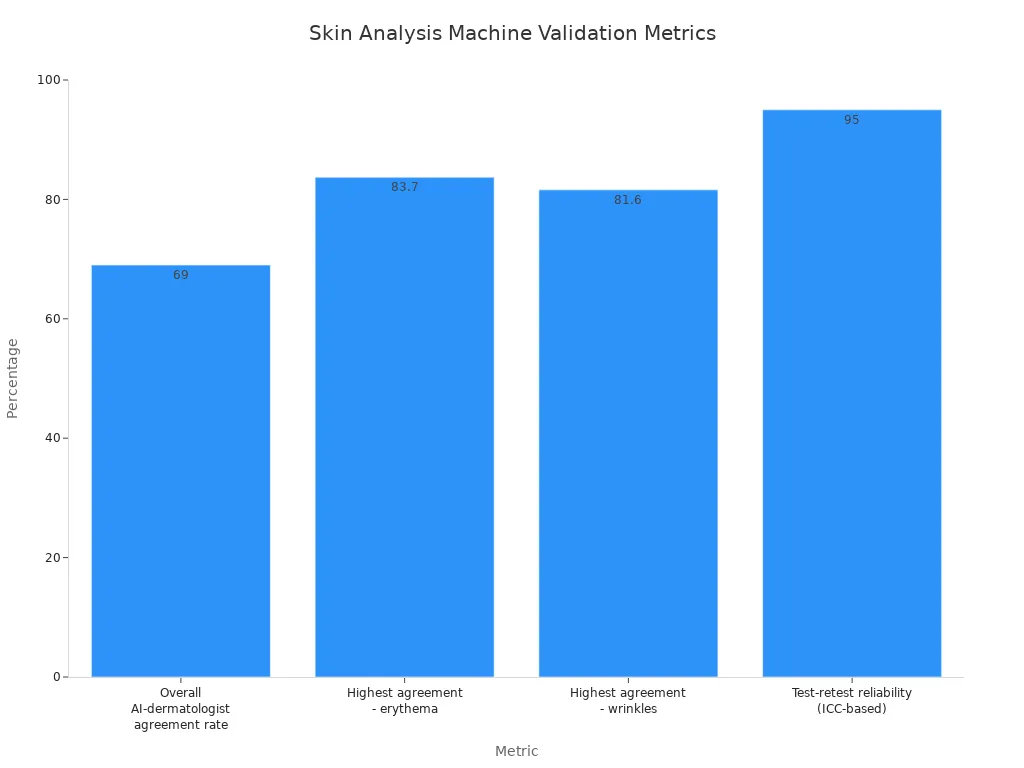
This chart shows a different kind of validation. The AI-dermatologist agreement rate reached 69% overall. Agreement on erythema hit 83.7%. Wrinkles scored 81.6%. Test-retest reliability measured 95%. These metrics give clinics confidence. They can rely on the technology to support their expert judgment. For you as a distributor, this data closes the sale. You prove the technology works. You show the market is growing. And you demonstrate that clinics need this tool to stay competitive in a world demanding personalized care.
Profit Margins and Pricing Strategies
Hardware Margins vs. Recurring Revenue
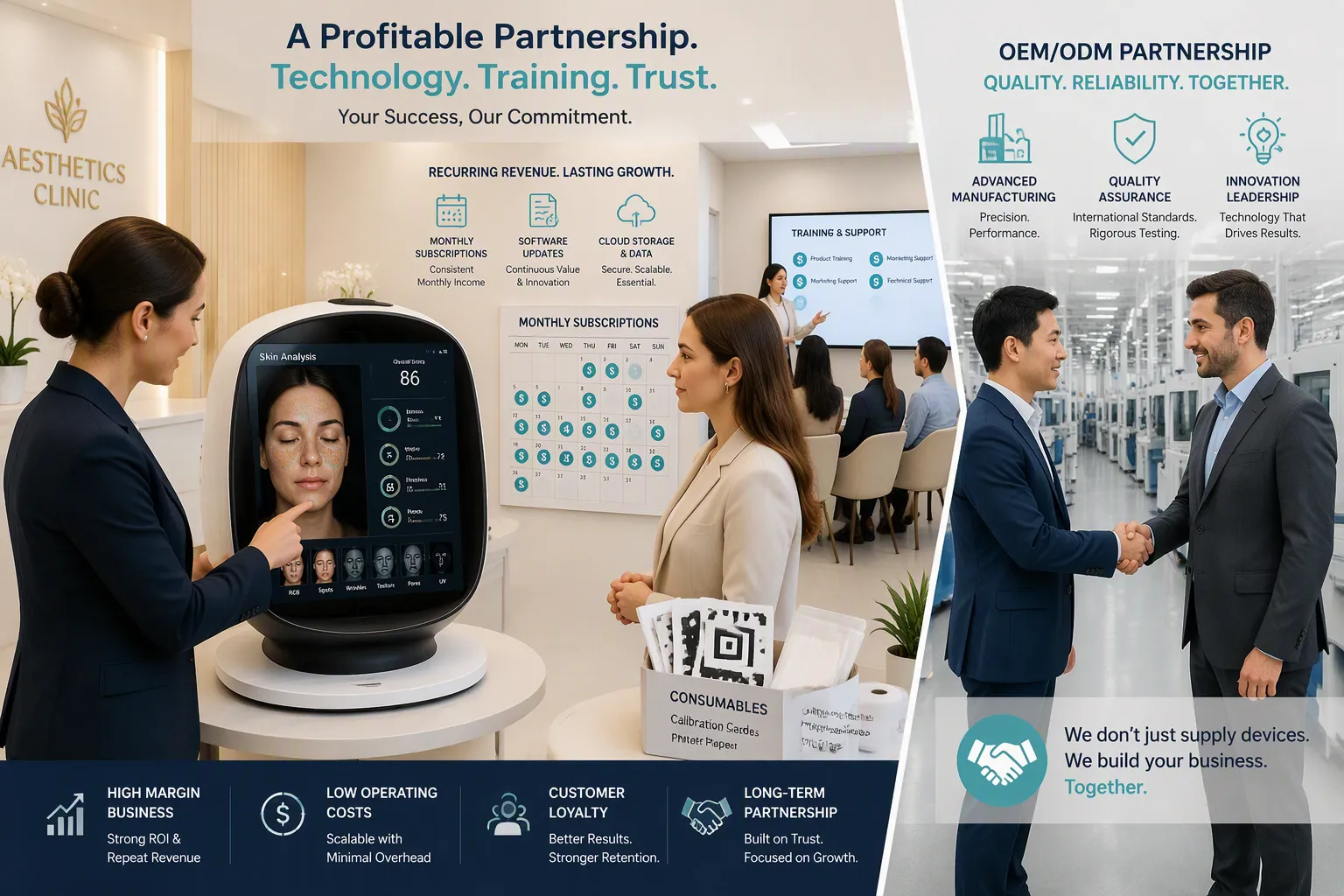
I see distributors make one common mistake. They focus on the initial hardware sale. That approach leaves money on the table. The real profit engine runs on recurring revenue streams. Think about software subscriptions. A clinic pays monthly for updates, cloud storage, and advanced analytics. That subscription generates steady income month after month. Proprietary consumables add another layer. Calibration cards, printer paper for reports, and specialized probes need regular replacement. Each reorder carries a healthy margin. Training packages complete the ecosystem. New staff need certification. Existing staff need refresher courses. You charge for each session.
Consider the math. A single skin analysis machine might sell for $8,000 to $15,000. That sale feels good. But the subscription at $150 per month generates $1,800 annually. Over five years, that totals $9,000. Add consumables at $200 per quarter. That adds another $4,000. Training brings in $500 per session, twice yearly. That contributes $5,000 more. The recurring revenue exceeds the hardware price. This model transforms a one-time transaction into a five-year relationship. Your client gains continuous value. You gain predictable income. This approach stabilizes your cash flow and builds a loyal customer base.
Leveraging OEM/ODM Support for Better Pricing
I recommend sourcing directly from manufacturers who offer OEM/ODM services. This strategy changes your cost structure dramatically. Off-the-shelf retail products carry multiple layers of markup. The manufacturer adds their margin. The brand adds theirs. The distributor adds another. You end up paying for everyone in the chain. Direct manufacturer partnerships eliminate those middle layers.
When you work with a factory like Meicet, you access wholesale pricing. You can customize the hardware with your own branding. You choose the software features that match your target market. This flexibility lets you position your product strategically. You can offer a premium version with advanced AI algorithms. You can also offer an entry-level model for smaller salons. Each option carries different margins. The premium version might yield 60-70% gross margins. The entry-level model might yield 40-50%. Both outperform retail distribution margins significantly.
OEM/ODM support also reduces your inventory risk. Manufacturers can handle drop-shipping or maintain minimal stock levels. You order units as you close deals. This approach protects your working capital. You avoid tying up cash in unsold inventory. The manufacturer’s technical team provides white-label documentation and marketing materials. You focus on sales and client relationships. This partnership model creates exceptional profit potential that retail channels simply cannot match.
Identifying Your Target Buyer and Sales Channels
Selling to Med-Spas vs. Independent Salons
I see two distinct buyer profiles in this market. Each one wants different things from a skin analysis machine. Med-spas focus on clinical accuracy. They need documented before-and-after metrics for treatments like facials, peels, laser sessions, and injectables. Their clients expect progress reports they can review over time. Independent salons operate differently. They want speed and simplicity. A quick AI facial scan at the front desk helps them recommend products before a session begins. The table below shows this contrast clearly.
| Business Type | Prioritized Features |
|---|---|
| Med-spas & aesthetic clinics | Document before-and-after skin metrics for treatments; share progress reports with clients |
| Beauty salons & day spas | Run quick AI facial scans at the front desk; emphasis on speed and ease of use |
I tailor my sales pitch to match these priorities. For a med-spa, I demonstrate how the device tracks treatment efficacy across multiple visits. I show sample reports that clinicians can share with patients. For an independent salon, I focus on the front-desk workflow. I show how a scan takes under a minute and produces an immediate product recommendation. Understanding this difference prevents me from wasting time on the wrong message.
Direct Sales vs. E-commerce Platforms
High-ticket equipment demands a direct sales approach. I schedule live demonstrations. I let prospects touch the device, run their own scans, and see the output firsthand. This hands-on experience builds confidence that no website can replicate. Direct sales also let me negotiate pricing and bundle services like training and installation.
E-commerce still plays a role. I use my online store for lead generation. Prospects browse specifications, compare models, and request quotes. I also list entry-level models online for smaller businesses that prefer self-service purchasing. This hybrid strategy captures both ends of the market. The direct channel handles premium deals. The e-commerce channel filters prospects and moves lower-tier inventory. Together, they maximize my reach without diluting the value of my premium offerings.
Navigating Competition and Differentiation
Key Features That Justify a Premium Price
I watch many distributors compete on hardware specs alone. That approach fails. The device itself becomes commoditized quickly. Every manufacturer offers similar cameras, lighting, and imaging capabilities. Your real edge lives in the software ecosystem. Advanced analytics, AI-driven recommendations, and seamless integration with practice management systems create genuine value. These features justify a higher price point because they save clinics time and boost their revenue.
I recommend focusing on software capabilities that directly impact your buyer’s workflow. Look for features like automated report generation, cloud-based client history tracking, and comparative analysis across multiple visits. These tools help clinics demonstrate treatment effectiveness. They also simplify the consultation process. A clinic that can show a client their skin improvement over three months builds stronger loyalty. That outcome justifies paying more for your product.
Consider also the user experience. A clean interface with intuitive navigation reduces training time. Clinics appreciate software that their staff can master quickly. I look for systems that offer customizable templates and branding options. These features let clinics present professional reports with their own logo. This polish elevates their perceived expertise. When you sell these capabilities, you sell outcomes rather than hardware.
The Value of Training and After-Sales Support
I consider training the cornerstone of client retention. A skin analysis machine only delivers value when staff use it confidently. I design comprehensive onboarding programs that cover device operation, interpretation of results, and consultation scripts. These sessions transform a technical tool into a revenue generator. Clinics that understand how to use the data sell more treatments and products. They see a return on their investment quickly.
After-sales support matters equally. I establish a responsive helpdesk that addresses questions within hours, not days. I schedule regular check-ins with each client during the first year. These calls identify workflow issues before they become frustrations. I also offer refresher training sessions when clinics hire new staff. This ongoing relationship reduces churn significantly. Satisfied clients refer colleagues in this niche market. Word-of-mouth referrals become your most powerful marketing channel. Each referral costs nothing yet brings qualified leads directly to your door.
Assessing Long-Term Viability and Risks
Technological Obsolescence and Upgrade Paths
Technology moves fast in skin diagnostics. A device that impresses clients today might feel dated within three years. I see distributors worry about this constantly. They fear getting stuck with obsolete inventory. They also fear their clients losing confidence when newer models appear.
I solve this problem before signing any manufacturer agreement. I ask pointed questions about upgrade paths. Does the factory offer software updates for existing hardware? Can I swap camera modules without replacing the entire unit? Will the AI algorithms improve through cloud updates? These answers determine my long-term risk.
A manufacturer with a clear roadmap protects my investment. I look for partners who design modular systems. This approach lets clinics upgrade components rather than purchase whole new devices. I also negotiate firmware update commitments in writing. These updates keep my clients’ machines relevant without requiring new hardware purchases.
The regional growth data supports my confidence in this category. North America shows a projected compound annual growth rate of 15% from 2025 to 2030. The United States matches that pace at 15%. These numbers tell me demand will stay strong for years. Clinics will keep investing in diagnostic tools that drive revenue.
| Region | Projected CAGR (2025–2030) |
|---|---|
| North America | 15% |
| USA | 15% |
Market Saturation and Future Growth Potential
Every growing market eventually attracts more players. I prepare for that reality by choosing a clear niche. I refuse to compete on price alone. That battle favors large distributors with massive purchasing power.
I position myself in one of two lanes. The first lane targets high-end medical spas seeking advanced AI analytics. These buyers value clinical accuracy and pay premium prices. The second lane serves independent salons wanting simple, affordable entry-level devices. Each lane has distinct needs and distinct pricing power.
I also watch for saturation signals in my territory. When multiple competitors offer identical products, margins compress quickly. I avoid this trap by building relationships that transcend hardware. My training programs, responsive support, and consumables create switching costs. Clients stay because leaving means losing more than a device.
The market will keep growing. Personalized skincare demand shows no signs of slowing. Clinics need objective data to sell treatments effectively. I see this product as a gateway to long-term client relationships. The hardware sale starts the conversation. The ongoing partnership delivers sustainable profit.
A skin analysis machine becomes profitable when you treat it as a gateway to long-term relationships. Recurring software revenue, OEM/ODM cost advantages, and clinic demand drive your returns. Run a cost-benefit analysis against your existing client base and territory. Then research manufacturers like Meicet to evaluate their OEM/ODM capabilities and product roadmap before committing.
FAQ
How much does one machine earn beyond the initial sale?
Over five years, software subscriptions contribute $9,000. Consumables bring $4,000, and training sessions add $5,000. Together these streams exceed the machine’s $8,000–$15,000 purchase price.
Which buyer type offers the strongest opportunity?
Med-spas pay premium prices because they need documented treatment outcomes. Independent salons want entry-level models with faster front-desk scans. I target med-spas first for larger initial contracts.
What upgrade clauses should I negotiate?
I require documented paths for firmware updates, swappable camera modules, and cloud-based AI improvements. These clauses prevent my clients’ devices from aging quickly. Without them, my inventory becomes obsolete.
Post time: Sep-09-2026


