


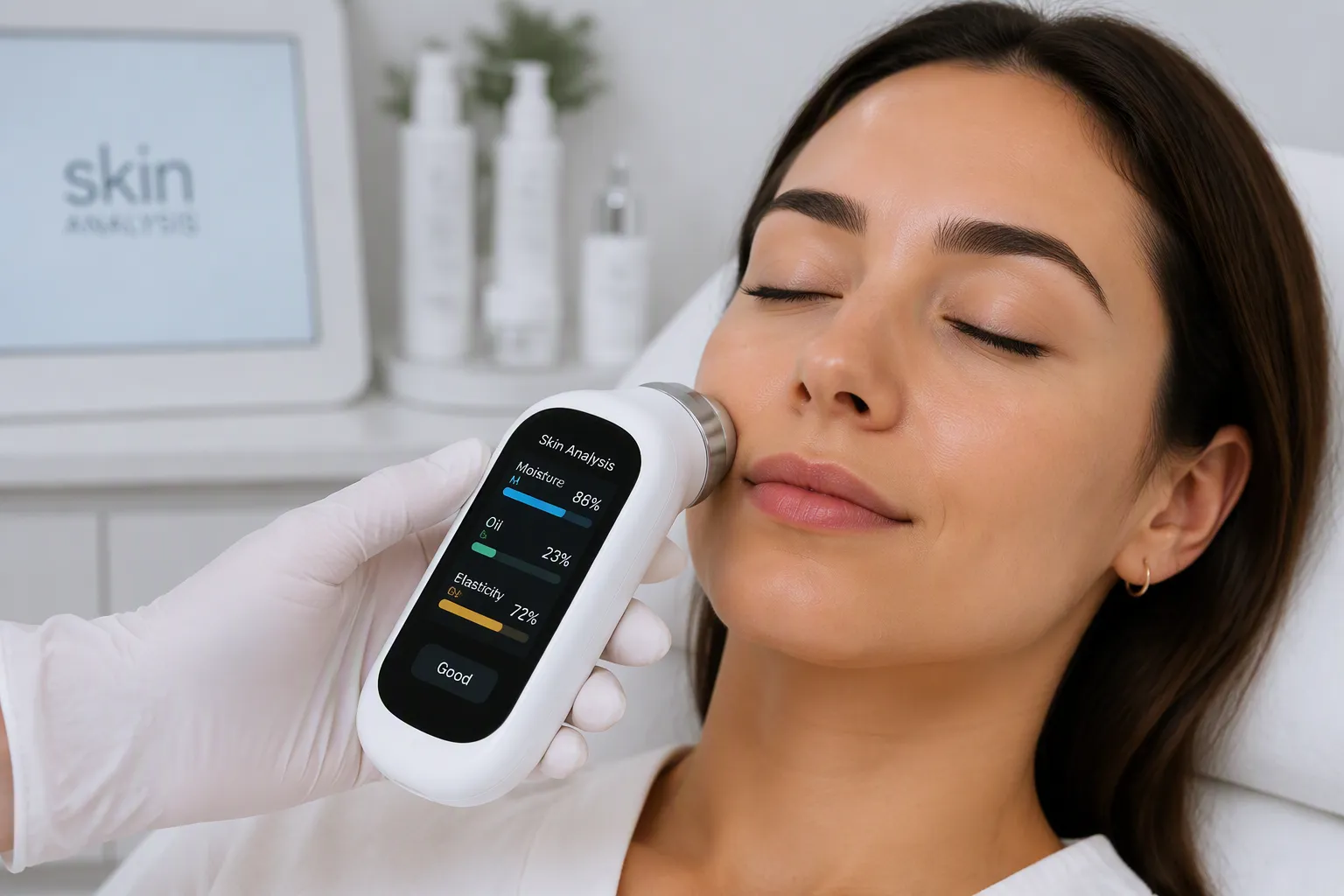
I grew tired of guessing whether my skincare products actually worked. Before-and-after photos never proved anything. How do I know if a product truly delivers results? Modern skincare now embraces objective, measurable data. The skin analysis systems market grows at 7.4% CAGR from 2026 to 2033, reflecting this shift. This post explains essential hardware, smart software, and red flags to avoid. A comprehensive Skin Testing Machine should assess hydration, spots, pores, and wrinkles for complete insight.
Key Takeaways
●Look for sensors that measure hydration, oil, and pH. These give you real numbers to track skin changes over time.
●Choose a machine with smart software and AI. It turns data into clear reports and useful advice for your skin.
●Avoid devices that only use photos. They miss key data. Always check that the device has scientific proof.
Essential Metrics in a Skin Testing Machine
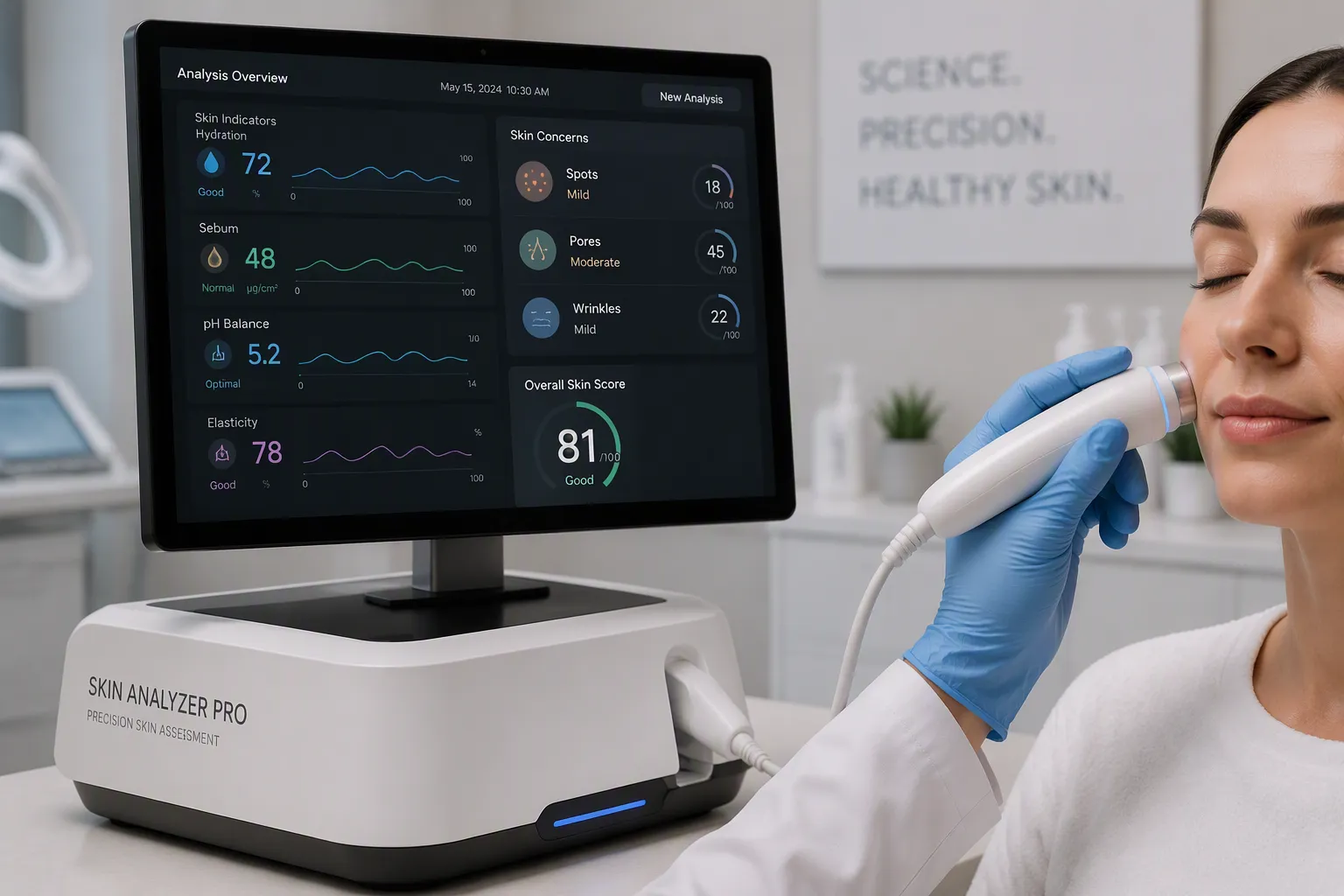
I rely on numerical values, not guesswork, when I evaluate a client’s skin. A high-quality device must measure hydration, sebum, elasticity, and pH levels. These readings give me objective scales that I can track over time. Without these numbers, I cannot prove whether a treatment works.
Core Sensors for Hydration, Oil, and pH
Hydration sensors come in two main types. Capacitance-based sensors, often called corneometry, work reliably on healthy skin. They struggle, however, with very dry areas like palms or skin lesions. Impedance-based sensors offer a different approach. They measure conductance across individual skin layers, including the stratum corneum, epidermis, and dermis. This method provides multiple parameters like resistance, capacitance, and phase angle. In comparative tests, textile-based impedance sensors showed fewer standard deviations during repeated measurements, meaning more consistent results. I prefer this approach for challenging skin areas.
Sebum measurement directly links to acne management. Research confirms that sebum excretion rate correlates with acne severity. I find this data essential when designing treatment plans.
The study explicitly reports that acne severity was positively correlated with skin sebum levels, confirming a direct linear relationship between the two variables.
pH measurement completes the core sensor suite. Healthy adult skin pH varies by source. Cleveland Clinic states normal pH sits around 5.5, slightly acidic. A multicentre PubMed study estimates natural skin surface pH averages 4.7, below 5. Another peer-reviewed study on healthy adult males reports a mean range of 5.4–5.9. Healthline gives a broader range of 4 to 7, with an average of 5.7. I use these reference points to interpret my readings.
Detecting Spots, Pores, and Wrinkles
A top-tier Skin Testing Machine must detect more than surface conditions. I look for devices that identify surface spots, UV spots, brown spots, pores, texture, wrinkles, red areas, and porphyrin. Each metric guides a personalized treatment plan.
UV imaging reveals hidden damage. UV light absorbs into epidermal melanin just below the skin surface, creating UV spots invisible under normal light. The system records this absorption pattern, measuring both surface and subsurface conditions. This allows me to detect hidden UV spots before they rise to the surface with skin maturation.
Pore analysis requires sophisticated image processing. Common techniques include thresholding combined with particle analysis to count pores and measure individual areas. Local thickness estimation fits spheres inside regions to provide a thickness histogram. The DiameterJ plugin offers an alternative for fiber and pore analysis. For complex structures, manual counting with edge detection serves as a fallback. I value a Skin Testing Machine that uses multiple methods for accuracy.
Wrinkle detection relies on texture analysis algorithms that map line depth and density. Red area analysis identifies sensitivity trends. Porphyrin detection reveals bacterial activity. Together, these metrics transform subjective complaints into actionable clinical data. I can track progress numerically, adjust protocols, and show clients measurable improvement. This objective approach builds trust and drives better outcomes.
Advanced Features and Pitfalls of Skin Testing Machines
Smart Software and AI-Driven Recommendations
I see AI as the bridge between raw sensor data and actionable advice. A peer-reviewed article in the Journal of Cosmetic Dermatology demonstrates that AI tools enable objective quantification of skin quality through high-dimensional image analysis. This approach reduces interobserver variability and supports consistent evaluation across time points and populations. The study concludes that AI represents a paradigm shift in aesthetic dermatology, offering standardized metrics for assessing skin quality. When aligned with validated frameworks, AI supports improved treatment outcomes and patient satisfaction.
AI can be trusted for skin analysis because it leverages enormous datasets, far beyond what any individual dermatologist could experience. Many studies, as one from Stanford Medicine, show AI matching or surpassing human experts in diagnostic accuracy. These tools are developed with input from expert dermatologists, incorporating the latest medical knowledge and standards.
I look for software that generates custom client reports automatically. These reports translate complex sensor data into simple visuals. I can show a client how their hydration improved over three months. Trend tracking over time reveals whether a treatment protocol truly works. I also need data export for patient records. This feature saves time and improves documentation quality. A reliable Skin Testing Machine should offer these capabilities as standard features.
Red Flags in Low-Quality Devices
I warn against devices that rely solely on photo analysis. Without sensor data for hydration, sebum, and pH, you get a superficial picture. Generic recommendations from photo-only apps rarely match individual needs. A camera cannot measure skin barrier function or oil production.
| Device Type | Typical Price Range |
|---|---|
| Home Use (photo-only apps/simple devices) | $50 – $300 |
| Professional (multi-sensor devices) | $2,000 – $10,000+ |
The midpoint for home use is $175, for professional $6,000. This yields an average cost difference of approximately $5,825. You pay for real, measurable data. I consider this investment essential for clinical credibility.
I also caution against lack of scientific validation. A 2022 validation study on VISIA found that 88.9% of measurement correlations across its eight skin parameters reached statistical significance. The top 50% of absolute correlations exceeded r=0.945. I check for similar published data before purchasing.
To verify a device’s claims, I look for: 1) Clinical studies with rigorous protocols, including randomized controlled trials and statistically significant results. 2) Peer-reviewed scientific literature supporting the measurement methodology. 3) Instrumental validation using standardized lab equipment. 4) Reproducibility studies confirming consistent results across repeated captures.
Poor calibration standards raise another red flag. Without regular calibration, readings drift over time. I ask about calibration frequency and procedures. Software update support matters too. A device without updates becomes obsolete quickly. I check the manufacturer’s update history before committing.
The right Skin Testing Machine transforms guesswork into measurable proof. I need essential sensors for hydration, oil, elasticity, and pH alongside comprehensive detection of spots, pores, and wrinkles. Smart software turns this data into clear client reports. Book a demo today and request a sample report to experience the difference firsthand.
FAQ
How often should I calibrate my skin testing machine?
I calibrate my device per the manufacturer’s schedule. Most professional units require regular calibration to keep readings accurate.
Can a skin testing machine replace a dermatologist?
No. A skin testing machine gives me objective data. I still need a dermatologist’s clinical expertise for diagnosis and treatment planning.
Which metric matters most for general skin health?
Hydration matters most. It directly affects barrier function, elasticity, and appearance. I always start with hydration readings when assessing a client.
Post time: Aug-27-2026


