


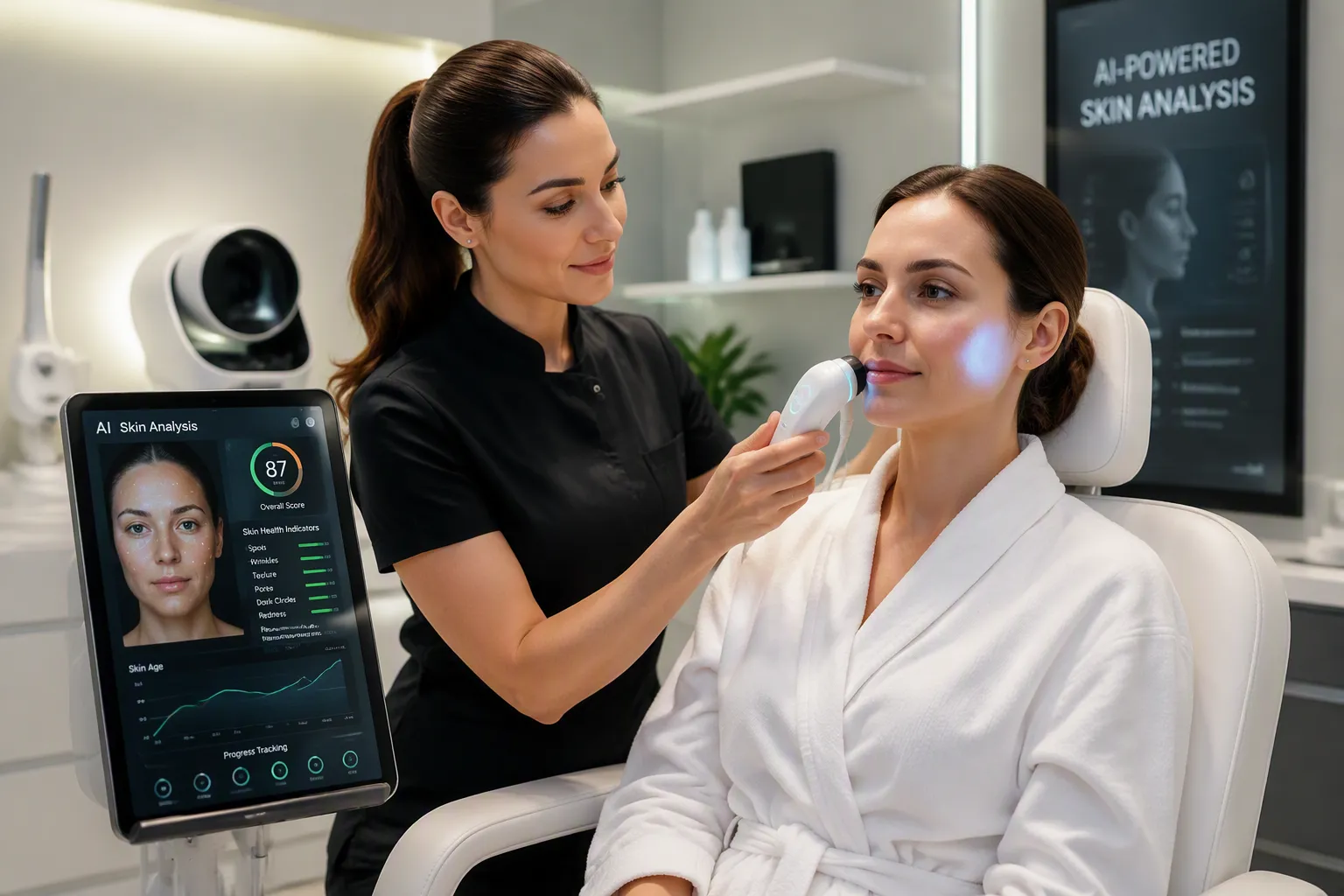
You want to grow your sales and have a clear advantage in a crowded market. I often hear this question: how do you stand out? A skin analysis machine gives a direct answer. Think about this: the AI skin analysis market is expected to reach $3.08 billion by 2033, growing 12.5% each year. This technology is not just a tool. It helps increase revenue by suggesting personalized products. It builds client trust with clear data. It creates a unique service that your competitors cannot easily copy. Let me explain the real business benefits for your distribution business.
Key Takeaways
●AI skin analysis machines help you make more money by suggesting products made for each person. This leads to bigger orders and more sales.
●These machines build trust with clients by using facts, which makes meetings faster and more believable, so customers come back.
●Offering AI skin analysis makes your business stand out from other companies. It gives you a special high-tech edge that brings in more clients.
●Accurate skin checks match customers with the right products, which lowers returns, saves you money, and makes customers happier.
●The investment pays off quickly, with machines often earning back their cost in 30-45 days by boosting sales and efficiency.
Boosting Revenue with Personalization
A skin analysis machine changes the way you sell. It stops your clients from guessing. It gives them clear reasons to buy more. This change brings in real money for your business.
From Generic to Targeted Upselling
Generic sales pitches do not work well. A customer comes in, and a staff member suggests a moisturizer for dry skin. That advice is too simple. It does not deal with the real cause of the problem. An AI system changes this. It scans the face and finds specific issues. Maybe the client has a weak skin barrier. Perhaps dehydration is the real problem. The system makes a scientific report. This report convinces the customer to buy a full routine. They buy a cleanser, a serum, and a sunscreen. They do not just buy one moisturizer. This raises the average order value.
The data backs up this change. AI skin analysis machines drive higher salon revenue and retail sales. They boost skincare product attach rates by up to 45%. These numbers show how powerful precise recommendations are. When a client sees their skin mapped out on a screen, they trust the advice. They buy the full set of products you suggest.
Personalized recommendations lead to higher average order values in several ways. AI-generated personalized bundles produce 35% higher AOV compared to single-item purchases. Guided selling asks real-time questions about skin type. It then suggests premium options customers did not know existed. This drives higher order values. Contextual upselling and cross-selling make the basket bigger. For example, the system matches a serum with a moisturizer. Dynamic pricing nudges suggest specific products to qualify for free shipping. This raises order value without being pushy. The system fairly matches products to skin physiology. This lowers returns and builds trust. An integrated CRM allows follow-up scans. This raises customer lifetime value and repeat purchases.
A 30% increase in services upsell.
Creating New Service Packages
You can build new revenue streams with this technology. Create a “Skin Health Assessment” package. Charge a premium fee for the detailed scan and consultation. This service pays for itself fast. Clients love the high-tech experience. They feel they get expert care. You can also offer follow-up scans as a subscription. This creates recurring revenue. The machine becomes a profit center, not just a cost.
The system makes personalized product recommendations based on computer vision analysis. This directly drives client trust and bigger purchases. You can train your staff to use the reports for targeted upselling. They no longer guess what a client needs. They know exactly what to recommend. This confidence leads to more sales. It also makes the customer feel understood. That feeling brings them back.
Building Trust with Objective Analysis
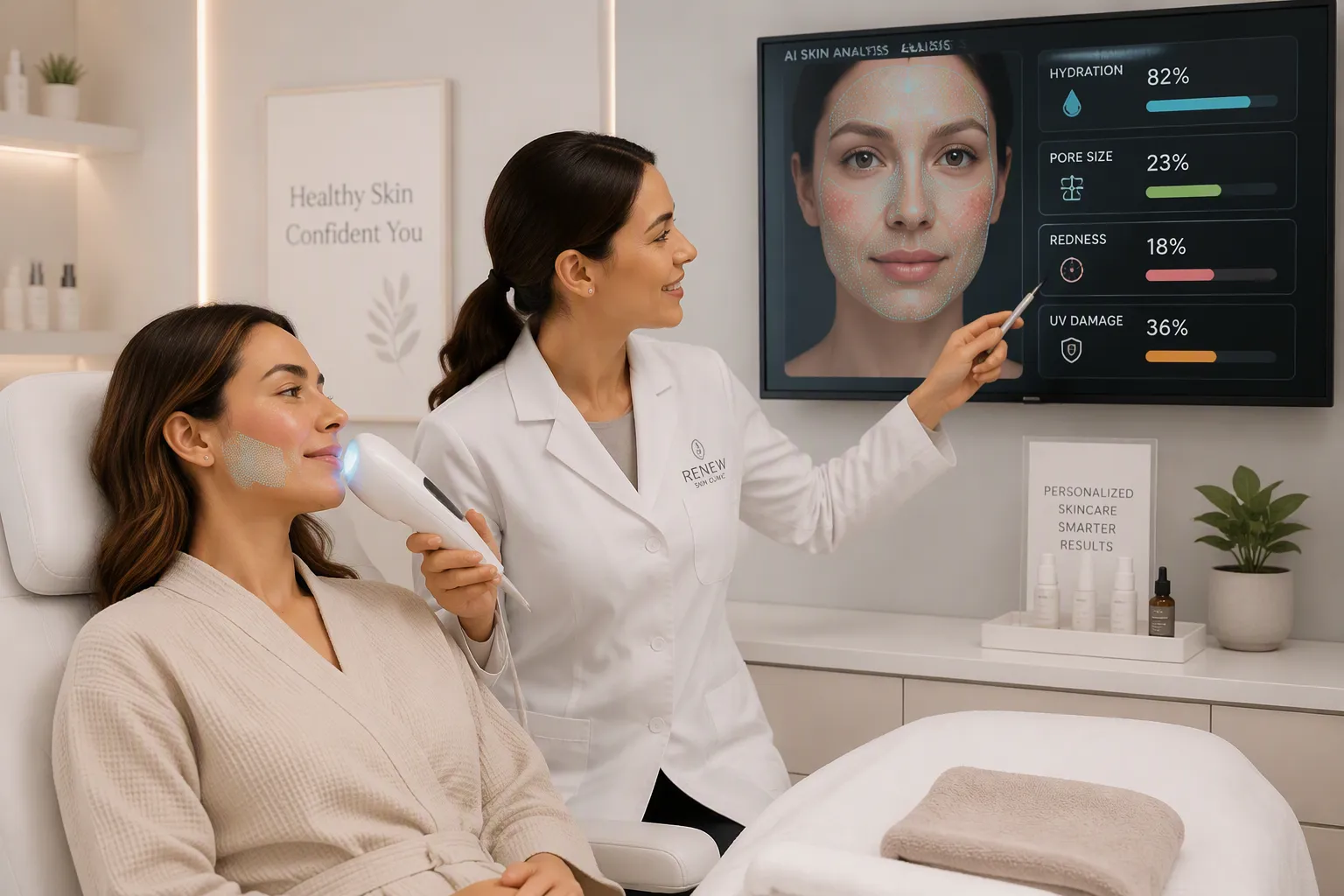
Clients trust what they can see. Old methods depend on a practitioner’s eye. That way has limits. Different estheticians give different opinions. Clients feel unsure. An AI skin analysis machine fixes this. It gives hard data clients can see and understand.
How a Skin Analysis Machine Builds Credibility
Guessing skin conditions leads to longer talks. When an esthetician points out fine lines by sight alone, clients feel doubtful. They think the spa just wants to sell products. This lack of visual proof makes consultations take longer.
Objective AI data takes away that pressure. The machine scans skin in under 60 seconds. It measures texture, pores, moisture, redness, and aging signs with data you can repeat. The system takes steady facial images for key skin insight. Buying an AI skin analyzer helps clinics improve assessment. I explain results in a clear way. Clients understand exactly what their skin needs.
Objective AI data removes sales pressure, making the consultation highly efficient because the customer trusts the metrics immediately. Staff members no longer feel like pushy salespeople. They act like helpful experts who read scientific charts, which makes clients much more comfortable spending money.
The difference between traditional and AI assessment is clear:
| Feature | Traditional (Subjective) Assessment | AI (Objective) Analysis |
|---|---|---|
| Speed | 5–15 minutes | Under 60 seconds |
| Consistency | Varies by practitioner | Standardized every time |
| Client-facing visuals | Limited | Detailed overlays and reports |
| Progress tracking | Manual, often subjective | Automated, objective scoring |
Showing deep-layer UV damage cuts convincing time right away. Clients see future wrinkles or hidden sun spots. They understand the risk. Data-driven metrics speed up agreement. Clients hardly ever argue with computer metrics. When the machine shows a low hydration score, they agree to an immediate facial.
Tracking Progress to Boost Retention
Trust grows with every follow-up. Before-and-after comparisons give visual proof of treatment efficacy. When clients see real progress, they keep up treatment. They trust the provider. They return.
The machine saves client history for ongoing tracking. I compare old and new scans to show progress. I set up progress reviews to keep people involved. This creates natural chances for refills. Re-scanning creates a loyalty loop. Clients come back to repurchase products and re-scan their skin.
●Consistent Monitoring: Regular AI assessments keep results and satisfaction going.
●Enhanced Engagement: Regular reports make clients feel included, which strengthens loyalty.
●Long-Term Relationships: Personalized assessments meet exact needs, which encourages return visits.
This repeated engagement improves customer lifetime value. Visible improvements keep clients committed. Clients who see quantified data ask fewer second opinion questions. They commit to longer protocols. That is the loyalty every distributor wants.
Differentiating to Capture Market Share
Offering a Unique High-Tech Experience
Most beauty distributors sell the same products. The market feels crowded. I see this problem everywhere. A skin analysis machine sets your business apart from the competition. It gives clients a reason to pick your partners over others.
The results speak for themselves. Luzern Labs reported 2.5× revenue growth through AI skin analysis and routines. Moroccanoil saw a 28% AOV lift across 8 European markets. Three Ships Beauty achieved a 208% increase in average order value. The Detox Market gained an 84% AOV lift and a 25% conversion rate increase. These brands use technology to stand out.
| Brand | Reported Result | Metric Type |
|---|---|---|
| Luzern Labs | 2.5× revenue growth | Revenue growth via AI skin analysis and routines |
| Moroccanoil | +28% AOV lift | Average order value across 8 European markets |
| Three Ships Beauty | +208% | Increase in average order value |
| The Detox Market | +84% AOV lift and +25% conversion rate | AOV and conversion rate increase |
Personalization drives much higher AOV. AI-powered routine recommendations give 20–200% increases in average order value compared to generic product pages. This technology creates a shopping experience clients cannot find anywhere else.
Becoming the Go-To Advanced Distributor
Distributors who adopt AI technology first become market leaders. I suggest building expertise around this tool. Train your sales team on the reports. Teach them to explain skin metrics clearly. This knowledge makes your business the clear choice for clinics and spas.
Zero-party data powers retention. Rich first-party skin data feeds Klaviyo segments and retargeting audiences as third-party cookies disappear. Confident shoppers come back. Accurate first-visit recommendations raise repurchase rates. Real-time follow-up support helps too. AI Shopping Assistants answer ingredient, routine, and compatibility questions instantly. This removes the last barrier before purchase.
Your reputation grows with every happy client. Partners trust your recommendations. They see real results. They keep coming back for more equipment and products. That loyalty builds a strong distribution business.
Reducing Returns with Accurate Assessments
Minimizing Product Mismatches
Returns eat into your profits. Every wrong product shipped back costs money in shipping, processing, and lost sales. I see this problem hurt distributors every day. Accurate skin assessments fix it at the source.
Traditional sales rely on guesswork. A customer picks a foundation shade by eye. They hope it matches. Often it does not. Industry benchmarks show that product information accuracy issues contribute to 35-40% of e-commerce returns. That is a huge loss. AI-guided matching changes this picture. NLP-based AI matching achieves 92-96% accuracy on title-only matching. With additional signals, accuracy improves to 98% or higher. When structured attributes are complete, AI matching accuracy exceeds 99%. These numbers mean far fewer mismatches.
According to Alhena AI, matching beauty products to individual skin types through AI skin analysis reduces product return rates by 20% to 30%. This reduction applies across multiple return categories. It covers wrong-product returns and shade-related returns for foundation and concealer. The AI cross-references each shopper’s skin profile against the brand’s verified product catalog. It does not rely on generic color theory. This precision protects your margins.
Ensuring Higher Customer Satisfaction
Happy customers come back. They also tell their friends. Accurate assessments create that happiness. When a client gets the right product the first time, they trust your recommendation. That trust builds loyalty.
AI-powered skin analysis helps customers instantly find the right product match. This reduces shopper hesitation. Data shows that brands lose up to $350 per 1,000 visitors due to hesitation. AI analysis improves conversion and average order value. It ensures customers purchase suitable products. This indirectly reduces return costs. Virtual try-on tools reduce return rates too. They directly improve profitability by lowering the costs associated with returned products and shipping.
Leading retailers using AI achieve return rates 34% below industry averages. A 5% reduction in return rate for a store with £2 million annual revenue can recover £100,000 in margins. Those recovered margins fund growth. They pay for better equipment. They reward your distribution business. Accurate assessments are not just a service. They are a profit strategy.
Calculating ROI: Cost vs. Gains
The Initial Investment and Costs
I know that every dollar counts in a distribution business. Market data tells me now is a good time to invest. The AI facial skin analyzer market was worth $3.8 billion in 2025. Analysts expect it to reach $12.6 billion by 2034. That is a yearly growth rate of 14.2%. This growth shows rising demand and a good chance for early adopters.
The best skin analysis machine uses 8‑spectrum imaging and smart AI analysis. It scans skin problems and makes detailed reports. This tech combines RGB, UV, polarized, and spectral scanning. It checks pigmentation, moisture, oil, collagen, pores, and wrinkles. I see this visual proof as a strong tool. It builds trust right away and supports treatment suggestions. Smart AI analysis uses deep‑learning algorithms. It automates the check, removes human mistakes, and gives steady, clear reports. Companies like Meicet offer machines that are easy to upgrade and include AI. These devices are a great base for future updates.
When I look at the cost, the range is wide:
| Aspect | Details |
|---|---|
| Entry‑level models | From about $500 |
| Advanced pro‑level devices | Up to $10,000 or more |
| What sets the price | Sensor type, software features, brand, AI analysis, high‑res imaging |
| Financing options | Many suppliers offer financing or leasing plans |
I also have to think about ongoing costs. Parts like probes, lenses, and covers wear out over time. Batteries for portable machines add another cost. Software updates may have a one‑time fee or a yearly charge. Yearly service keeps the machine working well. These costs are small compared to the money the machine brings in.
Professional skin analysis devices can cost tens of thousands of dollars, plus maintenance, calibration, and software updates.
That quote talks about the top end of the market. The machines I suggest fit into the lower price range I listed above. The key is to know what my clients need and match the device to their budget.
Projecting Long‑Term Revenue Growth
AI‑powered checks improve accuracy and speed. This mix leads to better ROI, higher treatment conversion rates, and strong profit potential. I can guess future returns based on real industry numbers:
| Metric | Reported Impact |
|---|---|
| Consultation conversion (selling high‑value facial packages) | 35%–50% increase |
| Skincare retail attach rate | 20%–40% increase |
| Equipment payback period | 30–45 days |
| Skincare product attach rate (B2B buyers enabling clinics) | Up to 45% |
These numbers change the talk from cost to profit. Instant client trust makes a big difference. When a machine shows damage under the skin, the client sees hidden problems. They agree to expensive treatments right away. I see this every time a clinic uses the machine. Auto cross‑selling also brings in money. Built‑in recommendation tools connect check results to skincare products and spa treatments. This raises the average sale without extra work.
Buying high‑end AI skin analyzers straight from makers lets me keep high profit margins. I give a fair price to my clients while making good returns for my business. Side‑by‑side scan comparisons show clear proof of treatment progress. Clients book again and follow home‑care plans. Customer loyalty goes up. Auto reports and standard steps cut talk time. My staff can focus on money‑making tasks instead of manual checks.
A case study from RoC Skincare backs up this idea. They used AI Skin Insight with Revieve. The result was a 62% higher average sale and a 79% increase in conversion rates. These kinds of results make the ROI math easy. A machine that pays for itself in 30 to 45 days and then keeps making money is something I cannot ignore.
I see a skin analysis machine as a smart investment for your distribution business. It is more than just equipment. This technology brings in money by suggesting personalized products. It builds client loyalty with clear data. It gives you an advantage that competitors cannot easily copy.
The market is growing quickly. Distributors who use this technology now will lead tomorrow. I encourage you to look into available models. Figure out your possible ROI. The numbers show the truth. Your business deserves this edge.
FAQ
How much does an AI skin analysis machine cost?
Entry-level models cost about $500. Advanced pro devices can run $10,000 or more. The price depends on sensor type, software, brand, and AI features. Many suppliers offer financing or leasing plans. Ongoing costs include replacement parts, software updates, and yearly service.
How fast does the machine pay for itself?
The machine pays for itself in 30 to 45 days. Clinics see a 35% to 50% jump in consultation conversion. Skincare retail attach rates go up 20% to 40%. These numbers quickly turn the machine from a cost into a profit center.
What technology powers the best skin analyzers?
The best machines use 8-spectrum imaging and AI intelligent analysis. This combines RGB, UV, polarized, and spectral scanning. The system checks pigmentation, moisture, oil, collagen, pores, and wrinkles. Deep-learning algorithms automate the check and produce consistent, detailed skin reports.
Can this machine really reduce product returns?
Yes. AI skin analysis cuts product return rates by 20% to 30%. It matches products to individual skin profiles with high accuracy. Leading retailers using AI have return rates 34% below industry averages. Fewer mismatches mean better margins for your business.
Is the market for these machines still growing?
Absolutely. The AI facial skin analyzer market was worth $3.8 billion in 2025. Analysts expect it to reach $12.6 billion by 2034. That is a 14.2% yearly growth rate. Early adopters gain a strong advantage in a rapidly expanding market.
Post time: Sep-18-2026


