


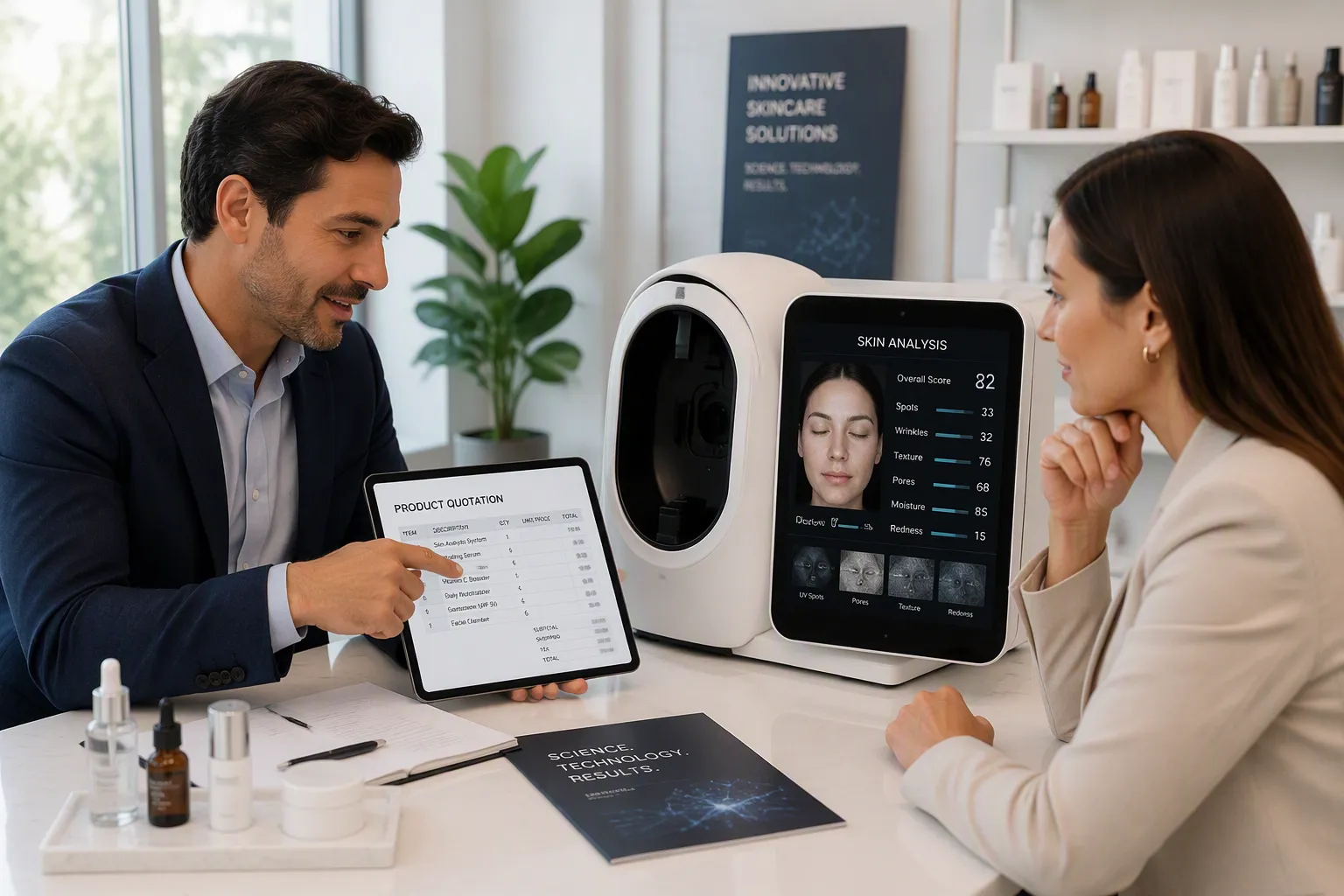
If you are a first-time buyer of a skin analysis machine, you might assume the manufacturer will force you to order a shipping container full of units. The reality is more nuanced. There is no universal MOQ for OEM orders — it varies by manufacturer and customization level. Software logo changes may need a low minimum. Housing or packaging customization often requires more. Always confirm the exact MOQ directly with each supplier.
Key Takeaways
●Stock models allow you to order as few as 1 to 5 units for testing.
●Custom branding or packaging raises the minimum order to 10 to 50 units.
●Full hardware changes like new molds require around 100 units or more.
Understanding MOQ for Skin Analysis Machines
Why Manufacturers Set Minimums
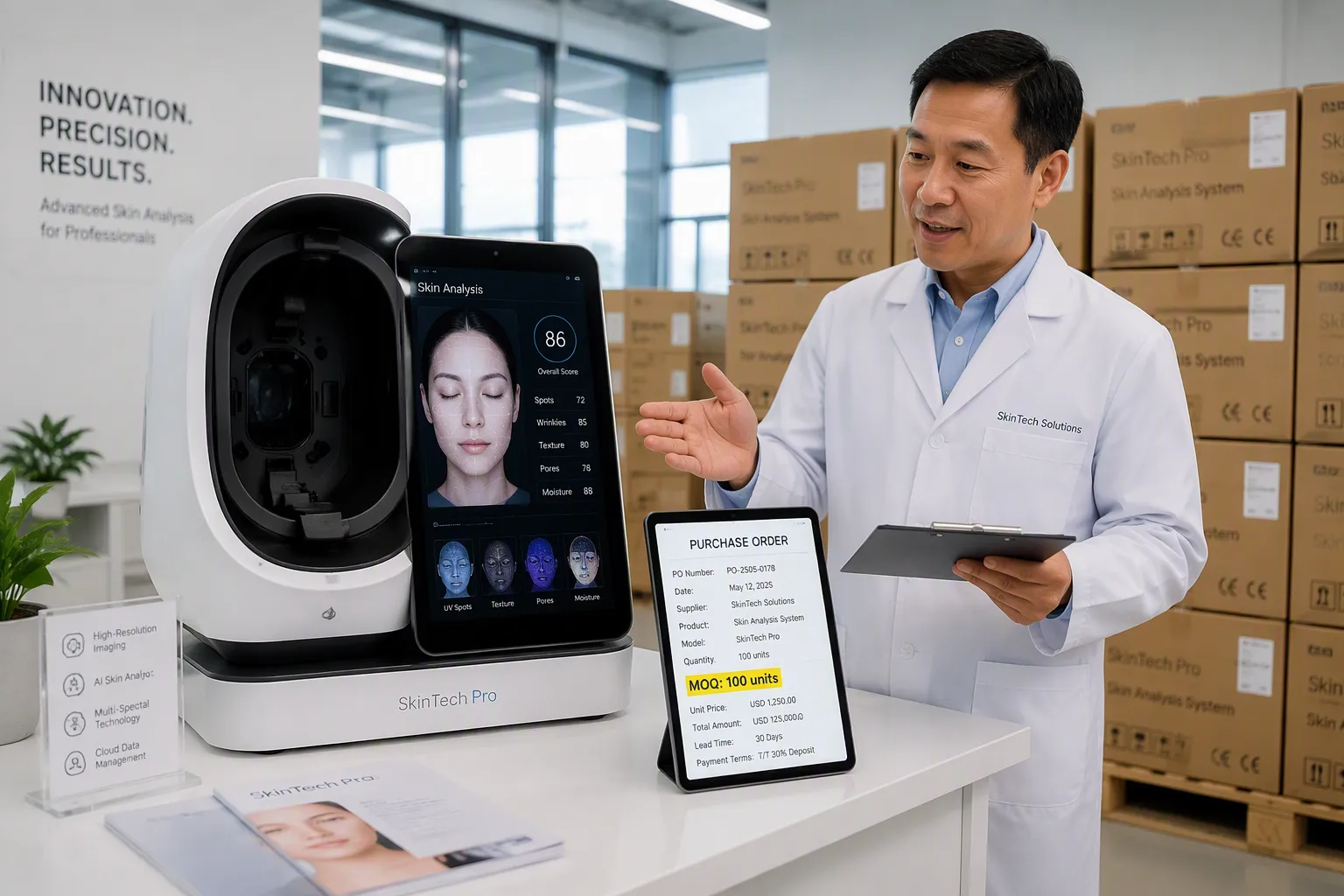
Manufacturers set minimums to cover production costs. When I build a skin analysis machine, I invest in tooling, calibration lines, and quality inspection. These setup expenses are significant. A small order cannot absorb them. By requesting a minimum quantity, I ensure my investment pays off. You receive a stable unit price because I spread those costs across more units.
Component suppliers also require minimum purchases. I cannot order just a few sensors or circuit boards. I must buy in bulk to keep prices low. Accepting micro-orders ties up factory capacity that could serve larger clients. The MOQ protects both parties. You get a fair price, and my factory operates efficiently.
Key Influencing Factors
Several factors shape the MOQ for any order. The product category matters first. Basic skin analysis machines with standard parts often carry lower minimums. High-end models need more careful assembly, so MOQ runs higher.
Customization level is the biggest factor. A simple logo change needs only software work. I can start with a single unit for that. Hardware changes, like a custom color, involve new paint processes. That raises the MOQ to around 100 units. A full exterior redesign requires entirely new molds, pushing it to around 300 units.
Factory stock availability also plays a role. If I have skin analysis machines already in stock, I can ship small quantities quickly. Production from scratch raises the MOQ due to setup overhead. Branding and packaging requirements, custom boxes or printed manuals, add to the minimum. Certifications for a skin analysis machine, like FDA or CE, may require batch testing, which increases lot size. Finally, supplier type matters. Some factories specialize in low MOQ for small clinics. Others focus on large OEM deals for established brands. Knowing which type you deal with helps set clear expectations.
Typical MOQ Ranges by Order Type
Stock Models and Low-MOQ Skin Analysis Machines (1–5 Units)
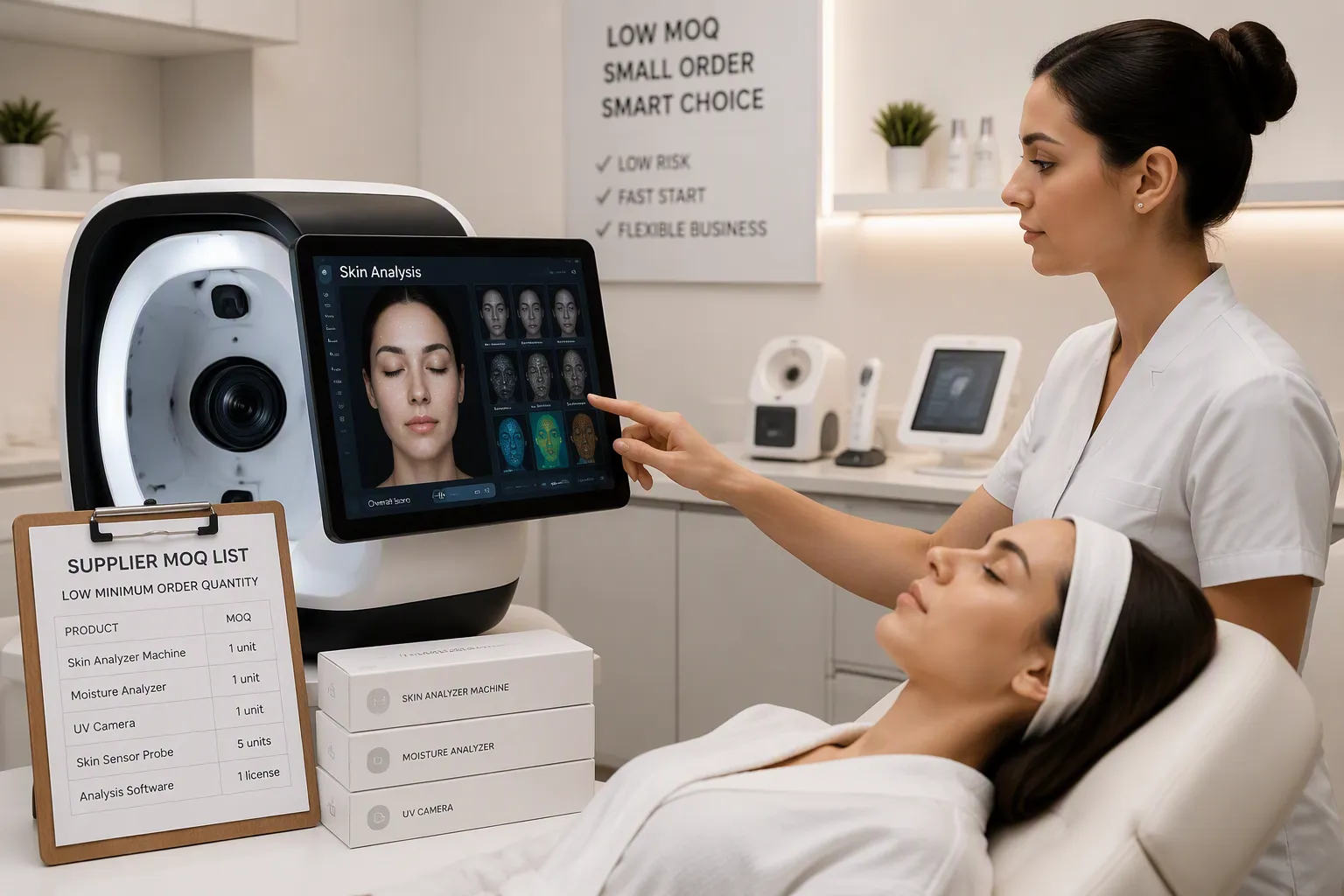
For a standard, unmodified skin analysis machine that sits in a manufacturer’s existing inventory, I often see MOQs as low as 1 to 5 units. This range suits buyers who want to test the market, acquire demonstration units, or equip a small clinic without a large financial commitment. Starting small reduces risk while still giving you a functional machine to evaluate.
I find that several suppliers specialize in low MOQ for these scenarios. The table below shows a few examples I have come across:
| Supplier | Product | MOQ | Certification |
|---|---|---|---|
| Ay Plus Beauty Equipment Co., Ltd. | Skin Analyzer (Facial Analysis) | 1 Set | CE |
| Beijing Vision Medical Technology Co., Ltd. | Digital Hair and Skin Analyzer | 1 Piece | CE, ISO |
| MX (OEM‑ready) | Skin Analysis Machine | 1 Unit | CE |
The MX model, for instance, carries a 10.1-inch screen, a 20-megapixel camera, and a 1-year warranty. It supports eight languages, including English, French, German, and Japanese. Some suppliers even list an initial MOQ of 0, which suggests they may provide free samples or negotiate very small batches for first-time clients.
When I work with in-stock models, the process stays simple. I do not need new tooling or lengthy setup. I order from existing inventory, which keeps costs low and delivery fast. This approach works perfectly for first-time buyers. You can place a small order, evaluate the machine’s performance in your real setting, and then decide on larger quantities later. I always recommend asking suppliers about sample ordering policies. Many are happy to accommodate small trial orders.
Custom Orders and Wholesale (10–100+ Units)
Once I move beyond stock models, the MOQ climbs significantly. If I require custom branding, private labeling, or custom packaging, the minimum typically falls between 10 and 50 units. Software UI tweaks, like adding new languages or adjusting the interface layout, also sit in this range. The factory needs to adjust production lines or printing processes, which justifies a higher minimum. This makes sense because every custom element demands dedicated setup work.
When I order a customized skin analysis machine with full hardware changes, such as a new housing design or custom molds, the benchmark MOQ rises to around 100 units per lot. Creating new molds involves significant upfront investment. The manufacturer spreads that cost across the order quantity. If the factory does not have the model in stock and must produce from scratch, the MOQ rises further. This situation is common for wholesale buyers who plan to distribute machines under their own brand.
I always encourage buyers to request a quote with their exact customization needs. That is the only way to get an accurate MOQ. Whether you need a single stock skin analysis machine for testing or a full wholesale batch, knowing your requirements upfront saves time and prevents surprises. Ask suppliers for sample ordering policies and be clear about your expectations from the start. Being specific about your customization level helps the manufacturer give you a realistic minimum from day one.
MOQ is not one-size-fits-all. Stock samples start at one unit. Fully customized OEM orders reach 100 or more. I advise starting small, testing the market, and growing. Customization, stock availability, and hardware changes push minimums up or down. Get quotes from multiple manufacturers. Specify your customization needs. Ask for a lower MOQ on a skin analysis machine.
FAQ
Can I order just one skin analysis machine for testing?
Yes. I often see stock models with MOQs of 1 to 5 units. This lets you evaluate performance before committing to a larger batch.
What pushes the MOQ higher?
Custom branding, private labeling, and packaging raise the minimum to 10–50 units. Hardware changes like new molds push it to around 100 units or more.
Do software changes require a large order?
No. A simple logo or UI tweak needs only software work. I can start with a single unit for that. Hardware changes drive the MOQ up.
Post time: Sep-10-2026


