


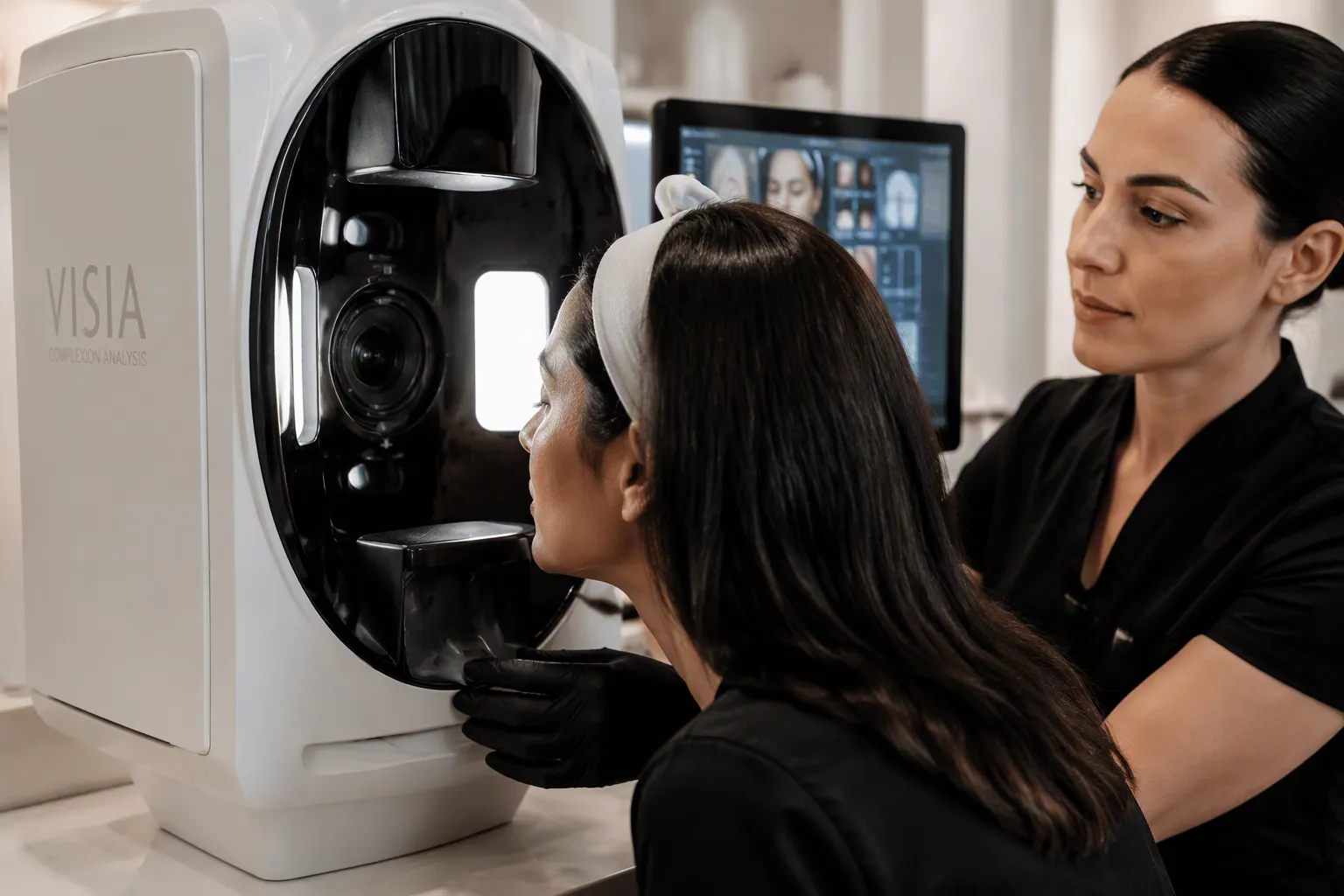
Finding a reliable 3D skin analyzer for your practice requires careful evaluation. I see many professionals choose devices based on brand recognition alone. That strategy leads to underwhelming results. True 3D skin analysis accuracy depends on specific technical features like imaging hardware and AI software. These components, along with user experience and support, determine real value. The right device delivers quantitative data. That data transforms client consultations and guides better treatment plans during every session. You need measurable insights, not just impressive marketing claims. A quality analyzer reveals conditions invisible to the naked eye. This capability elevates your professional credibility and improves client outcomes significantly.
Key Takeaways
●High-resolution imaging captures fine details for accurate skin analysis.
●Advanced lighting systems reveal both surface and hidden skin conditions.
●AI-powered software turns images into measurable data for better treatment plans.
●User-friendly interfaces and secure data storage streamline your workflow.
●Check brand reputation, support, and compliance before you buy a device.
Core Imaging for 3D Skin Analysis
The imaging hardware determines everything that follows. I have tested analyzers across price ranges, and the reliable ones share two traits: extreme resolution and intelligent lighting. Without these, even the smartest AI produces garbage data.
High-Resolution Imaging
Resolution dictates how much detail the camera sees. Industry-leading devices now feature high-resolution imaging, with at least 10-megapixel sensors. That level of clarity reveals fine lines, open pores, and subtle texture changes that lower-resolution cameras blur into nothing.
I first saw images at this resolution during a product demo. Small dehydration lines appeared that I had missed with my previous device. Tiny comedones looked like normal pores under standard lighting but showed clearly here. That detail matters because minor surface irregularities often point to deeper issues.
High-resolution capture also supports accurate progress tracking. When I compare two scans from different months, I need enough detail to measure real change. A high-resolution image gives me that confidence. I can zoom into specific areas without losing sharpness.
For accurate 3D skin analysis, this resolution lets the software reconstruct dimensional data properly. The AI needs clean, detailed input to calculate volume, depth, and area. Low-resolution images produce unreliable models that mislead my treatment decisions.
Advanced Lighting Systems
Lighting matters as much as resolution for thorough 3D skin analysis. Different skin conditions reveal themselves under different light types. No single source can show everything.
Devices with advanced lighting systems provide consistent bright illumination. This technology captures clear images even on darker skin with more melanin. Standard lighting shows surface texture and visible pores. Cross-polarized lighting removes glare to reveal subsurface pigmentation and redness. UV lighting reveals hidden pigment spots beneath the epidermis and sun damage invisible under normal light.
True UV lighting specifically catches these hidden conditions. Many devices claim UV capability but use weak LEDs that produce unreliable results. Professional systems use dedicated UV sources that match clinical wave-lengths for accurate detection.
I capture all three lighting modes during every session. Standard, cross-polarized, and UV together create a complete picture. This combination transforms a basic check into a thorough assessment that guides precise treatments.
AI and Software Capabilities
The software transforms raw images into actionable clinical data. I evaluate AI performance by how many parameters it measures and how accurately it measures them.
Key Skin Parameters
A capable system evaluates pores, pigmentation, wrinkles, hydration, oil levels, redness, texture, elasticity, and hidden conditions. Clinical evaluations confirm significant age-related reductions in skin elasticity, firmness, and density. The same studies show increased wrinkles and decreased plumpness. These findings validate what I see in my practice every day.
The AI detection accuracy varies by measurement type and image quality. I reviewed comparative data on hydration and transepidermal water loss prediction:
| Measurement | Image Type | R² Value |
|---|---|---|
| TEWL | Selfie | 0.264 |
| Skin Hydration | Selfie | 0.205 |
| TEWL | VISIA | 0.348 |
| Skin Hydration | VISIA | 0.263 |
Controlled lighting and consistent face orientation produce better results. The Corneometer remains the standard for hydration assessment through capacitance changes. AI prediction of hydration is less accurate than TEWL prediction. This gap relates to hydration’s weaker correlation with skin texture.
For hidden damage, the system uses 365nm ultraviolet light to reveal pigment spots beneath the epidermis. This exposes melanin distribution and subsurface damage before it reaches the surface.
3D-measured glabellar depth shows moderate positive correlations with clinician-rated severity (r = 0.5327) and participant-reported severity (r = 0.5855).
Automated Reporting Features
A strong report includes quantitative images, model patterns, data graphs, and multi-dimensional graphs. I look for these specific data elements:
●Pigmentation irregularity, including pigment density and distribution
●Radiance and dullness, or skin tone evenness
●Wrinkle depth and fold depth
●Surface texture and local texture variation
●Elasticity, related to firmness
●Erythema distribution
●Shadow mapping for skin glow assessment
●A composite index like the Skin Quality Index that aggregates metrics into a standardized score
A professional-grade 3D skin analyzer with high-resolution imaging and AI smart facial analysis handles these tasks well. This configuration supports detailed 3D skin analysis across all parameters.
User Experience and Data Management
Ease of Use for Professionals
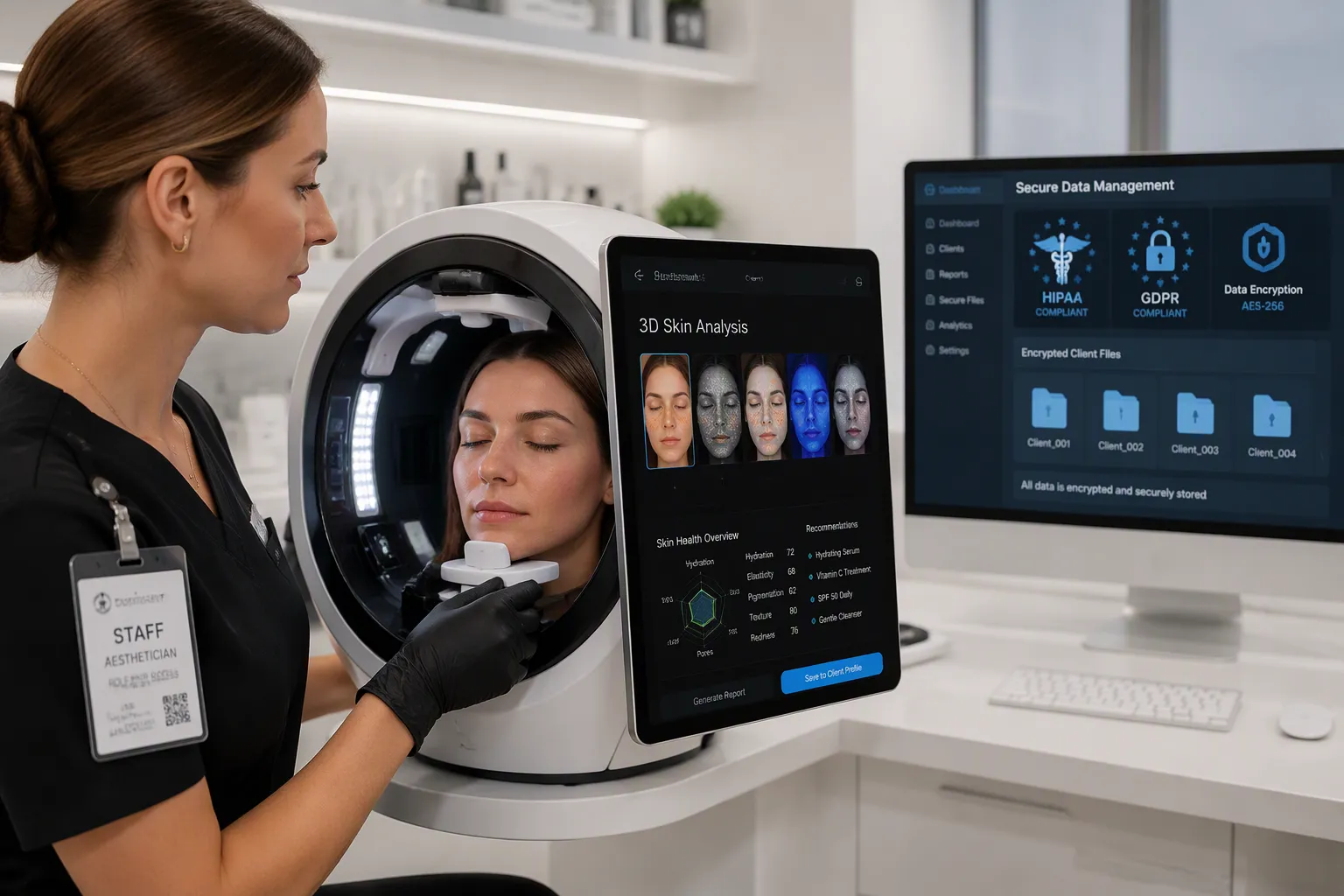
Several interface features reduce training time for my staff. Guided positioning standardizes every capture. My team produces comparable before-and-after images without extensive coaching. One-sequence multi-angle capture lets me complete all shots in a single flow. I avoid repeated trial-and-error learning with this approach.
Role-based accounts help my multi-operator clinic function smoothly. I assign specific tasks to different staff members. Each person learns only their portion of the system instead of the full interface. Video training built into the software provides onboarding for new estheticians. I shorten the learning curve substantially with these resources.
The rapid reporting workflow shortens the time from capture to client-ready results. My team spends less practice time learning to deliver professional reports. This efficiency keeps appointments running on schedule.
Ergonomics and usability matter: weight, handle design, screen visibility, and calibration requirements all affect consultation speed. A clunky interface slows down consultations. Interpreting results correctly requires training.
Secure Data Storage and Integration
Facial scans qualify as sensitive biometric data. Storage protocols require careful assessment. I evaluate whether a device uses local storage or cloud storage. Local storage keeps data offline and generally secure. Cloud storage allows convenient multi-room access across the clinic.
The device must comply with regional patient privacy regulations. HIPAA and GDPR compliance are non-negotiable requirements for my practice. Patient skin analysis data stores automatically in a cloud-connected system. This creates a permanent searchable record accessible from any device. Patient data gets encrypted and stored securely. The storage meets privacy and compliance standards.
Integration with electronic health records streamlines my clinical workflow. Enhanced data integration capabilities with EHR and AI platforms improve access to patient data. Seamless EHR integration enables longitudinal tracking of skin health. This setup supports continuity of care and more efficient clinical decision-making during each visit. Multi-spectral imaging platforms from companies like Canfield Scientific and VISIA demonstrate successful EHR integration. I rely on these features to document client progress across multiple sessions.
Practical Buying Considerations
Brand Reputation and Reliability
I evaluate brand reputation through evidence, not marketing. A manufacturer like Meicet earns trust when its devices perform consistently in real clinical settings. I ask for peer-reviewed studies that validate the device’s accuracy. A brand without published research raises a red flag for me.
Reliability testing matters enormously. Both inter-observer and intra-observer reliability should be tested, with an ICC of at least 0.8. The device must detect measurable changes that correlate with clinical results assessed by practitioners or subjects. Reproducibility, responsiveness, and interpretability are critical aspects for a device to be considered valid and reliable.
I also check regulatory status. FDA clearance or CE marking as a Class I or II device confirms the manufacturer met basic safety and efficacy standards. During demos, I ask specific questions about diagnostic capabilities, data storage, maintenance requirements, handling of different skin conditions, and real-time feedback. A manufacturer who refuses a trial period or makes exaggerated efficacy claims does not earn my business.
Cost, Support, and Training
The purchase price represents only part of the total cost of ownership. I calculate ongoing expenses before committing to any device. A warranty of at least one year provides baseline protection. Remote troubleshooting and local technician availability reduce downtime when problems arise.
Support packages should cover regular calibration and setup support, software updates, and data migration. Staff training and technician training keep my team proficient. I confirm spare part availability and cleaning requirements upfront. A self-sanitizing camera with Violeds sanitation reduces manual cleaning needs and saves my staff time.
Scalability and upgradability protect my investment. I evaluate compatibility with existing systems and seamless integration with data management software. Software updates, modular components, and AI integration future-proof the device. An intuitive interface and retractable hood streamline workflow and maintenance. These features matter for busy clinics where every minute counts.
I look for four things in any professional analyzer. High-resolution imaging captures fine detail. Multi-spectral and UV lighting expose surface and hidden conditions. AI-powered analysis turns images into measurable data. Robust data management keeps client records secure and accessible.
A device with these features delivers accurate 3D skin analysis. It also strengthens your professional credibility. Clients trust results they can see and measure.
Use this outline as your checklist during research and demos. Ask specific questions about resolution, lighting modes, AI parameters, and data integration. The right technology elevates your skincare services. It improves client outcomes and builds lasting trust in your expertise.
FAQ
How much resolution do I really need in a 3D skin analyzer?
I treat resolution as the foundation of every measurement. Industry-leading devices feature high-resolution imaging, such as at least 10-megapixel sensors. That detail lets the software reconstruct dimensional data properly. Lower-resolution images blur fine lines and open pores. The AI then builds unreliable models. I always demo a device at full resolution before I buy.
Why does a 3D skin analyzer need UV lighting?
UV lighting exposes what normal light hides. A 365nm ultraviolet source reveals hidden pigment spots beneath the epidermis and sun damage beneath the surface. Standard lighting only shows surface texture. Cross-polarized lighting removes glare to expose subsurface redness and pigment. I capture all three modes in every session. Together they create a complete assessment.
Can AI skin analysis replace a trained esthetician?
No. I use AI as a measurement tool, not a diagnostician. The software predicts hydration and transepidermal water loss with limited accuracy. The Corneometer remains the standard for hydration assessment. AI prediction of hydration is weaker than TEWL prediction. I interpret every report myself and combine the data with what I see and hear from the client.
What should I check before signing a purchase contract?
I confirm four things. First, a warranty of at least one year. Second, support that covers calibration, software updates, and data migration. Third, staff training for my whole team. Fourth, HIPAA and GDPR compliance for facial scan storage. I also ask for a trial period. A manufacturer who refuses one does not earn my business.
How do I know a device is reliable enough for clinical use?
I look for published research and reliability testing. Both inter-observer and intra-observer reliability should be tested, with an ICC of at least 0.8. The device must detect changes that correlate with clinical results. FDA clearance or CE marking as a Class I or II device confirms basic safety and efficacy standards. Marketing claims alone never convince me.
Post time: Sep-28-2026


