


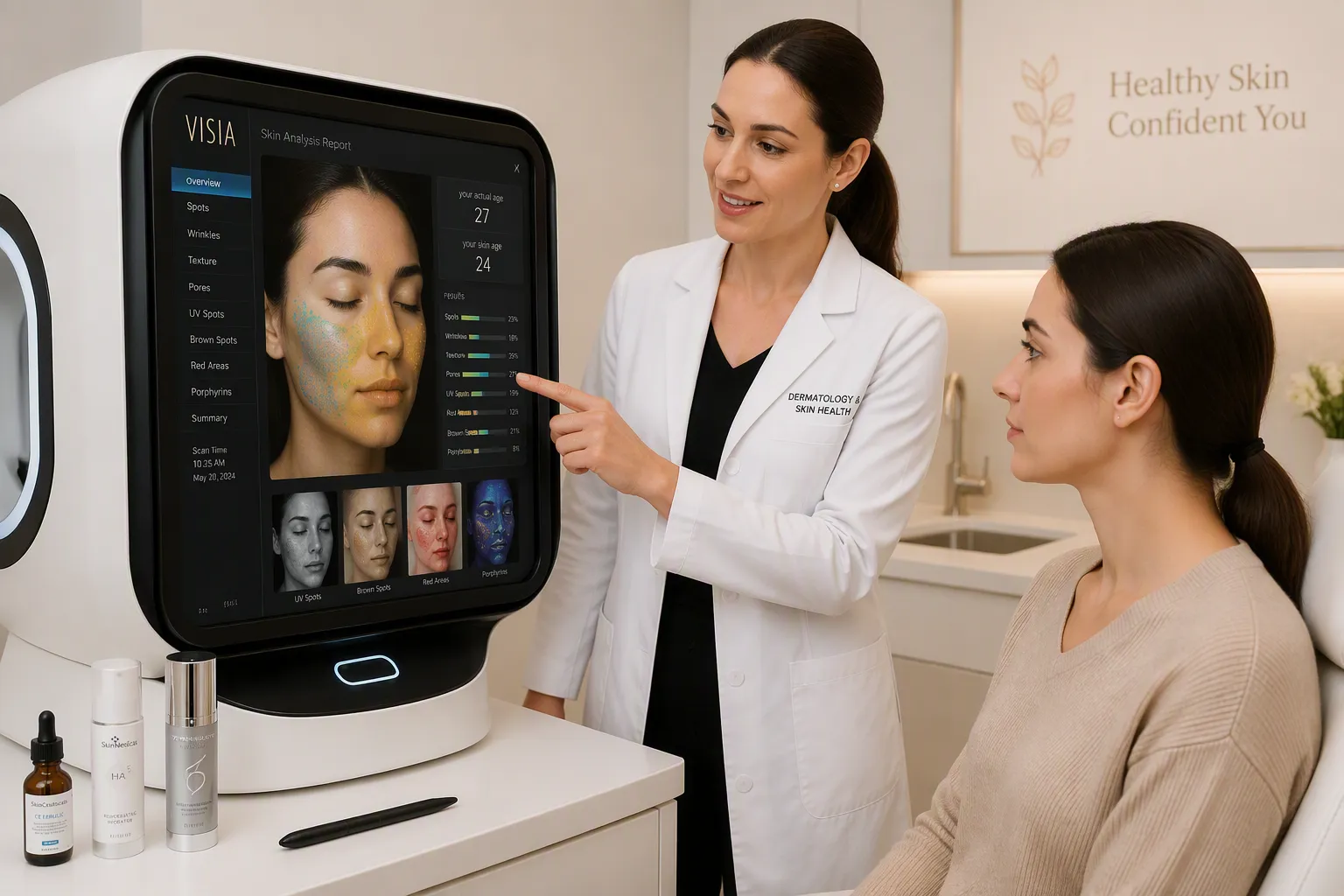
I watch clinic owners hesitate when I pitch new equipment. They fear wasting money. A skin analysis machine changes that conversation. It builds instant credibility. Recent surveys show 62% of consumers are interested in or already use AI for skincare or bodycare advice. Another 74% believe AI could make bodycare routines easier or more effective. This technology transforms skepticism into sales. I use these statistics to open doors. The right device positions my portfolio as forward-thinking.
Key Takeaways
●Choose a skin analysis machine with UV and cross-polarized light. These features capture deep skin details.
●Match the machine to your clinic type. High-volume clinics need fast payback and easy use.
●Invest in vendor training and support. This ensures staff can use the machine correctly.
Evaluating Key Features of a Skin Analysis Machine
Imaging Technology and Resolution
The imaging technology inside a skin analysis machine determines what you can actually see and show to a client. Standard visible light captures surface-level details. UV light goes deeper. It emphasizes pigment spots through melanin absorption, making it a minimally invasive and accurate method for detecting pigmentary disorders and early UV damage. Standard visible-light imaging alone cannot identify these early pathological signs.
Cross-polarized light offers another layer of insight. It uses a special lens group to weaken direct reflected light. This allows clear observation of uneven skin color beneath the epidermis. I can show a client hidden microvascular structures under their shiny skin. Sensitive skin features become more obvious. Irregular subsurface features become visible. This technology improves diagnostic accuracy for vascular structures, pigmentation, and lesion borders.
Camera resolution matters, but not as the starting point. Consistent lighting, head positioning, camera distance, and exposure matter more for longitudinal comparison. Even an 8MP+ camera will fail clinically if capture conditions vary between visits. The AI may compare lighting differences rather than actual skin changes. For capturing detailed skin lesion images, 5MP is the minimum recommended resolution. For optimal quality, 8MP or higher preserves finer details. Higher megapixels alone do not guarantee superior image quality. Sensor size, lens quality, and image processing also matter.
Clinics seeking a complete consultation system prefer broader multi-spectrum analysis over basic photo-only capture. A desktop system combined with a handheld microscopic analyzer offers versatility beyond a fixed-position setup. The best machines support repeat scans and comparable reports to demonstrate treatment efficacy over time.
AI Analysis and Report Clarity
AI analysis transforms raw images into actionable insights. AI-driven analyzers can achieve up to 90% accuracy in identifying hyperpigmentation. For pigmentation detection, new imaging systems show significant correlations with traditional methods. The B2 parameter shows a correlation of 0.4314, and the B1 parameter shows 0.4900. Full-face analysis correlations range from 0.3149 to 0.3995. These numbers help me explain why a clinic owner should trust the machine.
Report clarity directly impacts client understanding and treatment acceptance. Therapist Liliana Palacios states:
A lot of my clients love the functionality where I can send them a summary of what we addressed during the session, and they find it very helpful and enlightening.
Clear written summaries engage clients. They prompt reflection and better understanding of treatment content.
Clinics evaluate AI report quality using two key metrics: precision and consistency. Precision means the AI measures the same parameters at baseline, week 4, week 8, and endpoint with the same accuracy. Consistency means the same algorithmic model produces the same scores for the same image regardless of who runs the study or when.
Quality reports include quantified measurements across 15 advanced parameters. Pore count per square centimeter. Spot area percentage. Wrinkle depth in pixels. Continuous 0-100 scores capture variation invisible to simple grading scales. Parameters include Acne Inflammation, Deep Lines, Fine Lines, Enlarged Pores, Freckles, Melasma, Sun Spots, Nasolabial Wrinkles, and Irritation. Spatial heatmaps show the precise location of each skin condition. Before-and-after delta calculations provide parameter-level change across timepoints. These features help clinics justify treatment recommendations.
User-friendliness remains vital. An intuitive interface enables quick operation and reduces errors during use. Clinics value this to avoid workflow disruptions. When I present a skin analysis machine to a potential buyer, I emphasize how easy it is to integrate into their existing consultation process. The machine should help the team use it regularly, not just impress on paper.
Matching the Skin Analysis Machine to Your Business Model
Training and Workflow Integration
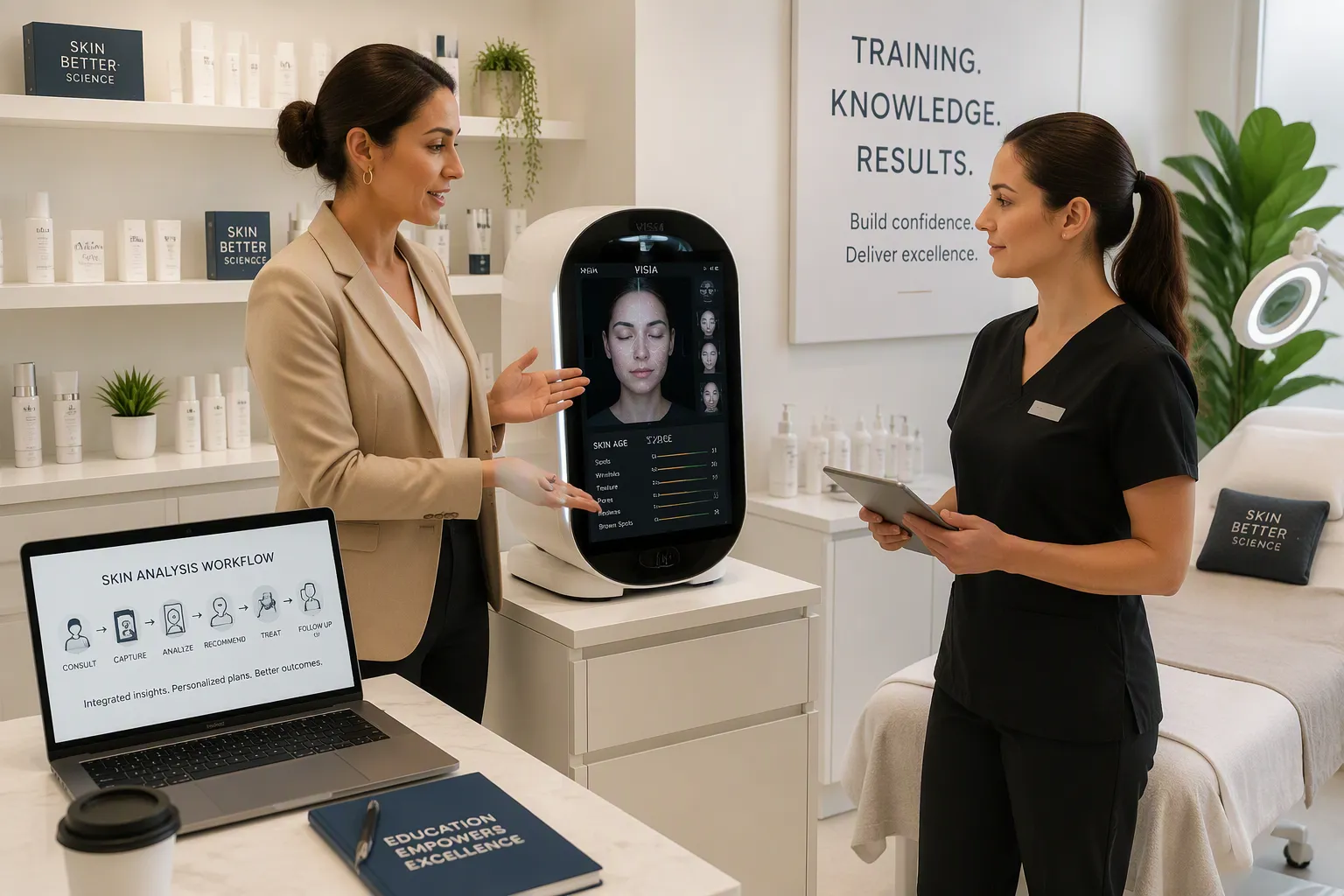
I have watched clinic owners regret a purchase because training was weak and support was slow. The best hardware fails without proper onboarding. Training durations range from 90 minutes to several months. Even brief sessions of 1-2 days improve accuracy. I ask every vendor about their training formats before I commit.
Live sessions, recorded videos, and written documentation each serve different staff members. New hires need a clear onboarding path. I want to know how long it takes a fresh aesthetician to run their first scan confidently. Troubleshooting methods matter too. Does the vendor offer chat, ticket, remote access, or on-site visits? Slow support creates operational downtime that costs my clients money.
When the diagnostic and treatment platforms come from the same certified manufacturer, a clinic gets one consistent quality benchmark, one training relationship, and one after-sales support channel across the full workflow — rather than managing two separate vendor relationships with potentially different certification levels and support standards.
I look for manufacturers with wider portfolios. They simplify training across modalities. Staff learn one ecosystem instead of juggling multiple interfaces. This reduces errors and boosts consistency across team members.
Workflow integration presents several common challenges. Staff may resist new routines. Clients might hesitate with unfamiliar technology. Data privacy concerns require transparent consent processes. Small workflow changes disrupt existing appointment protocols. I address these issues during the sales conversation, not after installation.
Shortlisting by Business Model and ROI
Different clients need different devices. High-volume med spas want user-friendly, high-throughput machines that optimize quick cash-pay service cycles. Boutique clinics prefer premium diagnostic lines backed by clinical data. Hospitals require institutional tenders and long-term service contracts. I segment my portfolio accordingly.
The cost structure varies dramatically between options. Traditional hardware devices range from $5,000 to $25,000 upfront. Service contracts, calibration, and consumables add recurring expenses. Payback periods stretch 12-24 months. Software-only solutions eliminate upfront capital but carry annual subscription fees around $899.85 per year. A software model breaks even with just one additional $75 add-on treatment per month.
| Business Model | Primary ROI Driver | Key Mechanism |
|---|---|---|
| Independent clinics | Device pays for itself via conversion & rebooking | Single scan turns verbal advice into visual report; anchors treatment & homecare sales; supports rebooking path |
| Multi-location chains / Franchises | Efficiency & consistency across locations | Centralized cloud dashboard for usage tracking; standardized report templates; API integration with CRM/POS for cross-location data comparison |
I present concrete ROI metrics to potential buyers. Capital expenditures for advanced systems run $8,000-$60,000 or more. Add 10-20% annually for service and software. Payback periods span 6-24 months depending on volume and upsell success. Throughput gains reach 20-50% more daily clients. Assessment time drops by 40-70%. Each upsell generates roughly $120 incremental profit. Eight additional upsells per week creates $46,080 in annual gross profit.
Franchises and multi-location operators need consistent output across devices. Look for vendor capabilities for centralized device configuration, batch software updates, and cloud dashboards that consolidate metrics across sites. This consistency directly impacts ROI by enabling standardized operations and reducing training overhead across locations.
I also compare 2D versus 3D analyzers. 2D systems capture surface conditions with multi-spectrum imaging. 3D systems add volumetric data for deeper structural analysis. The choice depends on treatment focus. A clinic specializing in injectables benefits from 3D visualization. A med spa focused on surface rejuvenation performs well with a quality 2D system. I match the skin analysis machine to the actual treatments my client offers.
Ongoing vendor support determines long-term success. Regular software and AI updates prevent the machine from becoming outdated. Standardized assessment protocols increase staff productivity. Consistent diagnostic services build patient loyalty over time. I negotiate support terms before signing any distribution agreement.
I evaluate technical features first, then business fit. The right skin analysis machine solves one specific client pain point. With the AI skin analysis market growing at 16.18% CAGR through 2035, this decision matters now. Create your checklist, request demos from three vendors, and negotiate support terms. Start evaluating your next inventory addition with this framework and watch your clients’ confidence – and your sales – grow.
FAQ
What minimum camera resolution should I recommend to my clients?
I advise at least 5MP for detailed skin lesion images. 8MP or higher preserves finer details for optimal clinical analysis.
How long does staff training typically take for these devices?
Training ranges from 90 minutes to several months. Even brief 1-2 day sessions improve accuracy significantly for new operators.
What is the realistic payback period for a skin analysis machine?
I see payback periods from 6 to 24 months. Eight additional upsells per week creates roughly $46,080 in annual gross profit.
Post time: Sep-08-2026


