


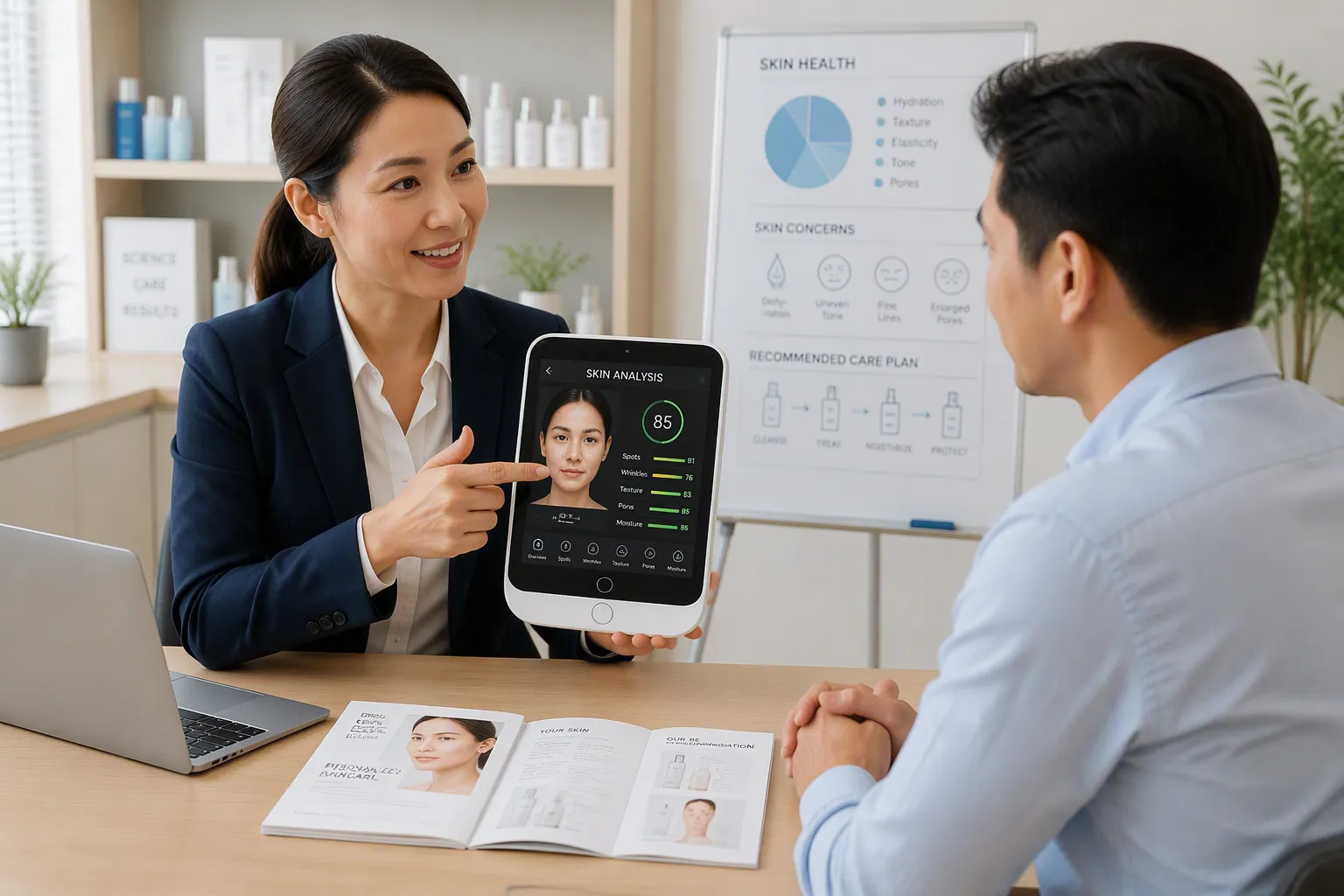
The global skin analysis market is expanding rapidly, with aesthetic practices adopting imaging technology at unprecedented rates. I understand the anxiety: investing thousands in equipment that underperforms or becomes obsolete threatens your bottom line. How do you evaluate a manufacturer to ensure your investment drives client trust and revenue? This guide examines technical specifications, cost analysis, and partnership factors. I’ll help you make a confident, informed decision.
Key Takeaways
●Choose a 3D imaging system with AI analysis for accurate skin assessments.
●Calculate total cost of ownership, including maintenance and software fees.
●Verify supplier certifications and request a live demo before buying.
Assessing Technology and Cost
Comparing Imaging Accuracy and AI Capabilities
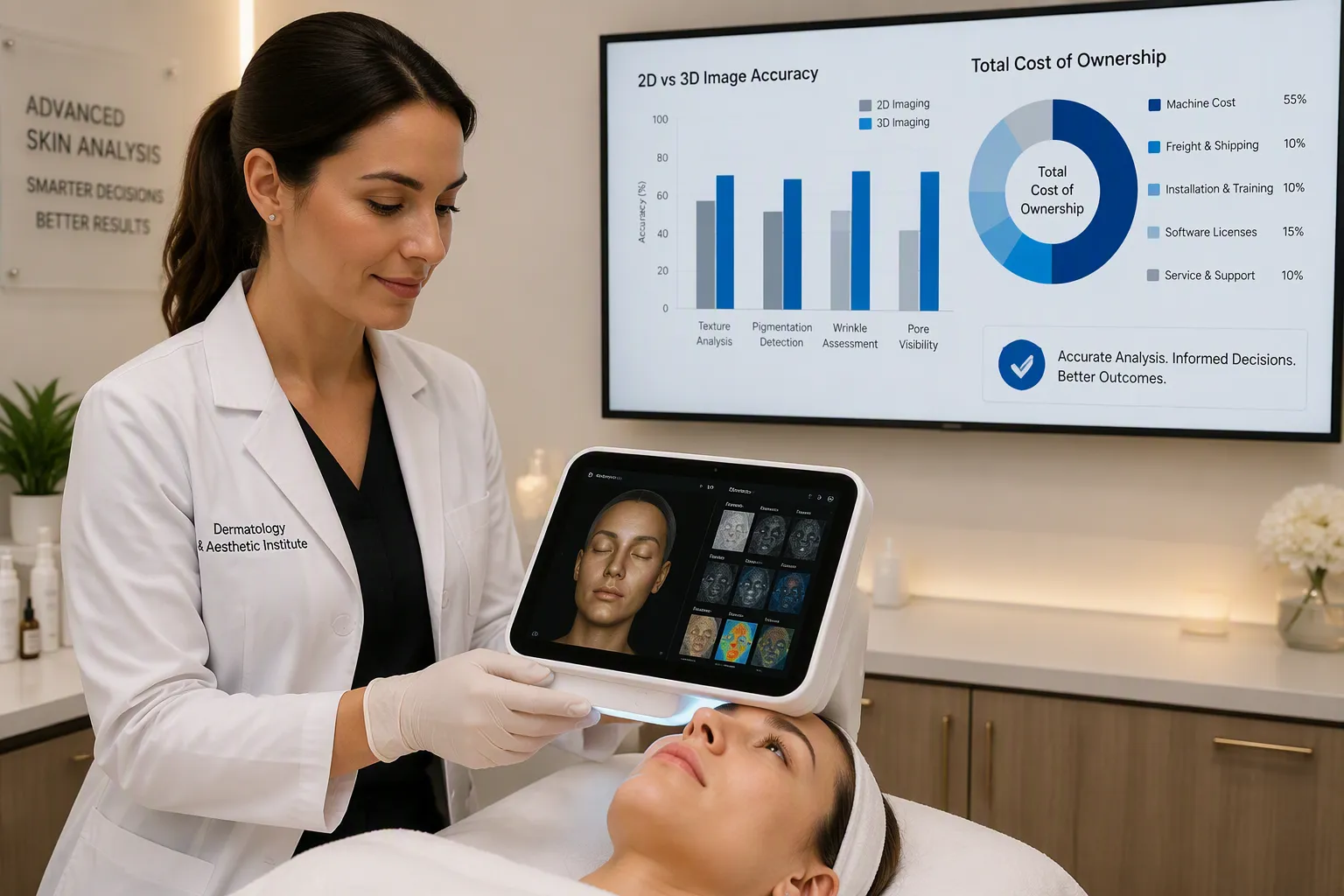
Image resolution determines what your device can actually see. A 2D camera captures a flat plane, which introduces errors from camera angle variations and reference sticker placement. I’ve seen practices struggle with inconsistent 2D results over time. 3D imaging solves this problem by capturing multiple synchronized images and using photogrammetry to reconstruct a true-to-life model. The accuracy difference matters clinically. Studies show 3D scanning achieves an average linear measurement error of 1.8%, while 2D photography reaches 3.3%. For facial assessments, 3D ratios sit closer to clinical standards, and observers report higher confidence with 3D in 82.2% of cases.
Spectral imaging adds another layer of diagnostic power. UV light reveals hidden pigmentation changes, porphyrin levels, and sun damage invisible under normal lighting. Polarized light reduces surface reflection to analyze redness, sensitive areas, and vascular conditions. RGB imaging captures visible surface characteristics like pores and wrinkles. A device that combines these modalities examines skin from the epidermis to the dermis, giving you a complete clinical picture.
AI algorithms transform raw images into actionable insights. The VISIA system validates its wrinkle algorithm against a large reference database, with 86% of users agreeing the analysis improves their understanding of skin health. The Antera 3D system demonstrates instrumental error below 2% in controlled tests on artificial skin samples. These validations matter because your clinical credibility depends on accurate, reproducible measurements. A manufacturer that publishes validation data shows confidence in its technology.
Calculating Total Cost of Ownership and ROI
The purchase price represents only the beginning. I break down total cost of ownership into several components: machine cost, freight, optional hardware, software licenses, cloud storage, API integration, training, maintenance, and updates. A machine costing $2,000 with first-year software, training, and maintenance adding $500 brings your total investment to $2,500. Hidden costs accumulate over five years. Recurring maintenance runs $1,000–$2,500 annually. Some leases impose per-scan penalties when you exceed monthly limits. Vendor-financed packages often bundle software upgrades that function as ongoing subscriptions.
AI-based systems shift the cost model from capital expenditure to operational expenditure. Traditional devices like VISIA require a ~$12,000 one-time purchase plus costly repairs. AI-based options use existing hardware with subscriptions from $199 monthly, including free automatic updates. AI analysis eliminates per-session costs that traditional manual analysis incurs at $50–$200+ per session. AI tools reduce consultation time by 20-40%, saving clinics $25,000–$60,000 annually through reduced redundant visits and optimized staff allocation. Practices report 20-40% increases in retail product attachment rates when visual diagnosis connects specific problems to clear solutions.
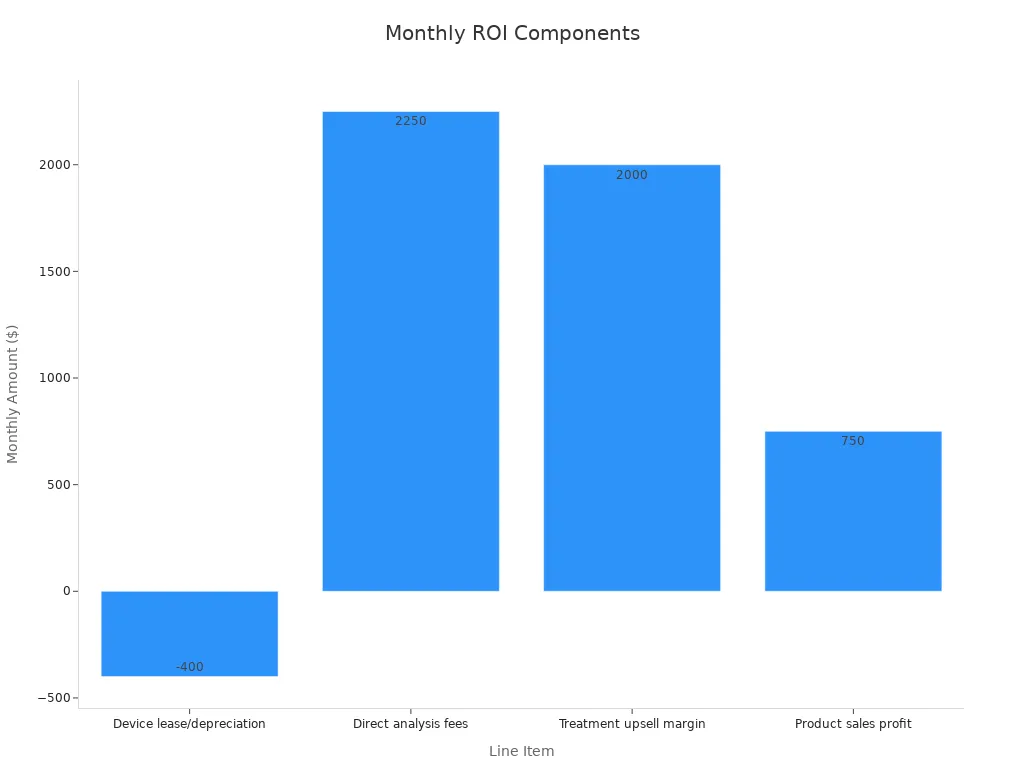
Consider this ROI model: device lease at $400 monthly, direct analysis fees of 3 scans daily at $30 across 25 days generating $2,250, treatment upsell margin adding $2,000, and product sales profit contributing $750. Your net monthly return reaches $4,600. Even a conservative model with modest weekly volume recovers purchase price in 1.8 months. The cheapest option rarely proves most cost-effective long-term. Evaluate the manufacturer’s reputation for software updates and support, because those factors determine whether your device retains value over years of service.
Vetting the Manufacturer and Support
Evaluating Manufacturer Certifications and Experience
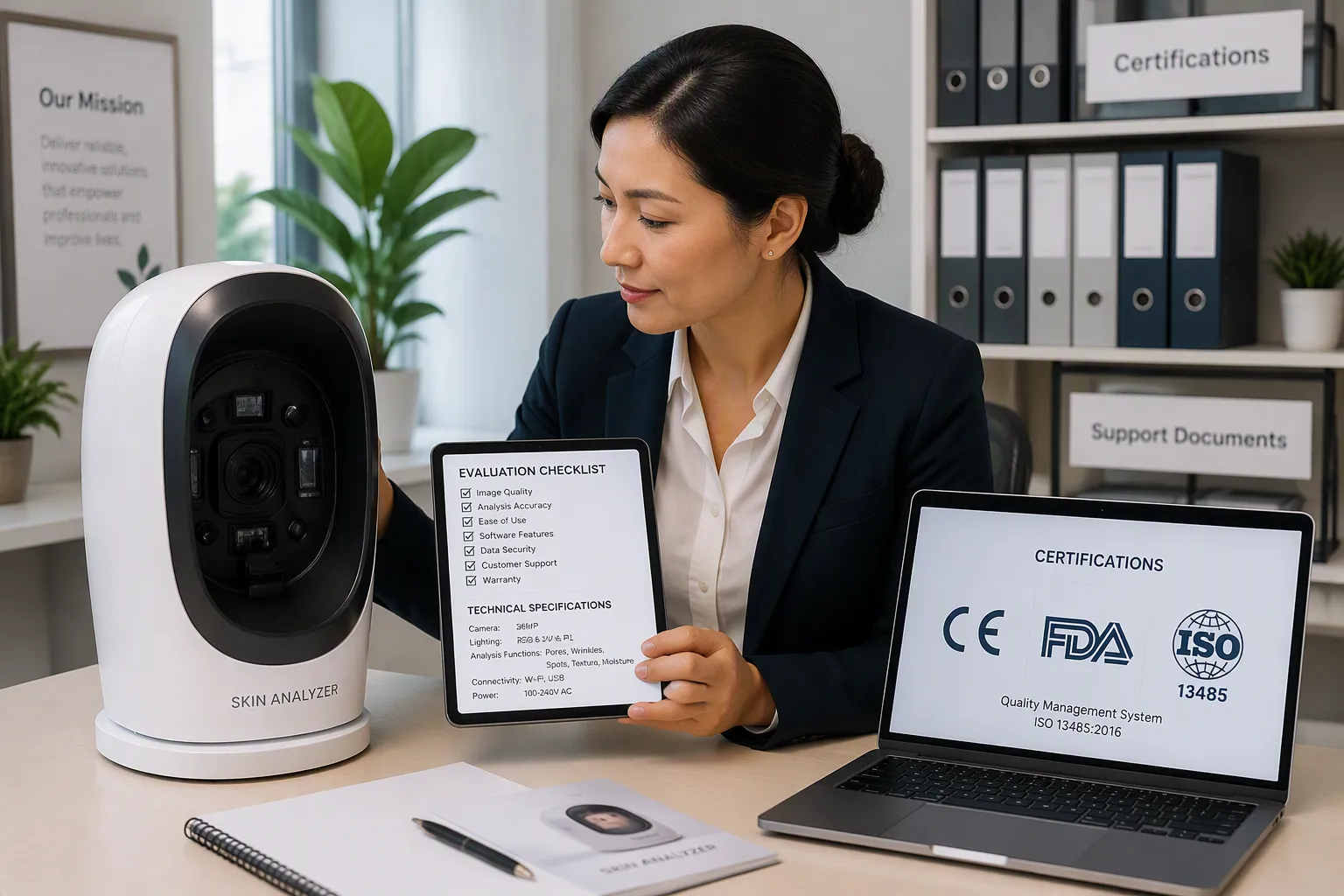
Certifications tell you whether a device can legally enter your market. The FDA does not require cosmetic manufacturers to register their establishments, but medical-grade devices need FDA clearance for U.S. sale. The European Union mandates CE marking under the Medical Device Regulation as a passport to market access. ISO 13485 signals systematic quality control, though it does not grant market entry by itself. I recommend checking each certification against your target region before signing anything.
Regulatory Compliance & Data Privacy (2026): Verify CE (MDR), FDA, or NMPA markings based on your target region to avoid customs seizures or legal liability. This is a non-negotiable step in the global procurement process.
A manufacturer with years in dermatology or aesthetics typically delivers more reliable software updates and hardware support. I look for published technical specifications, independent clinical backing, and authentic customer voices. Overly polished testimonials raise suspicion—real feedback includes both praise and criticism. Red flags include vague specs, impossible claims like “diagnose skin cancer,” and unclear update policies.
Support quality determines long-term value. I verify warranty terms cover lens calibration drifting and sensor failures. I confirm remote diagnostic support lets engineers fix software bugs instantly. I ask about software feature rollout frequency and whether cloud-based systems receive automatic AI improvements. A responsive manufacturer offers operator training, marketing support, and a global maintenance policy.
Matching Device Workflow to Your Business Model
Your workflow dictates the right device design. A high-volume spa prioritizes speed and portability. Staff run scans during intake without creating bottlenecks for walk-in clients. Portable systems let any team member with a tablet perform analysis anywhere in the facility. A medical clinic, however, needs advanced diagnostic features and EHR integration. Clinical-grade systems like VISIA offer validated, high-precision imaging for reproducible results. They also provide comprehensive patient charting that combines clinical notes with high-resolution images in one location.
| Workflow Requirement | Evaluation Question to Ask |
|---|---|
| Clinical relevance | Does the parameter set map directly to the treatment decisions your practice makes? |
| Operational simplicity | Can the system operate without a connected PC or network? |
| Client engagement | Is the integrated screen designed for shared client-facing review? |
| Data management | Does the system store records onboard or depend on external software? |
| Manufacturer support | What certifications does the manufacturer hold, and what does post-sale support look like? |
I ask these questions before purchasing. A system without a large integrated display requires separate screen setup for every consultation, adding friction. A device that depends on cloud services creates workflow interruptions when the network fails. The right manufacturer matches device capabilities to your operational reality, not just your clinical wishlist.
I weigh four pillars when choosing equipment: imaging accuracy, total cost, manufacturer credibility, and workflow fit. Create a scorecard ranking each factor against your business goals. Request a live demo and trial period before committing. Test the device in your environment. The right supplier becomes a strategic partner in your practice’s growth and client satisfaction.
FAQ
How do I verify a manufacturer’s AI accuracy claims?
I look for published validation data. The VISIA system reports 86% user agreement on its wrinkle algorithm. Independent clinical studies offer the best proof.
What hidden costs should I expect beyond the purchase price?
Recurring maintenance fees run $1,000 to $2,500 annually. Software licensing and per-scan penalties can also add unexpected expenses over time.
How quickly can I see ROI on a skin analyzer?
A conservative model recovers the purchase price in 1.8 months. Higher scan volumes accelerate this timeline considerably.
Post time: Aug-24-2026


