


I track skin analysis machine wholesale pricing closely. In 2026, entry-level units run $319-$1,399, mid-range models $2,399-$2,999, and high-end systems $20,000-$80,000. That demand shapes my costs, pricing, and ai skin analysis business planning.
Key Takeaways
●Skin analysis machines come in three price tiers: entry-level costs $200-$500, mid-range costs $899-$2,000, and high-end costs $7,000-$20,000.
●The total cost includes more than the machine price. Shipping, duties, and training can add 20-60% to your costs.
●The skin analyzer market is growing fast. This growth helps you earn back your investment quickly.
Wholesale Pricing by Machine Type
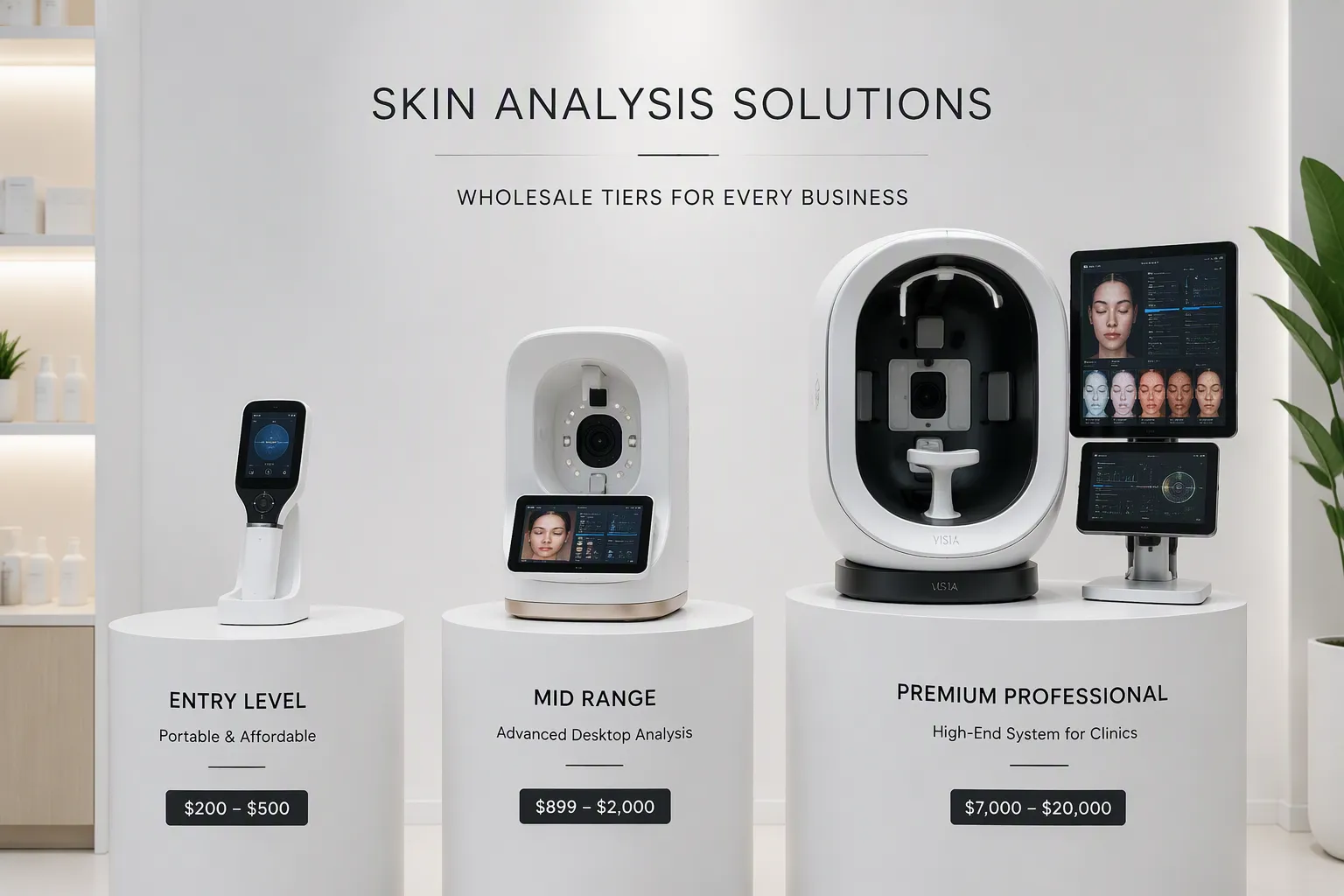
I group skin analysis machine wholesale pricing into three clear tiers. Each tier serves a different buyer, and each carries its own margin profile.
| Category | Wholesale Price Range |
|---|---|
| Entry-level and portable | $319-$1,399 |
| Mid-range | $2,399-$2,999 |
| High-end | $20,000-$80,000 |
Entry-Level and Portable Models
Entry-level units sit at the bottom of the price ladder. I see portable skin analysis tools listed from $319 for a high-definition skin and scalp analyzer. These devices handle basic imaging and suit salons testing the waters. A step up, the B3 AI Intelligent Skin Analyzer sells for $1,399 with 8-spectrum imaging and 19 facial problem detection. One portable model, the AM-680, carries a $850 base price with discounts at 5 and 20 units. It packs five-color spectral detection, Bluetooth, and CE certification. For distributors, these wholesale options keep initial outlay low. The trade-off is narrower diagnostic accuracy.
Advanced and AI-Powered Systems
Mid-range and high-end machines tell a different story. Professional AI skin analyzers typically range from about $2,399 for a solid 10-parameter 2D model to $2,999 for a high-resolution multi-spectrum system. The spread depends on camera resolution, spectrum count, and screen size. Professional clinic units can cost $20,000-$80,000. This skin analysis technology now leans on artificial intelligence in skin analyzers. Haut.AI, for instance, trains 94 algorithms on over 3 million images and reports 98% accuracy across all skin tones. That level of quality drives demand. App-based scanners run $59.99 to $899.85 per year, while hardware units reach $20,000-$80,000 upfront plus annual software fees. These advanced skin analyzers target clinics and medspas. A distributor’s pricing strategies must match the buyer’s budget and the machine’s capability. The skin analyzer industry rewards those who segment carefully.
Key Factors Affecting Costs

I look beyond the catalog number when evaluating costs for a skin analysis machine. Several hidden factors determine what I pay. Order volume and supplier relationships matter most, along with additional expenses.
Order Volume and Supplier Relationships
Volume shapes everything in wholesale. Larger orders earn better pricing from manufacturers. The skin analyzer wholesale market rewards consistent buyers. The skin analyzer industry runs on reliable partnerships. I negotiate using MOQ guarantees and lead-time agreements as bargaining chips. I leverage these commitments to secure favorable terms.
I invest time in relationships. I request factory audits and CE certification evidence. These documents confirm the skin analysis technology meets safety standards. They give me leverage during price discussions. The best deals come from trust, not haggling.
Quality matters more than the lowest price. A cheap machine that fails early incurs higher expenses in the long run. I weigh cost against functionality through careful evaluation. I match features to my budget. I verify the actual technology inside. A solid warranty adds peace of mind. Reliable skin analysis tools justify a higher upfront investment. Careful selection prevents expensive mistakes.
Supplier support services add value during negotiations. Training and commissioning do not raise my purchase price. Wholesale options combine imaging with treatment modules. Bundled packages increase my average transaction value. That gives room to negotiate lower per-unit pricing.
Additional Costs to Budget For
The factory list is only half the story. Total landed cost can be significantly higher than the factory price. I budget for shipping expenses, duties, insurance, and inland transport. Demand in the market shapes shipping rates during peak seasons.
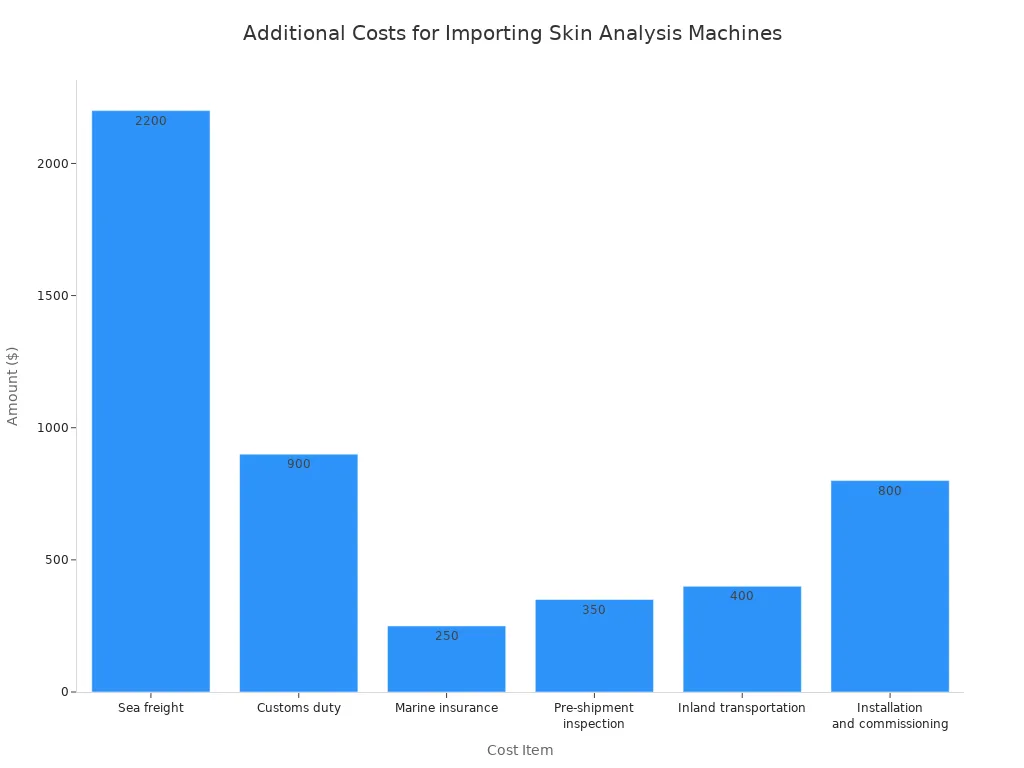
Hidden costs can catch me off guard. Port storage fees and customs delays add up quickly. I set aside money for pre-shipment inspection and operator training. Every missed cost reduces my margin. I include an after-sales reserve in my pricing strategies to cover spare parts and warranty support. Getting a complete picture protects my ai skin analysis business. AI skin analysis trends evolve quickly.
Skin Analyzer Wholesale Pricing and ROI
Financing and Leasing Options
I explore financing paths before committing to large wholesale orders. Equipment leasing spreads the cost across months. This approach preserves working capital for other business needs. Many manufacturers offer payment terms for qualified distributors. I negotiate extended terms when I place bulk orders. Some suppliers bundle training and support into the lease agreement. This reduces my upfront cash outlay.
Third-party financing companies specialize in medical and beauty equipment. They understand the skin analyzer industry and its revenue cycles. I compare rates across multiple lenders. A lower monthly payment improves my cash flow. I factor financing charges into my pricing strategies. The total cost of ownership matters more than the sticker price.
Calculating Potential ROI
I calculate ROI before I place any order. The formula is simple: ROI = (Net Profit / Investment) x 100. For cosmetic distribution, I include production, distribution, and marketing spend in the investment. I start by listing all cash outlays. These include purchase price, delivery, installation, training, and first-year software. Next, I define revenue per scan, set utilization assumptions, and apply a gross-margin factor. Then I compute annual net profit and payback period.
The skin analyzer industry’s growth strengthens my ROI projections. Strong demand for ai skin analysis and skin analysis technology drives repeat orders. I run sensitivity checks across low and high scenarios. This protects my business from optimistic assumptions.
I see three price tiers for a skin analysis machine: entry-level $319-$1,399, mid-range $2,399-$2,999, high-end $20,000-$80,000. Order volume and supplier choice cut costs most. Budget for shipping and training too. Request personalized quotes from several manufacturers to secure the best skin analyzer wholesale pricing.
FAQ
What is the average wholesale price for a skin analysis machine?
I see three tiers. Entry-level units cost $319-$1,399. Mid-range models run $2,399-$2,999. High-end systems reach $20,000-$80,000. Your order volume and chosen supplier shift these figures.
Do I need to budget beyond the unit price?
Yes. I add shipping, duties, insurance, inspection, and training. Total landed cost can run significantly above the factory price. I also reserve funds for after-sales support.
How does market growth affect my ROI?
The skin analyzer industry’s growth drives repeat orders. That growth supports faster payback on your investment.
Post time: Sep-10-2026


