


You’ve seen the ads—one sleek device promising to erase wrinkles, shrink pores, and sculpt your jawline. But is it magic or marketing? I understand the appeal for home users seeking convenience and professionals expanding services. This article examines costs, results, and practical use cases. The answer isn’t simple—it’s about matching the Beauty Machines to your specific needs.
Key Takeaways
●Multifunctional beauty machines offer convenience and long-term savings, but they require a real commitment to regular use.
●Match the device’s technologies to your specific skin concerns and budget, including ongoing costs for consumables.
●For best results, combine home devices with professional treatments; they maintain results but do not replace expert care.
What Are Multifunctional Beauty Machines?
A multifunctional beauty machine combines several treatment technologies into one device. You might find radio frequency (RF), ultrasonic cleansing, microcurrent, LED light therapy, vacuum suction, and cold hammer functions inside a single console. These units range from compact handhelds for home use to large salon systems offering up to 16 different treatments.
Core Technologies and Treatments
Manufacturers build these devices around distinct technologies. Aqua technology uses swirling water for deep pore cleansing and oil control. OxyGemeo™ generates tiny CO2 bubbles that burst to boost skin oxygenation. uCosmoX™ breaks down skincare products into smaller particles for better absorption. RF and EMS deliver adjustable energy for skin tightening, while ultrasound pushes nutrients deeper into the skin.
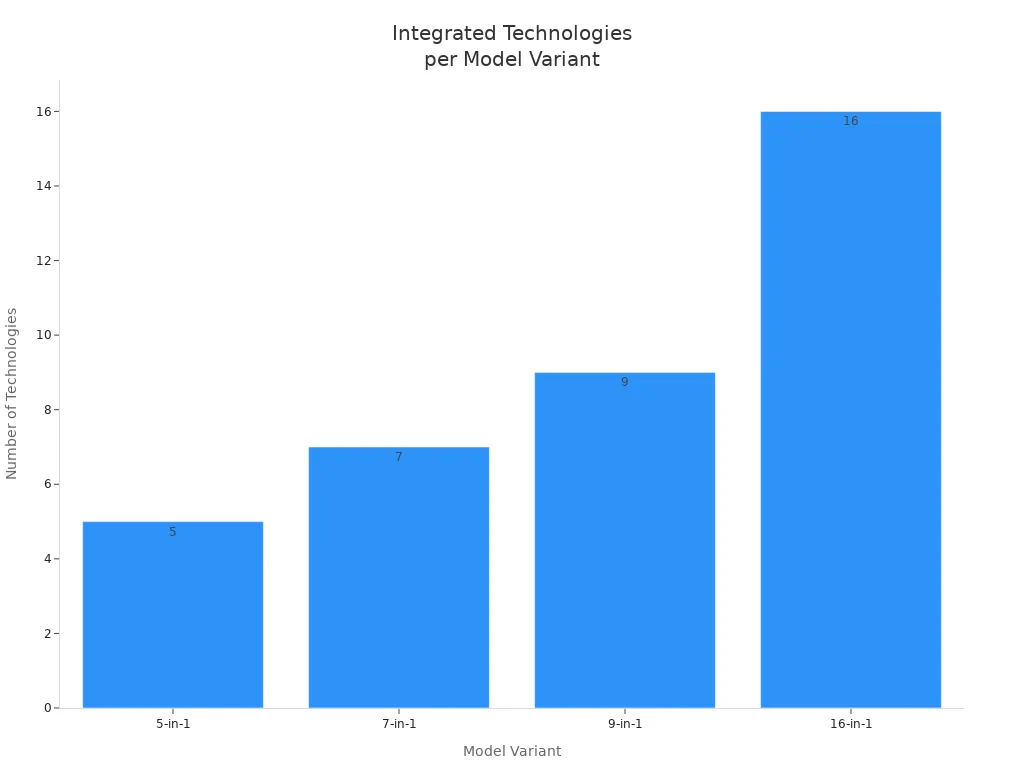
The table below shows how models vary in their integrated technologies:
| Model Variant | Integrated Technologies |
|---|---|
| 5-in-1 | RF, ultrasonic, microcurrent, vacuum suction, cold hammer |
| 7-in-1 | RF, microcurrent, LED light therapy, ultrasonic, mist spray, vacuum suction, cold hammer |
| 9-in-1 | Technologies not individually listed |
| 16-in-1 | Technologies not individually listed |
Clinical studies support RF efficacy. Fitzpatrick et al. found 83.2% periorbital improvement with monopolar RF. Hwang et al. reported 73.5% of patients saw improvement within two months using bipolar RF. Fractional RF reduced acne scar volume by 38% in one study.
Professional vs. At-Home Models
The price gap between categories is substantial. At-home portable oxygen facial machines typically cost $30 to $450. Professional units range from $1,000 to $6,000 or more. That difference reflects build quality, power output, and treatment versatility.
Professional Beauty Machines often include stronger energy settings and more handpieces. Home models prioritize safety with lower intensities and simpler interfaces. I recommend assessing your space, budget, and treatment goals before choosing either path.
The Upside: Convenience and Cost Savings
Cutting Down on Salon Visits
I see the most obvious benefit in the math of repeated salon visits. A single professional facial treatment can cost anywhere from $80 to $200, depending on your city and the spa’s reputation. If you book one treatment per month, you spend $960 to $2,400 annually. A quality home device costs less than that upfront, and you can use it as often as you like without booking an appointment.
Time savings matter just as much as money. I factor in travel time, waiting room delays, and the treatment itself. A salon visit easily consumes two hours of your afternoon. With a home unit, I can treat my face while watching television or reading. The convenience encourages consistency, and consistent use drives visible results.
Professional estheticians also benefit from consolidation. A single multifunctional console replaces several single-purpose machines that might occupy separate corners of a treatment room. This frees floor space for additional beds or retail displays. The reduced clutter also simplifies cleaning and maintenance routines.
Streamlining Your Skincare Routine
I find that multifunctional devices simplify my daily regimen. Instead of applying three different serums with three different tools, I use one device that cleanses, infuses product, and tones my skin in a single session. This streamlined approach reduces the time I spend on skincare from twenty minutes to about ten.
The integration also helps me maintain better habits. When I own fewer tools, I remember to use them more regularly. A device that sits on my countertop serves as a visual reminder. I no longer forget about a specialized wand tucked away in a drawer. This consistency translates into better skin health over time.
For professionals, the streamlined workflow means more clients per day. Switching between handpieces takes seconds, not the minutes required to move a client between separate machines. The efficiency boost directly improves revenue potential.
The Downside: Price, Learning Curve, and Commitment
The Initial Investment and Ongoing Costs
The upfront price tag often shocks first-time buyers. Professional-grade multifunctional units range from $1,000 to $6,000 or more. At-home models cost less, but quality portable devices still run between $200 and $450. I always remind shoppers that the purchase price tells only part of the story.
Many machines require consumables to function properly. Conductive gels, specialized serums, and replacement handpieces add recurring expenses. Some devices need new applicator tips every few months. I calculate these costs before committing to any system. A $300 device might demand $50 in supplies every quarter, which adds $200 to your annual budget.
Financing options exist for professionals. Some suppliers offer 0% installment plans that spread the cost over several months. This approach helps estheticians manage cash flow while building their service menu. Home users rarely access such terms, so they must save or pay in full.
The Risk of Inconsistent Use and Results
A device left in a drawer provides zero value. I see this pattern repeatedly with clients who purchase machines on impulse. They use the device enthusiastically for two weeks, then forget about it when life gets busy. The result? Wasted money and unchanged skin.
Results depend on regular, correct usage. Most protocols require sessions three to four times weekly, each lasting 10 to 15 minutes. Missing sessions breaks the treatment cycle and delays visible improvements. I advise buyers to honestly assess their daily routines before purchasing.
The learning curve also deserves attention. Initial certification training for professional machines spans from a few days up to one week. This period combines theoretical instruction with hands-on practice. Home users face a similar adjustment, though less formal. Many devices include an “Auto mode” that shortens the initial learning period. Manual mode demands deeper understanding and a longer adjustment time.
Before buying, ask yourself: “Will I commit to this routine for six months?” If the answer hesitates, reconsider the purchase.
Key Factors to Consider Before Purchasing
Before you spend money on any device, I want you to sit down with a piece of paper. Write your top three skin concerns. Be specific. Do you struggle with inflammatory acne along your jawline? Are fine lines around your eyes becoming more noticeable? Does your complexion look dull no matter how much water you drink? Your list becomes your shopping guide.
Matching the Machine to Your Skin Type and Goals
Each technology inside a multifunctional unit targets different problems. For acne-prone skin, I look for devices that include blue LED light around 415 nm. That specific wavelength kills Propionibacterium acnes by exciting porphyrins the bacteria produce, generating singlet oxygen for non-drug sterilization. High-frequency therapy with neon or argon electrodes also works well for breakouts. It kills bacteria, reduces inflammation, and accelerates healing while improving blood circulation.
For anti-aging goals, I check the device’s light modes and energy settings. The table below shows what I expect from quality machines:
| Device | Recommended Anti-Aging Settings |
|---|---|
| RF LED Microcurrent Lift Device | Multiple light modes, adjustable intensity levels, RF thermal energy, LED light, EMS/microcurrent stimulation |
| 360° LED Lift & Sculpt | Red LED (elasticity), Blue LED (calm skin), Purple LED (balance), microcurrent EMS, thermal therapy, adjustable intensity |
| GlowUp LED 360° Light Wand | LED light therapy, gentle microcurrent, adjustable treatment modes, touch sensors |
I also evaluate the device’s overall design and usability. Look for intuitive controls that reduce frustration, especially if you are new to these tools. Compact, travel-friendly units fit into bags more easily, which means you will actually use them on trips. Most importantly, verify that the underlying technology delivers on its claims. Some products fail to meet their marketing promises, so I read clinical studies and customer reviews before I trust any brand.
Certifications matter too. Devices lacking proper safety certifications risk skin irritation and poor performance. I check regulatory compliance before I recommend any machine to my readers.
Evaluating Your Budget and Lifestyle
The honest question I ask every buyer is simple: “Are you willing to use this 3-4 times a week for 10-15 minutes?” If your schedule cannot accommodate that commitment, the device will collect dust. I have seen too many expensive purchases become bathroom decorations.
Your budget extends beyond the purchase price. I factor in consumables like conductive gels and replacement heads. A $300 device might require $50 in supplies every quarter. That recurring cost changes the value equation.
Demographic fit also plays a role. Younger users often seek innovative features and app connectivity. Older users typically prioritize ease of use and proven effectiveness. Consider which category matches your preferences.
I recommend listing your primary concerns, checking the device’s technologies against that list, and honestly assessing your daily routine. When you match the machine to your actual needs, the investment makes sense. When you buy on impulse, you waste money. The right Beauty Machines purchase transforms your skincare practice, but only when you choose deliberately.
Professional vs. At-Home Beauty Machines: Which Is Right?
I often hear the same question from two different groups. A salon owner wants to expand her service menu. A home user wants to simplify her routine. Both ask which category of Beauty Machines fits their life. The answer depends on your goals, budget, and commitment level.
The Case for Professional-Grade Equipment
I see three clear advantages for professionals who invest in a multifunctional unit. First, you offer more services without buying separate machines. A single console can deliver RF, microcurrent, LED therapy, and hydro-dermabrasion. Second, you attract clients who want all-in-one treatments. Third, the potential return on investment justifies the upfront cost.
Financing options make professional units accessible. The table below shows what I recommend my clients consider:
| Financing Type | Max Amount | Starting Cost | Speed |
|---|---|---|---|
| Equipment Financing | Up to $10m per piece | Prime Rate + 3.5% | 3-10+ business days |
| SBA Loan | $50k – $10m | Prime Rate + 1% | 4-12 weeks |
| Business Term Loan | $5k – $10m | 1-4% p/mo | 1-3 business days |
| Business Line of Credit | $1k – $1m | 1% p/mo | 1-3 business days |
| Revenue Based Financing | $10K – $5m | 1-6% p/mo | 1-2 business days |
| Merchant Cash Advance | $5k – $5m | 1-6% p/mo | 1-2 business days |
For more substantial investments like new salon equipment, you might consider a Business Term Loan, an SBA Loan, or Equipment Financing instead. These products carry higher borrowing amounts and longer terms, which are ideal for launching new services or purchasing new product lines.
Most lenders require these qualifications:
●Annual Revenue: $75K+
●Credit Score: 550+
●Time in Business: 6 months+
I find that professionals who meet these criteria often secure favorable terms. The monthly payment becomes manageable when you spread it over 24 to 60 months. Your device pays for itself once you book enough treatments.
The Appeal of Personal-Use Devices
Home users value simplicity and safety above all else. I always advise checking certifications before buying any device. The table below explains what each mark means:
| Certification | Regulatory Body/Region | Key Purpose for Consumers |
|---|---|---|
| CE | European Union (EU) | Mandatory for sale in EU/EFTA; ensures compliance with EU health, safety, and environmental standards. |
| FDA | U.S. Food and Drug Administration | Required for U.S. market; signifies the device has been evaluated for safety and effectiveness. |
| ISO (e.g., 13485) | International Organization for Standardization | Global credibility; ensures a quality management system that consistently meets regulatory and customer requirements for medical devices. |
I recommend verifying certificates by checking the issuing authority, certificate number, and expiration date. Third-party audit reports also confirm ongoing compliance.
Popular brands offer reliable at-home options. The table below shows models I have seen deliver consistent results:
| Brand | Device | Multifunctionality Summary |
|---|---|---|
| Shark Beauty | FacialPro Glow | Combines hydro-infusion, extraction, hot and cold therapy for 10 benefits. |
| T3 | Curling Straightener | 2-in-1 tool: straightens and curls with heated plates. |
| Therabody | TheraFace Mask Glo | Delivers red, infrared, and blue LED light plus vibration massage. |
| Bio-Therapeutic | BT-Sculpt Gen2 | Microcurrent tool with two preset programs for product absorption and contouring. |
Realistic expectations matter most for home users. No device replaces professional treatments for advanced concerns like deep wrinkles or severe acne. I tell my readers to view these machines as maintenance tools. They preserve results between salon visits. They also require regular cleaning and occasional replacement heads. A device that fits your countertop and your schedule will serve you well.
Comparing Alternatives: Single-Purpose Tools and Salon
Treatments
When a Single-Purpose Device Makes More Sense
Sometimes a single-purpose tool fits your needs better than a multifunctional one. I see this most often with clients who have one dominant concern. For example, a dedicated LED mask delivers consistent light therapy across your entire face simultaneously. A multifunctional unit requires you to hold a handpiece over each area for several minutes. The mask saves time if red light therapy is your primary goal.
Think about your primary concern. Someone with persistent acne might benefit more from a high-frequency device that targets bacteria directly. The single-function unit costs less and performs that one job exceptionally well. A multifunctional machine spreads its engineering across many features. It cannot match the focused power of a specialized tool for that specific task.
I also consider portability. A single-purpose wand fits into a weekend bag easily. A console unit stays on your countertop. If you travel frequently, a compact device that does one thing well serves you better than a larger machine you leave at home.
The Value of Professional Expertise
No machine, however advanced, replicates a practitioner’s trained eye. I value the human element in skincare deeply. An esthetician examines your skin under magnification. They feel the texture with their hands. They adjust pressure, product selection, and treatment duration based on real-time feedback. A machine follows a programmed protocol. It cannot sense when your skin becomes irritated or when a product starts working.
Professional treatments also combine modalities in ways that devices cannot. A skilled esthetician layers techniques, alternating between extractions, enzyme peels, and LED therapy within one session. They adapt the sequence based on how your skin responds. This customized approach delivers results that a home device cannot match.
I believe the best strategy combines both worlds. Use a home device for maintenance between professional visits. Let the expert handle the advanced work. The right tool for one person may not suit another. Know your priorities before purchasing.
The most effective skincare routine blends professional treatments with consistent home maintenance.
A multifunctional beauty machine demands serious thought, not impulse buying. I want you to evaluate your skin concerns honestly, calculate your real budget, and measure your willingness to follow a routine. For dedicated home users and busy estheticians, these devices transform daily care. For casual shoppers, they become expensive decorations. Research brands thoroughly, read verified reviews, and seek rental options before committing.
FAQ
How do I verify a device’s safety certifications?
I check the manufacturer’s website for certificate numbers, then confirm them with the issuing body. I also look for third-party audit reports that prove ongoing compliance with CE, FDA, or ISO standards.
How long before I see visible results?
Most protocols require three to four sessions weekly for six to eight weeks. I notice initial improvements in skin texture within two weeks, but deeper changes like collagen remodeling take at least two months of consistent use.
Can one machine replace all my salon treatments?
No single device replicates a professional’s judgment or technique. I view these machines as maintenance tools that extend results between expert visits. Advanced concerns like deep wrinkles still need a trained esthetician’s hands.
Post time: Sep-03-2026


