


I define 3D skin analysis as a non-invasive imaging technique that captures detailed, three-dimensional images of your skin.
3D skin analysis is a non-invasive imaging technique that uses modern technology (multispectral imaging, polarized light, laser scanning) to create a detailed, multi-layered view of the skin.
Dermatologists and skincare professionals use it to assess skin health beyond what the naked eye can see. How does this technology work? What does it measure? What happens during a session?
Key Takeaways
●3D skin analysis uses advanced cameras and AI to detect sun damage and wrinkles invisible to your naked eye.
●The scan creates a detailed baseline of your skin for a personalized skincare plan and measurable progress tracking.
●The procedure takes only a few minutes, feels comfortable, and works safely on all skin types.
How 3D Skin Analysis Works
The Technology Behind It
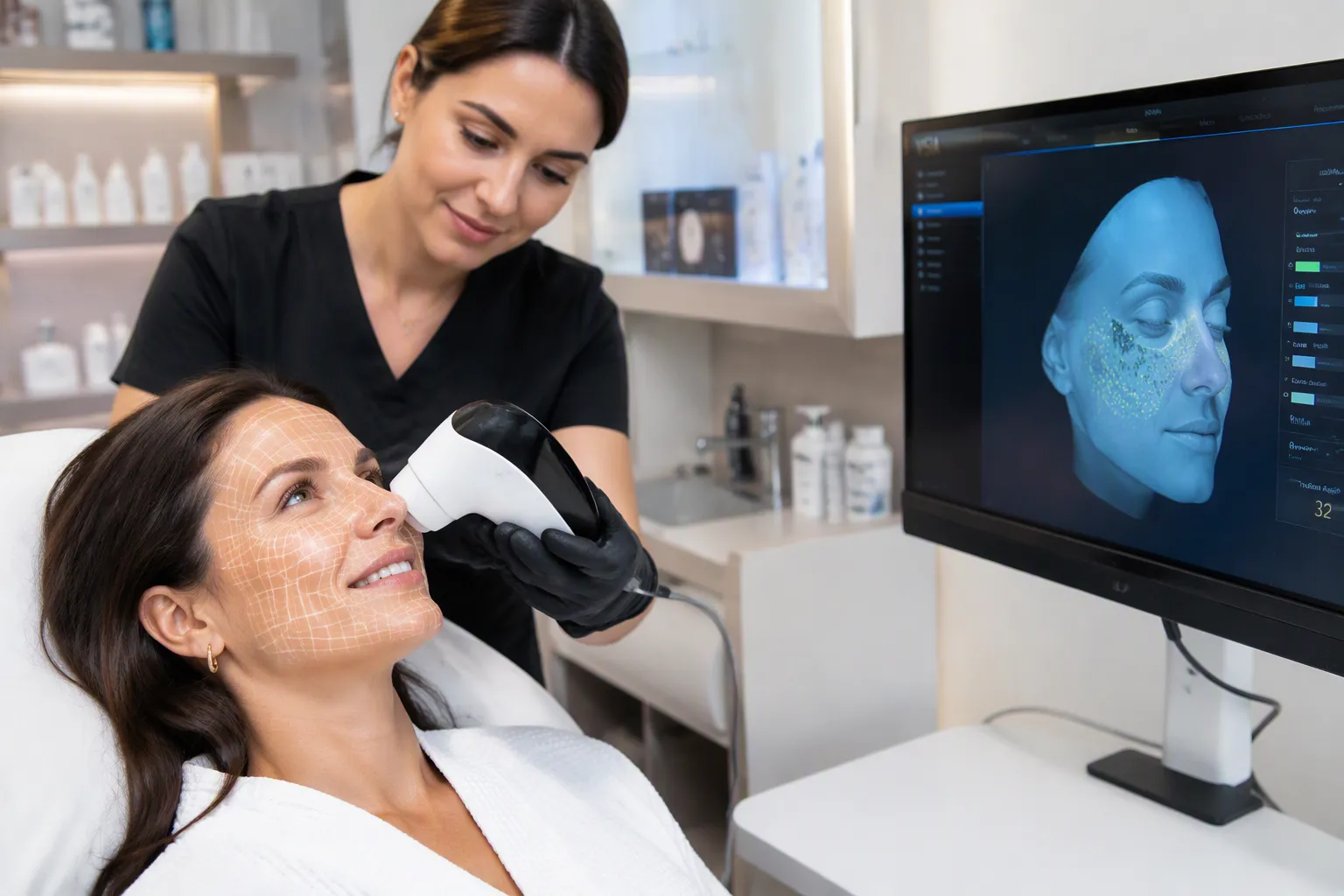
I find the technology behind this imaging surprisingly elegant. Specialized cameras, controlled lighting, and imaging filters work together to capture high-resolution, three-dimensional images of your skin. The system uses polarized and non-polarized lighting to reduce reflection. This approach enables detailed skin analysis and lesion tracking over time.
Multi-spectral imaging sits at the heart of the process. It captures surface and subsurface skin conditions using different light wavelengths. Switching between normal, polarized, and UV light conditions highlights specific subsurface characteristics. UV light penetrates deeper to reveal sun damage not yet visible as surface concerns. Cross-polarized light reduces surface reflection to assess redness and inflammation below the skin’s surface. This technology enables early detection of UV damage, pigmentation issues, and collagen loss that originate beneath the surface.
Artificial intelligence plays a critical role in processing these images. Here is how AI contributes to the analysis:
| AI Role | Description |
|---|---|
| Multi-dimensional skin analysis | AI algorithms combine data from multiple spectra to comprehensively analyze and accurately judge skin condition. |
| 3D face reconstruction | AI supports high-precision 3D facial modeling, enabling detailed morphological diagnosis. |
| Deep learning-based quantification | Deep learning algorithms and AI face recognition quantify and analyze major skin indicators on both surface and deep layers. |
| Integration with imaging technologies | AI works with high-resolution cameras and structured light 3D imaging to process multi-spectrum images. |
| Enhanced learning and diagnosis | AI facial analysis combined with 3D skin simulation enables faster learning and more accurate skin condition assessment. |
Systems like the Pear 3D Plus Skin Analysis system use precision imaging to capture multiple detailed, high-resolution images of the skin, providing an in-depth analysis of the skin’s structure, texture, and overall health.
A Step-by-Step Session
A typical session follows a clear path. First, you meet with a skincare professional for a consultation. They ask about your concerns and review your skin history. Next comes the scan itself. You sit in front of the imaging device, and the system captures images of your face. The scanning process takes only a few minutes. Image capture and software processing complete quickly. According to the AIMYSKIN FAQ, a typical professional skin analysis session takes only a few minutes, with the report ready for review immediately during the consultation. The PEAR 3D Skin Analysis page states that the device can teach you more about your skin health in just 10 minutes.
After the scan, the software analyzes the images. AI algorithms process the multi-spectrum data. Then you review the results with your provider. They walk you through the findings and explain what each image reveals. This step-by-step approach keeps the experience comfortable and informative.
What 3D Skin Analysis Measures
Key Skin Features Detected
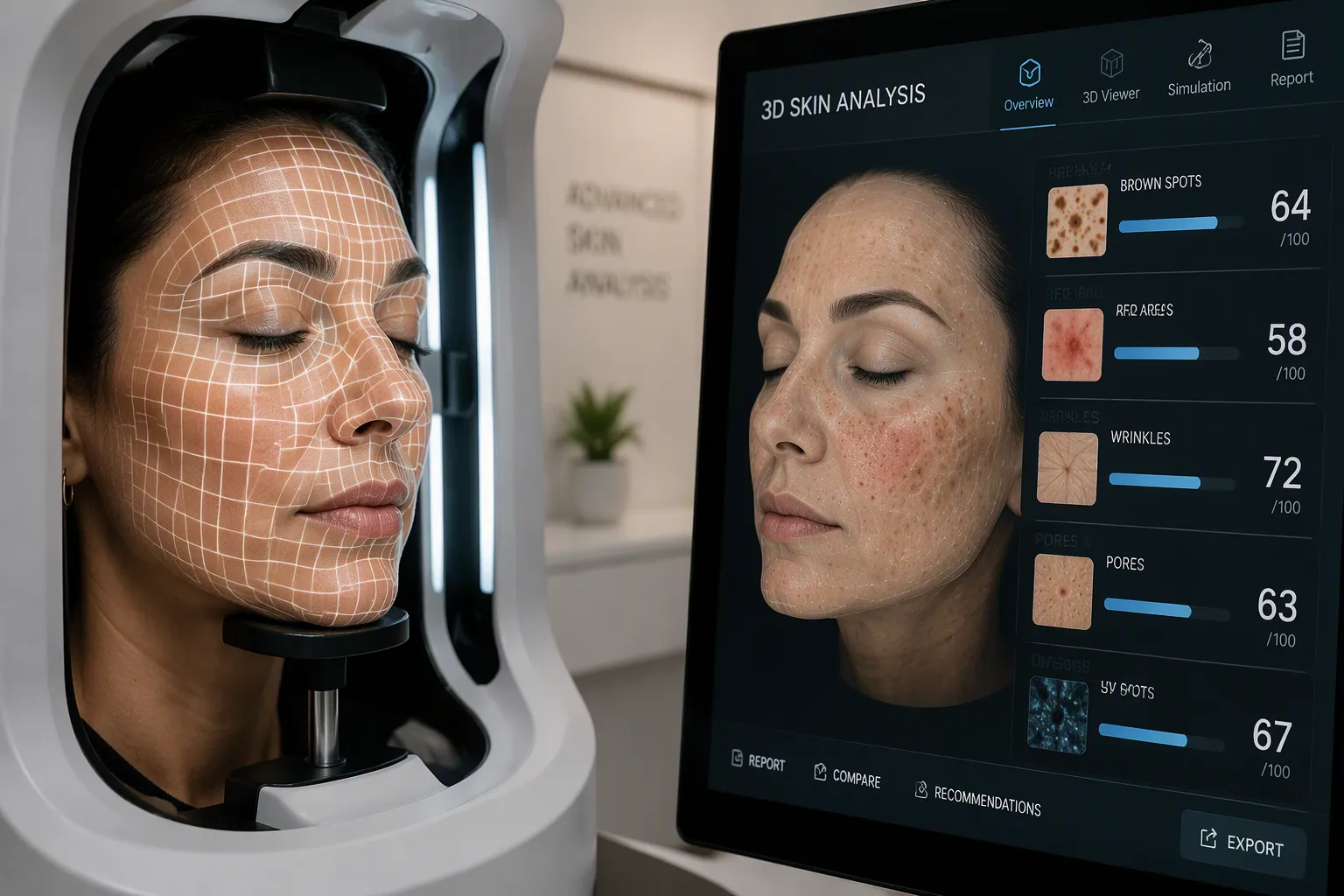
I find the breadth of what this technology captures remarkable. A single scan evaluates multiple skin features simultaneously. Here is what the system identifies:
1.Brown or red marks (spots) on the skin surface
2.Wrinkles, including fine lines and deeper folds
3.Skin texture, recorded as raised or depressed surface areas
4.Pores, visible as circular openings in the skin
5.UV spots, indicating sun damage from UV absorption by epidermal melanin
6.Brown spots, representing natural brown marks or sun damage
7.Red areas, showing blood vessels and hemoglobin linked to various skin conditions
8.Porphyrins, bacterial excretions found in pores produced by Propionibacterium acnes
Quantifying these features matters more than you might think. Board-certified dermatologist Dr. Daniel Schlessinger puts it plainly:
“Maybe good skin quality isn’t something we can even really judge with our naked eye… Maybe we need to use an AI to look at microscopic tiny pores on the skin and count them up in a way that a human just simply can’t do.”
This quantification replaces subjective visual assessment with reproducible numerical scores. The system detects hidden concerns beneath the surface too. UV light reveals sunspots and underlying pigmentation that normal lighting misses. Polarized light targets hemoglobin to detect vascular lesions, visible blood vessels, and inflammation. Red Zone imaging highlights redness for assessing sensitive skin and acne activity. UV light with a Wood’s lamp helps determine whether pigmentation is superficial or deeper, guiding more effective treatment.
Different imaging technologies handle specific tasks. Here is how they map onto key features:
| Imaging Technology | Role in Detecting Features |
|---|---|
| Specular Imaging | Reveals skin surface texture and glossiness, highlighting fine lines and wrinkles |
| 3D Viewer | Examines pore depth, wrinkle size, and texture from multiple angles |
| Fine Lines & Wrinkles Analysis | Identifies and sizes wrinkles to track signs of aging |
| Pore Count & Depth | Measures number and depth of pores to assess overall skin texture |
The AI Magic 3D Skin Analyzer also maps pore distribution to detect congestion, oiliness, and breakout potential. It evaluates pore clogs and oil secretion objectively, using the data to assess and rate aging. UV fluorescence imaging in VISIA captures subsurface sun damage as UV spots, providing percentile scores and precise numerical metrics.
Benefits for Personalized Care
These insights enable truly personalized care. The PEAR 3D skin analysis captures multiple skin layers at once, providing a microscopic view that exposes damage invisible to the naked eye. It detects hidden signs of aging, including UV radiation damage, subtle subcutaneous wrinkles, and clogged pores. Showing clients tangible evidence of their skin’s hidden condition motivates them to invest in tailored products and services.
A professional uses this data to design a customized regimen. For example, if the analysis reveals significant sun damage and emerging wrinkles, they can recommend targeted laser therapy and specialized serums to stimulate collagen production. This approach ensures the treatment directly addresses the patient’s unique needs. The quantified metrics establish a measurable baseline, allowing providers to design data-driven treatment plans and track progress over time. Early detection of subsurface concerns means I can address pigmentation or vascular issues before they become visible. Tracking the true effectiveness of skincare products becomes possible because serial imaging detects subtle deviations from baseline. Each session builds a record, helping develop a care concept tailored to individual skin needs.
What to Expect During a Session
Preparation and Safety
I take a few simple steps before my 3D skin analysis appointment. First, I wash my face with a gentle cleanser about one hour before arriving. Then I stop applying any skincare products or makeup. This pause lets my skin return to its natural state. I avoid cleansing too close to the appointment time, as that might make the reading slightly off. I also wear a dark shirt and remove all facial jewelry. These choices help the imaging system capture accurate data without interference.
The procedure is completely safe for me. I find reassurance in this statement from the PEAR System™: “The PEAR System™ is completely safe and non-invasive. It uses advanced imaging technology without radiation or discomfort and is appropriate for all skin types and tones.” The system uses light wavelengths similar to natural sunlight. UV light exposure stays minimal and brief. The device also sanitizes itself with ultraviolet self-cleaning technology between each use. The analysis works effectively on my skin type and tone, so I never worry about compatibility.
Reading Your Results
After the scan, the software processes the images. The system generates a detailed report with clear images and numerical scores. I review these findings with my skincare professional. They point out specific areas of concern and explain what each image reveals. Surface features like wrinkles and pores appear clearly. Subsurface issues like UV spots and redness become visible for the first time. I see my skin in a way I never could with my naked eye.
These results guide my next steps. My professional designs a personalized treatment plan based on the data. I now understand my skin’s true condition. I know exactly which products and procedures will help me. The session takes only a few minutes from start to finish. I leave with a clear understanding of my skin and a concrete plan for improvement. The quantified metrics establish a baseline for tracking progress over time.
I see 3D skin analysis as a safe, non-invasive tool. It gives me a deeper, data-driven view of my skin health.
It delivers personalized treatment plans, early detection, and measurable progress tracking. I suggest consulting a dermatologist or skincare professional to see if this analysis suits your needs.
FAQ
Is 3D skin analysis painful?
No. I felt nothing during my scan. The system uses light and cameras only. It involves no needles, no radiation, and no discomfort at any point.
How should I prepare for my appointment?
I wash my face about an hour before. I skip makeup and skincare products. I also wear a dark shirt and remove facial jewelry for the clearest images.
Can I use 3D skin analysis on any skin tone?
Yes. The technology works for all skin types and tones. The imaging relies on light wavelengths, so my skin tone never limited the results.
Post time: Sep-23-2026


