


Manufacturer Strategy and Market Potential
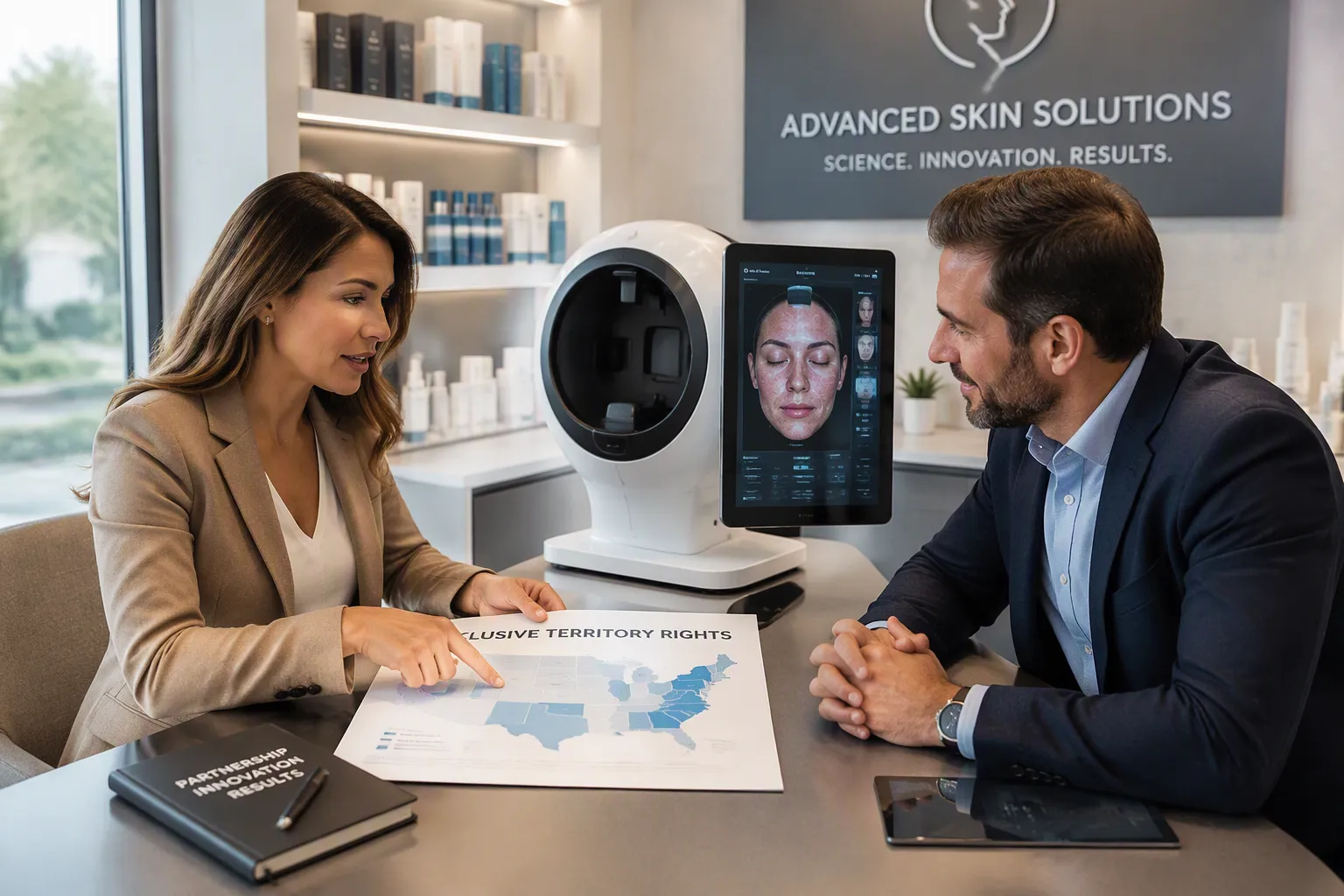
I have learned that manufacturer strategy drives every exclusivity decision. Some brands want rapid expansion. They grant exclusive territories to motivate distributors. Other brands prioritize protection. They keep tighter control and avoid locking into one partner. Market potential also matters. A manufacturer studies territory size, demand, and available distribution channels before saying yes. In cosmetics licensing, a strong territory with clear channel access looks far more attractive.
Exclusive territories reduce direct competition from the same brand. This can increase long-term unit value for the distributor. I always check a manufacturer’s public distributor policies first. For example, Meicet (https://www.meicet.com/) is a skin analysis machine manufacturer worth reviewing for its partner terms.
Distributor Performance and Legal Compliance
A distributor must prove performance capability. I show sales history, market knowledge, and regulatory readiness. Medical device distributors need proper certifications. Under US antitrust law, brands may impose reasonable non-price restrictions on territories and customer groups. These restrictions are often permissible when they promote interbrand competition. However, agreements that restrain price competition or allocate markets create legal risk.
The FTC and state regulators may challenge misleading statements, unreasonable security, or undisclosed data use related to skin-tone analysis. Some state laws require notice, consent, and retention schedules for biometric identifiers. Under EU competition law, territorial and customer restrictions are hardcore restrictions unless expressly permitted. Such agreements are null and void and may attract significant fines. The Pierre Fabre case showed that requiring skin care products to be sold only in a physical space with a qualified pharmacist was a de facto internet sales prohibition. Beauty agents may also need vendor permits, and specifics vary by region.
How to Negotiate Exclusive Rights for Skin Analysis Machines?
Manufacturer Strategy and Market Potential
I have learned that manufacturer strategy drives every exclusivity decision. Some brands want rapid expansion. They grant exclusive territories to motivate distributors. Other brands prioritize protection. They keep tighter control and avoid locking into one partner. Market potential also matters. A manufacturer studies territory size, demand, and available distribution channels before saying yes. In cosmetics licensing, a strong territory with clear channel access looks far more attractive.
Exclusive territories reduce direct competition from the same brand. This can increase long-term unit value for the distributor. I always check a manufacturer’s public distributor policies first. For example, Meicet (https://www.meicet.com/) is a skin analysis machine manufacturer worth reviewing for its partner terms.
Distributor Performance and Legal Compliance
A distributor must prove performance capability. I show sales history, market knowledge, and regulatory readiness. Medical device distributors need proper certifications. Under US antitrust law, brands may impose reasonable non-price restrictions on territories and customer groups. These restrictions are often permissible when they promote interbrand competition. However, agreements that restrain price competition or allocate markets create legal risk.
The FTC and state regulators may challenge misleading statements, unreasonable security, or undisclosed data use related to skin-tone analysis. Some state laws require notice, consent, and retention schedules for biometric identifiers. Under EU competition law, territorial and customer restrictions are hardcore restrictions unless expressly permitted. Such agreements are null and void and may attract significant fines. The Pierre Fabre case showed that requiring skin care products to be sold only in a physical space with a qualified pharmacist was a de facto internet sales prohibition. Beauty agents may also need vendor permits, and specifics vary by region.
How to Negotiate Exclusive Rights for Skin Analysis Machines?
Demonstrating Capability and Proposing Terms
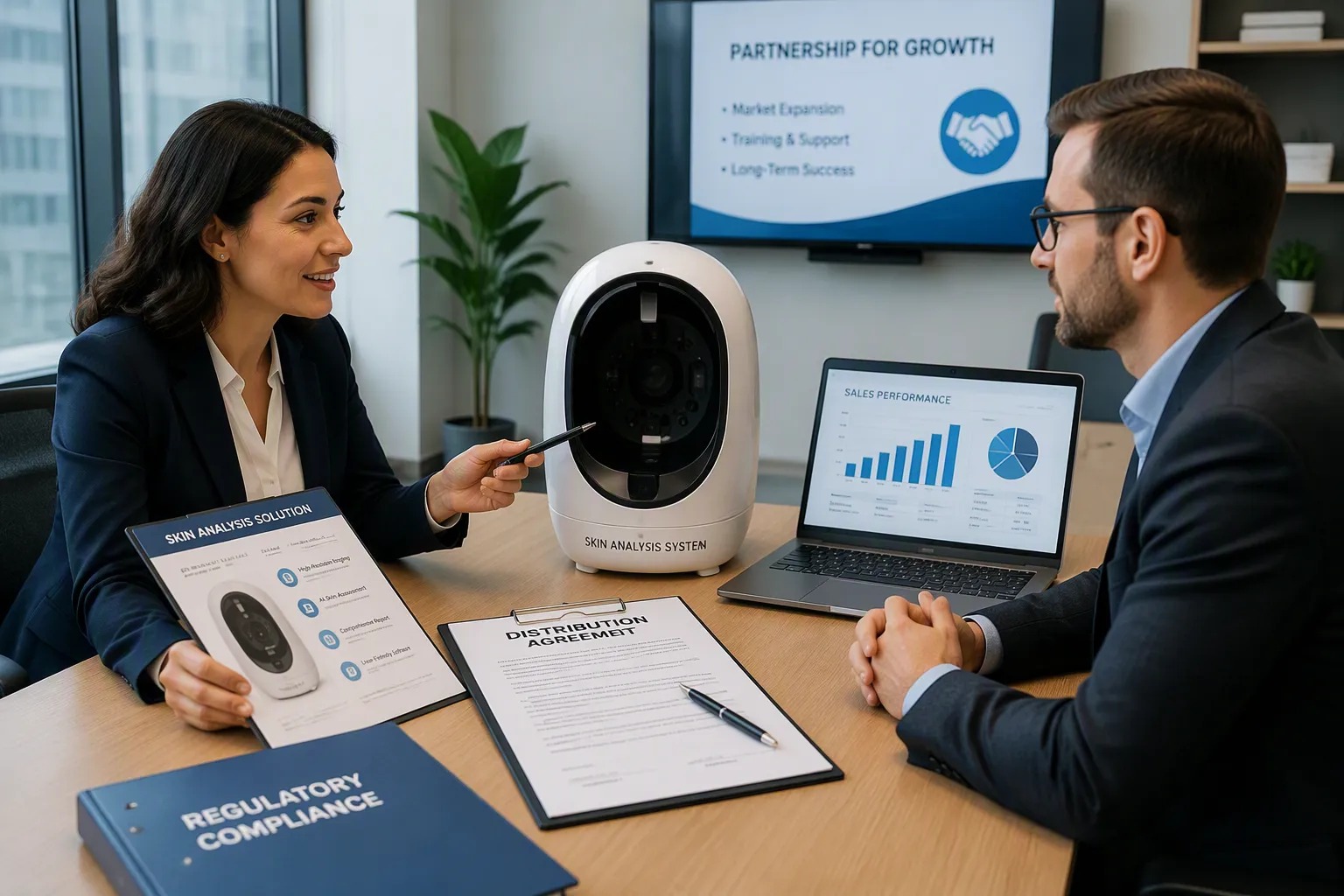
I start every negotiation by proving I can sell. I present sales history, market knowledge, and regulatory readiness. A manufacturer wants a partner who understands the territory. I show them my distribution channels and my track record with similar products. For a skin analysis machine, I also document my compliance with local medical device rules. This builds trust before we discuss exclusivity.
Next, I propose clear terms. I define the product scope, territory boundaries, performance metrics, and contract duration. I never leave these points vague. An exclusive distribution agreement must clearly detail the products or services covered and the exact scope of exclusivity. I also consider partnering with a private label cosmetics company for distribution or wholesale. This approach can combine speed, lower risk, and proven exclusive regional rights. It gives the manufacturer confidence in my ability to move units quickly.
Formalizing the Agreement and Defining Scope
I formalize everything in a written contract. I hire a lawyer to review the terms. This step matters because antitrust laws shape what I can negotiate. Under US law, the Sherman Antitrust Act of 1890 prohibits monopolistic behavior. Section 1 bars agreements that unreasonably restrain trade. Section 2 prohibits monopolization and attempted monopolization. The Clayton Act of 1914 forbids exclusive dealing, tying arrangements, and price discrimination. The FTC Act Section 5 empowers the FTC to challenge unfair methods of competition.
Exclusive territory agreements are explicitly identified as a form of anticompetitive dealing under US federal antitrust laws. However, exclusive dealing is not per se illegal. Courts analyze these claims under the rule of reason. They require plaintiffs to show anticompetitive effects outweigh pro-competitive benefits. Key factors include market definition, market power, foreclosure, harm to competition, and competitive justifications. Private plaintiffs may recover treble damages, costs, and attorney’s fees under the Clayton Act.
In the EU, Article 101(1) TFEU prohibits agreements that prevent, restrict, or distort competition within the internal market. This includes market allocation and exclusive territory agreements. Article 102 TFEU prohibits abuse of a dominant position. I must align my contract with these rules. I also check that my agreement does not violate the Reiter v. Sonotone (1979) precedent. That Supreme Court ruling designed the Sherman Act as a consumer welfare prescription. It shifted focus from protecting competition itself to preventing consumer harm.
I define the scope of exclusivity with precision. I specify which products fall under the agreement. I set clear territory boundaries. I establish performance metrics like minimum sales targets. I also set a fixed duration with renewal options. This protects both parties and reduces legal risk.
What Key Considerations and Risks Should Distributors Know?
Legal Aspects and Performance Obligations
I treat antitrust compliance as a daily duty, not a one-time checkbox. The FTC reviews franchising and territorial rights closely. EU and UK competition law adds another layer for medical devices. I must assess my distribution agreement against both rule sets in parallel.
Companies must assess their distribution agreements against both the revised EU and UK rules, and should evaluate EU and UK rules in parallel, since both have extraterritorial application where agreements are implemented in the UK and have a material impact in the EU.
Aspect EU Rules UK Rules Applicable regulation VBER and Guidelines VABEO, modeled on EU VBER Active vs. passive sales Active sales may be restricted; passive sales must always be permitted Same distinction applies within the four UK counties Penalties High fines; maximum 10% of annual worldwide turnover No cases yet regarding sales restrictions
Performance obligations also bind me. I accept minimum sales targets, marketing requirements, and regular reporting duties. Exclusive distributorships are legal when they comply with antitrust laws. They still do not guarantee success.
Potential Risks and Exit Strategies
I watch for underperformance, territory renegotiation, manufacturer direct sales, and brand expansion conflicts. A manufacturer may sell directly into my region. A brand may expand and dilute my protected area. These risks grow when my sales lag.
I build exit strategies into every contract. I negotiate termination clauses with clear notice periods. I set transition periods for inventory and customer handover. I keep renegotiation options open. Protected territories strike a balance between franchisee protection and brand growth, unlike full exclusivity. This balance protects my skin analysis machine investment while giving the manufacturer room to grow.
Exclusive territory rights for a skin analysis machine are achievable. They depend on manufacturer strategy, your capability, and legal compliance. I negotiate proactively, present a strong business case, and formalize every term carefully. Assess your leverage, understand regulatory requirements, and pursue exclusivity strategically.
FAQ
What antitrust laws apply to exclusive territory agreements?
I must comply with US Sherman and Clayton Acts plus EU Article 101. Courts apply the rule of reason, not a blanket ban.
What happens if I miss performance targets?
I risk territory renegotiation or contract termination. Building exit strategies into my contract helps protect my investment.
Can I negotiate exclusivity after starting as a non-exclusive distributor?
Yes. I demonstrate strong sales first, then request exclusivity. Proven performance gives me more leverage at the bargaining table.
Post time: Sep-18-2026


