


In the rapidly advancing field of dermatology and aesthetic medicine, personalisation is the ultimate goal. One of the most critical frameworks for achieving this is the Fitzpatrick Skin Type (FST) classification, a system that categorises skin based on its response to ultraviolet (UV) radiation. Historically, determining one’s FST relied on subjective questionnaires about sunburn and tanning tendencies. Today, the advent of the High-Precision Skin Analyser is transforming this process, delivering objective, data-driven insights that unlock unprecedented levels of tailored skincare and treatment safety.
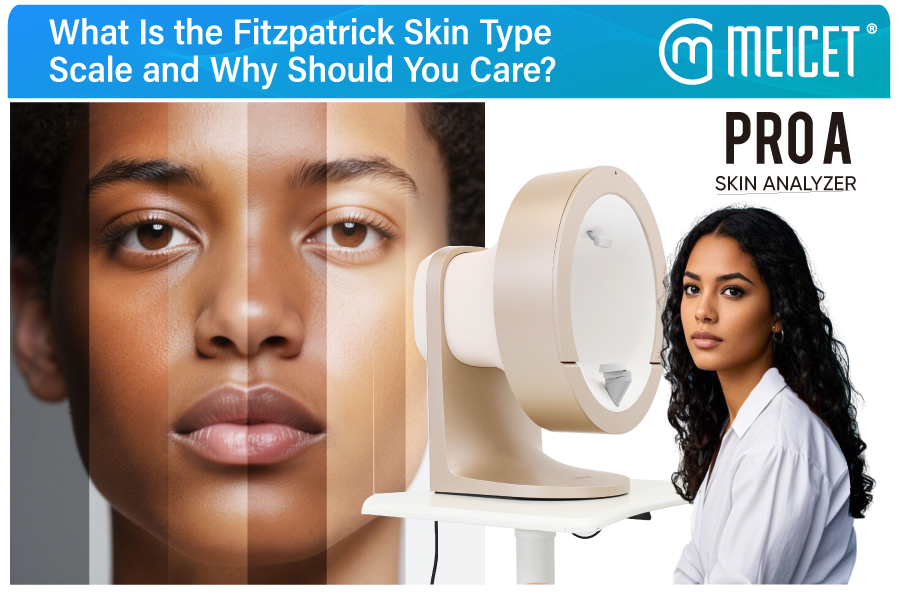
The Fitzpatrick Scale, ranging from Type I (very fair, always burns) to Type VI (deeply pigmented, never burns), is far more than a measure of colour. It is a predictor of melanin behaviour, healing responses, and, crucially, risk levels for various procedures. Misjudging this type can lead to adverse outcomes, from severe burns during laser therapy to post-inflammatory hyperpigmentation (PIH) from routine peels. This is where the High-Precision Skin Analyser proves indispensable. By deploying multi-spectral imaging and advanced spectrophotometry, it moves beyond visual guesswork to quantify the skin’s melanin concentration and distribution with scientific accuracy.
The primary contribution of a High-Precision Skin Analyser in this context is its elimination of subjective bias. When a practitioner uses the device, it captures high-resolution data from specific skin sites, often shielded from sun exposure, to determine the baseline, constitutive pigmentation. It can analyse how melanin is structured within the skin layers, providing a precise digital fingerprint that corresponds to a Fitzpatrick type. This objective classification is fundamental. For example, two individuals who may appear visually similar under Type III might have subtly different melanin dynamics, placing one at a higher risk for PIH. The High-Precision Skin Analyser can detect this nuance, enabling a truly bespoke approach.
In clinical practice, this capability directly translates to enhanced safety and efficacy. For any energy-based treatment—such as laser hair removal, IPL, or fractional resurfacing—knowing the exact FST is non-negotiable for selecting the correct wavelength, fluence, and pulse duration. A High-Precision Skin Analyser provides the concrete data needed to calibrate these devices safely. It allows practitioners to set parameters that effectively target the desired chromophore (like hair follicles or blood vessels) while sparing the surrounding melanin, thereby drastically minimizing the risk of burns, blisters, or dyspigmentation.
Furthermore, the High-Precision Skin Analyser aids in proactive skincare formulation. Individuals with higher Fitzpatrick types (IV-VI) are inherently more prone to pigmentary disorders like melasma and PIH. The analyser can monitor sub-clinical melanin accumulation long before dark spots become visible to the naked eye. Armed with the knowledge of their precise FST and baseline pigmentation maps, patients can adopt preventative regimens featuring appropriate antioxidants, tyrosinase inhibitors, and stringent sun protection tailored to their specific risk profile. The device thus shifts the paradigm from reactive correction to intelligent, long-term prevention.
Beyond treatment, the High-Precision Skin Analyser serves as an invaluable educational and monitoring tool. It visually demonstrates to patients the unique characteristics and needs of their skin type, fostering better compliance with professional recommendations. By establishing an objective baseline Fitzpatrick assessment, subsequent scans can track changes over time, measuring the stability of pigment and the skin’s response to prescribed homecare or clinical interventions. This creates a feedback loop where care plans are continuously refined based on empirical evidence.
In conclusion, the integration of Fitzpatrick Skin Type assessment into a High-Precision Skin Analyser represents a quantum leap in personalised dermatology. It replaces estimation with measurement, transforming a theoretical skin type into a dynamic, data-rich profile. This technology empowers clinicians to navigate the complexities of pigment with confidence, ensuring that every recommendation—from a daily moisturiser to an advanced laser protocol—is grounded in the immutable science of the individual’s skin. In doing so, the High-Precision Skin Analyser does not just classify skin; it unlocks a new standard of safe, effective, and truly customised care for every patient on the spectrum.
editor:henry
Post time: Jan-08-2026


