


I define a modern Skin Analyzer as an advanced diagnostic tool combining multi-spectral imaging and artificial intelligence. This technology reveals sub-surface skin concerns long before they appear on the surface. I rely on accurate objective data to replace generic guesswork with precise, personalized skincare solutions. I analyze these measurements to build effective daily regimens. Modern digital systems offer higher diagnostic clarity than basic visual checks alone.
| Method | Overall Accuracy Range | Condition-Specific Example (Acne) | Condition-Specific Example (Melasma) |
|---|---|---|---|
| Modern AI Skin Analyzers | 86% to 97% | 89% to 94% | 91% to 95% |
| Traditional Visual Inspection | 75% to 94% | 78% to 85% | 82% to 88% |
Key Takeaways
●Modern skin analyzers use special lights and AI to spot hidden skin problems early.
●Detailed biometric data helps experts choose the right products for your specific skin needs.
●Custom clinical plans reduce side effects and make aesthetic treatments safer for everyone.
●Digital scans track skin progress over time to show exact real-world product results.
●AI diagnostic tools deliver higher accuracy than standard eye checks alone.
Understanding Modern Skin Analyzer Technology

I rely on modern imaging systems to evaluate skin conditions beneath the visible surface. Advanced digital devices combine light spectrums and artificial intelligence to reveal hidden tissue damage. I capture clear images that guide accurate diagnostic decisions.
Multi-Spectral Imaging
I use multi-spectral light sources to examine different depth layers of human skin. Tissue components absorb light at specific optical wavelengths. For instance, hemoglobin in blood vessels shows characteristic absorption peaks at 540nm and 580nm visible wavelengths. I target these specific light bands to visualize subdermal vascular networks deep inside the dermal layer. Standard optical systems cannot show these deep vascular patterns clearly. Modern clinical devices employ several distinct illumination types to capture precise skin measurements:
●Standard Visible Light (RGB)
●Parallel Polarization Light
●Cross-polarized Light
●Blue Light
●UltraViolet (UV) Light
●Near-Infrared (NIR) Light
Near-Infrared light penetrates deep into the dermis to evaluate collagen structures and hydration levels. Advanced equipment like the Demetra multispectral dermoscope visualizes subcutaneous structures from up to 2 mm depth. I study these deep layers to identify early photo-aging and sun damage before spots appear on the surface.
| Study / Device | Primary Spectrum | Target Feature | Maximum Penetration Depth |
|---|---|---|---|
| Demetra Multispectral Dermoscope | Multi-spectral Polarized | Melanin and Blood Supply | Visualizes structures up to 2 mm depth |
| NIR Spectrum Systems | 850 nm to 950 nm | Tissue Structure and Collagen | Accesses deep dermal layers |
AI Deep-Layer Detection
I integrate artificial intelligence algorithms with spectral images to analyze complex skin markers. Machine learning software evaluates subtle patterns across distinct facial zones. For example, the FaceAge AI algorithm learned from a training dataset of over 3 million images. This system identifies minor skin variations with clinical precision.
“FaceAge can give a better picture of someone’s health by assessing the skin folds on your mouth or the hollowing of your temples. A diagnostic tool like this, used properly, could improve the quality of life of millions of people.”
The AI software evaluates multiple early signs of photo-aging:
1.Fine lines and deep wrinkles
2.Dark spots and hyperpigmentation
3.Uneven skin tone and rough texture
4.Enlarged pores and sensitivity markers
AI detection also improves diagnostic accuracy for red, inflamed skin conditions like rosacea. In clinical evaluations, the Tibot AI model achieved a Top-One Prediction Accuracy of 91.7% and a Top-Three Prediction Accuracy of 98.6% for the acne and rosacea category. Additionally, GPT-4o diagnosed rosacea from 10 clinical photos with 100% accuracy.
I also calculate estimated skin age by evaluating specific biological tissue markers against chronological age. The diagnostic system calculates biological skin age using weighted biomarker scores:
●Wrinkle depth and density: 35% model weight
●Texture deterioration: 25% model weight
●Pigmentation irregularity: 20% model weight
●Volume loss: 10% model weight
●Elasticity reduction: 5% model weight
Using a digital Skin Analyzer helps me detect early structural changes accurately. I convert these complex optical data points into clear skin care insights.
Personalization Benefits in Skincare
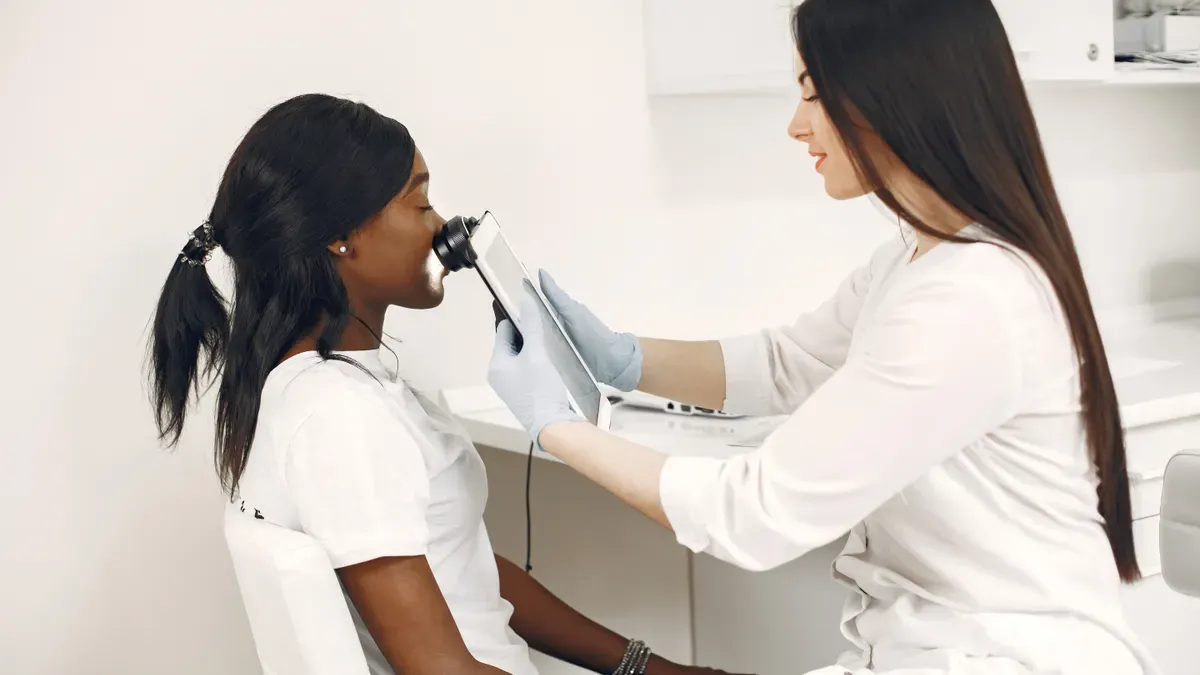
I construct precise skin profiles using concrete diagnostic metrics instead of superficial observation. Advanced imaging systems gather data on hydration levels, texture irregularities, and acne severity across every facial zone. I use these objective measurements to understand the exact physical state of the underlying tissue layers.
Targeted Product Selection
I evaluate skin data to address distinct underlying concerns rather than broad classifications. Many people mistake underlying dehydration for surface dryness. I use biometric data to select ingredients that treat the specific physical condition.
1.Precise Diagnosis: Personalized care starts with assessments measuring key parameters like hydration and barrier integrity, replacing guesswork with data.
2.Targeted Intervention: This data clarifies critical distinctions (e.g., dehydration vs. dryness), allowing for correct ingredient selection (e.g., humectants like hyaluronic acid for dehydration).
3.Superior Results: Clinical studies show measurable improvements in skin barrier and hydration within 28 days when regimens are biometrically validated, a timeline generic products rarely achieve.
Modern digital platforms process real-time variables alongside structural measurements. I utilize these technological capabilities to refine product recommendations for everyday use.
| Technology / Process | Diagnostic Data Used | Personalized Action for Hydration |
|---|---|---|
| AI ingredient/scanner system | Skin-analyzing facial scans, product ingredient analysis | Recommends humectants (e.g., hyaluronic acid) based on individual skin analysis to enhance hydration. |
| AI platforms (e.g., Perso, Optune) | Real-time environmental data (humidity, temperature) via geolocation APIs | Dynamically suggests humectant-rich moisturizers during low-humidity conditions to optimize hydration. |
| AI systems with wearable sensors | Real-time physiological data (TEWL, skin moisture levels) | Recommends occlusive formulations when increased TEWL is detected to enhance moisture retention and repair the barrier. |
Using a Skin Analyzer allows me to continuously align daily skincare products with real-time biometric needs.
Custom Treatment Plans
I design specialized medical spa treatment plans based on objective analysis of different skin types. Precise imaging guides my decisions before I perform clinical procedures. This precise, tailored approach directly helps minimize the risk of adverse reactions for clients.
Visia skin analysis allows providers to move beyond generic approaches and create strategies tailored specifically to you. By combining VISIA® imaging with expert clinical assessment, providers can determine not only if injectables are appropriate, but how to use them conservatively and effectively within a broader treatment plan.
Personalized aesthetic treatment plans directly promote safety by reducing adverse reactions. This is achieved because such plans are based on treatments that meet precise personal goals, ensuring procedures are appropriate for the individual. Furthermore, the use of AI-powered diagnostics within these plans predicts treatment outcomes, which leads to the selection of the safest and most effective procedures. This combination of precise targeting and predictive analysis results in minimized risks for the patient.
I rely on these advanced diagnostic metrics to guide patients toward safer outcomes. Customized clinical care prevents unnecessary skin irritation and avoids inappropriate treatments.
●Objective diagnostic scans establish accurate baseline measurements for delicate dermal tissue.
●Predictive algorithm tools calculate potential skin responses before initiating aggressive medical therapies.
●Customized aesthetic protocols ensure correct product strength selection for each specific patient.
I establish long-term treatment strategies using verifiable visual evidence. Precise physical data allows me to deliver maximum aesthetic results while maintaining total skin health.
Tracking Skin Progress Over Time
I monitor skin transformations by capturing continuous diagnostic images over weeks and months. Visual progress checks often fail to catch subtle tissue repairs. Digital skin analyzers measure exact physiological updates inside the deeper dermal layers.
Measuring Regimen Efficacy
I track specific biometric parameters to evaluate product performance. Digital skin analyzers measure distinct skin characteristics to determine regimen success:
●Texture
●Pore size
●Wrinkles
●Sun damage
●Underlying skin conditions
●Skin elasticity and structure
I compare these digital readings against baseline scans to evaluate real changes. Objective measurements sometimes isolate single attributes or analyze small facial areas. Meanwhile, subjective clinical rating scales may not include every skin type or ethnicity. I combine objective diagnostic tools with subjective photonumeric grading. This comprehensive approach delivers a complete assessment of true skin health.
Routine Optimization
I adjust daily skincare routines based on verifiable visual trends. Documenting user progress builds long-term consistency. Clients follow active regimens more reliably when they see clear proof of performance.
| Tracking Method | Primary Purpose | Impact on Long-Term Adherence |
|---|---|---|
| Logging skin changes & routine effectiveness | To reveal what products/actions are working | Provides motivation through visible results, making it easier to stay consistent with a disciplined regimen. |
| Daily routine logging with reminders | To simplify the process of following a routine | Simplifies habit formation and encourages daily adherence. |
| Photo journals & notes | To capture visual progress and subjective experiences over time | Creates a feedback loop that fosters commitment and allows for personalized adjustments. |
| Gamified rewards (badges, points) | To incentivize consistent logging and routine completion | Encourages consistent adherence by adding a motivational, game-like element. |
I use these logging strategies to help users maintain daily discipline. Visual photo journals create a reliable feedback loop. This feedback loop helps me make personalized routine adjustments over time. Clear diagnostic data guides every product change. I ensure every client achieves steady skin improvement through continuous digital tracking.
Why Use a Digital Skin Analyzer?
I observe clear limits when I rely on traditional visual examinations alone. Standard visual checks miss subtle deep-layer conditions because poor lighting and human subjectivity alter the results. Research highlights this problem clearly.
Limitations of Visual Checks
I find that visual inspections often overlook critical issues because human eyes cannot penetrate the outer skin layer. Studies show that visual exams miss many dangerous conditions.
| Study Reference | Condition Focus | Sensitivity (Visual Exam Alone) | Implied Missed Diagnosis Rate |
|---|---|---|---|
| Holmes et al (Study 14) | Melanoma | 60.9% | 39.1% |
| Hoorens et al (Study 25) | Melanoma | 76.0% | 24.0% |
| De Bedout et al (Study 36) | Any Skin Cancer | 60.1% | 39.9% |
| Study 30 | Not Specified | 66.9% | 33.1% |
| Sinz et al (Study 37) | Nonpigmented Malignancies | 72.3% | 27.7% |
Lighting problems and motion blur reduce overall exam reliability. Environmental changes create inconsistent assessments between different clinical visits.
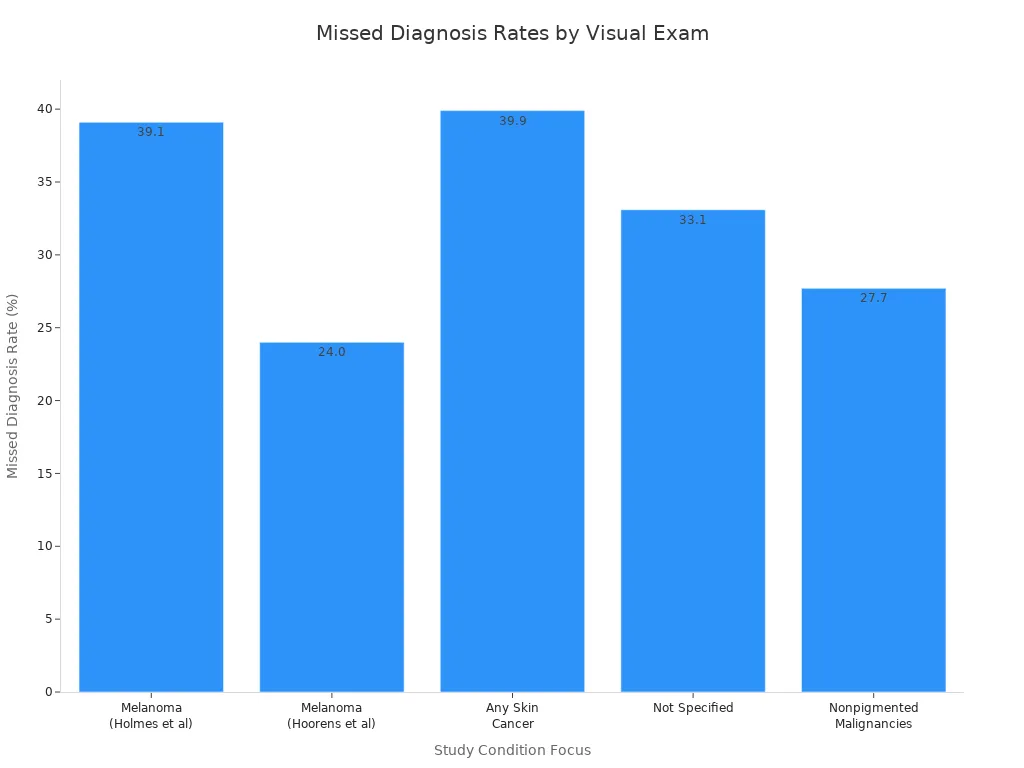
Visual checks fail to detect early structural changes. I need advanced technology to eliminate human error during consultations.
Objective Diagnostic Accuracy
I use a modern digital Skin Analyzer to secure precise diagnostic data. AI algorithms achieve 87% sensitivity and 77% specificity overall, whereas clinicians achieve 79% sensitivity and 73% specificity.
In a direct, head-to-head meta-analysis, AI algorithms demonstrated a statistically significant advantage in overall diagnostic accuracy (sensitivity and specificity) compared to the pooled group of all clinicians.
The hardware removes user variation by standardizing the capture distance and lighting conditions.
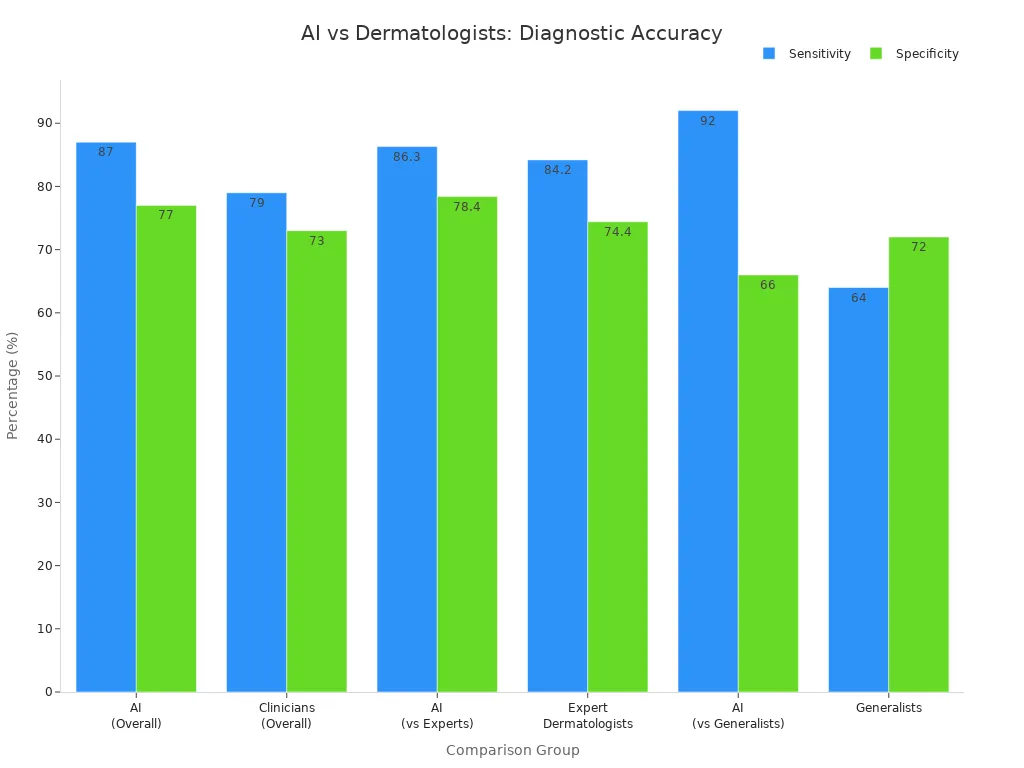
Digital imaging systems increase early melanoma detection sensitivity to approximately 95% compared to 80% for clinical exams. I deliver superior care by using objective diagnostic tools.
I replace uncertain visual guessing with concrete diagnostic facts using advanced digital technology. A modern digital Skin Analyzer captures exact sub-surface metrics to reveal hidden skin conditions long before surface appearance. I use these precise optical measurements to build highly tailored skincare regimens for distinct underlying physical concerns. Continuous progress tracking allows me to evaluate actual product performance accurately over extended periods. I optimize daily routines based on clear biometric updates from continuous imaging scans. Objective diagnostic tools eliminate generic assumptions completely during client consultations. Adopting high-tech skin diagnostics ultimately empowers smarter, long-term decisions for lasting skin health and superior clinical care.
FAQ
How does a digital skin analyzer detect sub-surface skin issues?
I use multi-spectral imaging light sources, including ultraviolet and cross-polarized light, to look deep beneath your top skin layer. These specialized light bands expose hidden sun damage, deep vascular networks, and early photo-aging up to 2 mm deep before symptoms reach the surface.
What optical light spectrums do modern skin analyzers use?
Modern digital devices combine six primary illumination types to evaluate structural tissue health. I rely on standard visible light, parallel-polarized light, cross-polarized light, blue light, ultraviolet light, and near-infrared light to measure blood supply, collagen structures, and hydration levels accurately.
Are AI skin analysis tools more accurate than visual checks alone?
Yes, AI digital algorithms deliver superior diagnostic accuracy compared to basic visual checks. I achieve 86% to 97% overall diagnostic accuracy using modern AI analyzers. Visual exams alone miss subsurface conditions frequently because human eyes cannot penetrate the outer epidermal layer.
How often should I scan my skin to track progress?
I recommend scanning your face every four to six weeks to monitor actual cellular updates accurately. Regular visual progress checks allow me to measure changes in wrinkle depth, pore size, and pigmentation. I use these digital updates to optimize your daily skincare routine.
Post time: Aug-10-2026


