


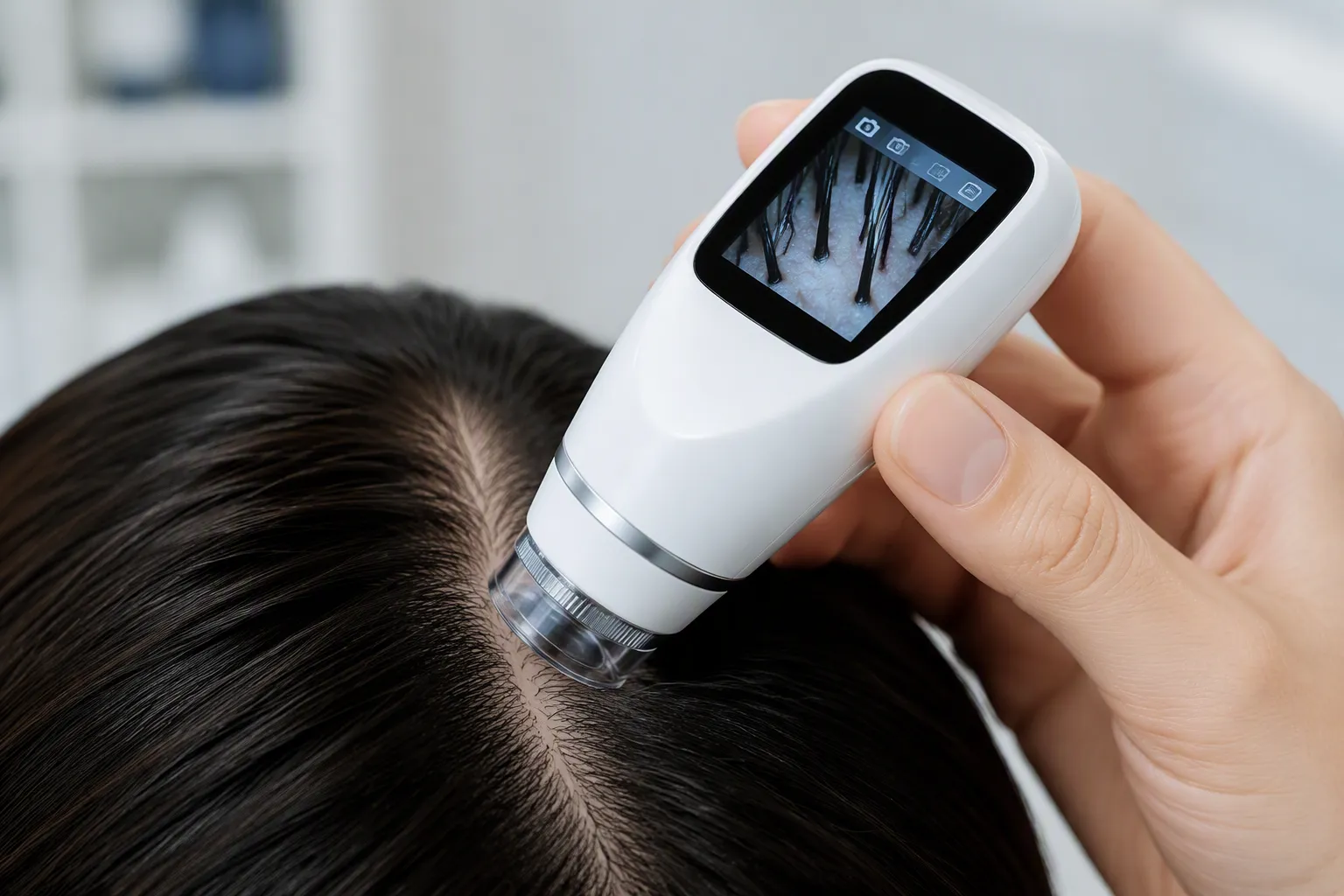
I believe a good Hair Scalp Analyzer combines high-resolution imaging, AI-driven insights, progress tracking, and a non-invasive design. This guide helps you spot essential specs versus marketing hype. For example, is a higher megapixel count always better, or does the software matter more? I aim to give you clarity on these choices.
Key Takeaways
●Choose a hair scalp analyzer with at least 5MP resolution and multiple magnification levels for accurate detection of hair thinning and follicle health.
●Use AI-powered analysis for personalized treatment recommendations and progress tracking, but remember it complements, not replaces, professional advice.
●Prioritize non-invasive, safe devices with seamless app connectivity to monitor your hair health conveniently and privately over time.
Essential Imaging Features in a Hair Scalp Analyzer
When I evaluate a Hair Scalp Analyzer, the imaging system forms the foundation of everything else. Without clear, detailed images, even the smartest software has nothing meaningful to analyze. Let me break down what truly matters in the optics and how the device interprets what it sees.
High-Resolution Optics and Magnification
The sensor resolution sets the floor for image quality. Research from clinical photography shows that a camera with just 1.3 megapixels (MP) can handle dermatological imaging, including scalp work. Modern analyzers far exceed this baseline, so resolution alone rarely limits performance today. What matters more is how the device uses those pixels.
For detecting hair loss patterns, the math gets specific. A hair strand needs at least 64 pixels in width for reliable detection. When you increase that to 128 pixels or higher, the detection rate jumps above 95%. For the finest vellus hairs—those thin, barely visible strands that signal early thinning—you need around 1024 pixels. These numbers tell me that a 5MP sensor isn’t just marketing; it provides the pixel density necessary for accurate analysis.
Magnification levels serve different diagnostic purposes. I’ve found that a good Hair Scalp Analyzer offers multiple magnification options:
| Magnification | Diagnostic Contribution |
|---|---|
| 10x | Captures panoramic front and back images to document treatment progress over time |
| 50x | Analyzes the hair shaft and identifies signs of miniaturization or thinning |
| 200x | Reveals follicle health and sebaceous oil production in high detail |
I should note that not all magnification is equal. A stereo microscope at 90x lacks sufficient hair shaft detail for proper analysis. Even 100x or 200x with a compound microscope provides only partial information. Experts emphasize that 400x magnification delivers the detailed hair shaft examination necessary for thorough assessment. When you shop, look for devices that offer both lower magnification for overview documentation and higher magnification for follicle-level inspection.
Pattern Recognition and Diagnostic Accuracy
The imaging hardware captures the data, but pattern recognition software interprets it. Modern analyzers use machine learning algorithms to identify specific diagnostic patterns. Convolutional Neural Networks (CNNs) extract features from scalp images to detect hair density, follicle health, and early thinning. Image segmentation divides the scalp into regions—thinning versus normal—for targeted analysis. Some systems even use Generative Adversarial Networks (GANs) to generate synthetic follicle images, improving model training when real annotated data is scarce.
These algorithms support comparative baseline measurements. I can capture an initial image, then track changes over weeks or months with the same parameters. The software identifies subtle shifts in hair density, sebum buildup, or inflammation that might escape the naked eye.
However, I must be honest about limitations. Research comparing automated systems to human experts shows a significant gap. Dermatologists achieve 58.1% mean accuracy on suspected diagnoses, while the best-performing AI model reaches only 62.5% when including differential diagnoses. All tested AI models combined averaged just 18.2% accuracy on suspected diagnoses. This tells me that pattern recognition serves as a powerful assistant, not a replacement for professional judgment. The best devices use AI to flag potential concerns and track changes, but they don’t claim to replace a trichologist’s expertise.
A single megapixel image is adequate for on-screen evaluation and publication purposes in clinical dermatology, as demonstrated using freeware and commercial software.
This quote reinforces that the software’s analytical capability matters more than chasing ever-higher megapixel counts. A device that combines solid optics with intelligent pattern recognition delivers the most value for tracking your hair health journey.
Smart Analysis and User-Centric Design
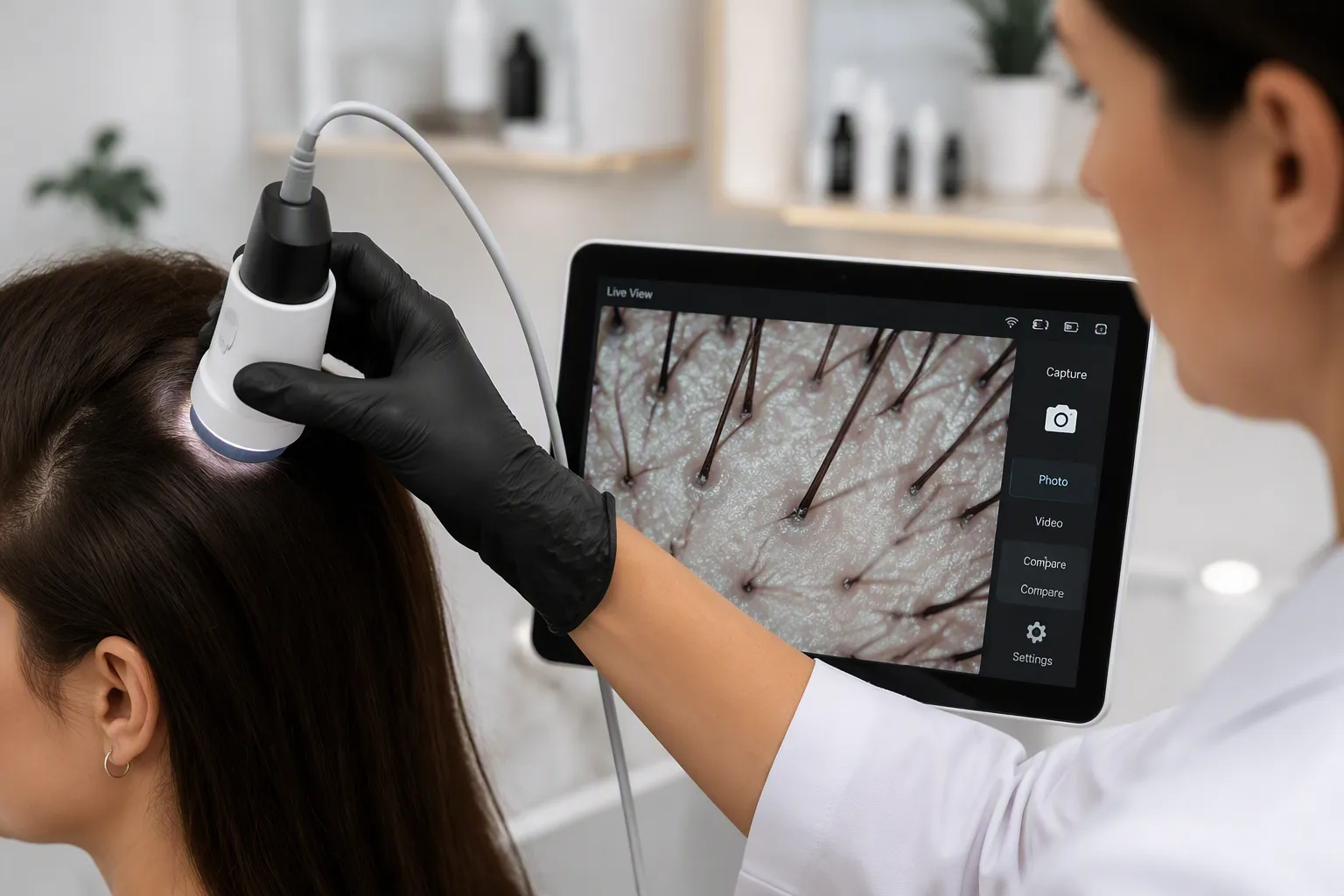
I believe a device’s real value emerges from how it interprets images and serves the user. Hardware captures the data, but smart analysis turns that data into actionable insights. A user-centric design ensures the process remains safe, private, and convenient.
AI-Driven Insights and Data Tracking
Artificial intelligence transforms raw scalp images into personalized guidance. I have seen AI identify follicle miniaturization, inflammation, or excess sebum that my own eyes would miss. This precision diagnosis forms the foundation for targeted treatments. The system recommends specific products—growth serums, nourishing shampoos, or scalp treatments—based on my unique condition.
AI also supports progress monitoring. I can re-assess my scalp through imaging, and the software quantifies improvements or declines. It modifies my routine based on real data. This convenience and privacy allow me to perform detailed analysis from home, reducing salon or clinic visits.
The benefits of AI-driven personalization include:
●Precision diagnosis: Identifies specific issues like follicle miniaturization, inflammation, or excess sebum missed by visual inspection.
●Targeted treatments: Provides customized product recommendations (e.g., growth serums, nourishing shampoos, scalp treatments).
●Progress monitoring: Re-assesses scalp conditions via imaging to quantify improvements and modify routines.
●Convenience and privacy: Enables detailed scalp analysis from home, reducing salon or clinic visits.
AI also offers predictive diagnostics. It can forecast future hair health issues and suggest preemptive treatments. Real-time monitoring tracks changes in hair condition, detecting early signs of thinning or breakage. The system recommends specific nutritional supplements and treatment plans based on my hair texture, scalp condition, and lifestyle. It simulates potential treatment outcomes and adjusts my routine over time. This personalization scales to my unique genetic predispositions, environmental influences, and hormonal variations.
Effective data tracking requires more than just images. I need a system that logs my journey over time. The essential features for data tracking in a hair health app include:
| Essential Feature | Key Indicator | Clinical Significance |
|---|---|---|
| Photo Timeline | Hairline position, crown density, temple angle changes | Gold standard for visual assessment; compare to 6-12 month baseline for meaningful trends |
| Treatment Adherence Log | Finasteride ≥80% adherence; Minoxidil ≥70% adherence | Single biggest predictor of treatment success; distinguishes ‘not working’ from ‘not adequately tested’ |
| Side Effect Reporting | Timestamped entries (e.g., sexual side effects at week 3) | Real-time data distinguishes genuine adverse reactions from nocebo effects |
| Density Measurement | Consistent downward trend in follicular units/cm² | App-based estimates (100-150 FU/cm² normal) provide longitudinal trend identification warranting clinical follow-up |
A good Hair Scalp Analyzer should integrate these tracking features into its software. I also value tools that support additional tests like porosity and elasticity. A comprehensive hair health assessment requires more than surface-level analysis.
Non-Invasive Safety and Seamless Connectivity
Safety matters above all else. I insist on a non-invasive design that works for all scalp types. The device should not cause discomfort, irritation, or damage. Optical imaging using visible light poses no risk, unlike some diagnostic tools that use UV or heat. This makes the analyzer suitable for frequent use.
Seamless connectivity completes the user experience. A top-tier Hair Scalp Analyzer emphasizes both safety and connectivity. The best devices pair with a smartphone app via Wi-Fi or Bluetooth. I can transfer images instantly, review my history, and share data with my trichologist if needed. App integration also supports privacy protection. My data stays on my device or in a secure cloud, not shared without my consent.
A user-centric design also considers ease of use. The device should feel comfortable in my hand. The interface should guide me through each step. I want to capture an image, receive analysis, and move on.
When I choose a Hair Scalp Analyzer, I check for high-resolution imaging, smart analysis, and safe design. I prioritize data tracking and pattern recognition over flashy specs. These features deliver long-term value. The right analyzer is an investment in your hair health journey, providing clarity and confidence in your routine.
FAQ
How many megapixels do I really need?
I recommend at least 5MP for reliable hair strand detection. Higher resolution helps identify fine vellus hairs that signal early thinning. Beyond that point, software quality matters more than pixel count.
Can AI replace a professional trichologist?
No. Research shows AI models achieve only 18.2% accuracy on suspected diagnoses compared to 58.1% for dermatologists. Use AI as a tracking assistant, not a replacement for expert medical advice.
Is frequent scalp imaging safe?
Yes. Visible light imaging poses no risk to any scalp type. Unlike UV-based tools, optical analyzers cause no irritation or damage, making them suitable for regular home monitoring.
Post time: Aug-27-2026


