


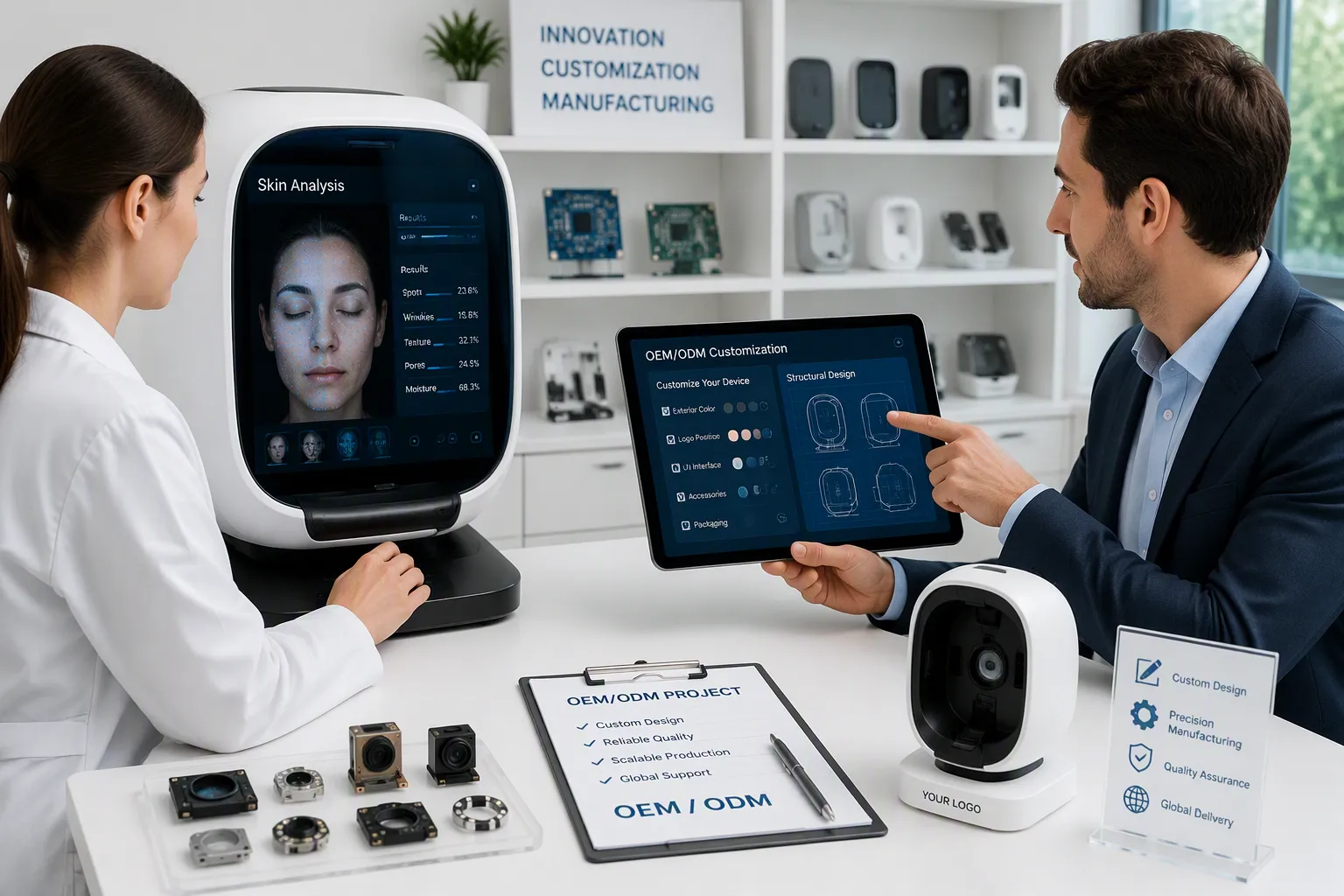
A professional-grade commercial skin analyzer must deliver multi-spectral imaging capability (at minimum RGB, cross-polarized, parallel-polarized, and UV modes), clinical-grade optical resolution (20MP or higher for full-face capture), quantifiable analytical output rather than subjective visual descriptions, and comprehensive progress-tracking tools for documenting treatment outcomes over time. The ISEMECO S7 exemplifies these standards with 20MP full-face imaging, four spectral modes, 3D visualization from any angle, and nine simultaneous analysis displays for comprehensive skin assessment . Beyond hardware specifications, professional buyers should verify regulatory certifications, manufacturer support infrastructure, and total cost of ownership before committing to a device.
✔
Key Takeaways
Multi-spectral imaging is non-negotiable: Professional analyzers need at least four spectral modes—RGB, cross-polarized (CPL), parallel-polarized (PPL), and UV—to analyze skin conditions at different depths.
Resolution alone doesn‘t determine quality: 20MP sensors with industrial-grade optics and color calibration (CRI 96.5+) deliver more diagnostically reliable images than higher-resolution consumer cameras.
Quantifiable data separates professional from amateur tools: A professional analyzer must produce numeric metrics and measurable changes, not just visual images.
3D visualization enhances diagnostic confidence: The S7’s 3D imaging visualizes skin surface from any angle, magnifying subtle conditions like wrinkles, sagging, and indentations.
Progress tracking drives clinical value: Multi-image comparison modes (mirror, two-image, multi-image, 3D) enable objective documentation of treatment efficacy.
Multi-Spectral Imaging: The Core Diagnostic Foundation
The number and type of spectral modes determine what skin conditions a professional analyzer can detect and at what depth. Basic analyzers capture only RGB (visible light) images, which reveal surface concerns like visible pores and uneven tone. Professional-grade systems add cross-polarized light (CPL) and parallel-polarized light (PPL) to penetrate different skin depths, plus UV photography to reveal subsurface conditions invisible to standard photography.
The ISEMECO S7 captures nine image modes: RGB (7200K color temperature), UV light, parallel-polarized light, cross-polarized light, Wood‘s light, red areas, gray map, green map, and purple map . This multi-spectral approach enables analysis of conditions that single-mode systems cannot detect:
- ●RGB (visible light): Surface texture, color, and general appearance
- ●Cross-polarized light (CPL): Deep dermal conditions including pigmentation, vascularity, and inflammation
- ●Parallel-polarized light (PPL): Surface texture, wrinkles, fine lines, and pore size
- ●UV light: Porphyrins (bacterial activity), sun damage, and hidden pigmentation
MEICET’s broader 3D SKIN ANALYZER platform emphasizes that multi-spectral imaging combined with deep learning enables accurate assessment of 12 key skin issues—including wrinkles, pigmentation, pores, sensitivity, and acne—at different depths within the skin . For professional skin assessment, the ability to analyze subsurface conditions distinguishes clinical-grade equipment from cosmetic imaging devices.
Optical Resolution, Color Accuracy, and Image Quality
Optical quality determines whether the analyzer produces diagnostically reliable images or merely attractive photographs. A high pixel count without accurate color rendering and stable white balance introduces error into every analysis. Professional skin analyzers address this through industrial-grade imaging systems and rigorous calibration.
The ISEMECO S7 uses a 20-million-pixel full-face imaging system with LED lighting technology . The device‘s industrial large-aperture optics minimize distortion and maintain stable white balance across sessions. The system supports 48-color Spyder CHECKR calibration, ensuring that skin conditions render consistently across different devices and time points.
Color accuracy is quantified through the Color Rendering Index (CRI or Ra), which measures how faithfully a light source reveals object colors compared to natural sunlight (Ra = 100). Professional skin analyzers should achieve Ra ≥ 95 to ensure that pigmentation, erythema, and other color-dependent conditions are rendered true-to-life. Poor color rendering can make pigmentation appear more or less severe than reality, leading to misdiagnosis and unreliable progress tracking.
For buyers evaluating commercial skin analyzers, the critical question is not “what is the pixel count?” but “what is the complete optical system specification?”—including sensor resolution, lens quality, lighting CRI, and calibration methodology.
Table 1: Professional Skin Analyzer Technical Specifications — ISEMECO S7
| Specification | ISEMECO S7 | Why It Matters |
|---|---|---|
| Full-Face Pixel | 20 Million | Captures fine detail for precise analysis |
| Spectral Modes | RGB, CPL, PPL, UV, Wood‘s light + 4 specialized maps | Multi-depth analysis; surface and subsurface conditions |
| Lighting Technology | LED (20 UV light sources, Japanese-imported) | Consistent illumination for reproducible imaging |
| Analysis Modes | 9 intelligent modes | Comprehensive skin assessment in single session |
| 3D Imaging | Full-face 3D visualization from any angle | Reveals wrinkles, sagging, indentations as topography |
| Multi-Image Comparison | Mirror, 2-image, multi-image, 3D comparison | Tracks treatment progress over time |
| Symptom Annotation | Multiple tools for marking and measuring | Enables objective documentation of findings |
| Display | 31.5-inch 4K screen (optional) | Client-facing visualization for consultation |
Analytical Depth: Quantifiable Metrics vs. Visual Descriptions
A professional skin analyzer must produce quantifiable data—not just images. The distinction between a professional diagnostic instrument and an expensive camera lies in the software‘s ability to extract measurable metrics from captured images.
The ISEMECO S7’s software suite provides quantifiable analysis tools:
- Symptom annotation and measurement: Tools for marking and quantifying skin conditions, enabling objective tracking of results.
- Multi-image comparison: Mirror comparison (left/right symmetry), two-image comparison (time-based progress), and 3D comparison.
- Homogeneous display comparison: Simultaneously displays nine types of images for comprehensive analysis from different perspectives.
Table 2: Professional Skin Analyzer Selection Checklist
| Evaluation Area | Critical Question | Recommended Spec | Red Flag |
|---|---|---|---|
| Spectral Modes | How many lighting modes? | 4+ modes: RGB, CPL, PPL, UV | Single-mode RGB only |
| Resolution | Pixel count and optics? | 20MP+ with industrial optics | Consumer camera hardware |
| Analytical Output | Quantifiable metrics? | Data-based with measurement tools | Image-only, no metrics |
| Regulatory | Certifications? | CE certification; ISO 13485 | No documentation |
Software Workflow and Clinical Integration
Software capability determines whether the analyzer serves as a diagnostic instrument or merely an imaging device. The hardware captures images; the software extracts clinically actionable information and integrates with consultation workflows.
- ➤ Customer tagging system: Categorizes customers by skin issue (melasma, acne, etc.), enabling efficient retrieval of similar case studies.
- ➤ Quick export function: Three export options—single image, batch export, and customizable watermarks for professional documents.
- ➤ Multi-terminal access: Supports network access for multiple terminals, improving consultation efficiency.
FAQ
What spectral modes should a professional skin analyzer have?
A professional-grade analyzer should have at minimum four spectral modes: RGB, cross-polarized light, parallel-polarized light, and UV. Analyzers with fewer than four modes limit the range of conditions that can be detected and analyzed at different depths.
How does color accuracy affect professional skin assessment?
Color accuracy determines whether skin conditions are rendered true-to-life. A low CRI can make pigmentation appear more or less severe than reality, leading to misdiagnosis. Professional analyzers should achieve Ra ≥ 95.
What is the difference between 2D and 3D skin analysis?
2D analysis captures flat images, while 3D analysis creates volumetric models that reveal depth—wrinkles, sagging, and indentations appear as measurable topography rather than flat shadows.
How important is pixel count for skin analyzer accuracy?
Pixel count matters, but optical quality matters more. A 20MP sensor with high-quality industrial optics and proper calibration produces more diagnostically useful images than a higher-resolution consumer camera.
What regulatory certifications should a professional skin analyzer have?
At minimum, look for CE certification and ISO 13485 quality management certification. A device without regulatory certification may not be legally usable in clinical settings.
Post time: Oct-13-2026


