


The skin analyzer market is undergoing a transformation from professionalization to diversification. What used to be expensive equipment found only in high-end beauty salons and dermatology clinics has now branched out into various types to meet the needs of different users.
Professional medical-grade devices, such as the VISIA Gen8, still hold the technological high ground, with prices ranging from $15,000 to $20,000, primarily serving medical and research institutions. Commercial beauty devices have found a balance in cost-effectiveness, with prices between $4,000 and $13,000. Products from brands like MEICET and Zemits have become standard equipment in many beauty salons and skincare centers. The rise of the home market has further expanded the boundaries of skin analyzers. Portable devices are now available directly to consumers through e-commerce platforms like Amazon, making personal skin monitoring more convenient.
Among the popular models, the MEICET MC88 stands out in the commercial sector. This device utilizes five-spectrum imaging technology, including standard light, cross-polarized light, parallel polarized light, UV light, and Wood’s light, to capture high-definition facial images. Through intelligent facial positioning and symptom extraction analysis, combined with comparisons against a large-scale skin database, the MC88 can accurately assess various skin concerns such as redness, pigmentation, wrinkles, deep spots, pores, and acne. It generates symptom maps and reference values to help skincare professionals develop optimal treatment and care plans for clients.
Regarding the “3D D9,” current search results do not show a skin analyzer model under this name. Information related to “D9″ in search results refers to the Denza D9, a new energy MPV vehicle, which is unrelated to skin analyzers. However, there are skin analysis devices on the market that employ 3D imaging technology, such as the ISEMECO 3D Skin Analyzer, which uses multispectral imaging and skin cloud algorithms to detect up to 15 skin issues.
Other noteworthy brands and products include the Cobbawe Professional Skin Analyzer, available on Amazon. It offers comprehensive skin health assessments, measuring parameters like moisture, elasticity, oiliness, and pigmentation. The device also integrates a dermatoscope function to evaluate conditions such as acne, pigmentation, and signs of aging.
For those seeking portability, the MLG CF-685A is a wireless Wi-Fi-connected skin, scalp, and hair analyzer. Its compact design and compatibility with iOS and Android apps make it suitable for both home and salon environments.
In the professional field, the VISIA Gen8 is regarded as the industry gold standard. It employs multi-angle high-resolution facial imaging combined with advanced skin analysis software, using cross-polarized and UV lighting to capture detailed skin data.
The Zemits Skin Analyzer strikes a balance between imaging and functionality, offering multispectral imaging and intelligent diagnostic tools to provide a comprehensive view of skin health at a reasonable price.
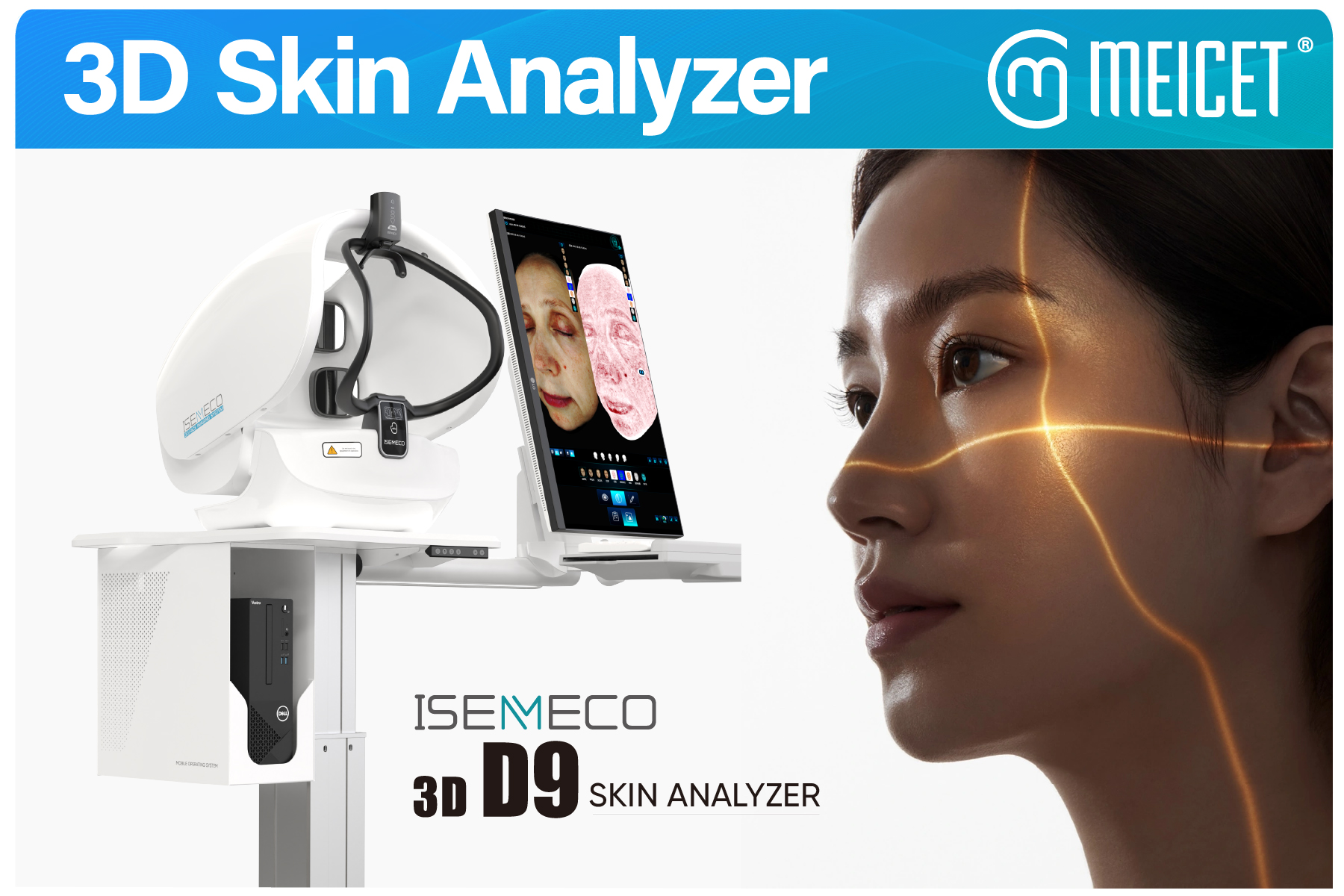
When selecting a skin analyzer, it’s essential to clarify the primary use case and requirements. Professional medical institutions and high-end beauty salons may opt for industry-standard devices like the VISIA Gen8, while general beauty salons might prioritize cost-effective options like the MEICET MC88. For beginners or home users, portable and user-friendly devices such as the MLG CF-685A or Cobbawe products may be more suitable.
Technical parameters are another critical consideration. High-quality devices should feature multispectral imaging capabilities to capture detailed information both on the skin’s surface and beneath it. AI analysis functions can quickly interpret skin parameters and provide real-time insights. Data management and reporting features are also important—excellent devices should generate intuitive visual reports to help clients understand their skin conditions and treatment plans.
On the screen of a skin analyzer, areas marked in red, yellow, and blue—indicating sensitivity, pigmentation, or excess oil—are gradually translated into precise numbers and percentages. A beautician swipes lightly to pull up test results from three months ago, showing an increase in hydration from 42% to 58% and a reduction in wrinkle depth by 0.3 mm. These changes are compiled into clear comparison charts. In a New York apartment, a girl’s skin analysis app alerts her that today’s UV exposure index exceeds safe limits and recommends stronger sun protection. In a Shanghai beauty salon, the manager studies a 3D facial model of a client generated by a newly arrived skin analyzer.
These devices record not only changes in skin data but also how technology transforms abstract health concepts into trackable, manageable daily metrics for ordinary people.
Post time: Dec-31-2025


