


The journey of professional skin analysis is a story of technological convergence, marked by a decisive shift from subjective visual assessment to objective, data-driven diagnosis. This evolution has fundamentally reshaped aesthetic medicine, dermatology, and professional skincare, establishing the skin analyzer not merely as an imaging device, but as the cornerstone of modern, personalized treatment protocols. From early magnification lamps to today’s AI-integrated systems, each advancement has expanded our understanding of skin health. This progression finds a contemporary expression in devices like the MEICET MC10 Skin Analyzer, which embodies the current industry standard of combining accessibility with comprehensive analytical power.
The Developmental Trajectory: From Observation to Intelligence
The genesis of professional skin analysis lies in simple, magnified observation. For decades, practitioners relied on high-intensity magnifying lamps, which provided enhanced visual clarity but remained limited by human subjectivity, variable lighting, and the inability to document or quantify findings reliably. The first major revolution arrived with standardized digital imaging, pioneered by systems like the Visia Complexion Analysis in the late 1990s. This introduced controlled, cross-polarized lighting to eliminate glare and reveal subsurface conditions, alongside UV imaging to expose sun damage. The key breakthrough was the creation of a reproducible baseline, allowing for the first true objective comparisons over time.
The second wave of evolution was defined by multi-spectral imaging and connectivity. Devices began incorporating additional light wavelengths—such as parallel-polarized light for enhanced texture mapping and specialized blue or amber light for specific concerns like bacteria or hemoglobin. This period also saw the integration of software platforms capable of generating client reports and the nascent stages of cloud connectivity for data storage and remote access. The focus expanded from single-point assessment to managing the client journey.
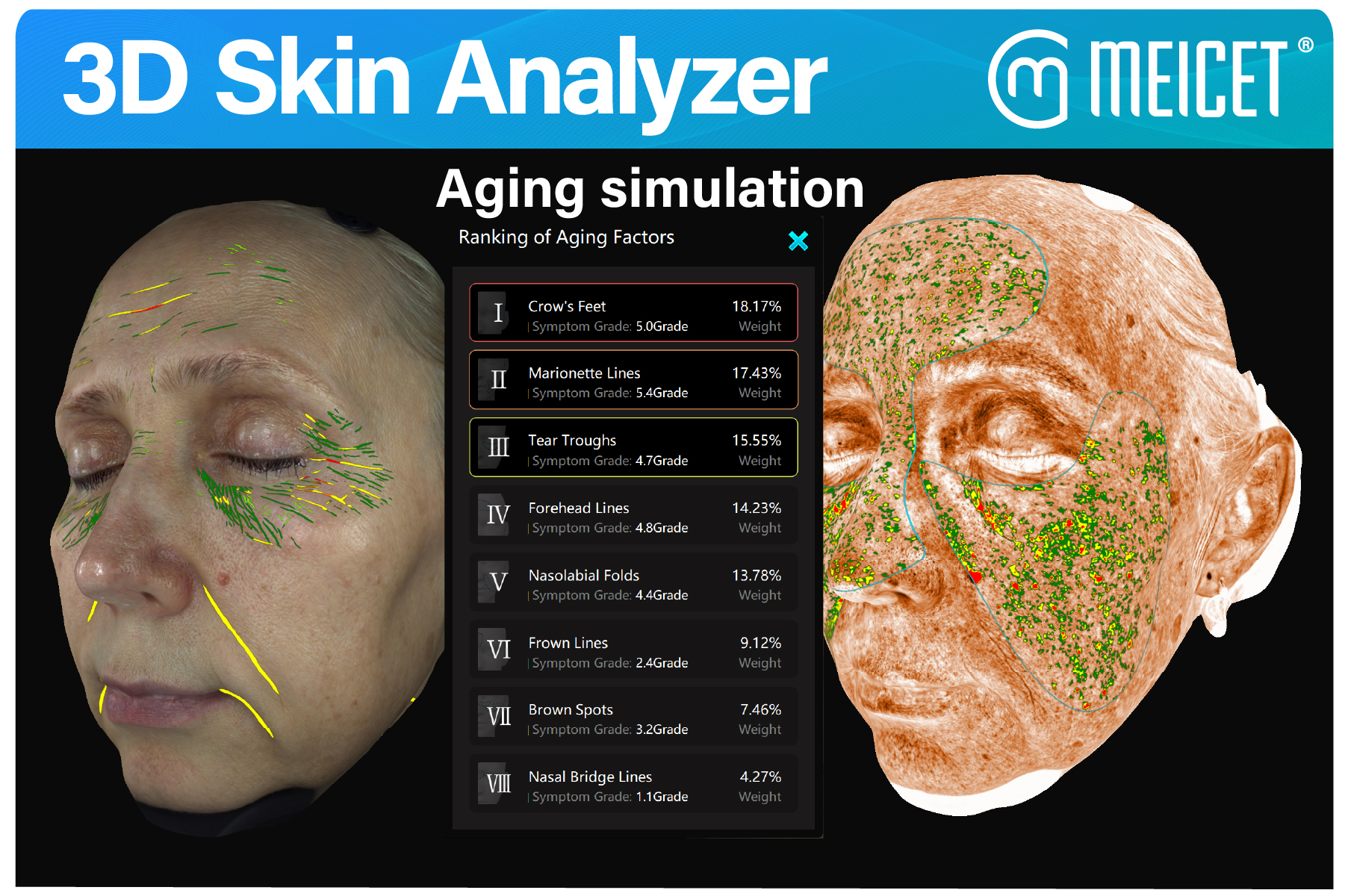
We are now firmly in the third, and most transformative, phase: the era of Artificial Intelligence and quantitative 3D analysis. Modern analyzers leverage deep learning algorithms to automatically detect, classify, and quantify skin features with speed and consistency surpassing human capability. This move from qualitative description to quantitative metrics—measuring pore count, wrinkle length, pigmentation area in square millimeters—provides irrefutable, numerical proof of efficacy. Concurrently, 3D topographic mapping has emerged, offering volumetric assessment of wrinkles, scars, and facial contours, which is indispensable for advanced aesthetic planning. The modern device is an intelligent diagnostic partner.
The Multifaceted Role of the Modern Skin Analyzer
Today’s advanced analyzers perform four critical, interconnected functions across clinical and commercial environments. Primarily, they serve as an objective diagnostic foundation, replacing guesswork with measurable data to guide treatment decisions for lasers, injectables, and topical regimens. Secondly, they are powerful client engagement and educational tools. Visualizing “invisible” damage like subdermal UV spots builds immediate trust and transparency, transforming abstract advice into compelling, personalized evidence, which in turn facilitates informed consent and higher-value treatment planning.
Thirdly, these devices are essential for treatment efficacy tracking and practice growth. By quantifying progress across multiple parameters, they provide undeniable validation of treatment success, enhancing client retention and practice reputation. Finally, in retail and consumer settings, they enable hyper-personalized product recommendation, using AI analysis to match skincare formulations directly to a customer’s quantified needs, driving satisfaction and sales conversion.
The MEICET MC10: A Synthesis of Evolution in Practice
The MEICET MC10 Skin Analyzer stands as a direct product of this evolutionary arc, designed to deliver the core benefits of advanced analysis in a streamlined, user-friendly format. It integrates key technological milestones into a practical clinical tool.
At its core, the MC10 utilizes a professional multi-spectral imaging system, featuring standard RGB, UV, and cross-polarized light modes. This allows practitioners to conduct a rapid, yet comprehensive, skin census—assessing surface color, detecting underlying pigmentation and vascular issues, and analyzing skin texture and oil-sebum presence without surface glare. This multi-angle imaging provides a holistic view that is foundational for accurate diagnosis.
The true power of the MC10 is unlocked by its integrated AI analysis software. Upon image capture, the system’s algorithms automatically evaluate key skin indices. It goes beyond simple detection; it quantifies concerns, assigning values to parameters like wrinkle severity, spot count and size, and pore visibility. This automated quantification standardizes assessments, ensuring consistency regardless of the operator’s experience level, and generates clear, visual reports that make complex data easily understandable for the client.
Furthermore, the MC10 is engineered for efficiency and enhanced consultation workflow. Its design prioritizes ease of use with features like a touch-screen interface and ergonomic capture positioning, allowing for quick imaging with minimal client disruption. The ability to display stark before-and-after comparisons during follow-up visits is perhaps one of its most valuable clinical and business functions, visually reinforcing treatment benefits and fostering long-term loyalty.
In conclusion, the development of skin analysis technology mirrors the broader shift in medicine towards precision and personalization. From magnification to multi-spectral imaging, and now to AI-driven quantification, each stage has increased objectivity, deepened understanding, and strengthened the practitioner-client relationship. Instruments like the MEICET MC10 represent the maturation of this journey, packaging sophisticated diagnostic capabilities into an accessible platform. They democratize high-level analysis, empowering a wider range of professionals to base their practice on clear data, build trust through transparency, and ultimately deliver more effective, personalized skincare outcomes. The future will see further integration of 3D data, real-time biomarker analysis, and predictive AI, but the core mission remains unchanged: to transform the invisible into the actionable.
Post time: Dec-10-2025


