


In the realm of plastic surgery and medical aesthetics, precision is not merely a preference—it is a prerequisite. Unlike standard beauty salons, plastic surgery hospitals operate at the intersection of medicine and aesthetics, where diagnostic accuracy directly influences surgical outcomes and patient safety. For these institutions, selecting the right Skin Analyzer is a decision that carries profound clinical and commercial implications.
The stakes are inherently higher in a medical s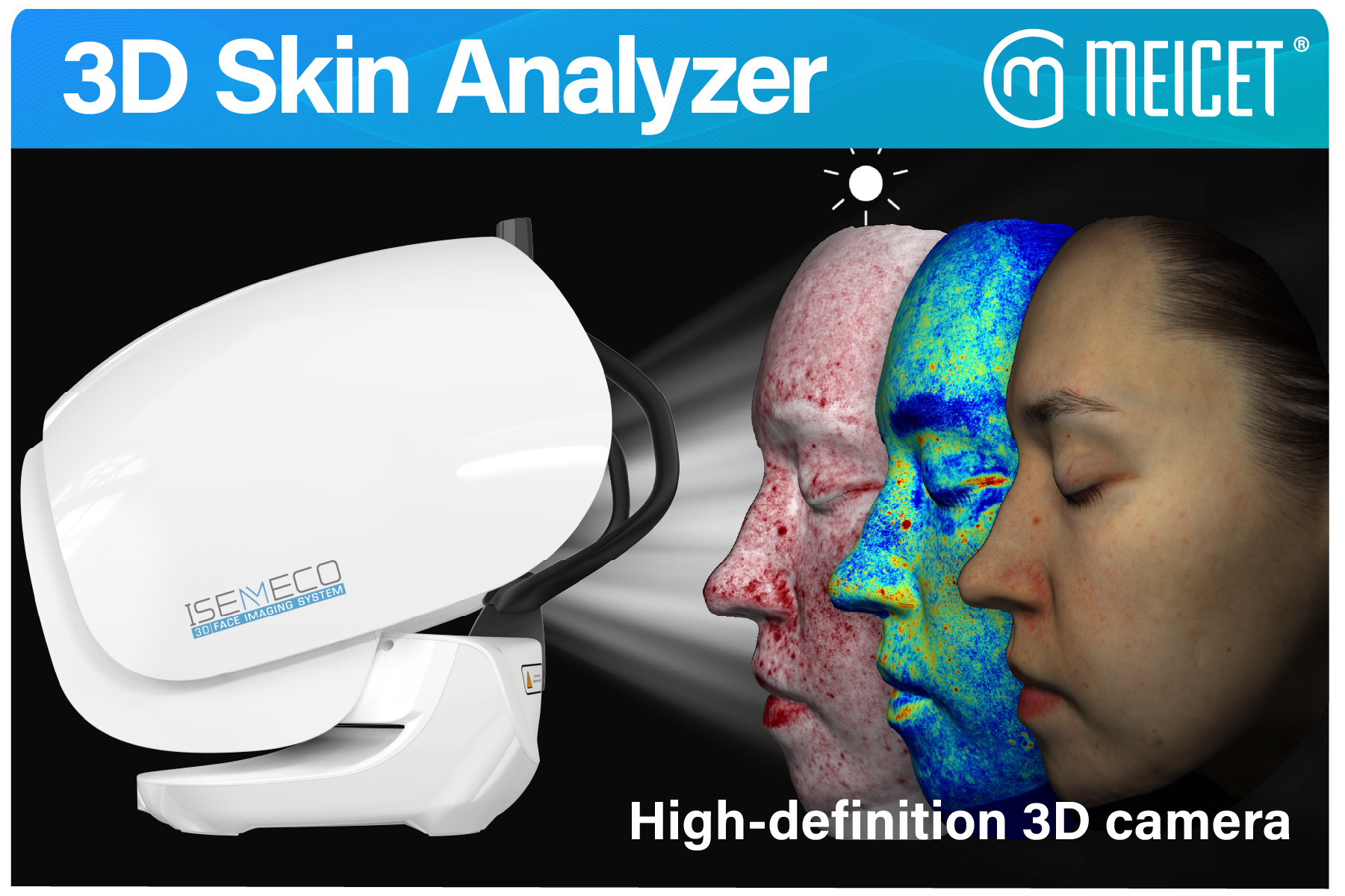 etting. Plastic surgeons require diagnostic tools that do more than superficial assessments; they need devices capable of revealing underlying structural conditions, vascular patterns, and deep tissue characteristics. A Skin Analyzer intended for clinical use must therefore meet rigorous standards of imaging fidelity, reproducibility, and data integrity. The choice of technology can mean the difference between an informed surgical plan and an avoidable complication.
Among the available options in the market, MEICET has established itself as a trusted name in clinical environments. The brand’s analyzers are designed with the understanding that medical professionals require more than compelling visuals—they require quantifiable, reproducible data. MEICET’s multispectral imaging technology captures skin across multiple light spectra, including cross-polarized and UV light, revealing details that are essential for pre-surgical assessment. Vascular lesions, deep pigmentation, and subclinical inflammation that might affect surgical approaches become clearly visible, allowing surgeons to plan with greater confidence.
The software architecture of a clinical-grade Skin Analyzer must also differ from consumer-oriented devices. MEICET’s proprietary algorithms are built to detect and measure specific biomarkers with high repeatability. For a plastic surgeon planning a facelift, laser resurfacing, or injectable treatments, understanding the precise distribution of elastosis, the depth of rhytids, and the patterns of vascularization is critical. MEICET’s quantitative analysis provides these metrics, transforming subjective visual assessment into objective clinical data that can be tracked over time.
Integration with existing clinical workflows is another vital consideration. A plastic surgery hospital typically manages extensive electronic medical records, and a standalone device that cannot communicate with these systems creates inefficiency. MEICET analyzers offer robust data management capabilities, allowing for seamless integration into patient records. This ensures that preoperative images and analyses become part of the permanent medical file, supporting both clinical decision-making and medicolegal documentation.
Patient communication in a surgical context carries unique weight. Individuals considering plastic surgery often experience anxiety about outcomes and uncertainty about whether their concerns are being understood. A high-resolution Skin Analyzer serves as a powerful communication bridge. When a surgeon can show a patient the exact areas of concern—illustrated through MEICET’s clear visual mapping—the consultation becomes a collaborative exploration. Patients gain realistic expectations about what procedures can achieve, and surgeons can document the baseline condition comprehensively, reducing the risk of postoperative misunderstandings.
Long-term reliability and regulatory compliance are non-negotiable for medical institutions. MEICET’s commitment to ongoing software development and adherence to international standards provides plastic surgery hospitals with confidence that their investment will remain clinically relevant. Regular updates ensure that the device keeps pace with evolving research and diagnostic techniques, while robust technical support minimizes downtime in busy surgical practices.
In conclusion, the selection of a Skin Analyzer for a plastic surgery hospital must be guided by clinical accuracy, data integrity, and seamless workflow integration. While many devices offer surface-level analysis, the demands of surgical practice require the depth and precision that MEICET delivers. For institutions where patient outcomes hang in the balance, choosing a diagnostic partner with proven medical credibility is not just a business decision—it is a clinical imperative.
Post time: Feb-06-2026


