


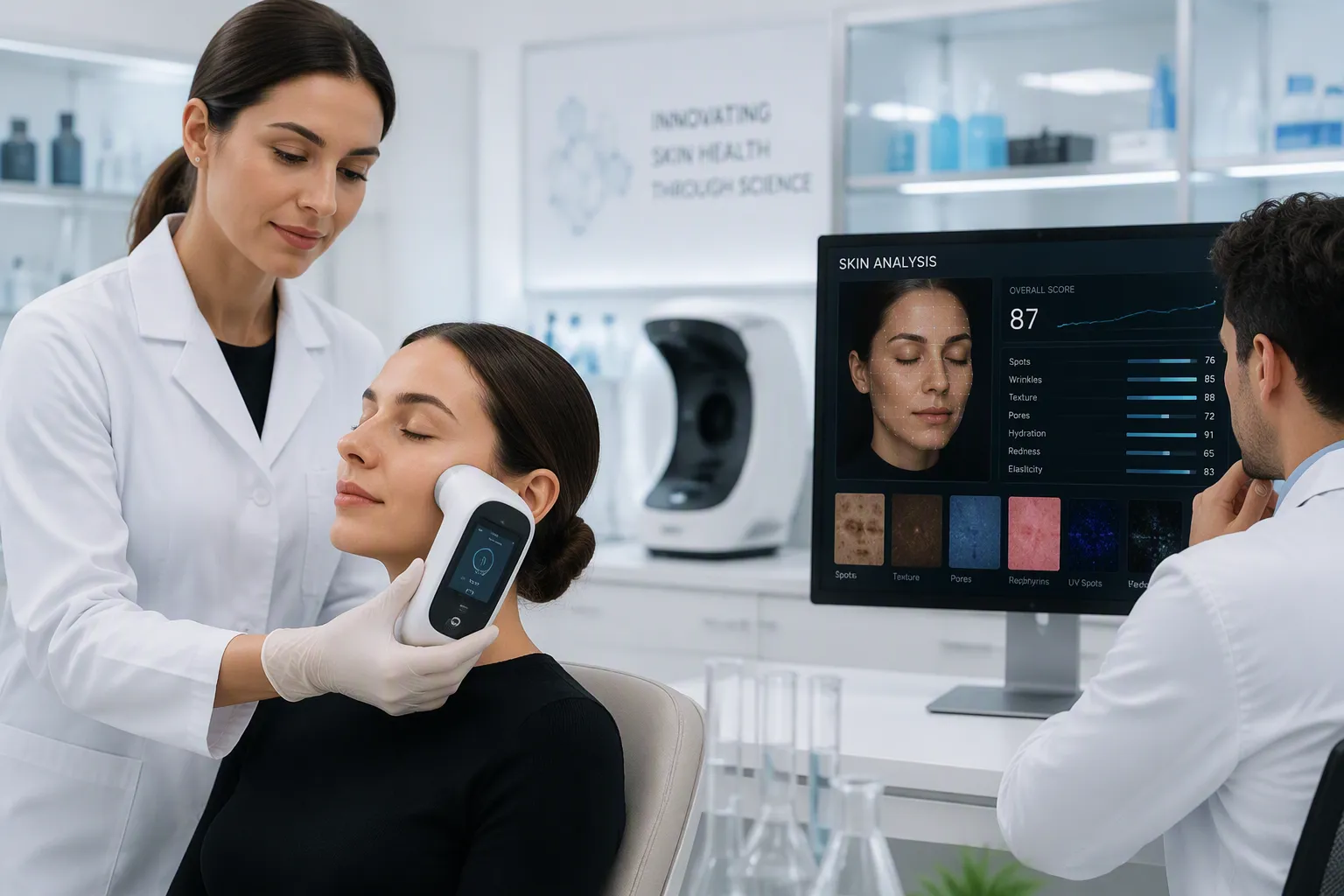
OEM skin analyzer manufacturing lets a brand outsource production to a specialized manufacturer. That partner builds custom devices under your label. I see this as a smart shortcut for skincare brands.
The manufacturer develops both imaging hardware and AI software. Many systems use multispectral imaging to capture high-definition facial images. This reveals moisture, pigmentation, pores, and wrinkles clearly.
You enter the market with a professional, certified device. You skip building your own production line entirely. That saves time and capital.
Key Takeaways
●OEM manufacturing lets you launch a custom skin analyzer without building your own factory, saving time and money.
●A reliable manufacturer handles both hardware and AI software, ensuring your device meets quality and safety standards.
●Choose a partner with strong technical skills, proper certifications, and clear communication to ensure a smooth product launch.
OEM Manufacturer Role and Technology
What OEM Manufacturing Means for Skin Analyzers
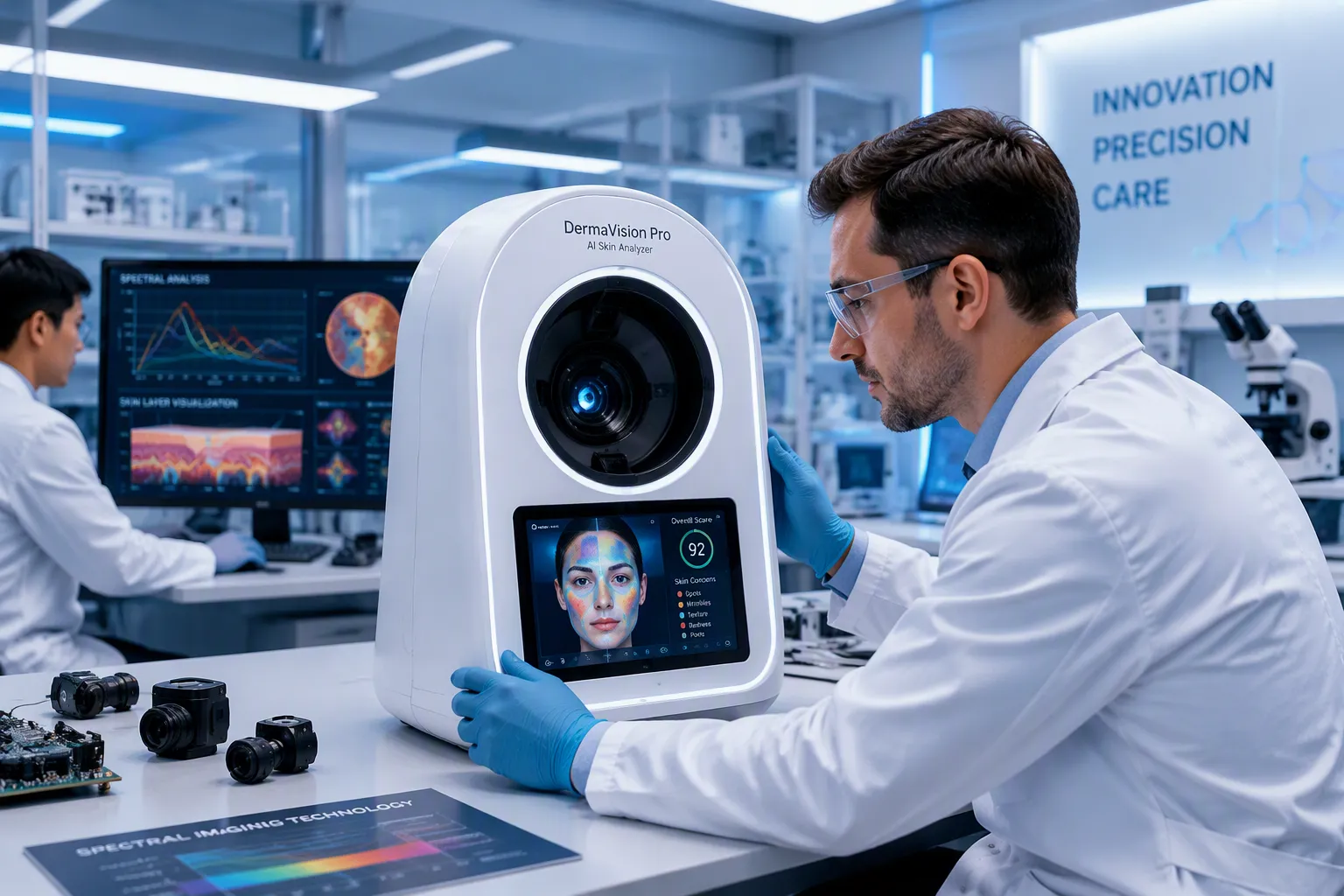
When I talk about OEM manufacturing in this industry, I describe a partnership where one company handles the entire engineering burden. The manufacturer takes responsibility for both sides of the product: the physical hardware and the digital intelligence inside it. On the hardware side, that means imaging sensors, precision lighting arrays, and the camera systems that capture facial data. On the software side, the same manufacturer builds the AI algorithms that interpret those images and generate patient reports.
A capable OEM partner brings serious engineering resources to the table. I look for facilities like a 3,000 square meter plant where over 60% of staff hold higher education degrees. The team typically includes embedded systems engineers, software developers focused on image processing and machine learning, plus a clinical testing group that validates performance. This dual expertise matters because skin analysis demands both precise optics and intelligent interpretation.
The manufacturer also manages regulatory compliance. CE certification and SGS verification signal that the device meets safety and quality benchmarks. I always check whether the manufacturer confirms certificates for the final configuration, since a document issued for one model does not automatically cover a customized version. Clinical testing adds another layer of trust, proving the device performs as claimed in real conditions.
Core Technologies: Spectra Imaging and AI Analysis
The magic happens when multiple light spectra work together. Modern systems use multispectral imaging that combines RGB white light, UV light in the 320–400 nm range, and polarized light. Each spectrum reveals different skin layers and conditions.
| Component | Specification |
|---|---|
| Camera | 50 MP industrial camera |
| Lighting | RGB white light, UV & Wood’s lamp (320–400 nm), Polarized light (PL) |
| Capture | 3D capture with 360° slicing on select models |
| Additional | Fixed lighting for repeatable shots; AI analysis engine for grading |
The imaging modes serve distinct purposes. RGB light captures surface conditions. Parallel polarization reveals skin texture. Cross-polarization penetrates deeper to show inflammation and redness. UV light exposes pigmentation issues and porphyrins, which indicate bacterial activity. A seventh-generation system can complete a full facial analysis in about 20 seconds.
The AI engine then processes these images. Intelligent face-positioning ensures consistent framing across sessions. Symptom extraction algorithms identify and grade concerns like moisture levels, pigmentation, pores, and wrinkles. The system generates automated reports that both practitioners and patients can understand.
I find the diagnostic accuracy data compelling. A pooled analysis of AI systems showed sensitivity of 0.86 and specificity of 0.88 compared to dermatologist assessments. The diagnostic odds ratio reached 44.36, with an area under the SROC curve of 0.922. For melanoma specifically, sensitivity hit 0.86 and specificity reached 0.94. These numbers demonstrate that a well-trained AI matches or exceeds clinical performance in controlled settings.
This combination of spectral imaging and machine learning transforms how skincare professionals evaluate patients. The manufacturer delivers a complete solution, not just a camera with lights attached.
The OEM Manufacturing Process Step by Step
Custom Design to Prototyping
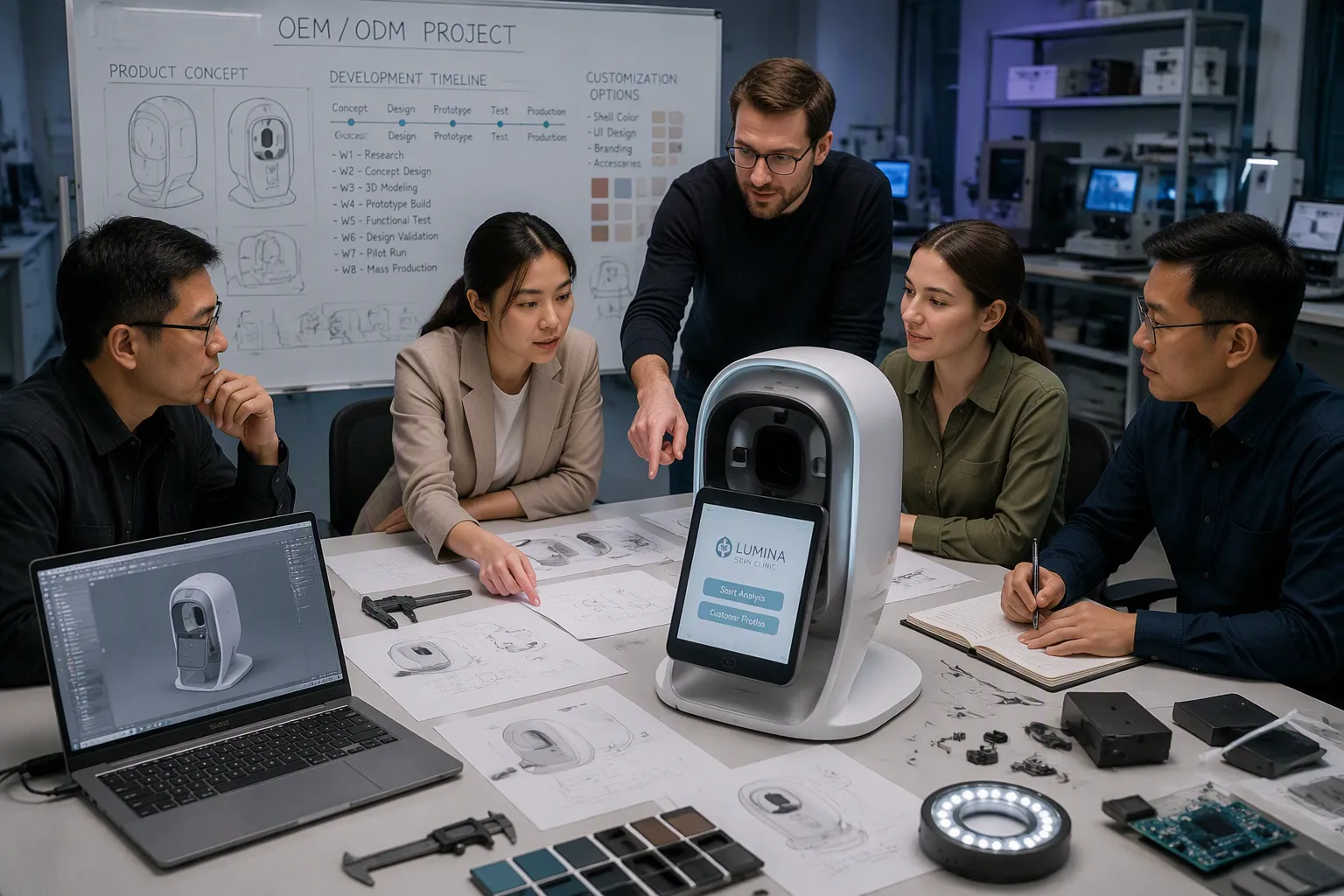
Every project begins with an initial consultation. I sit down with the brand team to define specifications. We discuss the device’s physical design, feature set, user interface, and software behavior. I ask about their target clients and clinical workflow. These answers shape every decision that follows.
The customization options go far beyond slapping a logo on a generic box. I work with brands on hardware casing, including white-labeling and color matching to their guidelines. The software UI displays the clinic’s logo prominently. We customize report wording, treatment protocols, and product-to-concern mapping. Some brands want their own catalogue uploaded into the system. Others need virtual onboarding for their staff. The goal transforms generic hardware into a proprietary diagnostic system that feels uniquely theirs.
Once we lock down the specifications, prototyping begins. I adapt existing designs when possible. This approach saves time and reduces risk. For full-design projects, the manufacturer builds new hardware from scratch. The prototype integrates imaging sensors, lighting arrays, and the AI processing software into a working unit.
Lead times vary considerably based on the approach. For full-design projects, several months typically pass from concept to production-ready units. Selecting an existing platform shortens that window dramatically.
For full-design projects (typical OEM work), lead times commonly span several months from concept to production-ready units, whereas selecting an existing platform can reduce time-to-market to weeks.
Regional differences also matter when planning your launch.
| Supplier Region | Lead Time (NPI to production) |
|---|---|
| Asia | 6–12 weeks |
| Europe | 10–20 weeks |
I share these numbers early so brands can align their marketing timelines with realistic production schedules.
Production, Assembly, and Quality Assurance
Once the prototype passes review, production begins. The assembly process brings together several key components. The skin analysis camera captures facial images with high resolution. A separate moisture detection device measures hydration levels that imaging alone cannot determine. An exclusive iPad serves as the display and processing unit. A USB 3.0 cable transfers data between the camera and the iPad. The AI processing runs through software on the iPad, generating the professional analysis report.
Quality assurance follows a structured protocol. I walk through five inspection stages with every batch:
1.Raw material inspection – verifies incoming ingredients meet specifications before use.
2.Water quality inspection – ensures the water used in production is pure and consistent.
3.Environmental monitoring – checks air quality and cleanliness of the production area to prevent contamination.
4.Semi-finished product inspection – validates intermediate batches for consistency before final assembly.
5.Finished product inspection – includes visual checks, labeling, weight, pH, viscosity, centrifugation, stability, and microbiological testing to confirm final compliance.
Certifications add another layer of assurance. CE certification confirms compliance with European health and safety standards. Medical Device Regulation (EU) 2017/745 governs certification for skin analyzers classified as medical devices. ISO 22716 certification ensures the manufacturing facility maintains standardized production processes. The manufacturer also maintains a Product Information File aligned with EU Cosmetics Regulation 1223/2009, containing safety reports, effectiveness evidence, and labeling documentation.
Each batch receives a Certificate of Analysis post-inspection. This document certifies compliance and gives brands confidence in every unit they ship.
Benefits and Choosing a Reliable Manufacturer
Customization and Cost-Effectiveness
OEM manufacturing gives you complete control over branding. I can customize the software logo, machine housing, startup screen, and user interface. Packaging, manuals, and marketing materials all carry your brand identity. Multi-language software options help you serve global distributors effectively.
The cost advantages are substantial. Building an in-house production line demands high capital investment for infrastructure, equipment, and staff. OEM manufacturing eliminates that burden. You pay for the finished product, not the factory that makes it. The manufacturer’s economies of scale reduce your ongoing costs significantly.
Time-to-market improves dramatically. In-house development often takes six months to a year or more. OEM partnerships compress that timeline to weeks or a few months. You leverage existing technology and production capacity rather than waiting for your own facility to come online.
| Aspect | OEM Manufacturing | In-House Production |
|---|---|---|
| Initial Investment | Low to moderate | High capital required |
| Time to Market | Weeks to months | Six months or more |
| Operational Responsibility | Low | High |
| Scalability | Easy to adjust volumes | Requires new investment |
Key Criteria for Selecting a Partner
I evaluate several factors when choosing a manufacturer. Technical expertise matters most. Look for in-house hardware R&D and software development capabilities. Advanced AI algorithm integration provides a stronger long-term competitive advantage.
Certifications serve as objective proof of quality. CE certification demonstrates conformity with European health and safety standards. ISO 13485 indicates compliance with quality management systems for medical devices. Equipment lacking these certifications poses liability risks and may fail prematurely.
Industry experience signals reliability. A manufacturer with years of presence understands market needs and improves product design accordingly. Client testimonials reveal real-world performance. A partner who embraces feedback shows willingness to improve.
Communication clarity determines project success. Ask about training and after-sales support. Inquire about technical support response times. Confirm they offer video tutorials, manuals, and online assistance. A responsive manufacturer prevents small issues from becoming costly delays.
Flexibility in customization separates adequate partners from exceptional ones. Ask about multilingual support and regional protection policies. Discuss legal agreements that mitigate cross-border risks. The right manufacturer adapts to your business direction rather than forcing you into their template.
Choosing the right manufacturer is the foundation of a successful product—one that combines robust technology, rigorous quality control, and seamless customization.
OEM skin analyzer manufacturing combines a manufacturer’s dual hardware and software expertise with a clear step-by-step process. I walked you through consultation, prototyping, production, and quality assurance. The benefits are clear: full branding control, lower investment, and faster market entry. Choosing the right manufacturer is the foundation of a successful product—one that combines robust technology, rigorous quality control, and seamless customization.
FAQ
How long does a typical OEM project take from start to finish?
Full-design projects usually span several months from concept to production-ready units. Choosing an existing platform shortens that window dramatically. Asian suppliers typically deliver new product introductions within 6–12 weeks.
What certifications should I verify before signing with a manufacturer?
I check for CE certification and ISO 22716 compliance. CE confirms European health and safety standards. ISO 22716 ensures standardized production processes. I also request the Certificate of Analysis for each batch.
Can I customize the software interface and reports for my clinic?
Yes. I can change the software logo, startup screen, and user interface. Report wording and treatment protocols adapt to your brand. Multi-language options help you serve international distributors effectively.
Post time: Sep-02-2026


