


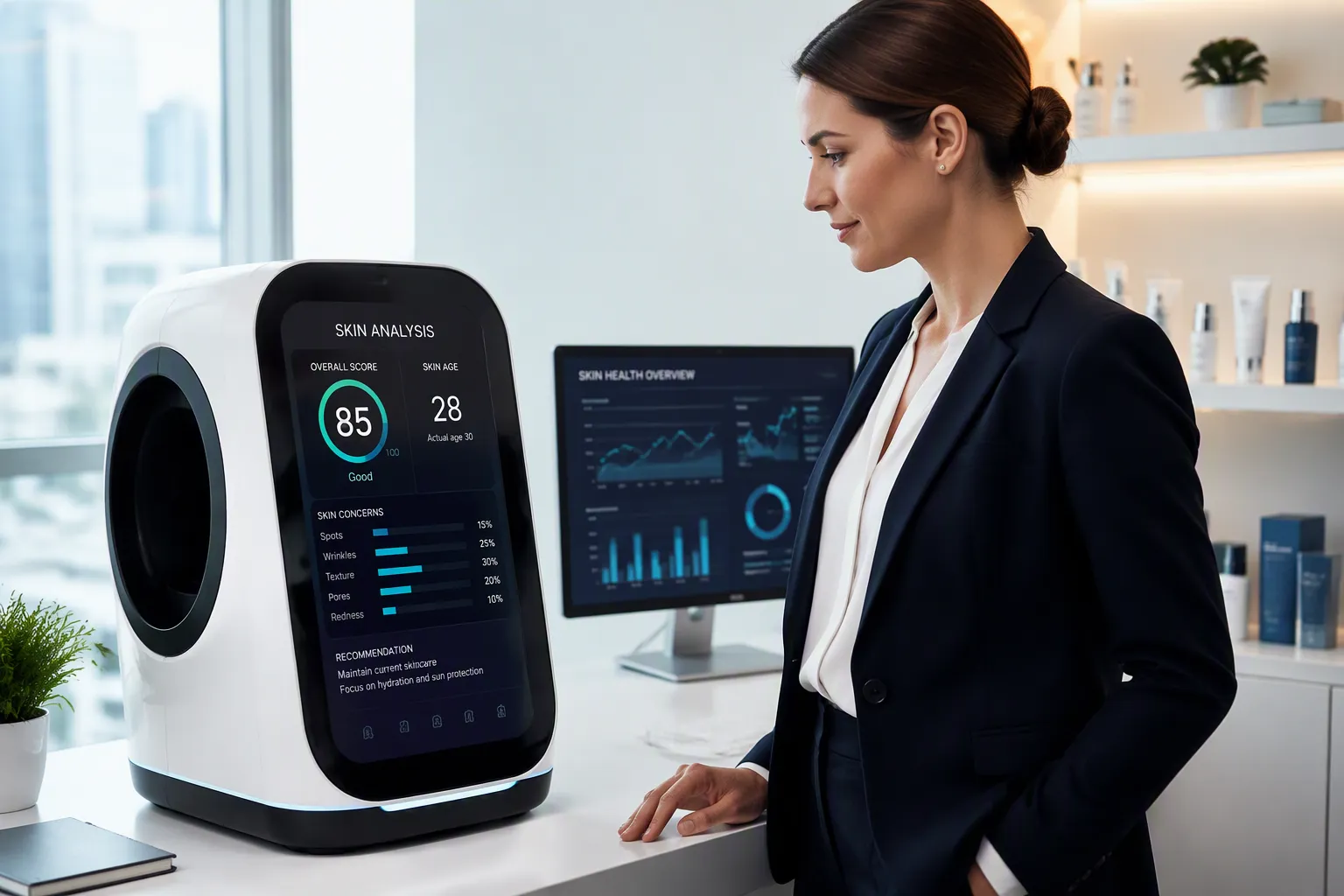
When you’re ordering skin analyzers by the hundreds, a wrong choice can cost you clients, cash, and credibility. So, how do you confidently compare manufacturers before signing that purchase order? I evaluate three pillars: criteria, manufacturer profiles, and validation steps. This systematic framework helps you avoid costly mistakes.
Key Takeaways
●Compare skin analyzers on accuracy, cost, and support to find the best fit for your business.
●Match the manufacturer to your business type: premium brands for clinics, cost-effective ones for spas.
●Validate manufacturers with pilot tests, certifications, and user reviews before placing a bulk order.
Key Criteria for Comparing Skin Analyzer Manufacturers
Accuracy and Clinical Validation
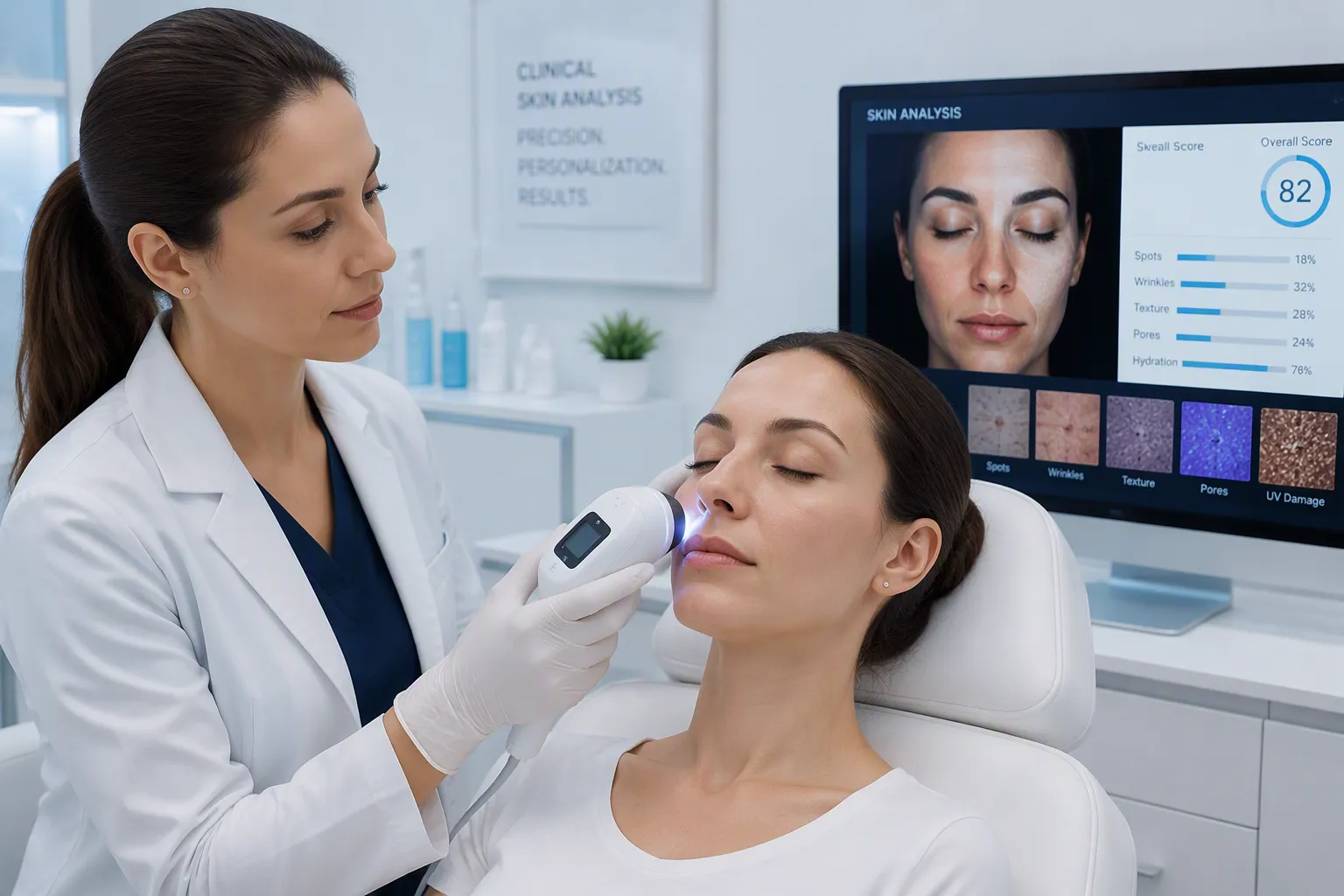
I start with accuracy because it determines whether your investment delivers trustworthy results. A skin analyzer that misreads conditions will erode client confidence quickly. Look for devices backed by published clinical studies, not just marketing claims.
Clinical validation matters across several dimensions. First, examine how the device performs across different skin tones. One study comparing classification systems found striking differences. The Monk Scale delivered consistent accuracy between 89–92% across all skin tones, with no statistically significant variation. The Fitzpatrick Scale, however, showed lower performance on lighter skin (0–20% accuracy) and performed better on darker tones, a difference that was highly significant. This tells me that the classification system a manufacturer uses directly impacts whether your diverse clientele receives accurate assessments.
Second, consider test-retest reliability. Research from Wake Forest School of Medicine validated an AI skin analysis system by measuring test-retest reliability at 95%. The same system showed over 80% correlation with physician assessments and professional imaging devices. These numbers demonstrate consistency across repeated measurements and alignment with gold-standard clinical tools.
Third, evaluate what the device actually measures. For pigmentation issues, AI-driven analyzers achieve up to 90% accuracy in identifying hyperpigmentation when trained on large datasets. For redness and vascular conditions, polarized light imaging systems demonstrate high sensitivity in detecting erythema, especially on the forehead. A clinical validation study comparing a handheld facial analysis system to a board-certified dermatologist showed a 69% agreement rate across 14 skin characteristics, with highest agreement for erythema (83.7%) and wrinkles (81.6%).
●Imaging modes: Look for multiple capture modes (cross-polarized, UV, and standard) to assess different skin layers.
●AI validation: Demand evidence that algorithms were trained on diverse datasets representing your target demographic.
●Repeatability: Ask for intra-device consistency data across multiple captures of the same subject.
●Privacy: Verify data handling complies with regulations like GDPR for EU markets. Obtain client consent before saving or sharing skin reports.
●Software capabilities: Check for OEM/ODM options, customizable report modes, cloud storage, and multi-language support.
Cost, Scalability, and After-Sales Support
Price varies dramatically across the market. Canfield VISIA hardware units typically range from $7,000 to $20,000 per unit. Other manufacturers, like Fotromed, price their skin analysis machines between $2,000 and $3,000, depending on configuration. This gap means your budget directly influences which manufacturer you can approach.
Cost extends beyond the initial purchase. Consider scalability—can the manufacturer fulfill your order volume consistently? Ask about lead times and production capacity before committing.
After-sales support often separates smooth operations from costly downtime. Premium manufacturers like Canfield and Zemits typically offer dealer-led support with local training, showrooms, and local spare parts. Cost-effective manufacturers like Fotromed provide factory-direct training, original spare parts, and international technical service centers across Europe, USA, and Australia. Warranties range from one to two years depending on the model.
I recommend evaluating the total cost of ownership. Factor in training time, software update frequency, and how quickly you can obtain replacement parts. A cheaper unit that requires weeks for repairs costs more than a pricier device with local support. Choose a manufacturer whose support model matches your geographic location and operational needs.
Top Skin Analyzer Manufacturers and Their Strengths
Premium Brands for Clinical Settings
I find that premium brands like Visia from Canfield Scientific dominate clinical dermatology settings. These manufacturers focus on precision and patient education. The Visia system uses IntelliFlash cross-polarized UV light photography to capture images both on the skin surface and beneath it. Its patented RBX technology separates red and brown colors. This allows me to assess hyperpigmentation, spider veins, and inflammatory changes with high accuracy. The system generates photographs using standard, UV, and cross-polarized light. These visual aids help patients understand their own skin conditions.
The clinical data supports this investment. In one study, 86% of respondents reported that Visia analysis helped them understand their initial concern. Another 86% noted that the system brought other skin problems to their attention. Most compelling for me, 100% of subjects would recommend Visia analysis to others. Also, 62% would prefer a practice with a Visia system over one without. These numbers show that premium manufacturers deliver value beyond hardware. They build patient trust and enable tracking of therapy efficacy over time.
Cost-Effective Manufacturers for Spas and Retail
For spas and retail businesses, I recommend cost-effective manufacturers like Meicet. Basic models start at $1,000. Medical-grade systems exceed $20,000. This price gap shows that Meicet occupies the cost-effective middle ground. The company recommends its commercial models for general beauty salons. Entry-level models work well for startups and budget-conscious buyers.
I find the Meicet S7 particularly compelling for bulk orders. It captures 9 intelligent images using multi-spectral imaging. This includes RGB, UV, cross-polarized, and parallel polarized modes. The 24MP ultra-micro lenses with Spyder CHECKR calibration ensure consistent quality. The device offers multi-terminal access via iPad or PC for remote diagnosis. It also includes customizable SaaS and CRM integration. Features like skin aging simulation and 3D local texture analysis enhance professional appeal. Meicet also offers OEM versions for rebranding with minimum order quantities of 50 units. They provide volume discounts for orders of 5 or more. This manufacturer provides a practical path for spas wanting professional-grade analysis without the clinical price tag.
Validating Manufacturer Reliability Before a Bulk Order
Pilot Testing and Demo Units
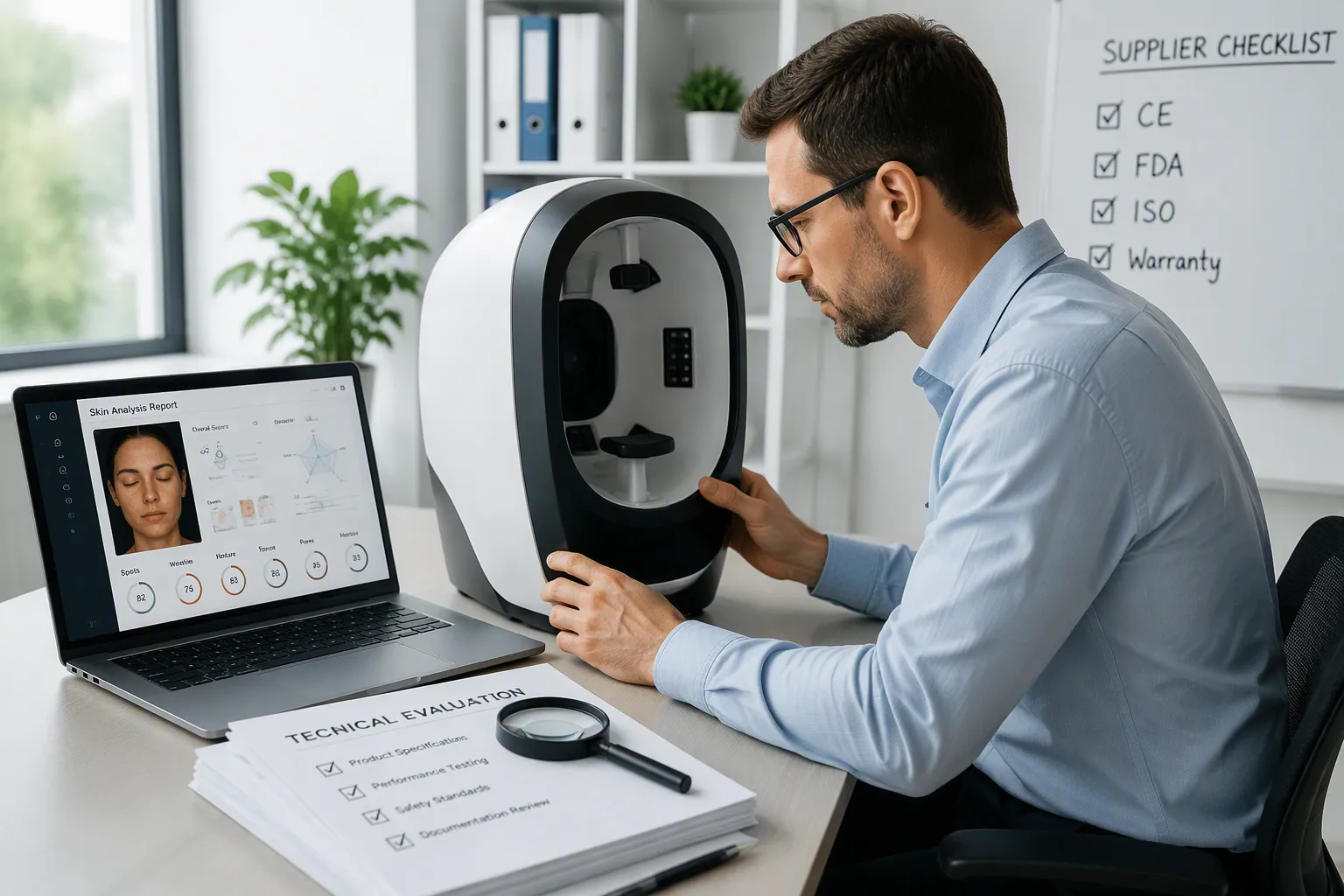
I start with pilot testing. A demo unit lets me test the device in my own environment. I evaluate consistency across multiple units. This step prevents surprises after bulk delivery.
I request a live remote software demo first. This tests interface speed and functionality. I verify the software runs smoothly. I also check the processing power and integration options.
I ask for a comprehensive technical specification sheet. This document details every parameter. I compare it against my requirements.
I verify the manufacturer’s quality control processes. I ask about production capacity. Can they meet my order volume? I request a photographic pre-shipment inspection. This confirms the unit’s condition before shipping.
I agree on Service Level Agreements (SLAs) for returns and spare parts. I define Incoterms to clarify shipping responsibilities. I insist on serialized packing lists and calibration certificates. For medical applications, I maintain certificates of conformity and test reports.
I confirm OEM/ODM capabilities. I ask about lead times and minimum order quantities. I negotiate after-sales support. This includes remote diagnostic access, on-site technical training, and access to clinical testing data.
Certifications, Warranties, and User Reviews
I verify third-party certifications. Hardware must carry CE, FDA, or ISO marks. These certifications prove the device meets safety and performance standards.
I demand transparent warranty terms. A minimum one-year warranty covers hardware replacements and critical software bug fixes. This protects my investment.
I assess the quality of onboarding materials. I look for comprehensive video tutorials, accurately translated user manuals, and live virtual training sessions. Good training reduces staff learning time.
I check user reviews. Verified reviews from other buyers give me real-world insights. Here is a sample of feedback for the SA-DM2 skin analyzer:
| Reviewer | Date | Review |
|---|---|---|
| Una | Jul 16, 2025 | I purchased the SA-DM2 skin analyzer machine for my clinic, and it exceeded my expectations. The analysis is very accurate, and clients can clearly see their skin issues. It has helped me recommend personalized treatments effectively. |
| Namit | Mar 13, 2025 | This skin analyzer machine is very user-friendly. My staff picked it up quickly, and it delivers consistent results every time. Clients are impressed by the detailed reports, and it makes consultations much more professional. |
| Cybelle | Nov 14, 2024 | The SA-DM2 skin analyzer machine has completely changed how I consult with clients. They love seeing the before-and-after analysis and feel more confident in following my skincare recommendations. It really helps build trust. |
| Natalya | May 15, 2024 | I’ve tried several skin analysis devices before, but the SA-DM2 is by far the most precise and professional. The reports are clear, easy to explain, and clients appreciate seeing real evidence of their skin conditions. |
| Johanna | Feb 06, 2024 | After using the skin analyzer machine for the first time, I could see immediate insights into my skin hydration and pore conditions. My clients also noticed the difference, which makes recommending treatments much easier. |
These reviews highlight accuracy, user-friendliness, and client trust. Positive feedback from multiple buyers strengthens my confidence in the manufacturer.
I request a live remote software demo to test interface speed and functionality. I ask for a comprehensive technical specification sheet before committing.
I compare skin analyzers using three steps. First, I evaluate criteria like accuracy and cost. Second, I match manufacturers to my business type. Third, I validate reliability through pilot testing and certifications. No single manufacturer fits every business. A clinic needs premium features. A spa needs cost-effective solutions. Start your comparison today by downloading our manufacturer checklist.
FAQ
What minimum order quantity should I expect from manufacturers?
Most cost-effective manufacturers like Meicet require around 50 units for OEM rebranding. Premium brands typically accept smaller orders but charge significantly more per unit. Always confirm MOQ before requesting quotes.
How long do warranties typically last on skin analyzers?
Most manufacturers offer one to two years of coverage depending on the model. I recommend confirming whether the warranty includes hardware replacement and software bug fixes before signing your purchase agreement.
Should I choose a premium or cost-effective manufacturer for my business?
Consider your clientele and budget. Clinics serving medical patients benefit from premium systems like Visia. Spas and retail settings achieve excellent results with cost-effective options like Meicet at a fraction of the price.
Post time: Sep-02-2026


