


The skin analysis device market has matured rapidly by 2026, with AI-driven imaging, 3D reconstruction, and cloud-based longitudinal tracking becoming standard rather than optional. For dermatologists, aesthetic clinics, and beauty retailers, selecting the right skin analyzer now involves evaluating not just image resolution but also algorithmic accuracy, data security, and integration with treatment workflows. This guide outlines the critical criteria for choosing a skin analyzer in 2026, using MEICET as a representative example of current best practices.
1. Imaging Technology: Beyond Visible Light
A modern skin analyzer must capture multispectral images—typically cross-polarized, parallel-polarized, and UV light. Cross-polarized light eliminates surface glare to reveal vascular lesions, redness, and pigmentation beneath the stratum corneum. UV light highlights porphyrins, sun damage, and oil gland activity. In 2026, devices that offer only standard white light are considered obsolete. Leading options, including MEICET‘s latest analyzers, combine three to five spectral bands with high-resolution sensors (32 megapixels or above) to visualize pore-level details.
2. AI Analysis Engine: Accuracy and Updateability
The AI model behind the device determines diagnostic consistency. Look for systems trained on large, diverse datasets that include multiple skin types (Fitzpatrick I–VI), ages, and conditions. In 2026, explainable AI features are gaining traction: the system should not only output scores but also highlight exactly where pigmentation or wrinkles have changed compared to previous visits. MEICET’s neural network, trained on over 10 million global skin profiles, delivers instant quantification of 28 parameters and automatically flags region-of-interest changes over time. Regular over-the-air algorithm updates are another must—static models quickly fall behind.
3. 3D Reconstruction and Surface Area Measurement
Two-dimensional analysis is no longer sufficient for tracking volume loss, scar elevation, or symmetry. Three-dimensional skin analyzers reconstruct facial contours from multiple angles, allowing precise measurement of wrinkle depth, pore volume, and even skin lifting after treatments. In 2026, top-tier devices incorporate structured light or stereo vision. MEICET’s MD200 3D Skin Imaging Analyzer, for example, generates a full 3D model that rotates on screen, enabling clinicians to assess nasolabial folds and periorbital wrinkles from any perspective.
4. Cloud Connectivity and Longitudinal Tracking
A skin analyzer that stores scans only locally limits clinical value. Cloud-based platforms enable secure storage, historical comparisons, and trend charts that show whether a patient’s pigmentation or erythema is improving or worsening over months. In 2026, data privacy compliance (GDPR in Europe, HIPAA in North America, PIPL in China) is non-negotiable. MEICET‘s cloud solution includes dedicated servers for different regions, automatic backup, and patient-specific timelines that integrate with practice management software. This feature is especially valuable for multi-location chains needing consistent reporting.
5. Speed and User Experience
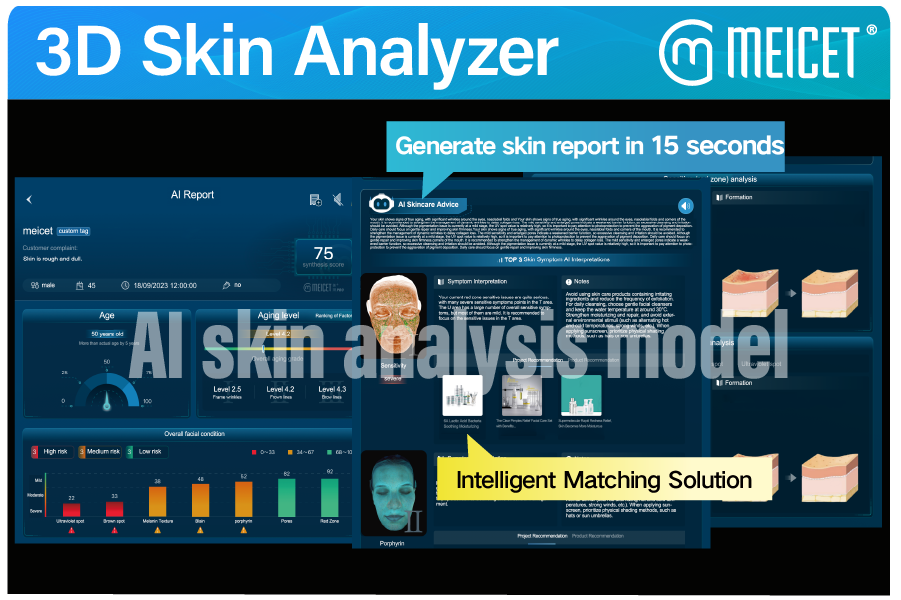
Clinic workflow efficiency depends on capture and analysis speed. In 2026, competitive devices complete a full multispectral capture and AI report generation in under 30 seconds. Automated facial landmark detection eliminates manual alignment, and one-click PDF export with customizable branding allows seamless client communication. MEICET’s touchscreen interface guides operators step by step, reducing training time to minutes.
6. Certifications and Clinical Validation
For medical use, regulatory approvals such as CE-MDR (Europe), FDA clearance (United States), or NMPA (China) are essential. Beyond certifications, look for published correlation studies comparing AI measurements against expert manual assessments or biopsy-validated references. MEICET holds CE, ROHS, and other international certifications, along with more than 30 national patents, and has conducted clinical validation studies that demonstrate high agreement coefficients.
7. Total Cost of Ownership and After-Sales Support
The purchase price is only part of the equation. Consider subscription fees for cloud storage, algorithm update costs, and warranty terms. In 2026, many brands offer tiered plans. MEICET provides a transparent pricing model that includes lifetime algorithm updates and remote technical support, plus on-site training for larger accounts.
Why MEICET Stands Out in 2026
As a Shanghai-based brand with a growing global footprint, MEICET has integrated all the above criteria into its product lineup. Its D9 and MD200 series combine 32MP 3D imaging, AI analysis of 28 skin parameters, and a secure cloud platform with dedicated servers in North America, Europe, and Asia. The company’s participation in major international exhibitions like IMCAS and the Hong Kong Beauty Expo, along with partnerships with L‘Oréal China, Mary Kay China, and other global names, underscores its industry credibility. For clinics seeking a future-proof skin analyzer that balances clinical rigor with operational ease, MEICET represents a benchmark in 2026.
When choosing a skin analyzer in 2026, prioritize multispectral 3D imaging, an AI engine that learns continuously, robust cloud tracking, and full regulatory compliance. Test the device in your own clinic environment if possible, evaluating capture speed and report clarity. Brands like MEICET offer demonstration units and remote online trials, allowing buyers to compare performance directly. The right investment will not only improve diagnostic accuracy but also boost patient engagement and retail revenue through personalized, data-driven skincare recommendations.
Post time: May-29-2026


