


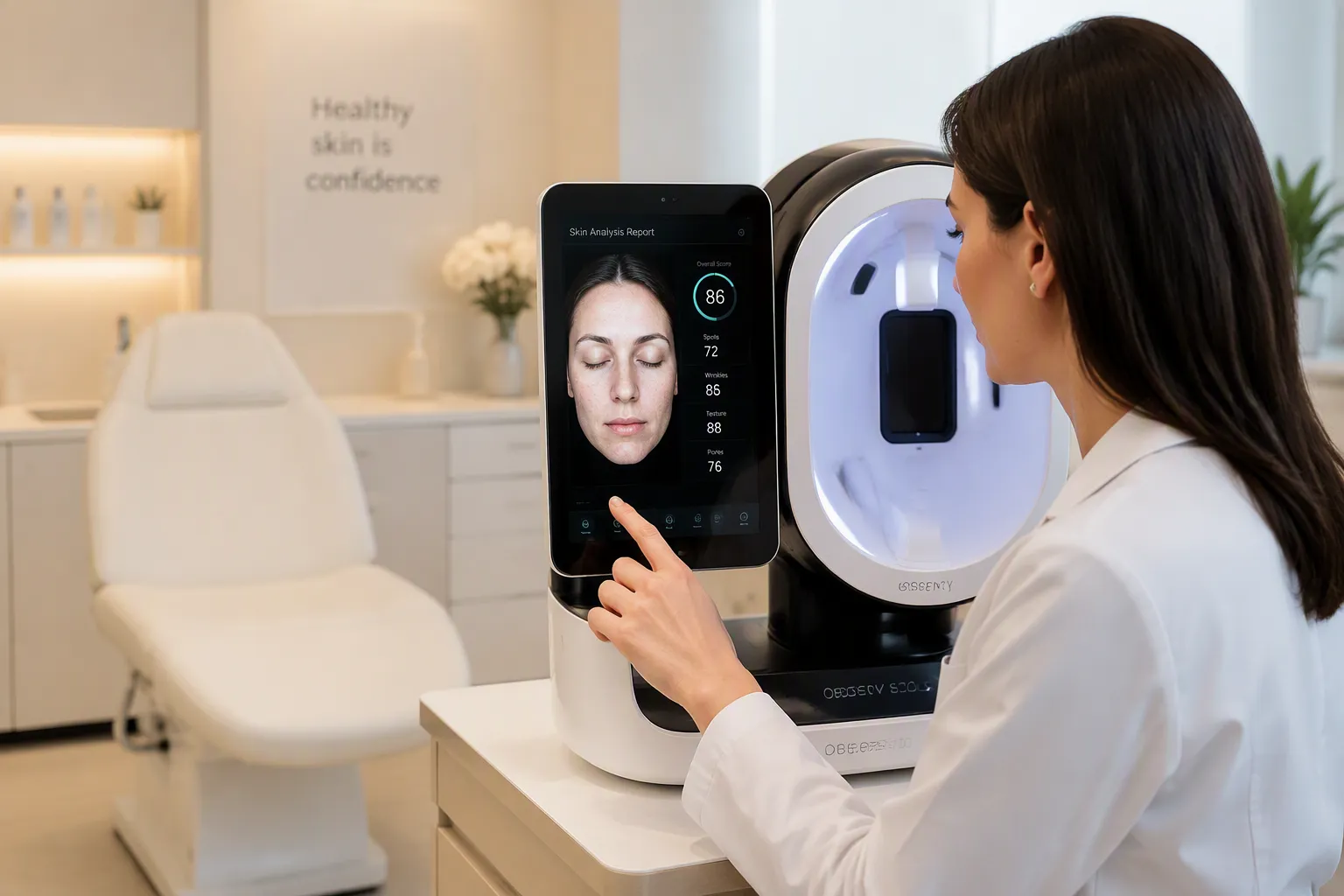
Quick Answer: To become a 3D skin analysis machine distributor, you need to complete three parallel tracks: (1) establish the legal business entity with import/export rights and medical device sales qualifications if applicable, (2) secure distribution rights from a manufacturer like MEICET by demonstrating market reach and technical capability, and (3) build the operational infrastructure for regulatory compliance, clinical training, and after-sales support. The global skin analysis systems market is growing steadily, with increasing demand from aesthetic clinics, dermatology practices, and medical spas for non-invasive diagnostic tools . The most successful distributors are not simply resellers—they become local market educators who can demonstrate measurable clinical value to their customers.
Key Takeaways:
- Regulatory classification determines your pathway: 3D skin analyzers may be classified as medical devices or general wellness tools depending on intended use claims and target market .
- Manufacturer support varies significantly: Established brands like MEICET offer training, marketing materials, and technical support that directly impact your ability to close sales .
- Market demand is strongest in aesthetic clinics and medical spas, where skin analysis serves as both a diagnostic tool and a consultation conversion tool .
- Initial investment includes more than equipment cost: Budget for regulatory compliance, staff training, demo units, and working capital for inventory.
- Exclusive territories typically require purchase commitments: Many manufacturers set annual sales targets and territory performance requirements for exclusive distribution rights.
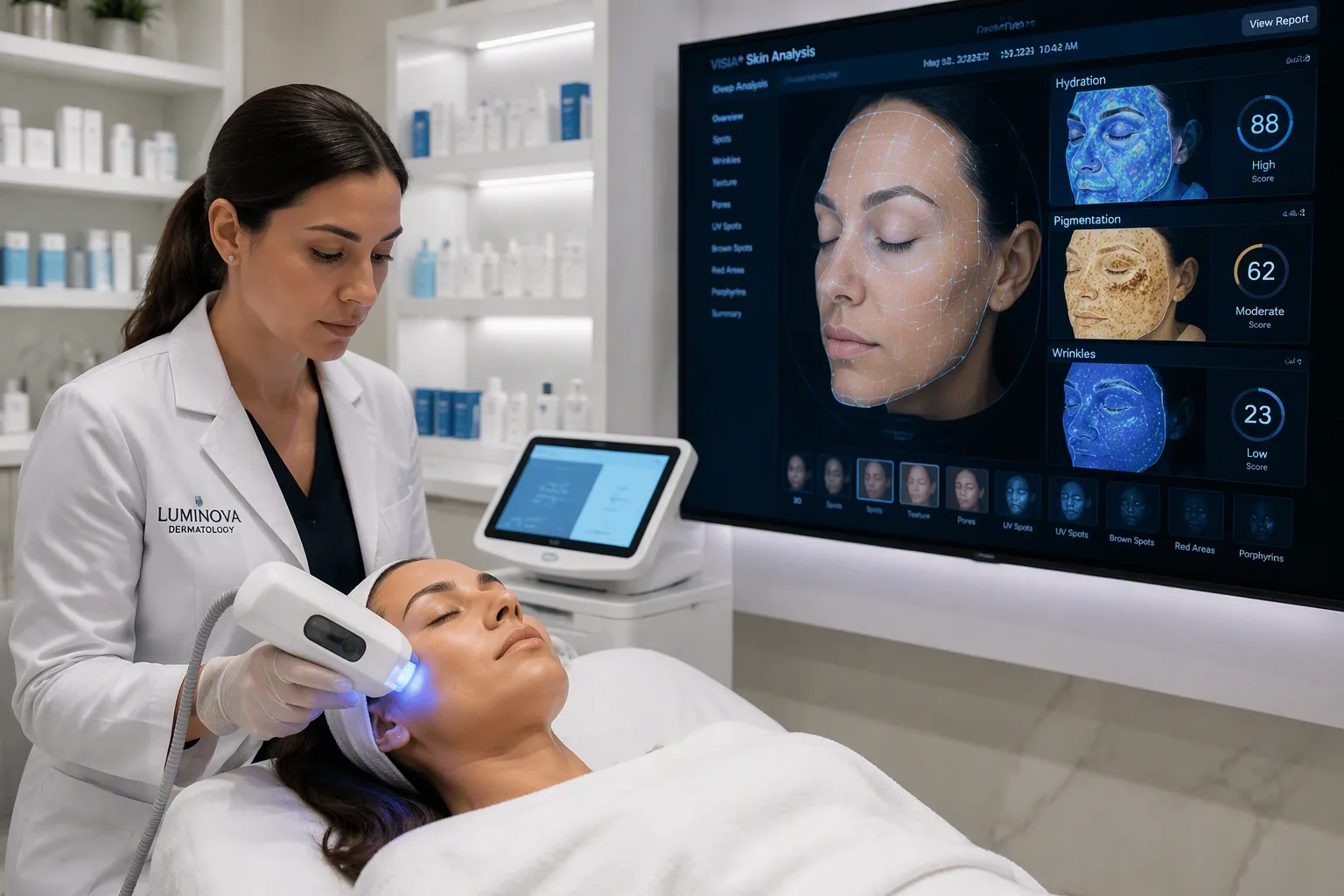
Understanding Your Regulatory Obligations Before You Sign Anything
The regulatory pathway for distributing 3D skin analysis machines depends entirely on how the device is classified in your target market—and this classification determines everything from certification requirements to what claims you can legally make. A skin analysis device marketed for general cosmetic assessment occupies a different regulatory category than one making medical diagnostic claims such as melanoma detection or acne grading.
In the European Union, devices intended for medical purposes fall under the Medical Device Regulation (MDR) 2017/745, requiring CE marking through a Notified Body for Class IIa or higher devices . Devices positioned as wellness or cosmetic tools may self-certify under Class I, but this classification restricts the claims you can make to customers. The distinction is not merely bureaucratic—a distributor who sells a wellness-classified device while making medical claims creates regulatory liability for themselves and their customers.
In the United States, the FDA determines classification based on intended use and predicate devices. A 510(k) clearance may be required if the device makes diagnostic claims or is substantially equivalent to a cleared medical device . Devices marketed solely for cosmetic purposes without medical claims may avoid premarket review, but the marketing language must be carefully controlled.
For importers and distributors in any market, the essential documentation to request from the manufacturer includes: CE certificates and Notified Body scope (for EU), FDA clearance letters or 510(k) summaries (for US), ISO 13485 quality management certification, IEC 60601 safety and EMC test reports, and software validation documentation . A manufacturer that cannot provide these documents limits your ability to operate in regulated markets.
Table 1: Distributor Qualification Requirements by Market
Market Device Classification Key Regulatory Requirements Documentation from Manufacturer European Union CE Marking (Class I self-certify or IIa via Notified Body) MDR 2017/745 compliance; EU Authorized Representative for non-EU manufacturers CE certificate, Technical File, Clinical Evaluation Report United States FDA 510(k) if medical claims; cosmetic if no claims Establishment registration; device listing; marketing language control 510(k) clearance letter or predicate rationale United Kingdom UKCA marking (post-Brexit) UK MDR 2002 compliance; UK Responsible Person UKCA certificate, ISO 13485 Canada Health Canada Medical Device License Class I-IV depending on risk; Canadian Importer license MDR license, ISO 13485 Australia TGA registration Class I-IV; Australian Sponsor required TGA conformity assessment certificate China NMPA registration Class I (filing) to Class III (registration); local agent required Registration certificate, test reports Sources: EU MDR 2017/745, FDA guidance, Health Canada, TGA
Finding and Securing the Right Manufacturer Partnership
The manufacturer you choose determines your product quality, your regulatory support, and your ability to compete on clinical value rather than price alone. MEICET (Shanghai May Skin) represents one established option in the 3D skin analysis space, offering products including the MC10 portable 3D analyzer and MC880 series for professional applications . The company positions its devices for hospitals, dermatology practices, medical spas, and skin care centers, with product development focused on advanced algorithms and HD imaging .
When evaluating manufacturers, consider these criteria:
Regulatory support capability: Does the manufacturer provide CE certificates, ISO 13485 documentation, and technical files you can submit to local regulators? Manufacturers with established export experience typically maintain these documents and can provide them efficiently.
Clinical training infrastructure: Will the manufacturer train your technical team and your customers‘ clinical staff? Effective training covers device operation, image interpretation, and patient consultation workflows. MEICET’s product documentation emphasizes multi-language support and software updates every 3-6 months, which supports ongoing distributor operations .
Marketing and demo support: Professional distributors need demo units, patient education materials, and ROI calculation tools. Manufacturers that provide these reduce your customer acquisition cost and shorten the sales cycle.
Territory protection and performance terms: Exclusive distribution agreements typically require minimum purchase commitments and territory performance targets. Understand whether exclusivity is based on demonstrated sales performance or requires upfront inventory investment.
Commercial terms: Request pricing tiers, payment terms, shipping arrangements (EXW, FOB, or CIF), warranty coverage, and spare parts availability. Standard warranty periods for skin analysis devices are 12-24 months, with extended support available through distributor agreements .
Building Your Operational Infrastructure
Successful distribution requires infrastructure beyond product inventory—you need technical support, customer training, and demonstration capabilities to convert prospects into customers. The distributor‘s value proposition to clinics and spas is not merely supplying equipment; it is enabling the customer to generate measurable return on their investment through improved consultations, higher treatment plan acceptance, and better patient retention.
Technical support and service capability: Clinics that cannot operate their skin analyzer efficiently will not recommend it to peers. Establish a service workflow that includes remote diagnostics, spare parts inventory, and response time commitments. Standard distributor service levels include response times under 4 hours for critical issues and next-day availability for replacement components .
Clinical training program: Train your customers’ staff to conduct effective skin analysis consultations. This involves not only device operation but also image interpretation, patient communication, and integration into treatment planning workflows. Research on demo effectiveness shows that pre-qualification, scripted 10-15 minute demonstrations, and calibrated imaging protocols significantly improve conversion rates .
Demo and evaluation units: Most clinics will not purchase a skin analyzer without a trial or demonstration. Maintain at least one demo unit that can be rotated among prospects, with a structured evaluation protocol that quantifies the device‘s impact on consultation quality and treatment plan acceptance.
Data privacy compliance: 3D skin analysis generates patient images and skin condition data. In markets with privacy regulations (GDPR in Europe, HIPAA in the US), your customers need guidance on consent procedures, data storage, and image retention policies. Distributors that provide privacy compliance templates and guidance differentiate themselves from price-only competitors .
Table 2: Distributor Start-Up Cost Estimate
Cost Category Typical Range (USD) Notes Initial inventory (2-5 units) $5,000 – $25,000 Depends on manufacturer pricing and territory size Demo unit $1,500 – $8,000 Often available at reduced distributor pricing Regulatory compliance $1,000 – $10,000 CE/FDA documentation, local registration if required Technical training $500 – $3,000 Travel to manufacturer facility or on-site training Marketing materials $500 – $2,000 Brochures, website content, case study development Working capital (6 months) $10,000 – $50,000 Operating expenses, staff, office overhead Total initial investment $18,500 – $98,000 Varies significantly by market and scale Estimates based on typical industry ranges; actual costs depend on manufacturer terms and local market conditions.
Building a Sales Pipeline in Your Market
The most effective distributor sales strategy targets aesthetic clinics, dermatology practices, and medical spas where skin analysis directly supports revenue generation. These customers evaluate skin analyzers based on their ability to improve consultation outcomes, increase treatment plan acceptance, and create recurring patient engagement.
Target customer profiling: Identify clinics and spas in your territory that perform skin consultations as part of their service offering. Dermatology practices performing acne treatment, pigmentation management, or anti-aging procedures represent high-value prospects because skin analysis supports their clinical workflow. Medical spas offering facials, chemical peels, or laser treatments benefit from objective skin assessment tools that quantify treatment progress.
Demo-driven sales process: The most effective distributor sales approach uses structured demonstrations that simulate the customer’s actual consultation workflow. A typical demo protocol includes: baseline image capture, AI analysis interpretation, treatment plan presentation, and ROI discussion showing how the device increases consultation quality and treatment acceptance . Time-boxed demonstrations (15-20 minutes) with clear follow-up materials and trial offers outperform open-ended presentations.
Quantifying customer ROI: Clinics purchasing skin analysis devices need to understand payback periods. Calculate the revenue impact of increased treatment plan acceptance, improved patient retention, and premium service offerings that the device enables. A skin analyzer that improves treatment plan acceptance by even 10-15% in a clinic performing 20 consultations per week can generate significant monthly revenue impact.
FAQ
What qualifications do I need to become a 3D skin analysis machine distributor?
The primary requirements are a registered business entity with import/export rights in your market, medical device sales qualifications if the product is classified as a medical device, and demonstrated market access to aesthetic clinics or dermatology practices. Some manufacturers require proof of technical support capability, such as access to a biomedical engineer or service technician .
Do I need special licenses to distribute skin analysis machines?
If the device is classified as a medical device in your market, you typically need a medical device distribution license or equivalent. In the EU, this may include registration with the local competent authority. In the US, FDA establishment registration and device listing may apply. For cosmetic-classified devices, the requirements are generally lighter but still include business registration and import/export compliance .
How much does it cost to become a distributor?
Initial investment typically ranges from $18,500 to $98,000 depending on market, manufacturer terms, and scale. This includes initial inventory, demo units, regulatory compliance, training, and working capital. Manufacturers often offer distributor pricing that provides margin for resale while requiring minimum order quantities for exclusive territories.
Can I distribute skin analyzers without a medical device license?
Yes, if the device is classified as a general wellness or cosmetic tool rather than a medical device. However, the classification depends on both the device’s intended use and your marketing claims. A device marketed for cosmetic skin assessment without medical claims may avoid medical device licensing requirements in many jurisdictions .
What support do manufacturers typically provide to distributors?
Standard manufacturer support includes product training, marketing materials, technical documentation, and warranty administration. Leading manufacturers also provide clinical training programs, demo equipment, regulatory documentation for market registration, and software updates. The level of support varies significantly—request details on training hours, marketing co-op funds, and technical support SLAs before signing.
How do I find customers for skin analysis machines?
Target aesthetic clinics, dermatology practices, medical spas, and skin care centers that perform consultations or treatment planning. Effective prospecting channels include industry trade shows, professional associations, direct outreach to clinic owners, and referral programs from satisfied customers. The most successful distributors build relationships with key opinion leaders in their territory who validate the device’s clinical value.
What are the typical profit margins for skin analyzer distributors?
Distributor margins vary by manufacturer, territory, and volume. Typical wholesale-to-retail markups range from 30% to 60% depending on the product tier and market positioning. Exclusive distributors with higher purchase commitments often receive better pricing and margin protection. Factors affecting margin include competition, regulatory costs, and value-added services you provide to customers.
Post time: Oct-13-2026


