


I remember stepping off my handheld analyzer, puzzled by the numbers. Am I checking too often or not enough? The truth is, there’s no universal answer—especially when you’re relying on a Body Composition Analyzer to track progress. Your goals, training phase, and need for consistent data all matter. Let me give you a clear framework for setting your monitoring schedule.
Key Takeaways
●Measure your body composition every 4 to 8 weeks to see real changes, not daily water fluctuations.
●Stay consistent with your measurement conditions, like time of day and hydration, for accurate trends.
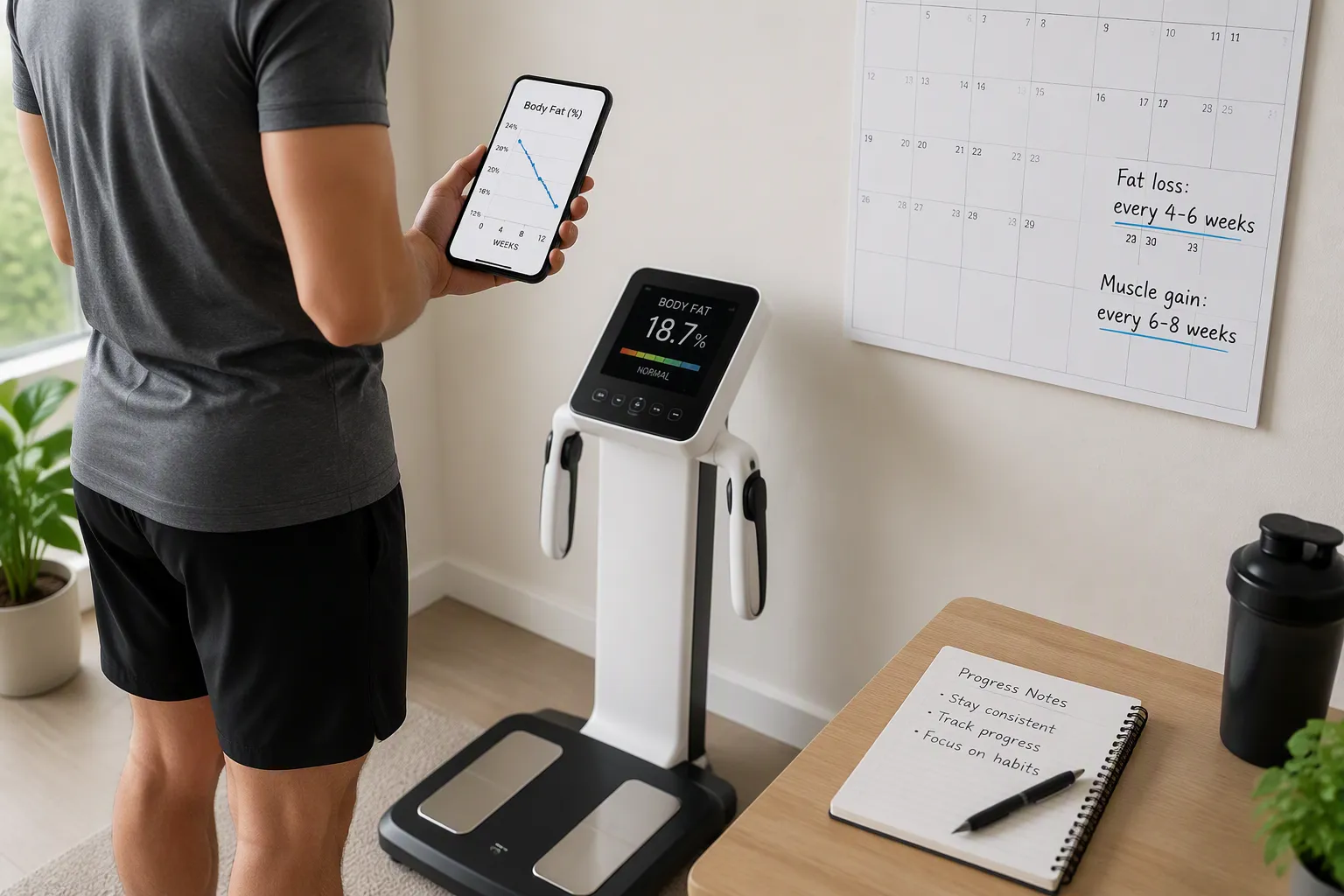
●Adjust your measurement frequency based on your goals: every 4-6 weeks for fat loss, 6-8 weeks for muscle gain, and 8-12 weeks for maintenance.
General Frequency Guidelines for Body Composition Analyzer
The 4-8 Week Sweet Spot
Most people benefit from measuring every four to eight weeks. This window allows enough time for meaningful changes in body fat or muscle mass to appear. Daily readings reflect water fluctuations of two to four percent, not actual fat or muscle change. I see this constantly with clients who step on a scale each morning and panic over a pound that vanishes by afternoon. That noise hides the real signal.
Research supports this timeline. It takes roughly four weeks for noticeable changes in lean muscle and body fat to occur after starting a new fitness or nutrition program. So if you check weekly, you’re mostly measuring hydration, not progress. A four-to-eight-week gap filters out that daily noise and shows you what actually changed.
| Measurement Method | Recommended Frequency | Clinical Rationale |
|---|---|---|
| BIA smart scale (body fat %) | Weekly or bi-weekly | Daily readings reflect ±2–4% water fluctuation, not fat/muscle change; weekly averages filter noise |
| BIA smart scale (body weight) | Daily (optional) | Only meaningful as a 7-day rolling average; single readings are uninformative |
| Waist circumference | Monthly | Visceral fat changes require 4–8 weeks of intervention to become measurable |
| DEXA scan | Every 3–6 months | 8–16 weeks of consistent training are needed to exceed DEXA’s precision threshold |
| Skinfold calipers (practitioner) | Every 4–8 weeks | Operator variability requires longer intervals so true change exceeds measurement error |
| Bod Pod | Every 3–6 months | Same physiological rationale as DEXA; cost limits more frequent use |
The key principle here: measurement frequency must match the physiological rate of change, which happens over weeks, not the technical capability of the device, which works in days. More frequent measurement captures hydration noise, not body composition change.
Key Factors That Change Frequency
Your situation can shift this timeline. If you’re actively changing your diet or training routine, checking every two to three weeks can help you spot trends early. But I caution against over-measuring. Obsessing over minor changes leads to frustration and poor decisions. I’ve watched people abandon solid programs because they misread a three-day fluctuation as failure.
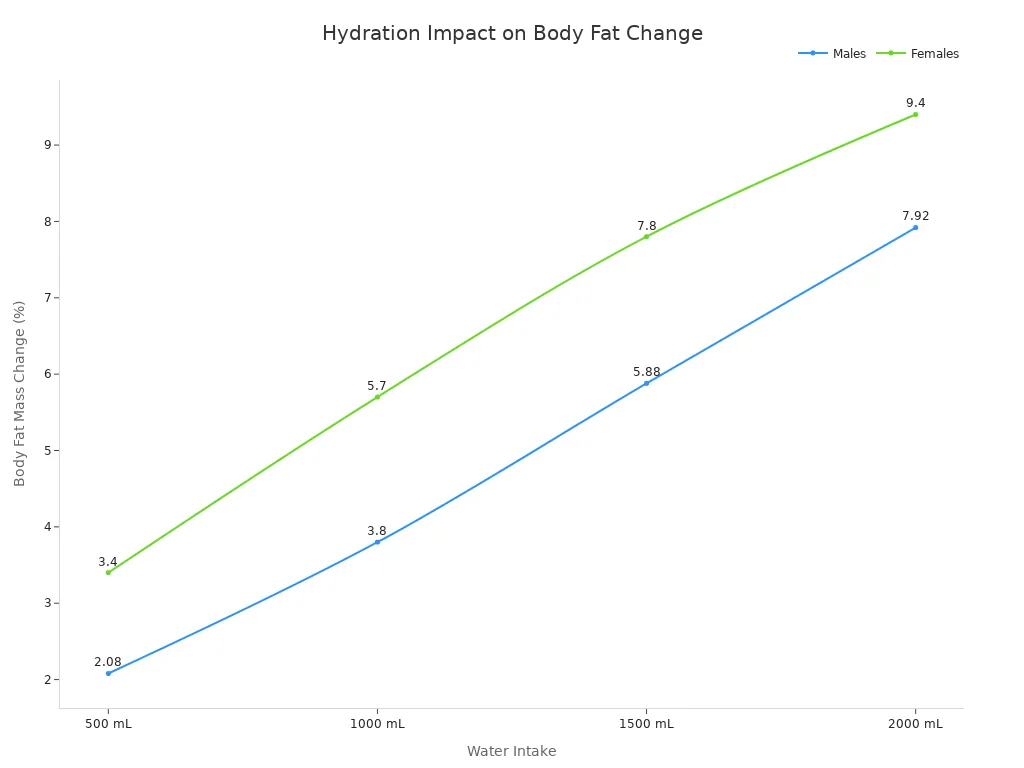
Hydration status dramatically affects readings. Research shows that drinking 500 mL of water can increase measured body fat mass by 2.08% in males and 3.4% in females. At 2000 mL, those numbers jump to 7.92% and 9.4%. The correlation between fat mass change and total body water is strong—R = -0.78546 for males and R = -0.73558 for females. That’s why I always measure under the same conditions.
Consistency matters more than frequency. I follow a strict protocol for every measurement: same time of day, same hydration level, same room temperature, and same Body Composition Analyzer. Skin temperature matters too—warmer skin lowers impedance and underestimates body fat percentage. I also avoid measuring right after exercise, since even moderate exercise overestimates lean mass.
| Technique | Standardized Condition | Specific Requirement |
|---|---|---|
| BIA | Hydration status | Maintain consistent hydration; dehydration lowers impedance and falsely raises body fat % |
| BIA | Skin temperature | Keep skin temperature consistent; warmer skin lowers impedance and underestimates body fat % |
| BIA | Room temperature | Maintain same room temperature for all measurements |
| BIA | Time since exercise | Keep consistent; even moderate exercise overestimates lean mass |
| Skinfold | Technician skill | Requires trained, precise technicians following standardized procedures |
| Skinfold | Caliper type | Use consistent, high-quality calipers |
| Skinfold | Hydration status | Keep stable; hydration affects adipose tissue compression |
| Skinfold | Time since exercise | Avoid measuring immediately after exercise |
| ADP | Temperature | Standardized temperatures are critical; Boyle’s law requires constant temperature |
The accuracy of any Body Composition Analyzer depends on these conditions. Fluid and electrolyte imbalances limit BIA accuracy. Alternative approaches like segmental BIA and bioelectrical impedance vector analysis reduce these errors. But for most home users, simply staying consistent gives you reliable trend data.
Adjusting Frequency Based on Your Goals
Your goals determine how often you should step on a Body Composition Analyzer. I tailor my recommendations to what my clients are actually trying to achieve.
Fat Loss and Muscle Gain Timelines
For fat loss, I recommend measuring every four to six weeks. This interval matches when real changes become visible. During the first two weeks, you see only minor scale drops and reduced puffiness. By weeks three and four, you might notice a half inch off your waist. But the real transformation appears between weeks four and six—your face looks leaner, clothes fit noticeably looser, and muscle definition starts emerging.
For instance, if you are working to optimize your health by losing body fat, it’s advisable to check your body composition every two to four weeks.
Why not measure weekly? Daily water weight fluctuates by two to three pounds, sometimes reaching five to six pounds within 24 hours. True fat loss amounts to only 0.04 to 0.2 pounds per day. A weekly check captures mostly water noise, not actual progress.
Muscle gain follows a similar timeline. Building lean tissue takes time, so I suggest measuring every six to eight weeks during a bulking phase. The minimum detectable change for an individual using a home analyzer is at least 3.4% body fat. Anything smaller could simply be measurement error. Checking too frequently wastes your effort—you cannot reliably see changes that small.
| Goal | Recommended Scan Frequency |
|---|---|
| Fat loss | Every 4–6 weeks |
| Muscle gain (bulking) | Every 6–8 weeks |
| Body recomposition | Every 4–8 weeks |
| Injury recovery/rehab | Every 6–12 weeks |
| Postpartum tracking | Every 6–8 weeks |
| Longevity/wellness | Every 8 weeks |
Maintenance and Performance Tracking
When you shift to maintenance mode, I recommend measuring every eight to twelve weeks. This longer interval focuses on long-term trends rather than rapid changes. Research shows that meaningful body composition changes only become statistically reliable after eight to twelve weeks of consistent effort. Shorter tracking periods risk over-interpreting noise.
For maintenance: two to four times per year, or less if you only want periodic check-ins.
Professional athletes represent an exception. They may benefit from more frequent checks to fine-tune training and nutrition. But for most people, a few scans per year helps you catch gradual changes before they become problems.
I remind my clients constantly: the goal is to use data to make informed decisions, not to obsess over numbers. A single week’s data point provides context. Four to eight weeks of consistent data provide evidence. Hydration fluctuations, travel, and sodium intake can create apparent fat gain that resolves the following week. Only trend analysis across three or more weeks smooths out these individual anomalies.
Set a schedule that fits your lifestyle and objectives. If you are in an aggressive fat loss phase, measure every four weeks. If you are maintaining, check twice per year. The key is consistency in your measurement conditions and patience with the process.
No single answer fits all. I recommend measuring every four to eight weeks. Consistency matters most. Measure at the same time, after an eight to twelve hour fast. Use the same device. Focus on trends, not single readings. Regular monitoring with a Body Composition Analyzer empowers you. It is not obsession.
FAQ
What should I do if my numbers stay the same for weeks?
I tell clients to check their measurement conditions first. Same time, same hydration, same device. If everything matches, trust the process. Real changes take four to eight weeks to appear clearly.
Can I weigh myself daily with a smart scale?
Daily weighing works only if you track a seven-day rolling average. Single readings reflect water fluctuations, not fat loss. I prefer weekly averages for meaningful trend data without the emotional rollercoaster.
Why do my readings differ from my gym’s equipment?
Different devices use different algorithms and electrode placements. My home Body Composition Analyzer gives me consistent trends, but absolute numbers vary across brands. Focus on your own device’s direction over time, not cross-device comparisons.
Post time: Sep-01-2026


