


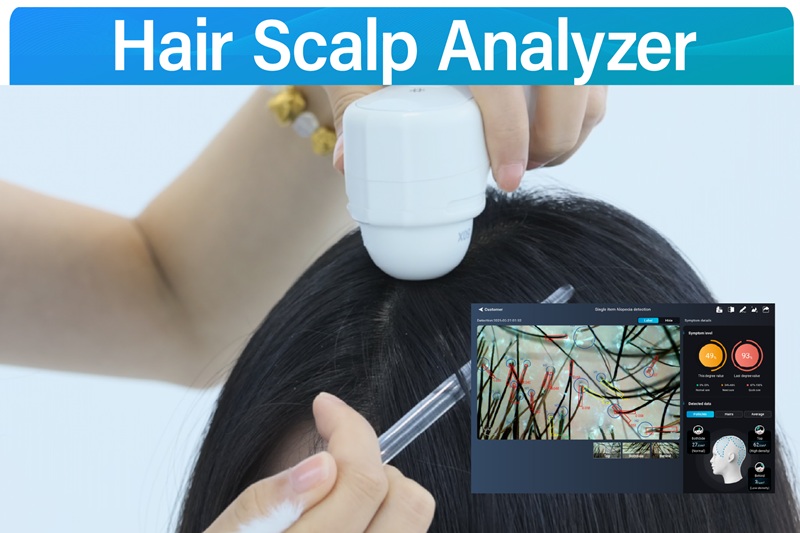
A Hair Scalp Analyzer uses advanced tools to check scalp health through sample collection, imaging, moisture checks, and lab analysis. Over half of people worldwide face scalp issues. Understanding your scalp can lead to better care, including early detection and customized treatments:
| Benefit | Description |
|---|---|
| Early Detection | Finds problems before they get worse |
| Customized Care | Suggests products for your unique scalp needs |
Key Takeaways
●A Hair Scalp Analyzer helps detect scalp issues early, allowing for timely treatment and better hair health.
●Regular scalp analysis provides personalized care recommendations, improving scalp condition and hair growth.
●Using advanced imaging and moisture measurement, the analyzer gives clear insights into scalp health, making hair care easier.
Hair Scalp Analyzer Overview
Device Purpose
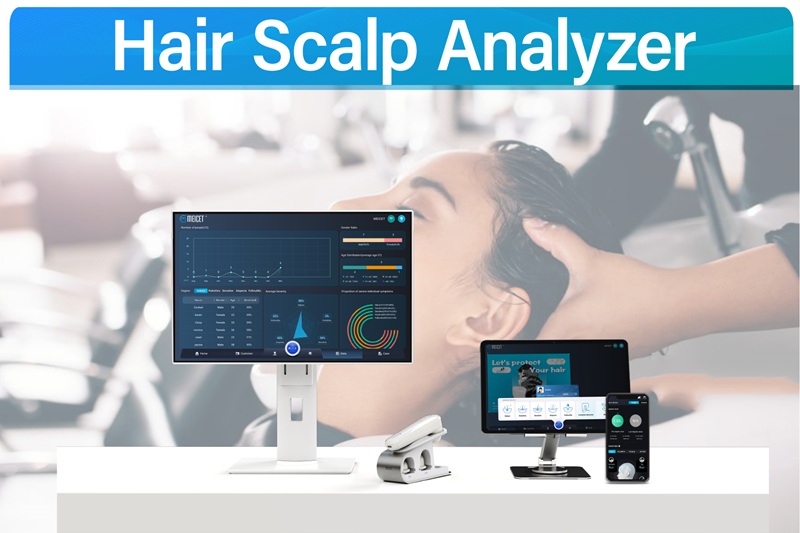
A Hair Scalp Analyzer helps people understand the condition of their scalp and hair. The device uses advanced technology to examine the scalp closely. It can detect issues like dryness, oiliness, or irritation. The analyzer provides a detailed report about scalp health. It also suggests ways to improve hair care based on the results.
●Detects various hair and scalp issues.
●Provides detailed analysis of scalp health.
●Offers personalized recommendations for hair care.
Many people use a Hair Scalp Analyzer to find out why their scalp feels uncomfortable or why their hair looks unhealthy. The device gives clear information that helps users make better choices for their hair routine.
Tip: Regular scalp analysis can help prevent problems before they become serious.
Who Uses It
Professionals and consumers both use a Hair Scalp Analyzer. Hair care experts and trichologists rely on this device to check scalp and hair health in detail. They use it to spot hydration issues and other concerns early. The analyzer is an essential tool in salons and clinics.
●Professionals conduct detailed checks of the scalp and hair using specialized technology.
●Hair scalp analyzers are essential tools in professional hair care and trichology practices.
●Consumers use scalp analyzers to understand and improve their scalp health.
●Trichology experts utilize scalp analysis to identify hydration issues early.
Consumers also use the device at home or during salon visits. They want to learn more about their scalp and get advice for better hair care. The Hair Scalp Analyzer makes it easier for everyone to take care of their scalp and hair.
Examination Process
Sample Collection
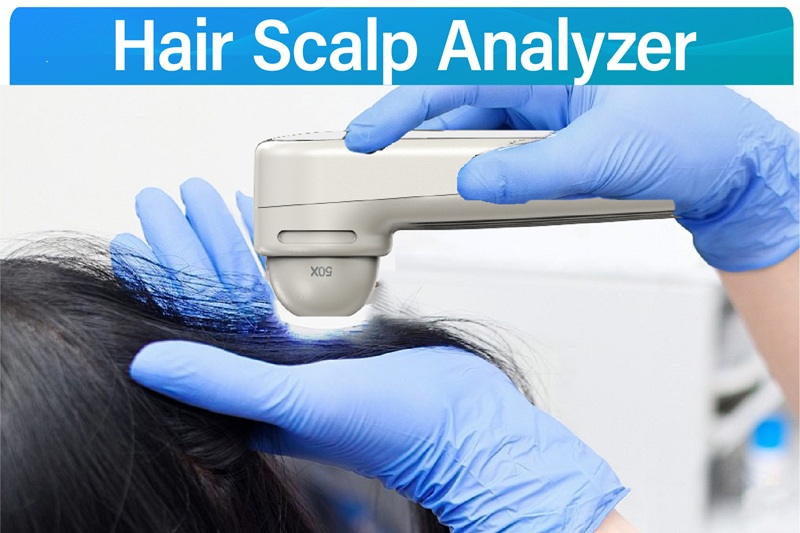
A careful sample collection process is the first step in scalp analysis. Professionals collect hair and scalp samples from specific regions of the scalp. This approach considers differences in hair growth rates across the head. The process uses sterile scissors and gloves to prevent contamination. Hair shafts are usually cut about 5 millimeters from the scalp. The collected hair is then chopped into small pieces and stored in clean plastic microtubes or bags. Scalp swabs may also be taken directly from the surface using cotton swabs. Only trained professionals should perform these steps to ensure accuracy and safety.
| Procedure Aspect | Details |
|---|---|
| Collection Location | Samples are taken from specific scalp regions to account for growth rate differences. |
| Sample Collection Method | Hair is cut with stainless steel scissors, collecting 500 to 1,000 milligrams. |
| Sample Storage | Samples are placed in pre-cleaned plastic bags or microtubes to avoid contamination. |
| Collector Qualification | Only trained professionals should collect samples. |
Laboratory testing follows sample collection. The lab extracts DNA from the hair or scalp swab samples. This step helps identify the types of bacteria present on the scalp. Understanding the scalp microbiome can reveal hidden causes of irritation or hair loss.
Imaging & Moisture Measurement
A Hair Scalp Analyzer uses advanced imaging techniques to examine the scalp in detail. These devices often include high-definition cameras and multiple magnification lenses. Imaging methods such as Laser Doppler Flowmetry, Laser Speckle Contrast Imaging, and Near-Infrared Spectroscopy help measure blood flow and oxygen levels in the scalp. These technologies provide real-time maps of scalp circulation and can detect early signs of poor blood flow.
| Imaging Technique | Function | Advantages |
|---|---|---|
| Laser Doppler Flowmetry | Measures blood flow and creates perfusion maps | Real-time, high sensitivity |
| Laser Speckle Contrast | Captures wide-field blood flow images | Non-invasive, fast |
| Near-Infrared Spectroscopy | Assesses blood oxygenation and flow | Shows scalp oxygen balance |
| Thermal Infrared Imaging | Detects temperature changes for circulation analysis | Non-contact, quick |
Moisture measurement is another key part of scalp analysis. Quantifying hydration levels helps determine overall scalp health. Several methods are used, including touch, stretch, wrap, and porosity tests. Tools like hair moisture meters and hydration test strips provide precise readings. These measurements help identify dryness, oiliness, or hydration issues that may affect hair growth.
●Hair moisture tests can use touch, stretch, wrap, and porosity methods.
●Hair moisture meters and hydration test strips give accurate results.
A Hair Scalp Analyzer combines these imaging and moisture measurement tools to give a complete picture of scalp health.
Follicle & Scalp Assessment
The next step involves a detailed assessment of hair follicles and the scalp surface. Dermoscopy and trichoscopy are important diagnostic methods. Dermoscopy allows professionals to see both the surface and sub-surface structures of the scalp. Trichoscopy focuses on hair disorders and evaluates follicular unit density and miniaturization. These methods help detect early signs of hair thinning or loss.
Professional analysis looks at several criteria:
●Follicular unit density (number of hairs per unit area)
●Patterns of follicle miniaturization
●Scalp inflammation (erythema index)
●Sebum levels (oil production)
●Hydration levels (moisture retention)
●Barrier integrity (transepidermal water loss)
●Discomfort scales (itch and pain)
Dermatoscopes play a key role in this process. They provide detailed visualization of skin and hair structures, which improves diagnostic accuracy. For example, UVF-dermoscopy can help identify different types of hair loss and scalp conditions by highlighting specific features under ultraviolet light. This technology supports professionals in making more accurate and less invasive assessments.
A Hair Scalp Analyzer integrates all these steps—sample collection, imaging, moisture measurement, and follicle assessment—to deliver a thorough evaluation. This process helps detect common scalp issues such as hair thinning, excessive shedding, irritation, oiliness, dryness, inflammation, clogged follicles, and poor circulation. Early detection and precise analysis allow for personalized recommendations and better scalp care.
Technologies & Results
Multi-Spectral Imaging
Multi-spectral imaging is a key technology in modern scalp analysis. This method uses different types of light, such as polarized and ultraviolet, to look beneath the surface of the scalp. It can reveal problems that are not visible to the naked eye. For example, it helps detect early signs of microinflammation around hair follicles. Early detection allows for quick treatment, which can prevent long-term damage.
| Technology | Description |
|---|---|
| Laser Doppler Flowmetry (LDF) | Measures blood flow using a laser; high sensitivity. |
| Laser Speckle Contrast Imaging | Captures blood flow patterns; non-invasive. |
| Photoplethysmography (PPG) | Measures blood volume changes; portable and simple. |
| Near-Infrared Spectroscopy (NIRS) | Analyzes light absorption for blood oxygenation. |
| Thermal Infrared Imaging | Detects temperature variations; non-contact and quick. |
Moisture & Hydration Analysis
A Hair Scalp Analyzer uses electronic sensors to measure scalp moisture. These sensors work like fitness trackers but focus on the scalp. They check moisture content and transepidermal water loss (TEWL). Corneometry is another method that measures how much water is in the scalp. High TEWL and low corneometry readings can show a weak moisture barrier. These tools help spot dryness or hydration problems early.
●Electronic sensors measure scalp moisture content.
●TEWL and corneometry readings show the health of the scalp’s moisture barrier.
Results & Insights
Scalp analyzers provide clear results that are easy to understand. The results include information about follicle health, scalp condition, hair shaft quality, and hair loss patterns. Users also receive personalized treatment suggestions based on their unique scalp needs.
| Result Type | Description |
|---|---|
| Follicle Health | Checks density, thickness, and signs of miniaturization. |
| Scalp Condition | Looks for inflammation, redness, and scaling. |
| Hair Shaft Quality | Examines thickness and damage. |
| Hair Loss Patterns | Identifies types of hair loss. |
| Personalized Treatment | Offers care recommendations. |
Benefits for Scalp Health
A thorough scalp analysis leads to many benefits:
●Personalized care plans improve scalp health.
●Early detection of problems allows for faster treatment.
●Tailored regimens can reduce hair shedding and boost hair density.
●Regular analysis helps track progress and adjust care routines.
Note: A Hair Scalp Analyzer gives a detailed view of scalp health, making it easier to choose the right treatments and products.
A scalp analyzer uses imaging, moisture checks, and lab analysis to give accurate insights into scalp health. This technology helps detect problems early and supports tailored care.
●Accurate results remove guesswork
●Early detection prevents scalp issues
●Personalized plans improve hair health
| User Response | Details |
|---|---|
| Positive Feedback | Most users feel satisfied with personalized advice. |
| Clinical Support | Recommendations are backed by clinical research. |
FAQ
How often should I use a Hair Scalp Analyzer?
Most experts recommend using a Hair Scalp Analyzer every few months. Regular checks help track changes and catch scalp issues early.
Can a Hair Scalp Analyzer detect dandruff?
Yes, a Hair Scalp Analyzer can identify dandruff by showing flakes and irritation on the scalp. It helps users choose the right treatment.
Is a Hair Scalp Analyzer safe for children?
A Hair Scalp Analyzer is safe for children. The device uses non-invasive imaging and gentle sensors, making it suitable for all ages.
Post time: May-22-2026


