


Quick Answer
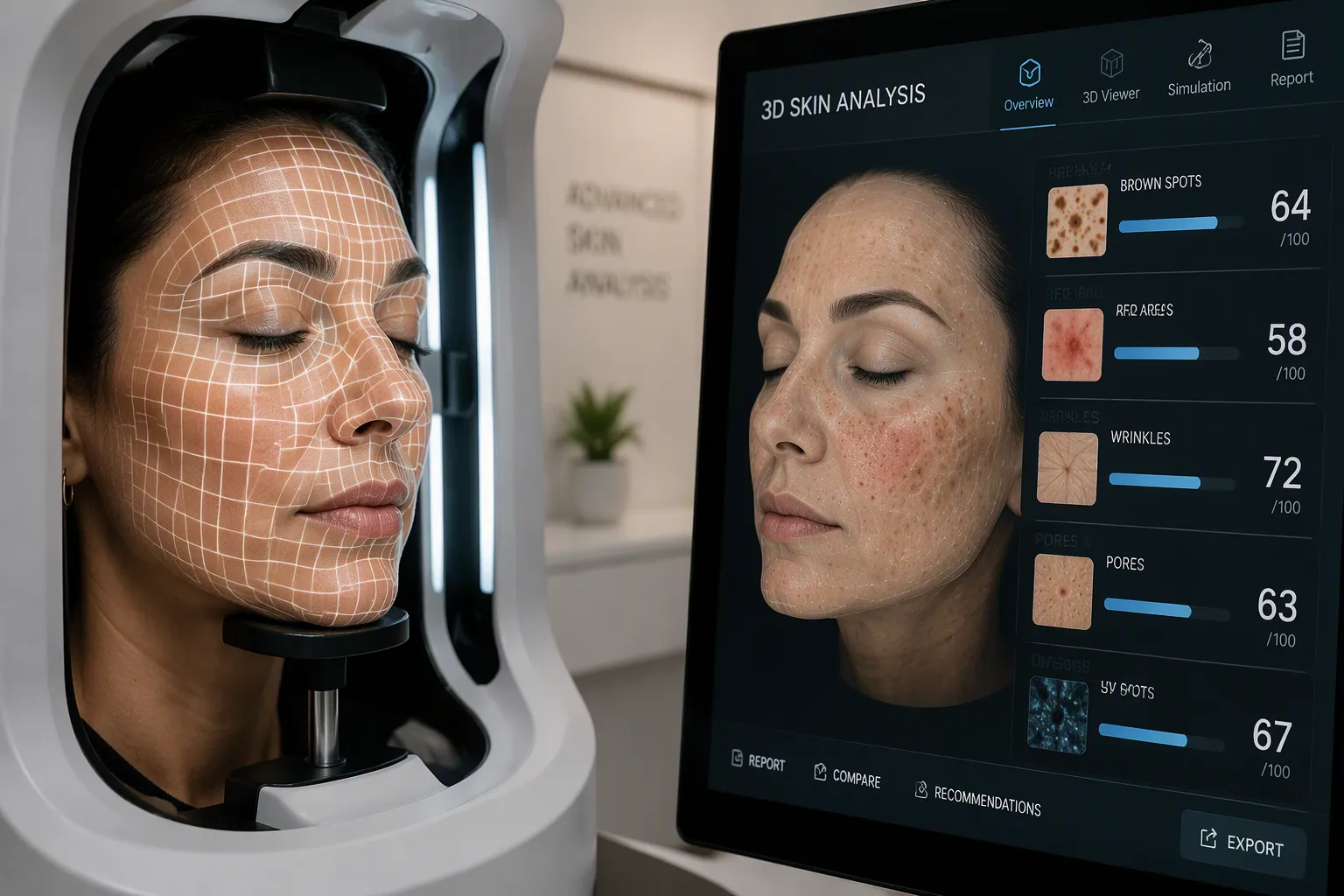
3D skin analysis technology can significantly increase beauty clinic conversion rates by transforming subjective consultations into objective, data-driven visual proof. Documented results show some clinics achieving conversion rate increases exceeding 50% after integrating AI-powered 3D consultation tools . The core mechanism is visualization of invisible skin concerns: 3D imaging reveals subsurface pigmentation, fine lines, and volume loss that 2D photos and verbal descriptions cannot convey. When customers see their own skin data—and the projected improvement—the perceived risk of treatment decreases and the urgency to act increases. Additionally, before-and-after comparison capabilities and aging trajectory simulation provide concrete evidence that supports treatment decisions at the point of consultation.
Key Takeaways:
●50%+ conversion increase documented in clinics using AI-powered 3D skin analysis during consultations
●37% boost in patient confidence reported when 3D imaging is used to visualize treatment plans
●3D skin analysis shifts the consultation from verbal persuasion to visual evidence, reducing customer skepticism
●Male and female customers respond differently to skin analysis technology; communication strategies should be segmented
●The AI skin analysis market is projected to reach $1.06 billion by 2032, growing at a CAGR of 18.39%
The Conversion Problem: Why Traditional Consultations Fall Short
The Verbal Description Gap
Traditional beauty consultations rely heavily on verbal descriptions of skin conditions. An aesthetician tells a customer “you have some fine lines around your eyes” or “your skin texture could be improved.” The customer nods politely but internally wonders: Is it really that bad? Do I need treatment now? Will it actually work?
This perception gap between the professional‘s trained eye and the customer’s subjective self-image is the primary obstacle to conversion. Research on facial skin analyzer adoption at skincare counters found that customers arrive with emotional concerns (”I feel like I look tired“) rather than technical diagnoses . The technology must bridge this gap by translating emotional concerns into visual, understandable data.
The Trust Deficit
Beauty clinics face a fundamental trust challenge: customers suspect that recommendations are driven by sales targets rather than genuine need. A study interviewing customers at a skincare counter revealed that male customers frequently asked whether the scan was free and whether it would lead to sales pressure, while female customers were more likely to engage with curiosity but still harbored concerns about being ”sold to“ .
This trust deficit cannot be overcome by persuasive language alone. It requires objective evidence that the customer can interpret independently.
How 3D Skin Analysis Transforms the Conversion Conversation
From ”Trust Me“ to ”See For Yourself“
3D skin analysis systems generate high-resolution, multi-spectral images that reveal skin conditions invisible to the naked eye. The ISEMECO D9 MAX, for example, uses a 42-million-pixel dual-eye grating structured light camera to capture facial point clouds at 0.02mm resolution, generating 11 high-definition 3D spectral images across four light spectra (natural, parallel polarized, cross-polarized, and UV) .
What this means in practice:
| Traditional Consultation | 3D Skin Analysis Consultation |
|---|---|
| ”You have sun damage“ | UV image showing pigmentation clusters under the skin surface |
| ”Your skin is aging“ | 3D model showing volume loss quantification (0.1mL precision) |
| ”Treatment will help“ | Aging trajectory simulation from current age to 80+ |
| ”It‘s worth the investment“ | Before/after overlay comparison with pixel-level alignment |
When customers see their own skin data—visualized, quantified, and projected forward—the conversation shifts from the aesthetician’s opinion to objective evidence.
The 50%+ Conversion Mechanism
Perfect Corp.‘s partnership with Keensight, a 3D consulting solution developer, provides a documented case of conversion impact. Clinics integrating AI skin analysis into their 3D consultation platforms reported an average increase in consultation conversion rates exceeding 50% .
The mechanism operates through three pathways:
1.Uncertainty reduction: Objective data eliminates the ”maybe it’s not that bad“ hesitation
2.Urgency creation: Aging simulation shows what happens without intervention
3.Confidence building: Before/after preview makes the outcome tangible
A separate case study on 3D imaging in anti-ageing consultations found that patient confidence increased by 37% when 3D imaging was used to visualize treatment plans, leading to higher conversion rates and increased revenue .
The Collaborative Consultation Dynamic
3D skin analysis also changes the emotional tone of the consultation. Instead of a customer staring into a mirror while pointing out perceived flaws, the practitioner and customer review the 3D scan side-by-side.
A practicing aesthetic physician described this shift: ”Instead of having a patient stare uncomfortably into a mirror while pointing out imperfections, I review scans with them side-by-side… This creates a more empowering dynamic with the patient no longer being talked at; they‘re engaged participants who can view and understand the ‘why’ behind our recommendations“ .
This collaborative dynamic reduces defensiveness and increases openness to treatment recommendations.
What 3D Skin Analysis Actually Measures (And Why It Matters for Conversion)
The Data That Drives Decisions
Modern 3D skin analysis systems quantify multiple parameters that directly correspond to treatment recommendations:
| Measurement | What It Reveals | Conversion Relevance |
|---|---|---|
| Pigmentation depth | UV-spectrum imaging shows melanin clusters below the surface | Supports whitening/laser treatment recommendations |
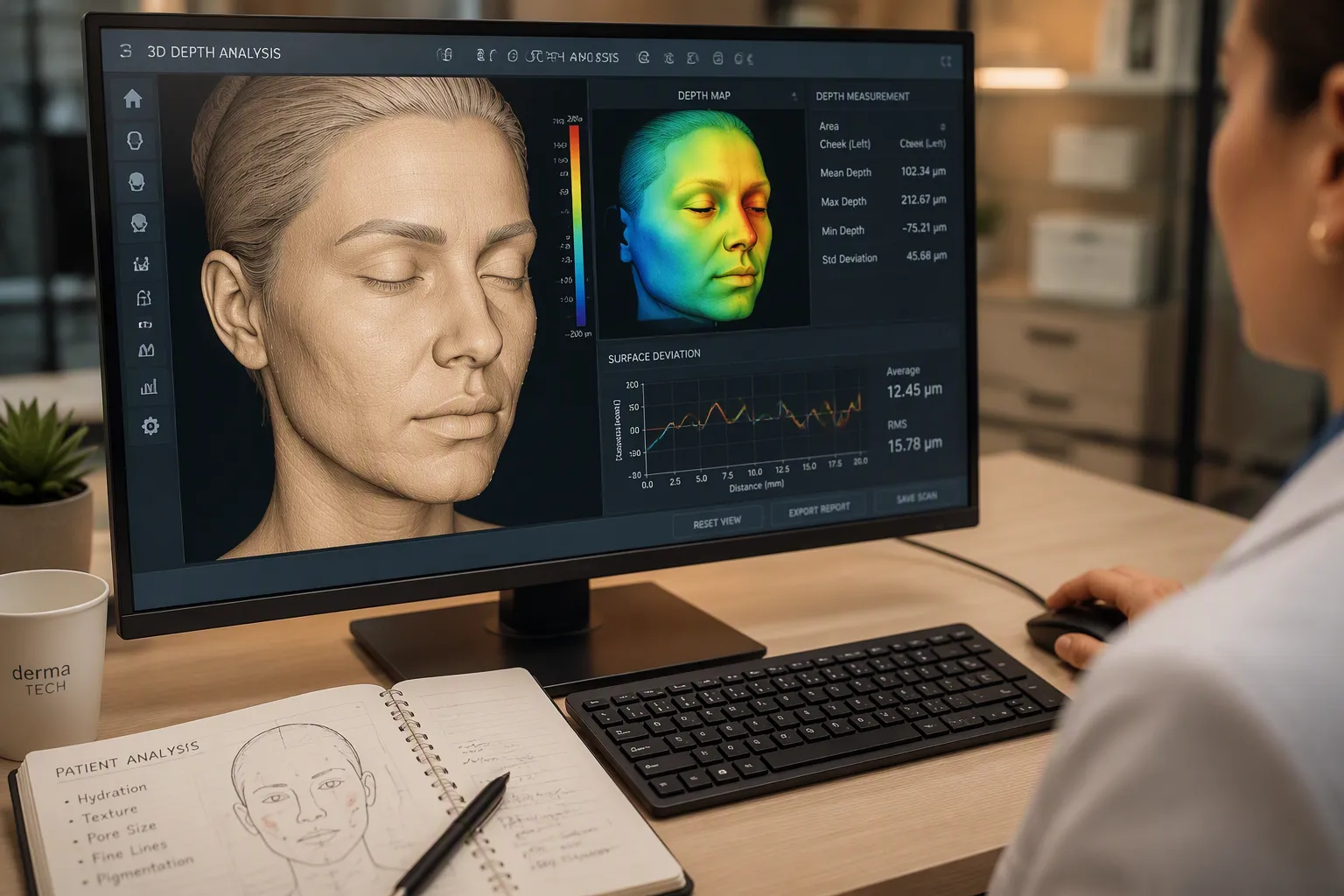
| Wrinkle depth | 3D topography captures fine lines invisible in 2D photos | Justifies anti-aging injectables or energy-based devices |
| Volume loss | Point cloud analysis quantifies facial depression (0.1mL precision) | Supports filler and lifting procedure recommendations |
| Pore condition | High-resolution imaging shows pore size and distribution | Justifies facial treatments and skincare regimens |
| Skin texture | 0.02mm resolution reveals surface irregularities | Supports resurfacing and rejuvenation recommendations |
The ISEMECO D9 MAX specifically emphasizes aging diagnosis with a ”CT-level“ approach: visualizing ”every wrinkle with nowhere to hide“ and quantifying facial depression and filler augmentation in real-time .
The Aging Trajectory: A Powerful Conversion Tool
One of the most conversion-effective features is aging simulation. The ISEMECO D9 MAX can simulate facial aging from current age to 80+ years, showing the customer a dynamic, visual projection of their future appearance .
This feature works because it addresses the present bias—the human tendency to discount future consequences. When a 35-year-old customer sees what their skin will look like at 50 without intervention, the urgency to act increases dramatically. The simulation makes abstract future consequences concrete and emotionally salient.
Segmenting the Conversion Strategy: Not All Customers Respond the Same Way
Gender Differences in Technology Response
Research on facial skin analyzer adoption at skincare counters reveals significant gender differences in how customers interpret and respond to the technology .
Female customers:
●More likely to respond with curiosity and interest upon first seeing the device
●Treat the scan as the beginning of a broader information-seeking process
●Often want to know what technology is used and why it seems accurate
●Respond well to consultative bundling based on scan outcomes
●More likely to recommend the service to others
Male customers:
●More likely to interpret the device with uncertainty and skepticism
●First questions: Is there a fee? Will I be pressured to buy?
●Need explicit reassurance that the scan is free and no purchase is required
●Respond better to short, evidence-oriented scripts
●Prefer one hero product plus one supporting recommendation rather than comprehensive regimens
Practical Script Adaptations
The research suggests differentiated approaches :
For female customers:
”Would you like a complimentary scan to see what your skin needs today and receive tailored product suggestions?“
For male customers:
”This is a free 3-minute scan that shows hydration and pore conditions. There is no obligation to buy, and I can summarize the results in one or two practical recommendations.“
Post-Scan Engagement Strategies
The conversion opportunity extends beyond the initial consultation. Research recommends :
●Female customers: Follow-up invitations for progress scans at 14 or 30 days (”Come back for a complimentary progress check to see how your hydration and spots have changed“)
●Male customers: Follow-up tied to product performance (”If you would like to verify whether the product improved hydration or pore condition, you are welcome to return for a free re-scan“)
Table: 3D Skin Analysis Features Mapped to Conversion Impact
| Feature | Function | Conversion Mechanism | Evidence |
|---|---|---|---|
| Multi-spectral imaging | Reveals subsurface pigmentation, vascular conditions | Visual proof of invisible concerns | ISEMECO D9 MAX: 11 images across 4 spectra |
| 3D point cloud modeling | Quantifies volume loss, facial contours | Objective measurement eliminates subjectivity | 0.02mm resolution, 0.1mL precision |
| Aging simulation | Projects future appearance (18-80+ years) | Creates urgency through present bias override | AI trajectory prediction |
| Before/after overlay | Pixel-level alignment of improvement | Reduces perceived risk of treatment | Real-time visualization |
| AI-generated reports | Automatic identification of top skin concerns | Accelerates consultation, reduces expert dependency | 30-second report generation |
| Multi-terminal sharing | Cloud-based result access | Enables follow-up engagement | Digital data center |
Implementation Considerations for Clinics
Technology Selection Criteria
Not all 3D skin analysis systems are equivalent. Key specifications to evaluate:
●Camera resolution: Higher resolution (e.g., 42MP) captures finer skin details
●Spectral coverage: Multi-spectral imaging (UV, polarized) reveals conditions invisible in standard light
●3D modeling precision: Sub-millimeter resolution (0.02mm) enables meaningful volumetric analysis
●AI capabilities: Built-in analysis models reduce dependence on operator expertise
●Integration: Compatibility with existing clinic management and CRM systems
Staff Training for Conversion Optimization
Technology alone does not convert customers. Staff must be trained to:
1.Explain the technology in customer-friendly terms
2.Interpret results accurately without over-claiming
3.Link findings to recommendations in a consultative, non-pushy manner
4.Adapt communication style based on customer response patterns
Regulatory Awareness
For clinics operating in regulated markets, understanding the regulatory classification of skin analysis devices is important. In the EU, software intended for diagnosis or therapeutic decisions may qualify as Class IIa medical devices under MDR Rule 11 . In the US, certain skin analysis systems have been cleared through the 510(k) pathway as Class II devices . Clinics should verify that their chosen system meets applicable regulatory requirements for their intended use.
FAQ
Q1: What conversion rate increase can a beauty clinic realistically expect from 3D skin analysis?
Documented results from clinics integrating AI-powered 3D consultation tools show conversion rate increases exceeding 50% in some cases . A separate case study reported 37% higher patient confidence leading to improved conversion . Actual results depend on implementation quality, staff training, and how effectively the technology is integrated into the consultation workflow.
Q2: How does 3D skin analysis differ from traditional 2D skin scanners?
3D skin analysis captures depth information that 2D scanners cannot. This enables volumetric quantification (e.g., 0.1mL precision for filler planning), aging trajectory simulation, and 3D before/after comparison from multiple angles . 2D scanners provide surface images but cannot measure volume loss or project future aging.
Q3: Is 3D skin analysis suitable for all customer demographics?
Research indicates gender differences in how customers respond to skin analysis technology . Female customers tend to engage with curiosity and information-seeking; male customers often need explicit reassurance about cost and sales pressure. Adapting communication scripts to these patterns improves engagement across demographics.
Q4: What skin conditions can 3D analysis detect that are invisible to the naked eye?
3D multi-spectral analysis can reveal subsurface pigmentation (UV imaging), vascular conditions (polarized imaging), fine lines and wrinkles invisible in 2D photos, pore structure, and volume loss quantified in milliliters . These findings support specific treatment recommendations that customers can visually verify.
Q5: How long does a 3D skin analysis consultation take?
Modern systems like the ISEMECO D9 MAX can generate an AI skin analysis report in approximately 30 seconds . The full consultation including result interpretation and treatment discussion typically takes 10-20 minutes depending on the complexity of findings and customer engagement.
Q6: Can 3D skin analysis help with treatment outcome verification?
Yes. The technology enables before/after overlay comparison with pixel-level alignment, allowing clinics to verify treatment efficacy with objective visual evidence . This supports both customer satisfaction and provides data for practice marketing.
Q7: What should a clinic look for when selecting a 3D skin analysis system?
Key criteria include: camera resolution (higher captures more detail), spectral coverage (multi-spectral reveals invisible conditions), 3D precision (sub-millimeter for volumetric analysis), AI capabilities (automated analysis reduces operator dependency), and integration with existing clinic systems. Clinics should also verify regulatory compliance for their market
Post time: Oct-08-2026


