


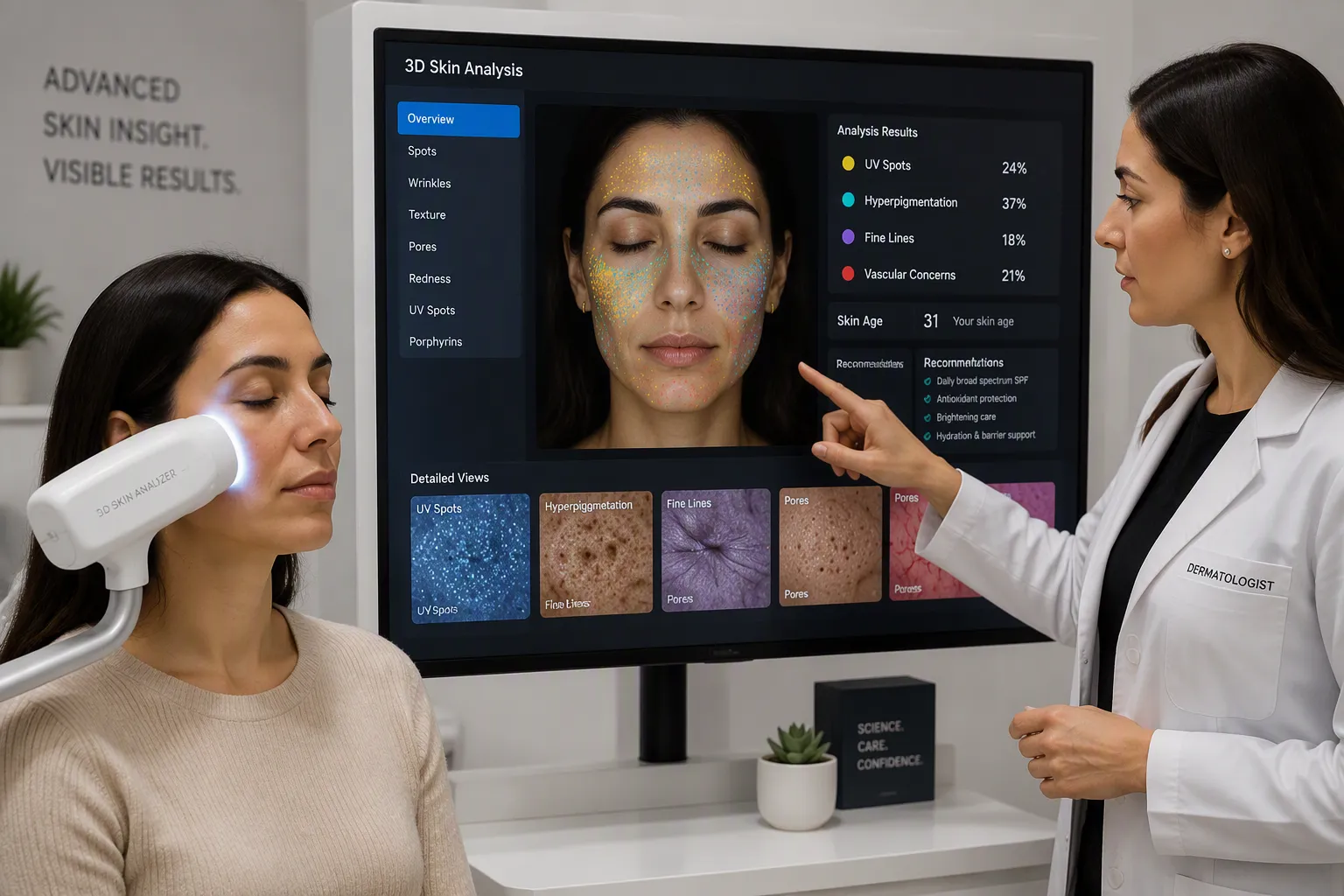
Yes — skin analyzer customization through OEM and ODM manufacturing is standard practice in the beauty device industry. OEM (Original Equipment Manufacturing) allows buyers to apply their own brand to an existing device with minimal modification, requiring MOQs as low as 1 set for logo customization and 10 sets for packaging customization. ODM (Original Design Manufacturing) enables deeper customization, where the manufacturer designs or adapts the product to the buyer’s specifications, often leveraging in-house R&D and existing platform technologies. Professional skin analyzer factories typically support logo, packaging, software interface, and even algorithm adjustment under OEM/ODM arrangements.
OEM starts with low MOQs: 1 unit for logos, 10 units for custom packaging.
ODM allows hardware, software, and analysis parameter adjustments via in-house R&D.
Trading companies can print logos but cannot modify firmware or core algorithms.
Custom reports and workflow integration are the most valuable OEM/ODM features.
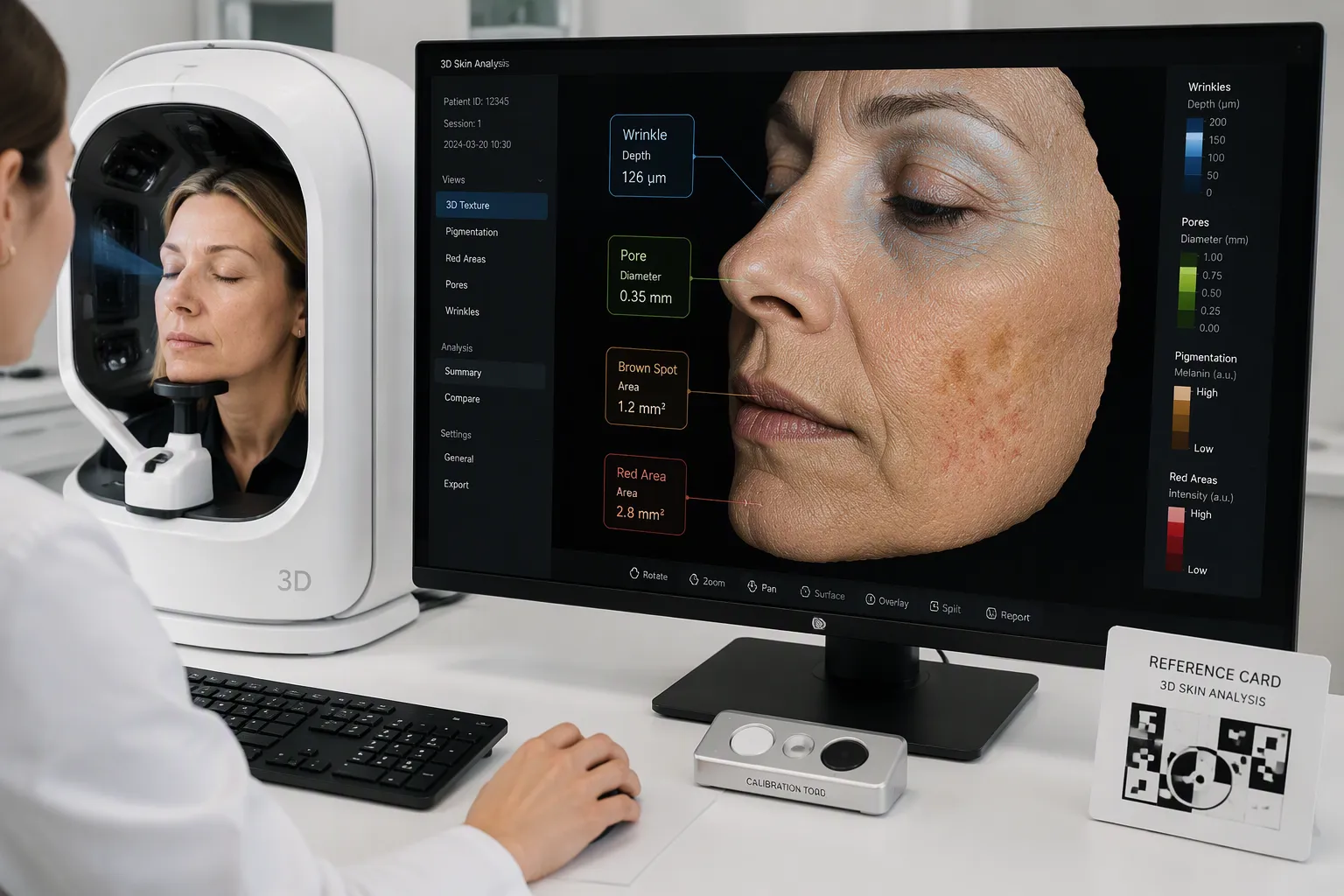
Understanding OEM vs. ODM in the Skin Analyzer Industry
The distinction between OEM and ODM determines what customization is possible and who controls product design. Understanding these models prevents procurement mistakes where buyers expect ODM-level flexibility from an OEM-only supplier.
OEM: Branding on an Existing Platform
OEM (Original Equipment Manufacturing) means the manufacturer produces a product according to the buyer’s specifications, using the buyer’s brand and trademark. In the skin analyzer context, OEM typically involves:
- Applying the buyer’s logo to the device housing and software interface
- Customizing packaging with the buyer’s brand elements
- Adjusting language settings and regional plug types
- Modifying report templates to display the buyer’s branding
Practical OEM scope for skin analyzers:
- Logo on device shell (MOQ: 1 set)
- Custom packaging (MOQ: 10 sets)
- Software splash screen and report header customization
- Language localization (many platforms support 17 languages or more)
ODM: Design and Production to Buyer Specifications
ODM (Original Design Manufacturing) means the manufacturer designs and produces the product according to the buyer’s requirements, with the buyer’s brand applied. The manufacturer brings its own technology, design capability, and often an existing product platform that can be modified.
ODM capabilities relevant to skin analyzers:
- Hardware: Sensor resolution, spectral mode count, screen size.
- Software: Interface redesign, menu structure, analysis workflow.
- Algorithms: Thresholds for skin condition classification.
- Cloud: Data storage location, CRM integration.
What Can Actually Be Customized?
| Customization Item | Typical Availability | MOQ Range | Manufacturer Requirement |
|---|---|---|---|
| Logo on device shell | OEM | 1-10 sets | Any manufacturer |
| Custom packaging | OEM | 10+ sets | Any manufacturer |
| Report template branding | OEM | 1-10 sets | Software access |
| Language localization | OEM/ODM | 1+ sets | Software config capability |
| Software splash screen | OEM | 10+ sets | Software access |
| Analysis parameter adjustment | ODM | 50-100+ sets | In-house algorithm team |
| Hardware configuration change | ODM | 100-500+ sets | In-house R&D |
| Algorithm retraining | ODM | 500+ sets | Data science team |
Software and Report Customization: The Hidden Value
Software customization delivers the highest ROI for OEM/ODM buyers because it transforms a generic device into a branded consultation tool without hardware redesign costs.
- Customizable report templates: Logo placement, color scheme, and QR codes.
- Analysis parameter presets: Adjustable thresholds for skin condition classification.
- Workflow customization: Order of analysis steps and automatic report generation.
- CRM/booking integration: API connections to practice management software.
Quality Agreements and Compliance
Medical device OEM/ODM relationships require documented quality agreements to satisfy regulatory requirements and protect both parties. ISO 13485 Clause 7.4.2 requires written agreements for supplier notifications regarding product changes.
- Product specification and acceptance criteria
- Change notification requirements
- Traceability and record retention
- Post-market surveillance responsibilities
- Regulatory responsibility allocation
Evaluating OEM/ODM Capability
A manufacturer’s OEM/ODM claims should be verified against its actual R&D and production infrastructure.
- R&D Team: Do they employ optics engineers and software developers?
- Case Studies: Can they show previous ODM projects with software modifications?
- ISO Scope: Does their ISO 13485 include “design and development”?
OEM vs. ODM Decision Framework
| Buyer Scenario | Recommended Model | Customization Scope | Typical MOQ |
|---|---|---|---|
| Distributor launching brand | OEM | Logo, packaging, reports | 10-50 sets |
| Clinic chain standardizing | OEM + Software | Branding, workflow, CRM | 20-100 sets |
| Unique market position | ODM | Interface & Parameter adjust | 100-500+ sets |
| Proprietary analysis method | ODM + Algorithm | Full hardware/software dev | 500+ sets |
Frequently Asked Questions
Can I customize a skin analyzer with my own brand?
Yes. OEM customization for logo and branding is widely available, with minimum order quantities as low as 1 set for logo customization and 10 sets for packaging customization.
What is the difference between OEM and ODM for skin analyzer manufacturing?
OEM means the manufacturer produces an existing product under your brand. ODM means the manufacturer designs or modifies the product according to your specifications, drawing on its own R&D capability.
What is the minimum order quantity for OEM skin analyzer customization?
Logo customization can start at 1 set; packaging customization typically requires 10 sets. Hardware or algorithm modifications require substantially higher volumes, typically 100-500 sets.
Can I customize the software and reports of a skin analyzer?
Yes — software and report customization is a standard OEM offering. Professional platforms support custom report templates with buyer branding, adjustable analysis parameters, and workflow reconfiguration.
What quality documentation should I require for an OEM/ODM skin analyzer order?
Require a written Quality Agreement covering product specifications, change notification procedures, and regulatory responsibility allocation. Verify the manufacturer’s ISO 13485 certificate.
How do I verify that a supplier can actually perform ODM work, not just OEM?
Ask for R&D engineer headcount, examples of previous ODM projects with software modifications, and whether their ISO 13485 scope includes “design and development.”
What are the risks of OEM/ODM manufacturing for skin analyzers?
Primary risks include: inadequate change control, regulatory responsibility ambiguity, software update dependency, and quality inconsistency across batches.
Post time: Oct-16-2026


