


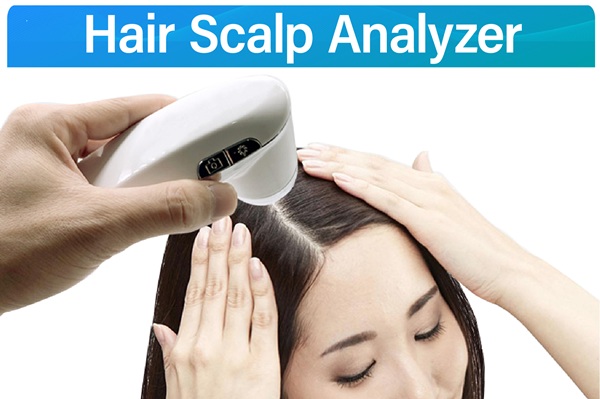
I often hear people ask if a Hair Scalp Analyzer can tell them why they lose hair. I want to clear up some common myths:
●Many think hair loss comes only from poor hygiene or age.
●Some believe all hair products are safe.
●Others trust stories over expert advice.
I know hair health depends on genetics, nutrition, and daily care. I use a Hair Scalp Analyzer to check the scalp’s surface, but only trained professionals should interpret its results. This device cannot replace a full medical exam.
Key Takeaways
●A Hair Scalp Analyzer helps assess scalp health by measuring redness, oil, and moisture levels.
●This tool can identify early signs of hair and scalp issues, but it cannot diagnose medical conditions.
●Seek professional medical advice if you notice sudden hair loss or changes in your scalp.
What a Hair Scalp Analyzer Can Reveal
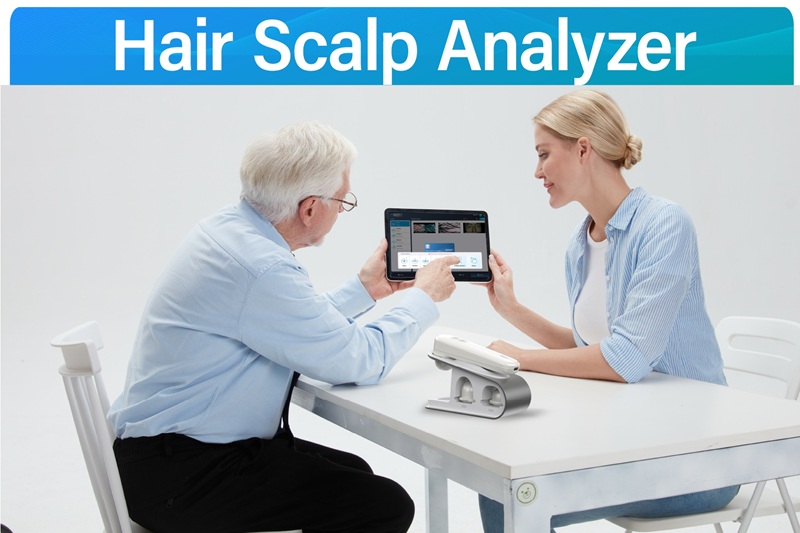
Scalp Health Assessment
When I use a Hair Scalp Analyzer, I can check several important signs of scalp health. These devices measure things like redness, oil, and moisture. Here are some of the main indicators I look for:
●Erythema Index: This shows how red the scalp is. Redness can mean early inflammation or irritation.
●Sebum and Hydration Levels: I use these readings to see if the scalp has too much oil or is too dry. Both can cause problems for hair growth.
●Transepidermal Water Loss (TEWL): This tells me if the scalp can hold moisture. High TEWL means the scalp barrier is weak.
●Itch and Pain Scales: Sometimes, I ask people to rate their discomfort. Even if the scalp does not look red, it can still feel itchy or sore.
●Inflammatory Biomarkers: In some cases, I check for special markers that show active inflammation.
Note: Clinical studies show that these measurements are reliable when I use standard methods like colorimetry and trichoscopy. This means I can trust the results to give me a good picture of scalp health.
I always remember that outside factors, like humidity or product buildup, can affect these readings. For example, too much oil can feed certain fungi, leading to dandruff. Dryness can make the scalp itchy. These conditions may change the results, so I try to control for them during analysis.
Follicle Density and Hair Condition
A Hair Scalp Analyzer helps me see how many hair follicles are in a certain area and how healthy they are. This is important because normal follicle density ranges from 150 to 220 hairs per square centimeter. I use digital imaging and special software to get accurate counts. Here is how the analyzer compares to other methods:
| Feature | Hair Scalp Analyzer | Manual/Microscopic Examination |
|---|---|---|
| Measurement Accuracy | High, objective measurements | Subjective, prone to human error |
| Technology Used | Digital imaging, algorithms, AI | Visual inspection |
| Detection of Early Changes | Yes, can identify early density changes | Often missed |
| Image Resolution | High-resolution images | Limited detail |
| Bias Reduction | Standardized imaging reduces bias | High potential for bias |
I also check for hair condition problems. The analyzer can spot thinning, excessive shedding, irritation, oiliness, dryness, clogged follicles, inflammation, pH imbalance, and even signs of poor nutrition. Here is a quick overview:
| Hair Condition Abnormality | Detection Method |
|---|---|
| Hair thinning | Hair density and thickness measurement |
| Excessive shedding | Analysis of hair loss exceeding 100-150 hairs/day |
| Scalp irritation | Trichoscopy for perifollicular examination |
| Oiliness | Sebum measurement using Sebumeter and Corneometer |
| Dryness | TEWL and corneometry assessment |
| Clogged follicles | Analysis of follicle blockage and circulation |
| Inflammation | Visualization of scalp condition at high magnification |
| pH imbalance | Assessment of scalp microbiome and pH levels |
| Nutritional factors | Epigenetic testing and blood panels for biological indicators |
I find that the Hair Scalp Analyzer gives me a clear, unbiased look at the scalp and hair. It can catch early changes that I might miss with my eyes alone.
Detecting Surface Issues
I often use a Hair Scalp Analyzer to spot surface problems on the scalp. These include dandruff, seborrheic dermatitis, and irritation caused by fungi like Malassezia. The analyzer can also show me signs of inflammation. However, I know that the device cannot always match the skill of a trained dermatologist. Studies show that AI models in scalp analyzers do not diagnose as well as human experts yet. They need more training to reach the same level.
●The analyzer helps me see dandruff and signs of seborrheic dermatitis.
●It highlights inflammation and fungal activity.
●It gives fast, non-invasive results, which is helpful for early or mild problems.
Tip: I use the Hair Scalp Analyzer as a first step. For deeper or long-term issues, I may need to refer someone to a dermatologist for more tests, like a scalp biopsy.
I always remember that a Hair Scalp Analyzer works best when I use it as part of a bigger plan. It helps me find surface issues quickly, but it cannot see everything happening below the scalp.
Limitations and When to Seek Medical Advice
What a Hair Scalp Analyzer Cannot Detect
I often remind people that a Hair Scalp Analyzer has limits. This tool gives me a close look at the scalp’s surface and hair shafts. It cannot see what happens inside the body. I cannot use it to find out if hormones, genetics, or medical conditions cause hair loss. For example, I cannot detect thyroid problems, iron deficiency, or autoimmune diseases with this device. I also cannot see if stress or medication changes affect hair growth.
Note: If you notice sudden, patchy, or rapid hair loss, or if you see redness, sores, or scaling on your scalp, you should not rely on a scalp analyzer alone.
Here is a table that shows what different diagnostic methods can and cannot do:
| Diagnostic Method | Purpose |
|---|---|
| Visual Assessment | Recognize signs and type of hair loss |
| Physical Exam | Check for inflammation, redness, sores, or scarring |
| Blood Test | Identify medical conditions, vitamin deficiencies, or hormonal imbalances |
| Scalp Biopsy | Refine diagnosis if lesions are present |
| Trichometric Analysis | Analyze scalp and hair characteristics with advanced technology |
| Pull Test and Tug Test | Learn more about the health of the hair |
Medical Tests for Hair Loss Causes
When I see signs that go beyond what a Hair Scalp Analyzer can show, I recommend medical tests. These tests help find the real cause of hair loss. Doctors use several methods to get a full picture:
●Physical examination
●Blood tests for anemia, thyroid, and hormone levels
●Scalp biopsy for unclear or severe cases
●Pull test to check hair strength and shedding
●Non-invasive scalp and hair assessments
Doctors often use these tests together. Each test gives a different piece of the puzzle. For example, blood tests can find hidden health problems. A scalp biopsy can show if scarring or inflammation causes hair loss. Physical exams help spot patterns and symptoms that machines might miss.
Here is a table that shows how each test helps:
| Diagnostic Method | Contribution to Diagnosis |
|---|---|
| Blood Tests | Identify conditions like anemia, hormonal imbalances, and deficiencies that may cause hair loss |
| Scalp Biopsy | Provide a clear diagnosis for conditions like scarring alopecia when other tests do not give answers |
| Physical Examination | Assess hair loss patterns and symptoms to guide further testing |
| Scalp Analyzer (Trichoscopy) | Offer a non-invasive look at the scalp and hair, sometimes helping avoid a biopsy |
Some tests have high accuracy. For example, trichometric analysis can detect hair shaft problems with 94% sensitivity when combined with fungal culture testing. Trichoscopy has 85% specificity for common types of hair loss. Scalp biopsy remains the gold standard for hard-to-diagnose cases.
When to Consult a Specialist
I always tell people to watch for warning signs that mean it is time to see a doctor. You should not wait if you notice:
1.Sudden or rapid hair loss
2.Patchy hair loss or bald spots
3.Receding hairline or thinning at the crown
4.Hair loss with scalp changes like redness, scaling, or sores
5.Hair loss after medication changes or illness
6.Hair loss that affects your mood or confidence
7.No improvement after using over-the-counter treatments
You should also see a dermatologist if you have:
●Progressive hair thinning
●Noticeable balding
●Itchiness, burning, or pain on the scalp
A medical clinician can give you a full assessment and suggest the best treatment. Trichologists can help with hair care, but only doctors can diagnose and treat medical causes. Early diagnosis gives you a better chance to save your hair and restore growth.
Tip: If you feel unsure about your hair loss, do not hesitate to seek professional advice. I use a Hair Scalp Analyzer as a helpful tool, but I always trust medical experts for a full diagnosis.
I use a Hair Scalp Analyzer to spot scalp and hair issues early, but I know it cannot diagnose medical causes.
| Key Takeaways | Limitations |
|---|---|
| Reliable for surface assessment | Cannot replace medical tests |
Medical experts remind me that only a doctor can give a full diagnosis.
FAQ
Can I use a scalp analyzer at home?
I can use some scalp analyzers at home. I always read the instructions and follow safety tips. For best results, I trust a trained professional.
Does a scalp analyzer hurt?
I never feel pain when I use a scalp analyzer. The process is non-invasive and gentle. I find it comfortable and quick.
Will a scalp analyzer tell me if I have a disease?
A scalp analyzer cannot diagnose diseases. I use it to check scalp health. For medical concerns, I always see a doctor.
Post time: May-25-2026


