


I used to trust my bathroom scale completely. Then I realized it couldn’t tell me whether I was losing fat or just water and muscle. A Body Composition Analyzer reveals the truth that weight alone hides. This device shows me exactly what my body is made of.
Key Takeaways
●Trust trends, not single readings. Weekly measurements under the same conditions reveal real progress.
●Follow a strict protocol: measure same time, fasted, hydrated, and after no exercise or alcohol.
●Choose a multi-frequency 8-electrode device for better accuracy. Consistency matters more than absolute numbers.
How a Body Composition Analyzer Works
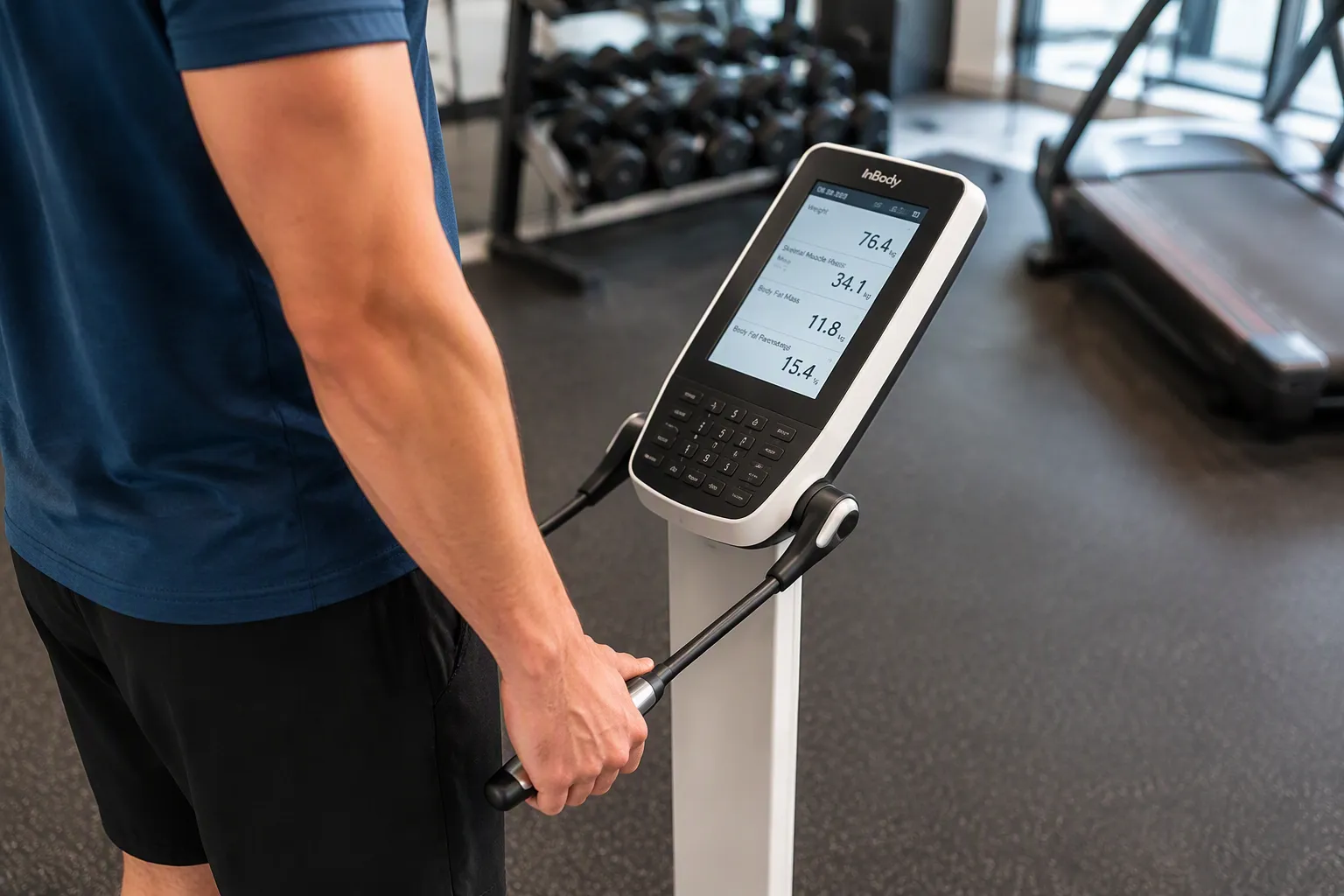
Most gym-grade devices rely on bioelectrical impedance analysis, or BIA. This technology sends a low-intensity electrical current through your body. Different tissues conduct electricity differently. Muscle contains about 73% water, so it conducts well. Fat and bone hold less water, so they resist the current. The device measures this resistance, called impedance, to estimate what your body contains.
The science gets more interesting with frequency. A low-frequency current only measures extracellular water, the fluid outside your cells. A high-frequency current crosses cell membranes and measures total body water. Multi-frequency devices use both to distinguish intracellular from extracellular water. From total body water, the analyzer estimates fat-free mass, then calculates fat mass as your total weight minus fat-free mass.
BIA vs. DEXA Technology
DEXA scans use X-rays to measure body composition with remarkable precision. The margin of error sits around ±0.8%. If your true body fat is 20%, a DEXA scan reads between 19.2% and 20.8%. BIA devices carry a larger error range of ±3-5%, meaning the same 20% body fat could read anywhere from 15% to 25%.
| Measurement Method | Reported Accuracy (Margin of Error) |
|---|---|
| BIA devices | ±3-5% |
| DEXA scans | ±0.8% |
DEXA costs $45-$150 per scan and requires a clinic appointment. A BIA device costs nothing per use once installed at your gym. The trade-off makes sense: DEXA offers precision, but BIA offers practicality. For weekly tracking, BIA wins because you cannot visit a clinic every Sunday morning.
Electrode count matters significantly. A 4-electrode scale measures only your lower body, then extrapolates to estimate whole-body fat. This approach fails for people with different body types. An 8-electrode device adds hand electrodes, creating five measurement circuits that cover your entire body. This design captures upper body and torso fat distribution accurately.
| Feature | 8-Electrode Multifrequency Device | 4-Electrode Single-Frequency Device |
|---|---|---|
| Electrode placement | Hands and feet | Feet only |
| Measurement circuits | 5 circuits, including whole body | Single lower-body circuit |
| Body water discrimination | Distinguishes intracellular from extracellular water | Cannot distinguish water compartments |
Key Metrics to Track
A quality Body Composition Analyzer reports several essential metrics:
●Body fat percentage: The proportion of your total weight that is fat tissue
●Muscle mass: The weight of skeletal muscle throughout your body
●Total body water: Your overall hydration status, split into intracellular and extracellular compartments
●Visceral fat: The dangerous fat surrounding your internal organs
●Bone mass: The weight of your skeletal structure
One caution about visceral fat: clinical studies show BIA correlates well with DEXA for total fat mass, but not for visceral adipose tissue specifically. Treat visceral fat readings as directional guidance rather than precise measurements.
Hydration represents the largest variable affecting accuracy. A 2% reduction in body water can shift body fat readings by 3-4 percentage points. This fluctuation can hide real progress or create false improvement signals. For reliable trend tracking, measure once weekly on the same day, immediately after waking, with an empty bladder, before eating or drinking anything. Stand barefoot on clean, dry electrodes. Avoid exercise for 12 hours and alcohol for 24 hours before measuring. Following this protocol produces dependable trend data within 4-6 weeks.
Popular gym models include InBody and seca devices. These Body Composition Analyzer units sync via Bluetooth for progress tracking. The key insight remains: single readings carry error, but consistent weekly measurements reveal genuine trends.
Choosing and Using a Body Composition Analyzer
Factors for Accurate Readings
I have learned that consistency matters more than any single measurement. My Body Composition Analyzer gives me the best data when I follow a strict protocol. I measure at the same time each day. I choose first thing in the morning after using the bathroom. I avoid eating or drinking anything before the scan. Research shows that eating a meal increases body mass and impedance. The percent body fat estimate rises by 0.8% to 1.7% within 20 minutes. These elevations persist for at least 60 minutes. I follow the recommendation to fast for at least 2 hours in clinical settings.
Hydration plays a critical role in accuracy. Total body water fluctuations directly affect conductivity. Dehydration reduces conductivity and overestimates body fat. Overhydration increases conductivity and underestimates body fat. I control for this by maintaining normal hydration. I avoid recent fluid intake before measurement.
Exercise is another variable I control. Strenuous exercise within 2 to 4 hours before a scan can decrease impedance. This reduces the accuracy of body composition measurements. I avoid working out before my weekly measurement. I also avoid alcohol for 12 hours and large meals for 2 hours.
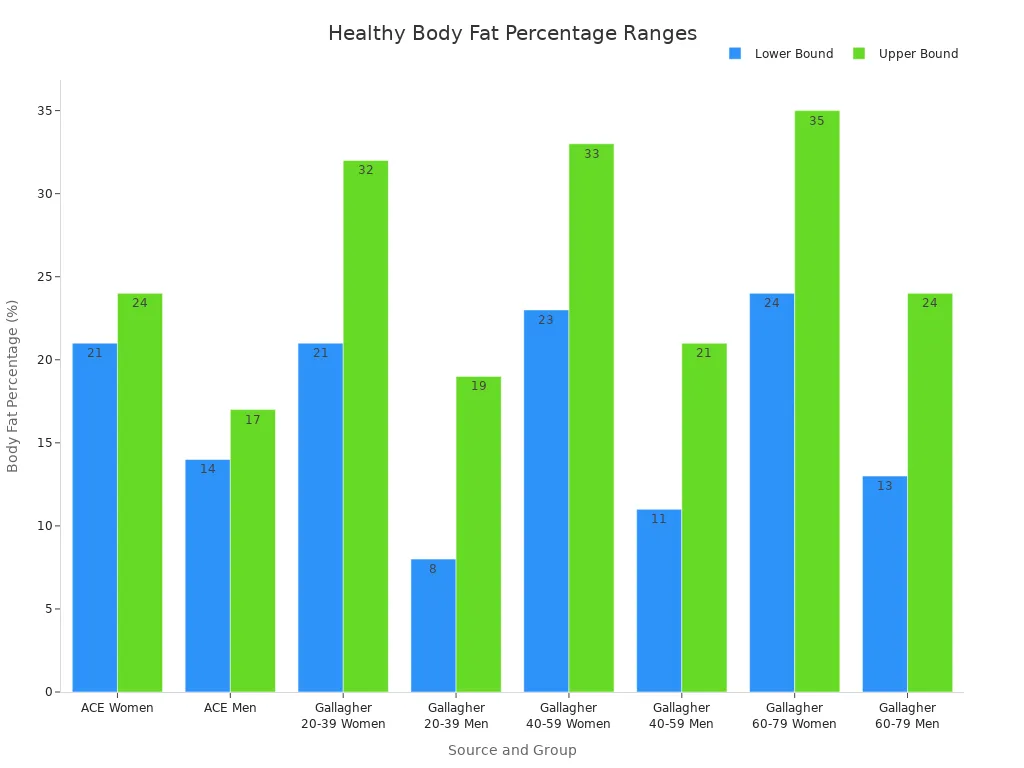
Following these steps gives me reliable trend data. I take 4 to 8 weekly measurements as my meaningful data unit. Individual readings can vary by 4 to 6 percentage points within a day. I focus on the trend, not the single number. To interpret my results, I compare my body fat percentage against healthy ranges. The chart below shows the healthy ranges for men and women according to ACE and Gallagher et al.
Selection Guide: Features and Cost
When I choose a Body Composition Analyzer, I look at three features. Multi-frequency technology provides better accuracy. Devices with 8 electrodes and 3 frequencies show a 98% correlation with DEXA scans. Consumer smart scales with 4 electrodes have a higher error range of 3% to 8%. The 8-electrode design reads through both hands and feet. This gives me accurate segmental analysis rather than estimation.
Research published in the National Library of Medicine validated InBody’s BIA technology, showing a 98% correlation with DEXA scans across multiple studies. This professional-grade accuracy is achieved through 3 frequencies and 8 electrodes, which directly measure each body segment rather than estimating upper-body data from lower-body readings—a key limitation of consumer smart scales.
Bluetooth connectivity is another key feature. Models like the InBody Dial H20 sync with my smartphone for progress tracking. I can view my trends in the app and share data with my trainer. Some devices integrate with Apple Health and Google Fit.
Cost is a major factor in my decision. The table below shows the price ranges for each category.
| Category | Price Range |
|---|---|
| Consumer home-use | $85 – $505 |
| Gym-grade business | $1,500 – $5,000 |
I choose based on my budget and how often I plan to use the device. For a home gym, a reliable consumer scale works well. For a commercial gym, a professional-grade unit provides better accuracy. I remember that a peer-reviewed study in JMIR mHealth concluded that smart scales are not accurate for body composition. The study states that these scales should not replace DEXA in patient care. But for trend tracking in a gym setting, a quality device gives me useful data. I focus on trends, not absolute numbers. I use the same device under the same conditions each time. This approach gives me meaningful data to track my progress over weeks and months.
A Body Composition Analyzer reveals progress that weight alone hides. I trust trends, not single readings. Choose a device that fits your gym and budget. Measure at the same time, under the same conditions, every week. Bluetooth syncing makes this routine effortless. Stop guessing about your progress – pick a device, build a routine, and start tracking what matters.
FAQ
How often should I measure my body composition?
I recommend measuring once per week. This frequency captures meaningful trends without obsessing over daily fluctuations. Your hydration, food intake, and exercise timing all affect readings. Weekly measurements smooth out these variables.
Can I use a Body Composition Analyzer if I have a pacemaker?
No. BIA devices send electrical currents through your body. These currents can interfere with implanted medical devices. Consult your doctor before using any BIA-based analyzer. This safety precaution applies to all models, including gym-grade units.
Why does my body fat percentage change between measurements?
Your hydration level causes most variation. A 2% shift in body water can change readings by 3-4 percentage points. Food intake and recent exercise also affect results. Follow the same measurement protocol each time for reliable trend data.
Post time: Sep-01-2026


