


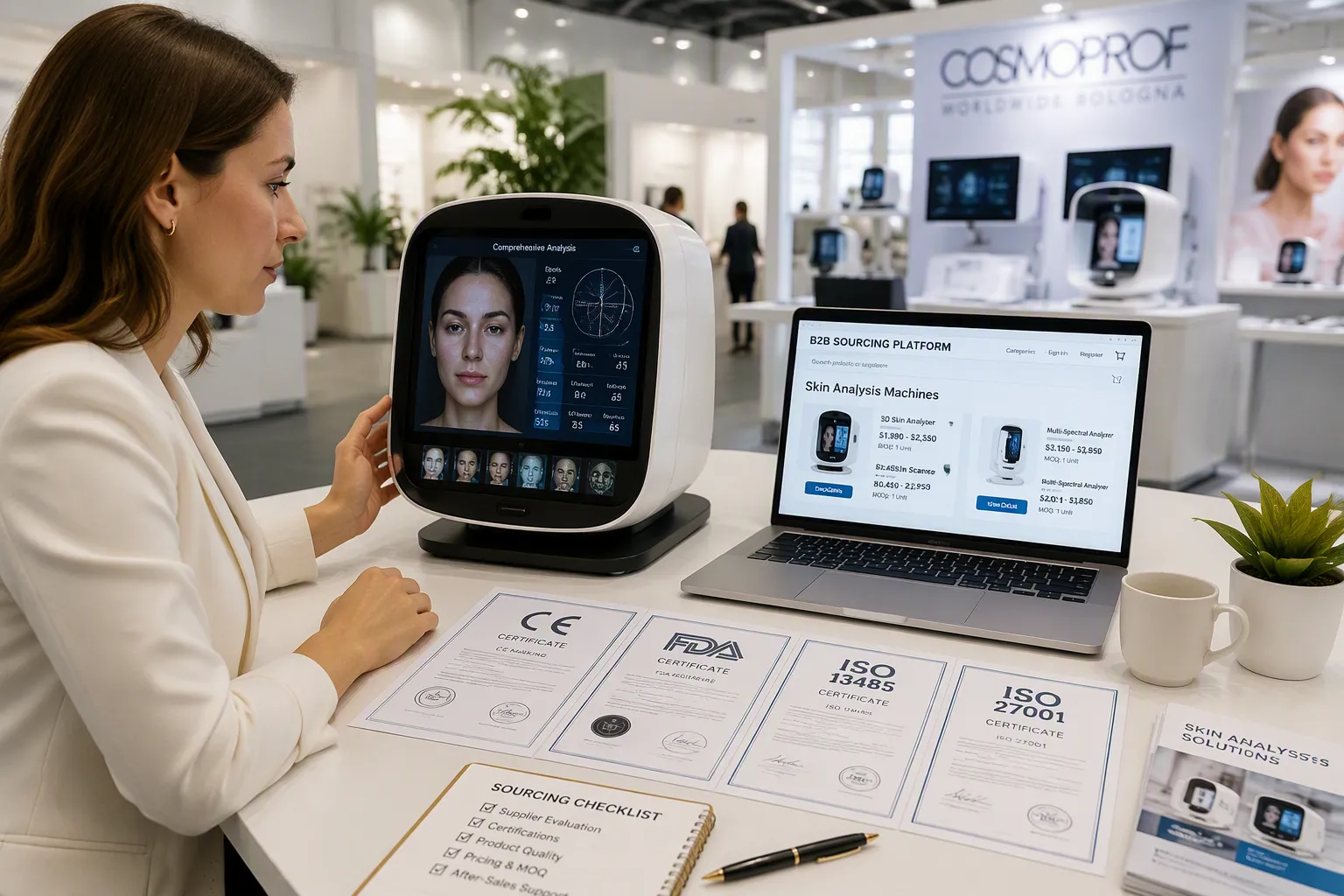
The choice between 2D and 3D skin analysis technology depends entirely on your business model and consultation objectives. 2D analyzers excel at capturing surface-level skin conditions—pigmentation, pores, texture, and UV damage. 3D analyzers add volumetric measurement and depth visualization, enabling quantification of wrinkle depth, facial volume loss, and sagging. The global 3D skin analysis system market was valued at approximately $114 million in 2025, growing at 8.3% CAGR toward $142 million by 2032.
2D is sufficient for surface-level consultation; 3D adds measurable depth for wrinkles and volume loss.
3D technology drives treatment plan acceptance by visualizing aging trajectories and structural changes.
Market leaders like Canfield’s VISIA 3D and MEICET’s S7 combine 2D analysis with 3D visualization tools.
Understanding the Technical Distinction: What 2D and 3D Actually Measure
2D skin analyzers capture flat images across multiple spectral modes to assess surface and subsurface conditions, while 3D analyzers create volumetric models that measure depth, volume, and contour changes. This distinction determines what clinical questions each technology can answer.
A 2D analyzer reveals:
- Pigmentation patterns & Sun damage
- Surface texture & Pores
- Vascular conditions & Redness
- UV damage & Porphyrins
A 3D analyzer adds:
- Wrinkle depth topography
- Quantifiable Volume loss
- Sagging and laxity displacement
- Predictive treatment simulation
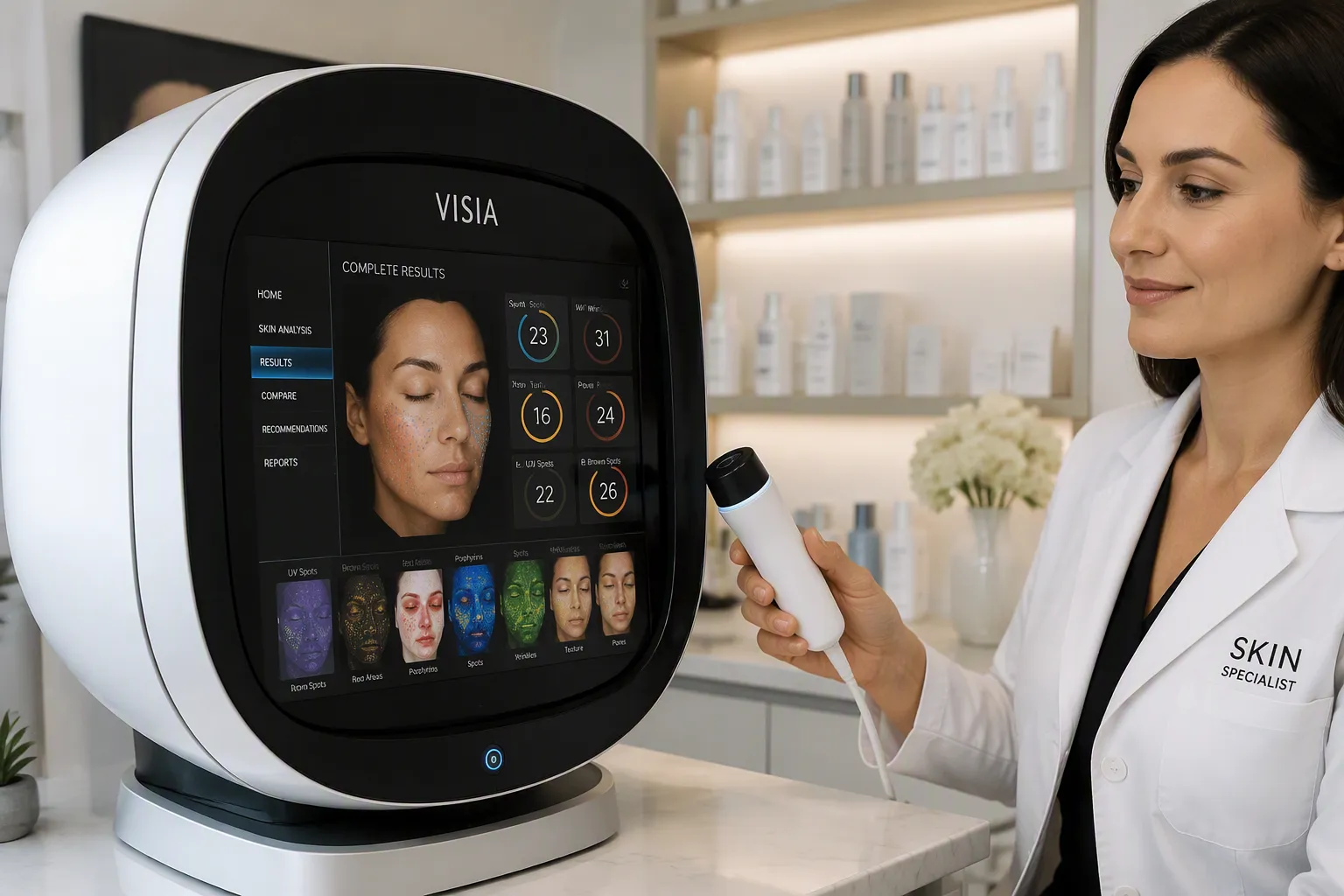
Table 1: 2D vs. 3D Skin Analysis — Capability Comparison
| Assessment Capability | 2D Analyzer | 3D Analyzer | Business Value |
|---|---|---|---|
| Pigmentation Analysis | Excellent | Excellent | 2D sufficient for most cases |
| Pore and Texture | Excellent (PPL mode) | Good (surface modeling) | 2D provides superior detail |
| UV Damage Detection | Excellent | Requires specialized mode | 2D is standard for UV imaging |
| Wrinkle Depth | Qualitative only | Quantitative | 3D enables objective tracking |
| Volume Loss | Not possible | Quantitative | Critical for injectables |
| Treatment Prediction | Not possible | 3D Sculptor tools | Increases plan acceptance |
The Business Case: When 2D Is Sufficient and When 3D Justifies the Investment
For beauty clinics and spas performing primarily skincare-focused consultations, a high-quality 2D analyzer like the ISEMECO S7 delivers the core value proposition. It captures 20-megapixel images across four spectral modes, providing professional visualization without the cost of full volumetric sensors.
Where 2D is sufficient:
- Skincare-focused consultations
- Acne and pigmentation management
- UV damage assessment
- Routine progress photography
Where 3D is necessary:
- Injectable consultations (Fillers)
- Contour-focused treatments
- Advanced anti-aging planning
- Surgical consultation support
How MEICET’s S7 Bridges the 2D-3D Divide
The ISEMECO S7 delivers professional-grade 2D multi-spectral analysis with 3D visualization tools. Its “3D Comparison” mode shows changes in skin texture and sagging from any angle, providing compelling before/after documentation for clients without the complexity of volumetric measurement.
Table 2: Technology Selection Guide by Business Type
| Business Type | Primary Needs | Recommended Tech | Rationale |
|---|---|---|---|
| Beauty Clinic | Skincare tracking | 2D Multi-spectral | Surface analysis is sufficient |
| Medical Spa | Volume & Fillers | Hybrid 2D/3D | 3D needed for injectables |
| Dermatology | Lesion tracking | 2D + Dermoscopy | Focus on surface pathology |
Regulatory and Practical Considerations
Operational efficiency is key. While 3D systems offer more data, they typically require a larger physical footprint, longer capture times, and higher training burdens for staff. 2D systems are often faster and more streamlined for high-volume aesthetic practices.
Frequently Asked Questions
No. 3D is better for applications requiring depth measurement. 2D is superior for surface analysis like pigmentation and pores. For most consultations, 2D provides sufficient value.
Systems like the ISEMECO S7 offer 3D surface visualization (rendering) but do not deliver volumetric measurement (quantification) like dedicated 3D systems.
3D-capable systems typically command a 30–60% price premium over 2D-only analyzers due to hardware complexity.
The ISEMECO S7 is a 2D multi-spectral analyzer with 3D visualization capability, capturing 20-megapixel images across four spectral modes.
Post time: Oct-13-2026


