


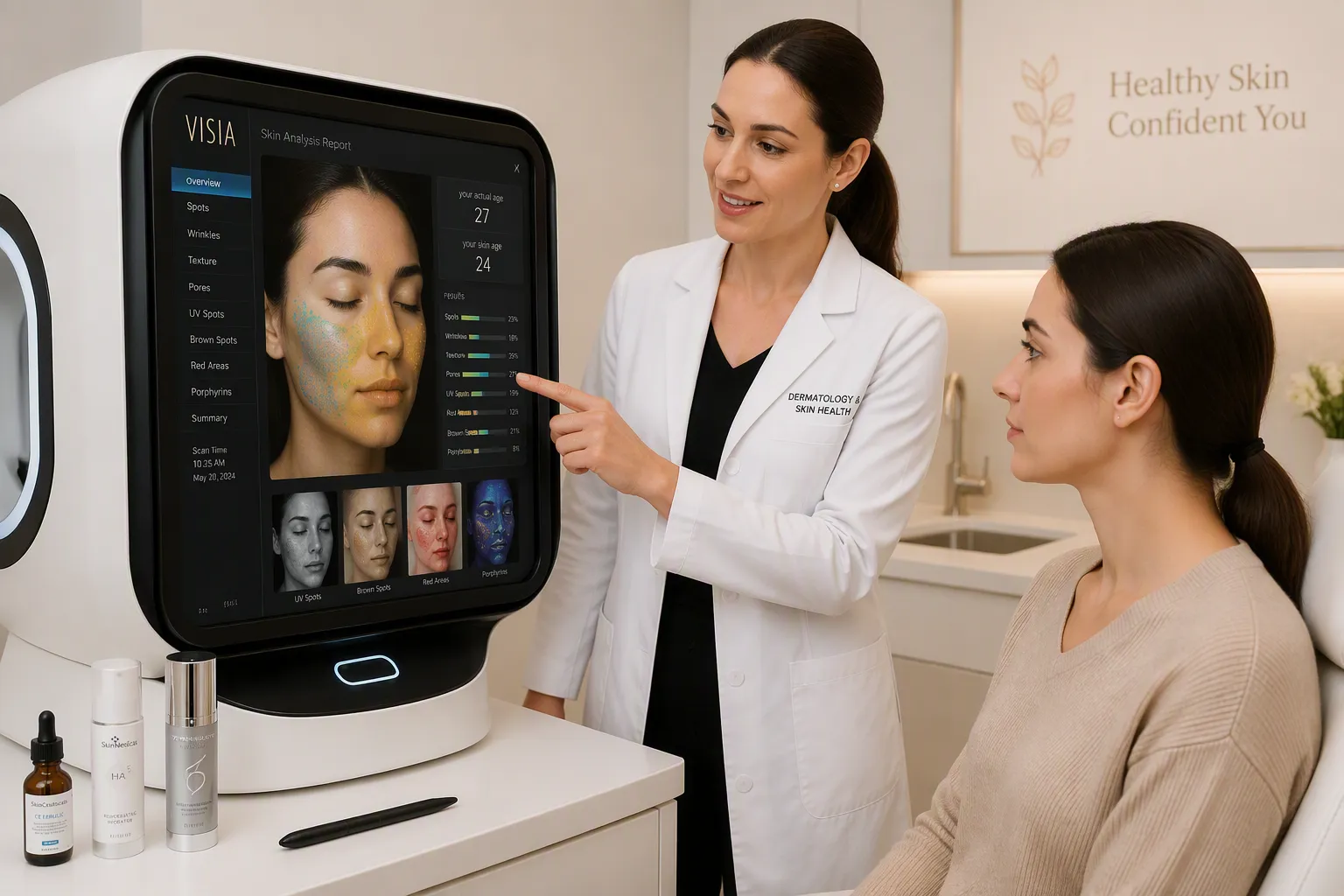
Quick Answer
Finding a reliable 3D skin analysis machine manufacturer requires verifying five critical factors: imaging technology authenticity (spectral modes and sensor resolution), AI analysis capability (database size and validation data), regulatory certifications (FDA 510(k), CE, ISO 13485), manufacturing maturity (OEM/ODM experience and quality control systems), and after-sales support infrastructure (warranty terms, clinical training, spare parts availability). Market data shows entry-level portable scanners cost approximately $700–1,200, mid-range clinical 3D AI systems range from $1,500–2,500, and high-end medical-grade multispectral workstations reach $2,700–18,000. For clinics requiring clinical-grade diagnostics, mid-range systems typically offer the optimal balance of capability and investment.
Key Takeaways
●Certifications are a non-negotiable threshold: FDA 510(k) clearance, CE marking, and ISO 13485:2016 certification represent the minimum compliance requirements for medical-grade skin analysis machines. Uncertified devices cannot be legally used for clinical diagnosis in most jurisdictions.
●Sensor resolution and spectral count determine diagnostic capability: 36-megapixel sensors paired with 8-spectrum imaging represent the current clinical-grade benchmark. Suppliers claiming “AI-powered” without disclosing specific sensor specifications warrant scrutiny.
●AI database size reflects algorithm training depth: Systems trained on more than 5 million real skin cases demonstrate significantly superior diagnostic accuracy and population diversity compared to models trained on smaller datasets.
●Manufacturing experience years serve as an indirect reliability indicator: Manufacturers with 15+ years of industry presence typically demonstrate more mature quality control and supply chain stability.
●After-sales training and support determine actual utilization effectiveness: Manufacturers providing one-on-one clinical operation training and remote technical support help clinics convert equipment into consultation tools more rapidly.

1. Imaging Technology Verification: Hard Metrics Beyond Marketing Terminology
Imaging capture capability represents the core competitive differentiator of 3D skin analysis machines, yet supplier marketing terminology often obscures actual technical specifications. Reliable manufacturers provide quantifiable hardware parameters rather than vague descriptions like “high-definition” or “AI-driven.”
1.1 Sensor Resolution and Image Quality
Sensor pixel count directly determines whether magnified images can clearly reveal microscopic details such as pores and fine lines. The current clinical-grade benchmark is 36 megapixels, while entry-level devices typically offer 10–20 megapixels. However, pixel count alone is not the sole criterion—lens quality, lighting design, and image processing algorithms equally influence final image output.
Verification method: Request actual captured skin image samples from the manufacturer, magnify to maximum levels, and inspect pore texture and pigment detail clarity. Do not rely solely on pixel numbers on specification sheets.
1.2 Actual Configuration of Multispectral Imaging Technology
Multispectral imaging enables skin analysis machines to penetrate the epidermis and observe subsurface pigment, vascular, and porphyrin distribution. Different spectral modes serve distinct purposes:
| Spectral Type | Primary Detection Target | Clinical Significance |
|---|---|---|
| RGB White Light | Surface texture, visible pigment | Baseline skin assessment |
| Cross-Polarized Light | Deep pigment, vascular conditions | Epidermal vs. dermal pigment differentiation |
| Parallel-Polarized Light | Surface shine, pores | Texture and pore quantification |
| UV/Wood’s Light | Porphyrins, epidermal melanin | Acne bacteria detection, hidden pigmentation |
The MEICET 3D series features 5 spectral modes (RGB, cross-polarized, parallel-polarized, UV, and Wood’s light) with 16 sets of 360° cross-polarized light sources for comprehensive facial illumination.
Warning signal: If a supplier promotes “8-spectrum” or “10-spectrum” capabilities but cannot explain the specific purpose and wavelength range of each spectrum, this may indicate marketing packaging rather than genuine functionality.
2. In-Depth Assessment of AI Analysis Capability
AI analysis is the critical dividing line between genuine diagnostic tools and “photography equipment,” but the true level of AI capability requires verification through measurable data.
2.1 Training Database Scale and Diversity
AI algorithm diagnostic accuracy depends heavily on the scale and quality of training data. Databases containing more than 5 million real skin cases can cover broader skin types, age groups, and skin condition combinations.
Industry research findings: Dermatology AI models demonstrate AUROC of 0.89 on light skin (Fitzpatrick types I-III) but only 0.82 on darker skin (types IV-VI). This gap stems from long-standing underrepresentation of darker skin populations in training data. Reliable manufacturers should be able to explain their database’s demographic composition and geographic diversity.
2.2 Practical Value of Analysis Dimensions
Analysis item quantity is not inherently better—the key lies in whether output results can translate into actionable consultation dialogue. A practical judgment criterion: can the device provide staff with three specific communication points within 90 seconds of scanning?
Core analysis dimensions should include:
●Pigmentation (distinguishing epidermal/dermal depth)
●Pores (count, area, severity grading)
●Wrinkles (depth measurement, not visual grading)
●Sensitivity/redness (regional distribution and area percentage)
●Moisture/oil content (quantified values)
The MEICET 3D series evaluates 12 key skin concerns and supports skin trend prediction for future 5–7 years.
2.3 Aging Simulation and Predictive Functions
Aging simulation functionality transforms skin analysis machines from diagnostic tools into sales conversion instruments. By visualizing skin changes over the next 5–10 years, clinics can more effectively communicate the value of preventive care.
3. Regulatory Certification and Compliance Verification
Certification represents the hard dividing line between medical-grade devices and consumer-grade products. Uncertified devices cannot be legally used for clinical diagnosis in most jurisdictions and may introduce legal and patient safety risks.
3.1 Core Certifications That Must Be Verified
| Certification Type | Applicable Scope | Verification Method |
|---|---|---|
| FDA 510(k) Clearance | U.S. market clinical use | Query FDA database to confirm K number |
| CE Marking | European Union market | Request CE certificate number |
| ISO 13485:2016 | Medical device quality management systems | Audit certificate validity period |
| IEC 60601-1 | Medical electrical equipment safety | Confirm test reports |
Winkonlaser K12 simultaneously holds FDA 510(k) clearance (K241860), CE marking, ISO 13485:2016, and IEC 60601-1 Ed.3.1.
Critical reminder: FCC ID certification is a mandatory requirement for products with wireless transmission capabilities and is distinct from medical device safety certifications. If a skin analyzer includes WiFi or Bluetooth functionality, FCC ID certification is additionally required for U.S. market entry.
3.2 Manufacturer Compliance History Review
Check whether manufacturers have product recall records, FDA warning letters, or market withdrawal histories. This information is publicly searchable through FDA official websites and regulatory agency databases in various countries.
4. Manufacturing System and Supply Chain Maturity
Manufacturer experience years and production scale serve as indirect but effective reliability indicators.
4.1 OEM/ODM Capability and Industry Experience
Manufacturers with long-term industry presence typically possess more mature process control and more stable supply chains. QM Medical indicates 19 years of OEM/ODM experience on its product pages, supporting comprehensive customization.
Evaluation dimensions:
●Year of establishment and core team industry backgrounds
●History of contract manufacturing for recognized brands
●Production facility scale and capacity
●Availability of in-house laboratories and testing capabilities
4.2 Market Position and Competitive Landscape
Major participants in the global 3D skin analysis system market include Canfield Scientific, BOMTECH ELECTRONICS, PIE, and MEICET. Chinese manufacturers are accelerating their substitution capability in the mid-range market, with brands like MEICET entering the list of global major participants.
Market share data: ADSS held 13.72% of the 3D skin analyzer market in 2024.
4.3 Trade Show Participation and International Exposure
Consistent participation in major industry exhibitions (such as Cosmoprof Worldwide Bologna, KIMES, and Cosmoprof Asia) reflects manufacturers’ international commitment and product competitiveness. MEICET participated in Cosmoprof Bologna 2026 (booth T13) and KIMES Seoul (booth B824), showcasing its 3D MD300 and D9 series products.
5. After-Sales Service and Training Support
Post-delivery support quality determines actual utilization effectiveness and return on investment.
5.1 Warranty Terms and Response Mechanisms
| Support Type | Industry Standard | Premium Standard |
|---|---|---|
| Main Unit Warranty | 1 year | 2 years |
| Accessory Warranty | 3 months | 6–12 months |
| Technical Support | Business hours email | 24/7 remote + on-site |
| Training Services | Manual/video | One-on-one clinical operation training |
QM Medical offers a 30-day quality refund policy, 2-year warranty, and “free one-on-one clinical operation training service provided by ADSS senior beauty instructors after receipt.”
5.2 Software Updates and Data Management
Continuous AI algorithm optimization requires manufacturers to provide regular software updates. Reliable manufacturers should specify:
●Software update frequency and fee policies
●Cloud storage data security measures
●Patient data export and backup capabilities
●Scalability of analysis dimensions
6. Pre-Order Verification Checklist
Before issuing a purchase order, confirm the following items:
Imaging and Hardware
Sensor resolution (target: ≥36 megapixels)□Spectral mode count and types (target: ≥5, including UV and polarized light)
Actual captured image sample verification (magnify to inspect details)
Capture speed (target: <60 seconds for full-face scan)AI and Analysis
Training database scale (target: ≥1 million cases)□Database demographic diversity explanation
Analysis dimension count and practicality (target: ≥12 items)
Aging simulation/prediction functionalityCertifications and Compliance
FDA 510(k) K number verification (if applicable to U.S. market)□CE certificate number confirmation (if applicable to EU market)
ISO 13485:2016 certificate validity period
FCC ID certification (if device includes wireless module)Manufacturing and Service
Manufacturer establishment year and industry experience□OEM/ODM capability and customization options
Warranty terms (main unit ≥2 years, accessories ≥6 months)□Training service content and format
Software update policies
Spare parts supply and response time commitments
FAQ
1. How can I determine whether a 3D skin analyzer’s AI is genuine or a gimmick?
Request specific AI performance data from the supplier: training database scale, accuracy metrics on validation sets, and performance differences across skin types (Fitzpatrick I-VI). Devices labeled “AI-driven” without any verifiable data are typically basic image processing software rather than genuine diagnostic AI.
2. What is the difference between FDA 510(k) clearance and FDA registration?
FDA registration merely indicates that a company has registered its facility with the FDA and does not imply product marketing authorization. FDA 510(k) clearance is a product-specific premarket review demonstrating that the device is substantially equivalent to a legally marketed predicate device in terms of safety and effectiveness. Skin analyzers for clinical use should hold 510(k) clearance rather than mere registration.
3. What are the core differences between entry-level (~$1,000) and clinical-grade (~$2,000) skin analysis machines?
Entry-level devices typically offer only 1–2 spectral modes, lower-resolution sensors, and basic analysis software, with primary functionality being “better photography.” Clinical-grade systems feature multispectral imaging, 36MP+ sensors, AI-driven quantitative analysis, and patient data management capabilities that produce actionable diagnostic reports.
4. Should I choose Chinese manufacturers or Western brands?
It depends on specific requirements. Western brands (such as Canfield Scientific) dominate the high-end academic market but typically cost 2–5 times more. Chinese manufacturers have significantly advanced their technical maturity in the mid-range market, with brands like MEICET entering the list of global major participants and offering FDA and CE certifications. For most clinics and aesthetic institutions, certified mid-range systems from Chinese manufacturers offer the optimal balance of value and capability.
5. Is a higher “spectral count” always better for skin analysis machines?
Not necessarily. An 8-spectrum system with redundant or ineffective spectral modes may deliver less actual value than a 5-spectrum system where each mode serves a clear diagnostic purpose. The key is verifying the actual clinical application value of each spectrum rather than pursuing quantity blindly.
6. After purchasing the equipment, how can I ensure staff can use it effectively?
Choose manufacturers that provide comprehensive training support. Quality suppliers offer one-on-one clinical operation training, user manuals, video tutorials, and remote technical support. Training content should include: standardized capture protocols, analysis report interpretation, and patient communication scripts.
7. What is the typical investment payback period for a 3D skin analysis machine?
Based on market experience, mid-range systems (approximately $1,500–2,500) typically achieve investment payback within 6–12 months in clinics with moderate patient flow, through improved consultation conversion rates and average transaction values. The key factor is whether the device helps staff establish professional trust during initial consultations and recommend appropriate treatment plans.
Post time: Oct-10-2026


