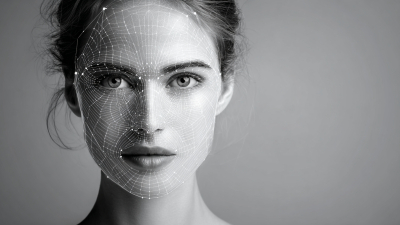
As we get closer to 2026, you can really see how quickly Face Scanner tech is changing. Experts like Dr. Emily Novak over at TechVision Labs are stressing how important it is to think about ethics in all of this. She’s quoted saying, “Face scanner technology has to respect people’s privacy if it’s going to succeed in the long run.” That’s a pretty big deal when you think about innovation going hand-in-hand with responsibility.
The progress in facial recognition is pretty impressive, no doubt. Companies are rolling out scanners that work faster and get better results. But, of course, there are still some hurdles. Like, how exactly are personal data going to be protected? These days, consumers want transparency and security—like, yesterday. That puts some real pressure on those developing the tech and lawmakers trying to keep up.
Face recognition has tons of potential across different fields, from security to healthcare and more. But not everyone is totally on board—many people still feel uneasy about the idea of being watched all the time. Figuring out how to handle this honestly isn’t easy. It’s all about having open conversations and finding that sweet spot between innovation and trust. Moving forward, the future of Face Scanner tech really hinges on building trust while pushing boundaries a bit.
As we move closer to 2026, face scanner technology is evolving rapidly. We see improvements in accuracy and speed. Enhanced algorithms analyze facial features with remarkable precision. This advancement opens doors to new applications in security, retail, and healthcare.
However, these advancements come with challenges. Privacy concerns are on the rise. Many people worry about how their data is used. Instances of biases in facial recognition are also emerging. It's crucial for developers to address these issues responsibly.
The integration of artificial intelligence is noteworthy. AI enhances the ability to recognize diverse facial traits. Yet, the technology must be inclusive. Some algorithms still struggle with nontraditional facial features. As face scanner technology evolves, it is essential to strike a balance between innovation and ethics.
Face scanner technology is rapidly evolving. By 2026, its applications will span various sectors. In security, face scanning enhances access control. It helps in identifying individuals in crowded places. This is vital for airports and big events. However, accuracy is not always guaranteed. False positives may lead to unnecessary scrutiny.
In retail, face scanners personalize shopping experiences. They can identify loyal customers and tailor promotions. This makes shopping more engaging. Yet, privacy concerns are significant. Customers might feel uneasy about being constantly monitored. Brands must tread carefully in balancing personalization and privacy.
Tips: Always communicate clearly about data usage. Transparency builds trust. Regular audits of face scanning systems can improve accuracy. Engaging with customers about their preferences can make them feel valued. It's crucial to examine the ethical implications of using face scanners in public spaces. Consider societal impacts before widespread implementation.
This chart illustrates the projected growth of face scanner technology applications across different sectors by 2026, highlighting the increasing utilization of this technology in security, healthcare, retail, and entertainment.
Face scanning technology is rapidly advancing. By 2026, we expect significant innovations that will reshape user experiences. According to a recent report by IHS Markit, the global facial recognition market is projected to grow to $7 billion by 2026. Such growth indicates a surge in demand for security, convenience, and personalization.
Innovative algorithms will enhance accuracy and speed. Researchers are exploring machine learning models that can recognize faces even in low-light conditions. This improvement could increase effectiveness in public safety applications. However, ethical implications remain a concern. Misuse of facial recognition can lead to privacy infringements. A study by the Pew Research Center highlighted that 81% of Americans feel they have lost control over their personal data.
Integration with other biometric systems is also anticipated. Merging face scanning with iris and voice recognition can improve security. Yet, blending these technologies poses challenges. Each system comes with unique vulnerabilities. Addressing these weaknesses is essential for trust. Users must grapple with balancing security and privacy in an increasingly digital world.
The future of face scanning technology raises significant privacy concerns. As this technology advances, so does its ability to identify individuals in various settings. Public spaces could become areas of constant surveillance. This reality can make people feel uneasy and vulnerable. With each scan, personal data could be collected without consent.
Tips: Always be aware of where and how facial recognition is being used. Opt-out options should be explored whenever possible.
Ethical implications are equally important. Decisions regarding who accesses this technology matter. This raises questions about bias and fairness. Facial recognition systems have been criticized for inaccuracies, particularly in diverse populations. Mistakes can lead to wrongful accusations or discrimination. Such issues demand attention and solutions from developers.
Tips: Engage in discussions about ethical use of technology in your community. Advocate for transparency and responsibility from organizations that rely on face scanning.
The future of face scanner technology by 2026 looks promising. Experts predict significant integration of face scanners with other biometric systems. For instance, combining facial recognition with fingerprint or iris scanning could enhance accuracy and security. A recent report suggested that integrating multiple biometric modalities could reduce false acceptance rates significantly. This could lead to better safety standards in various sectors.
However, challenges remain. Privacy concerns persist as biometric data collection increases. Users may hesitate to adopt these technologies in everyday scenarios. Ensuring robust data protection and transparent policies will be crucial. As we expand, we need to reflect on the ethical implications. Balancing innovation with user trust is essential for success.
Tip: Consider using multi-modal biometric systems for enhanced security. Relying on a single method may not be enough. Explore the possibilities of integration wisely.
The accuracy of face scanners continues to improve, but variability in conditions can lead to errors. Poor lighting, for instance, affects performance. Users must be aware of these limitations. On-the-go scans might not always yield the intended results. Continuous improvement and testing are vital for true advancements in technology.
Face scanner technology is poised to reshape various industries by 2026. Its integration in retail could streamline customer experiences. Imagine walking into a store and having personalized recommendations based on your past behaviors. However, this raises questions about privacy. Consumers may feel uneasy about constant surveillance. How do we balance innovation with personal freedom?
In the healthcare sector, face scanners can enhance patient care. They may quickly identify patients, reducing wait times. Yet, accuracy remains a critical issue. Misidentification can lead to serious consequences. The technology's future in security is similarly complex. While it can improve safety measures, over-reliance could create vulnerabilities.
The economic implications of face scanner technology are significant. Businesses could save costs with automation and improve efficiency. Yet, job displacement is a real concern. Workers need support to transition to new roles. The growth of this technology must consider its social impact. Can we create a future that benefits all?
The future of face scanner technology in 2026 is set to be transformative. With advancements in AI and machine learning, these systems will likely become more accurate and reliable. We can expect wider applications in security, healthcare, and personal devices. Imagine entering a building without physical keys. Just a quick scan, and you’re in. This convenience could reshape our everyday experiences.
However, issues surrounding privacy and ethics will require careful consideration. Data security concerns are paramount. Users want assurance that their biometric data is safe and not misused. Questions about consent and surveillance will arise. Not everyone may feel comfortable with pervasive face scanning in public spaces. These challenges call for ongoing reflection and dialogue on societal impacts.
Additionally, diversity in facial recognition technology is crucial. The algorithms must be trained on diverse datasets to ensure fairness. Many current systems struggle with accuracy across different demographics. This can lead to discrimination and bias. Future efforts must focus on creating inclusive and equitable technology that serves everyone fairly.
In today's fast-paced work environment, enhancing productivity is key to achieving success. The 2023 Global Workplace Efficiency Report highlights the importance of utilizing advanced tools to improve workflow and optimize time management. The MFJC-1B emerges as an innovative solution designed to cater to various professional settings, especially in beauty salons, hair salons, and medical spa cosmetics shops. With its multi-spectral detection capabilities and a stunning million high-definition pixels, this device ensures that professionals can provide top-notch services while maintaining efficiency.
One of the standout features of the MFJC-1B is its wireless charging capability, which eliminates messy cords and allows for a seamless working experience. Additionally, the incorporation of double detection heads enhances its functionality, enabling users to achieve more in less time. By investing in such technologically advanced tools, businesses can create an environment that not only improves overall productivity but also elevates the customer experience. The emphasis on professional design services with cost-effective solutions further ensures that every establishment can enhance its operations without overspending.
: It enhances productivity and improves efficiency in daily tasks. Users often report feeling more organized.
It is recommended to use it daily for the best results. However, some users prefer less frequent use.
Some users mention mild discomfort initially. Adjusting usage can help mitigate this issue.
Yes, it is versatile. Users find it helpful for both work and personal projects.
Results can vary. Some users may need more time. It's important to reflect on usage habits.
Yes, support is available through multiple channels. Feedback often improves the service experience.
The future of face scanner technology by 2026 promises to be transformative across multiple sectors, driven by its evolution from basic identification tools to sophisticated security systems. Currently, face scanners are utilized in areas such as law enforcement, banking, and healthcare, enhancing security and operational efficiency. By 2026, we can expect significant technological innovations, including improved accuracy and speed, as well as integration with other biometric technologies, which will further bolster their effectiveness.
However, with these advancements come privacy concerns and ethical considerations that must be addressed. The potential economic impact on industries is substantial, as face scanners streamline processes and improve user experiences. Future trends indicate an increased reliance on face scanning in everyday applications, raising questions about data security and user consent, which will be crucial in shaping the responsible development of this technology.