


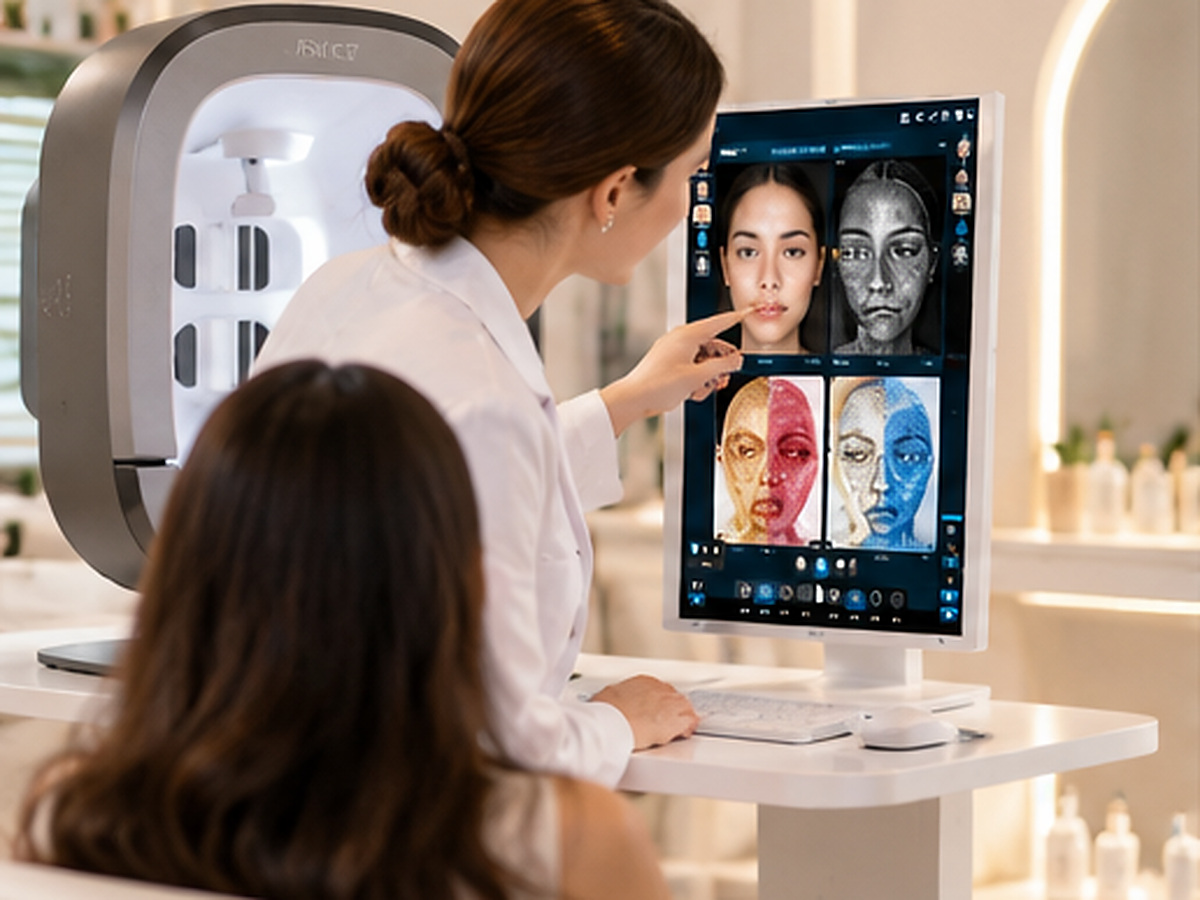
Quick Answer
A professional 3D skin analyzer supplier should provide three contractual commitments, not just verbal promises: a 12-month host machine warranty with explicit coverage of optical modules, sensors, and calibration components; structured training that covers clinical interpretation, not just button operation; and a written service-level commitment with measurable response times. MEICET’s published policy meets the baseline: one-year host warranty, three-month replacement for handles and parts, free software updates every 3–6 months, and technical support via phone, webcam, and online chat. The distinction that matters for buyers is whether the supplier has the spare parts inventory and technical infrastructure to honor those commitments across the device’s 5–7 year service life.
- ✔ Warranty scope matters more than warranty length. A 12-month warranty that covers the chassis but excludes the optical module—the most expensive component—is functionally inadequate for a 3D structured-light device.
- ✔ Response time commitments are more diagnostic than warranty duration. A device under warranty that takes six weeks to repair is six weeks of lost consultation revenue. MEICET’s published service standard includes 7×24 standby, one-hour repair response, and 24-hour solution commitment.
- ✔ Training must address clinical interpretation. The D9’s 8-dimension aging grading and 0.1ml volume difference features require staff who understand what the numbers mean for treatment planning, not just how to capture an image.
- ✔ Software updates should be included, not sold separately. Aging analysis algorithms and AI models improve over time; a supplier that charges for every update creates an escalating cost burden.
- ✔ Remote diagnostic capability reduces downtime. Multi-device login and remote report access allow the supplier to troubleshoot without dispatching a technician, which is the difference between hours and weeks of downtime.
A clinic purchasing a 3D skin analyzer typically focuses the negotiation on device price, delivery time, and installation. The warranty, training, and support terms are often treated as boilerplate—until the first component failure occurs during peak consultation season. The ISEMECO 3D D9, with its binocular grating structured light, 42-megapixel imaging, and 0.1ml volume precision, is a clinical-grade instrument with optical and electronic components that require calibrated service. The supplier’s after-sales infrastructure determines whether that instrument remains a revenue-generating asset or becomes a depreciating fixture.
1. Warranty Structure: What Should Be Covered and What Should Not
A professional 3D skin analyzer warranty should cover the host machine, the optical module, the light sources, and the control electronics for a minimum of 12 months from delivery. MEICET’s published policy states a one-year warranty on the host machine and three-month free replacement warranty for handles, treatment heads, and parts. This structure reflects the typical failure profile of the device: the host—including the camera module and structured-light projector—is the high-value, low-failure-rate component; the handles and wear items are lower-cost but higher-failure-rate.
The procurement distinction is between a warranty that covers the chassis and a warranty that covers the measurement system. A 3D skin analyzer’s clinical value depends on the optical path—the structured-light projector, the cameras, and the calibration between them. A warranty that excludes the optical module leaves the most expensive and most clinically critical component unprotected. MEICET’s service documentation for its professional skin analyzer line specifies that warranty coverage should explicitly include optical modules, sensors, and calibration components, not just the enclosure.
What the warranty should not cover is equally important: consumables, damage from misuse or unauthorized modification, and cosmetic wear. These exclusions are standard, but the buyer should confirm them in writing so that a dispute over a failed component is resolved by the contract, not by negotiation after the fact.
| Warranty Element | MEICET Published Policy | Professional Baseline Expectation | Procurement Question |
|---|---|---|---|
| Host machine | 12 months | 12 months minimum | “Does the host warranty cover the structured-light projector and cameras?” |
| Handles and treatment heads | 3 months replacement | 3–6 months | “What is the cost of replacement after the warranty period?” |
| Parts | 3 months | Component-dependent | “Which parts are classified as wear items?” |
| Software | Free updates every 3–6 months | Included, not separately priced | “Are AI model updates included in the update policy?” |
| Response time | 1-hour repair response, 24-hour solution commitment | Written SLA with measurable targets | “What is the escalation path if the 24-hour target is missed?” |
2. Training: The Difference Between Operating a Device and Using It
Training that covers only button-pushing and image capture leaves the clinic unable to use the software’s most valuable features. The D9’s software generates analysis across eight aging dimensions, classifies Fitzpatrick skin types I–VI, and calculates volume differences at 0.1ml precision. A staff member who can capture a scan but cannot interpret a “moderate” versus “severe” wrinkle grade, or explain to a patient why a 0.3ml volume change is clinically meaningful, has not been trained on the device—they have been trained on the camera.
Professional training should include two layers:
- Operational training: device setup, scan positioning, lighting conditions, data entry, and report generation. This layer can be delivered via video, manual, or on-site demonstration.
- Clinical interpretation training: how to read the aging grades, how to use the Fitzpatrick classification in treatment selection, how to explain volume difference calculations to patients, and how to link the analysis outputs to the clinic’s treatment menu.
MEICET provides operation videos and user manuals, and its service documentation for professional skin analyzers specifies that training should cover both operational and image interpretation skills. The procurement question is whether the clinical interpretation training is delivered live, whether it is tailored to the clinic’s specific treatment portfolio, and whether refresher training is available when staff turnover occurs.
3. Technical Support: Response Time Commitments and Remote Diagnostics
A warranty is only as valuable as the supplier’s ability to act on it. A 12-month warranty on a device that takes eight weeks to repair is eight weeks of lost revenue. The relevant service metric is not the warranty duration but the response time and resolution path.
MEICET’s published service standard for its professional skin analyzer line includes 7×24 standby support, a one-hour repair response commitment, and a 24-hour solution commitment. For routine technical issues, support is available via telephone, webcam, and online chat (Google Talk, Facebook, Skype). The D9’s multi-terminal architecture—which allows remote report viewing on iPads and computers—also enables the supplier’s technical team to diagnose software and data issues remotely, without dispatching a technician to the clinic.
The procurement action is to request the service-level agreement (SLA) in writing and to ask two specific questions:
- What is the escalation path if the 24-hour solution target is not met? A commitment without an escalation path is a target, not a guarantee.
- What is the spare parts availability commitment for the device’s expected service life? For a device with a 5–7 year clinical lifespan, the supplier should commit to parts availability for at least that period.
A clinic director in Southeast Asia reported that an 18-month-old skin analyzer with a failed UV module sat idle for 11 weeks because the supplier had no regional spare parts and no authorized technician. The estimated lost consultation revenue was $18,000—far exceeding the price difference between the lowest bidder and a supplier with local support infrastructure. This case illustrates the asymmetry of after-sales risk.
4. Software Updates: Included or Escalating Cost
AI-based skin analysis is not a static product. Aging models, Fitzpatrick classification algorithms, and report generation logic improve over time as the training dataset grows. A supplier that charges for each software update converts a product improvement into a recurring cost that the clinic cannot predict at purchase.
MEICET’s published policy states that free software updates are provided every 3–6 months. The procurement question is what those updates contain: bug fixes only, or new analytical capabilities and AI model refinements. If an update changes the grading thresholds or the report format, the clinic may need to retrain staff or adjust its treatment protocols. The purchase agreement should specify the update notification process and the clinic’s ability to defer non-critical updates until a convenient maintenance window.
For a multi-location buyer, the update delivery mechanism matters as much as the update content. If each device must be updated manually, a five-location group faces five separate update events. If updates are delivered centrally through a cloud platform, the operational burden is reduced. MEICET’s Skin Cloud platform, described in its service materials, supports centralized data management across devices, and the software update process should be confirmed as compatible with that architecture.
5. A Procurement Checklist for Warranty, Training, and Support
| Evaluation Area | Specific Request | Red Flag Response | Acceptable Response |
|---|---|---|---|
| Warranty coverage | Written warranty document with component list | “The standard warranty covers everything” without a component list | Named coverage for host, optical module, sensors, and calibration |
| Warranty duration | 12 months from delivery date | Warranty starts from shipment date, not delivery | Start date defined as installation or delivery, whichever is later |
| Response time SLA | Written commitment with escalation path | Verbal assurance of “fast service” | 1-hour response, 24-hour solution, named escalation contact |
| Spare parts | Parts availability commitment for service life | “Parts are available” without a defined period | Defined period (e.g., 5–7 years) with parts list |
| Training scope | Curriculum covering operation and clinical interpretation | “We provide training” without curriculum detail | Two-layer curriculum: operation and image interpretation |
| Training delivery | Live or on-site option; refresher availability | Video-only training with no live Q&A | Live session plus recorded reference materials |
| Software updates | Written policy on frequency and content | “Updates are available” without frequency or cost | Free updates every 3–6 months, including AI model improvements |
| Remote diagnostics | Confirmation of remote troubleshooting capability | No remote access; on-site visit required for every issue | Remote diagnosis via device connectivity or video call |
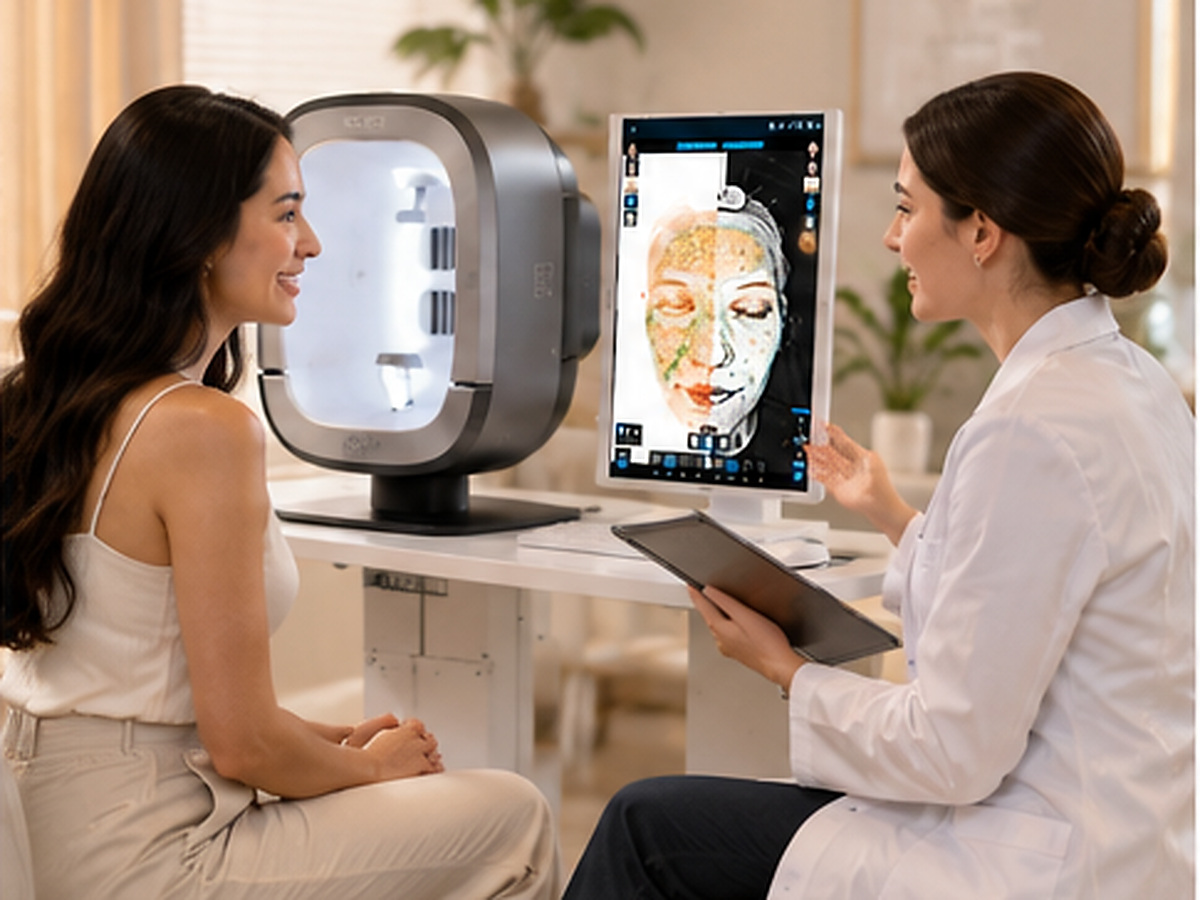
One year on the host machine is the industry baseline for professional skin analysis devices, and MEICET’s published policy confirms this standard. However, the warranty duration is less important than the coverage scope. A one-year warranty that excludes the optical module leaves the most clinically critical component unprotected.
MEICET’s published FAQ states a one-year warranty on the host machine and three-month free replacement warranty for handles, treatment heads, and parts. The published policy does not itemize exclusions, which means the buyer should request the full warranty document before purchase.
MEICET’s service documentation for its professional skin analyzer line states a 7×24 standby commitment, a one-hour repair response, and a 24-hour solution commitment. For routine issues, support is available via telephone, webcam, and online chat.
MEICET provides operation videos and user manuals, and its professional service documentation specifies that training should cover both operational skills and image interpretation. The buyer should confirm that the training package includes clinical interpretation.
MEICET’s published policy states that free software updates are provided every 3–6 months. The buyer should confirm in writing whether this includes AI model updates and new analytical features.
The buyer should request the post-warranty service terms before purchase: the cost of replacement parts, the labor rate for repairs, and the availability of a service contract for a 5–7 year clinical lifespan.
Request two contactable reference customers in a similar market segment and ask about their actual service experience: repair duration, response time, and local spare parts availability.
Post time: Nov-04-2026


