


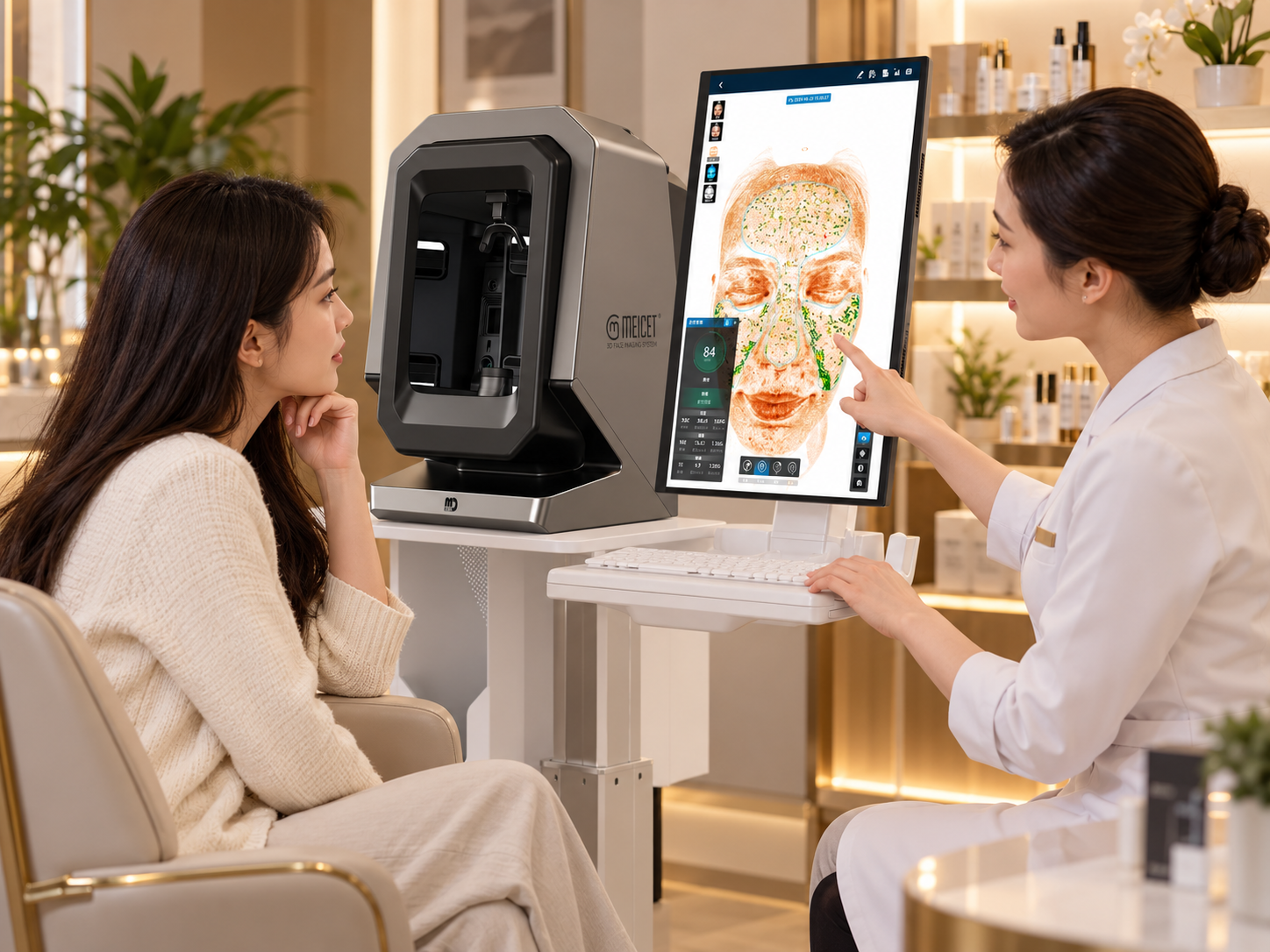
Buyers should expect a 3D skin analyzer’s software to deliver four non-negotiable capability layers: verifiable analytical depth, workflow-integrated reporting, regulatory-grade software documentation, and deployment flexibility. A device that produces a visually impressive 3D model but cannot document its analytical logic is a marketing asset, not a clinical tool.
42MP capture is meaningless if the software cannot grade findings across validated dimensions.
The gap between a 15-second AI report and manual interpretation determines consultation throughput.
Software driving diagnostic decisions qualifies as medical device software under EU MDR/IEC 62304.
Proprietary formats without export pathways create invisible long-term switching costs.
A clinic evaluating a 3D skin analyzer typically begins with the camera specifications: resolution, spectral modes, modeling accuracy. These are the parameters suppliers publish prominently. The software layer is where the device’s actual clinical utility is determined—and where procurement due diligence most often falls short. The ISEMECO 3D D9, for example, publishes specifications including binocular grating structured light, 0.2mm modeling accuracy, and 42 million full-face pixels. But the D9’s clinical positioning depends on software capabilities: AI-driven aging analysis across eight dimensions, Fitzpatrick skin type classification across types I–VI, and report generation incorporating doctor recommendations and skincare plans.
The first software question is not “how many dimensions” but “which dimensions are validated and how are they graded.” MEICET’s materials describe the D9’s aging analysis as an “aging index model” built through AI deep learning that encompasses eight dimensions: forehead lines, glabellar lines, crow’s feet, periorbital lines, laugh lines, marionette lines, corner of mouth lines, and brown spots.
| Analytical Capability | What It Measures | Verification Method | Clinical Consequence |
|---|---|---|---|
| 8-dimension aging grading | Wrinkle depth and severity | Repeat scan, same subject | Treatment planning errors |
| Fitzpatrick I–VI classification | Sun-reactive skin phototype | Test against known phototypes | Unsafe treatment recommendations |
| Pigment analysis | Epidermal vs. dermal | Dermatological assessment | Misdiagnosis of lesion type |
A 3D skin analyzer’s report is the interface between the device and the patient consultation. The D9 software generates customized reports incorporating 3D full-face images and doctor analysis recommendations. Buyers should verify Template configurability, Recommendation logic, and Export format (PDF) before purchase.
Under EU MDR, software that drives diagnostic decisions may qualify as medical device software. The standard IEC 62304 defines the software lifecycle processes required. A supplier should be able to produce documentation of requirements, architecture, and risk management.
The D9 software supports remote report viewing across multiple devices (iPad, computer). However, procurement must confirm: Where is patient data stored? (Local vs. Cloud) and Does it integrate with existing CRM systems?
| Capability | Consultation-Grade | Clinical-Grade |
| Image Analysis | Surface visualization | Multi-dimensional grading |
| Regulatory | None required | IEC 62304 Compliance |
| Data | Local storage | Configurable/Multi-site |
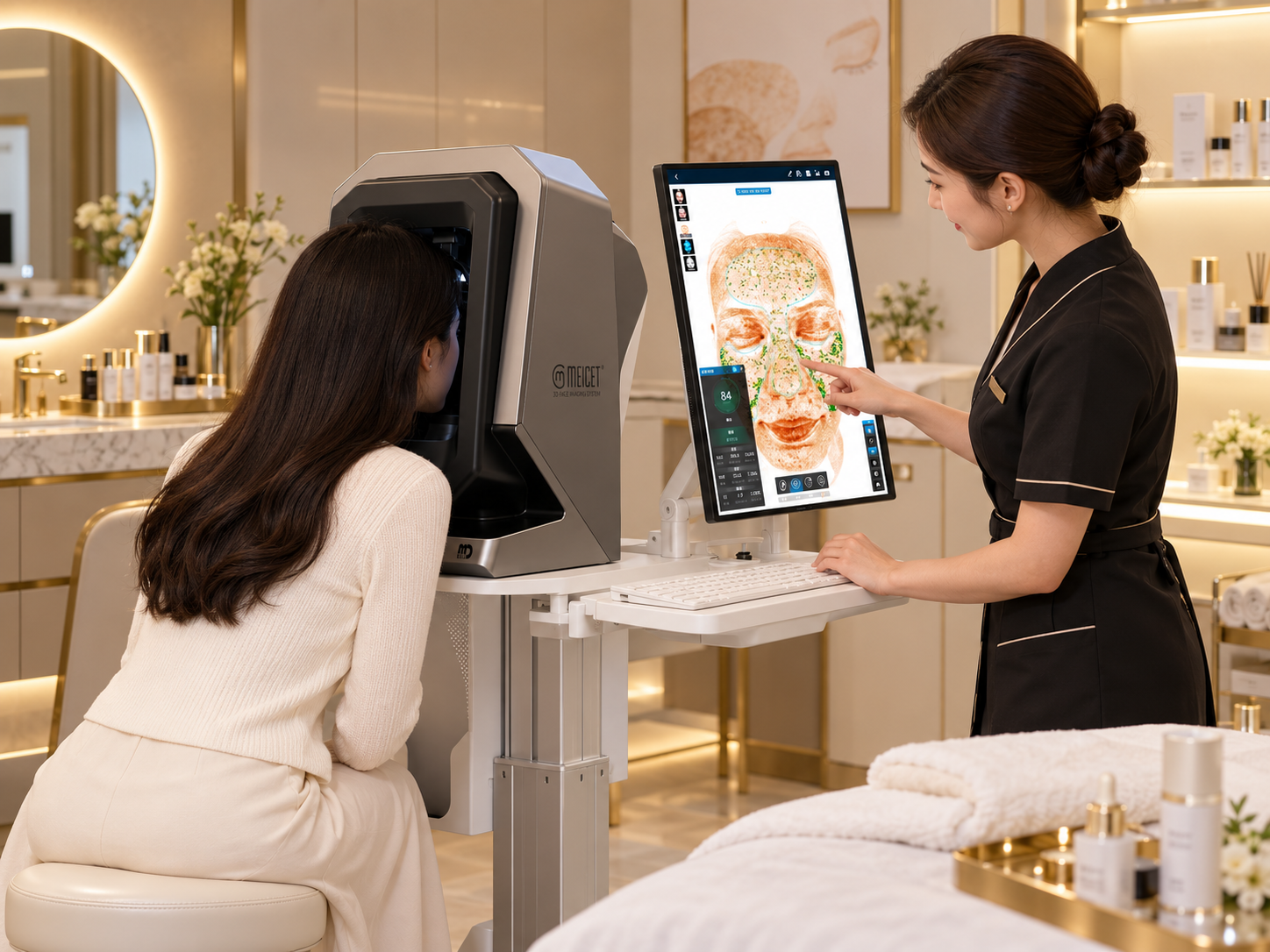
Validation is more important than quantity. A device grading eight aging dimensions with documented thresholds is superior to one reporting “50+” parameters without disclosed methodology.
If used for clinical assessment (wrinkle grading, treatment selection), it may qualify as medical device software under EU MDR. For strictly aesthetic tools, the burden is lower.
Ask for the validation methodology: What dataset was used? What is the sensitivity/specificity? Has it been tested across all Fitzpatrick skin types?
MEICET D9 allows customized reports. Verify if this is a standard feature, a paid service, or an OEM-only option before purchasing.
Architecture varies. Document the default location, ability to configure alternatives, and data export formats to ensure GDPR/HIPAA compliance.
Updates typically occur every 3–6 months. Clarify if updates include analytical changes that might require protocol revalidation.
Integration is not universal. Request a specific demonstration with your actual system rather than accepting generic “supported” claims.
Post time: Nov-04-2026


