


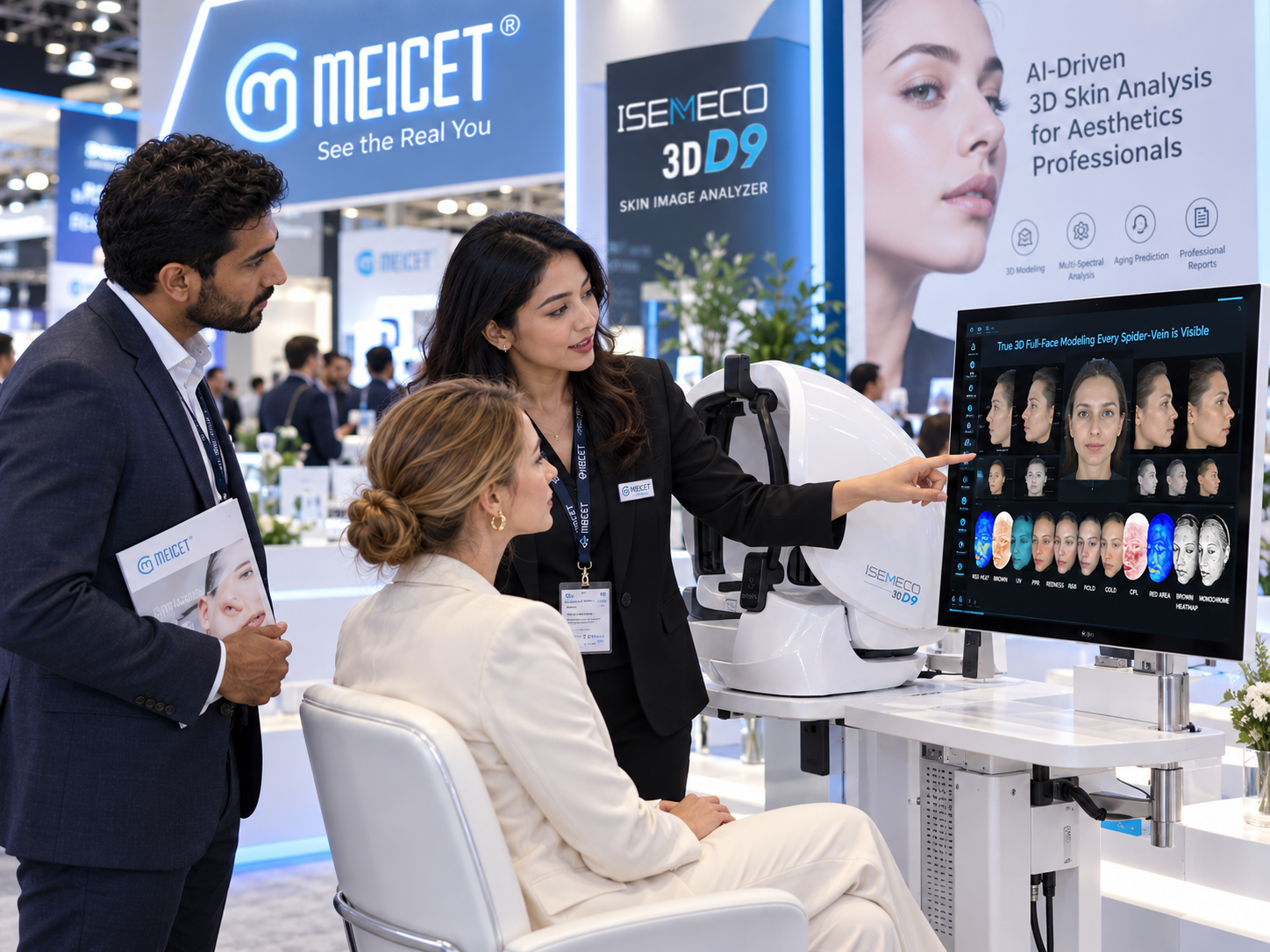
Before placing a bulk order for 3D skin analyzers, buyers must verify five categories that determine whether the shipment is an asset or a liability: certification validity, calibration status, software licensing, warranty coverage, and regulatory responsibility. MEICET’s ISEMECO 3D D9, with its 0.2mm structured-light modeling and 42MP imaging, invites bulk procurement for clinic chains—but the scale of the order amplifies both the operational benefit and the documentation risk.
Certification: Must cover the specific manufacturing site address, not just the parent brand.
Calibration: Required per-unit with traceable serial numbers, not per-batch.
Software: Licensing must support fleet deployment and multi-location updates.
Warranty: Logistics and cash-flow planning for failures must scale with order size.
A procurement manager placing a bulk order for 3D skin analyzers faces a different risk profile than a single-clinic buyer. The single-clinic buyer can absorb a defective unit by using the warranty; the bulk buyer must plan for multiple failures, staggered calibration cycles, and software version drift across a fleet. The ISEMECO 3D D9 is positioned for clinical use, featuring Fitzpatrick skin type classification (I–VI), 30+ detection dimensions, and AI-driven aging analysis. These capabilities justify a premium price point—and a rigorous procurement process.
The first bulk-order question is not “does the product have CE” but “does the certificate cover the factory that will make my 50 units.” For EU-bound orders, the MDR requires importers to verify UDI assignment and maintain a register of complaints. A bulk buyer that is itself the importer becomes the responsible party for vigilance reporting.
Calibration is the most frequently omitted bulk-order document. A 3D skin analyzer’s 0.2mm modeling accuracy claim requires traceable calibration. The D9’s structured-light system requires optical alignment that can drift during shipping. Negotiate a service agreement that specifies the calibration interval and loaner unit availability.
The D9’s software includes remote report viewing across iPads and computers. For a clinic chain, the question is whether these features operate in a shared cloud environment or are siloed. Ensure the agreement specifies if the license is perpetual and how fleet-wide updates are handled.
A 12-month warranty on 100 units is a logistics issue. Specify whether the warranty starts from the shipment date or installation date, and confirm spare parts availability after the model is discontinued. Shipping 19.5kg devices back to the manufacturer can quickly erode margins if freight responsibility isn’t defined.
Under EU MDR Article 16, a distributor placing its own name on a device assumes manufacturer obligations unless a written agreement preserves the original manufacturer’s responsibility. This must be resolved before the first shipment.
| Verification Area | Document to Request | Bulk-Specific Concern | Acceptable Evidence |
|---|---|---|---|
| Manufacturing Site | ISO 13485 Certificate | Address must match production site | Verifiable database number |
| CE Certification | Notified Body CE + DoC | Classification covers buyer’s market | Scope includes specific model |
| Calibration | Certificate per Serial No. | One certificate for batch is insufficient | Traceability to national standards |
| Software Licensing | License Agreement | Fleet vs. per-device management | Written data portability terms |
Check the site address on the PDF certificate against the “shipped from” address on the invoice. Verify the number on the issuing body’s online database.
Yes. For clinical accuracy (0.2mm modeling), each unit must have a certificate referencing its unique serial number. A batch certificate is insufficient.
Ask if the license is tied to hardware or the entity, how updates are pushed to the fleet, and who owns the patient data if the relationship ends.
It should be measured from installation, define repair turnaround times, include loaner unit availability, and clarify freight cost responsibilities.
Logo-only MOQs can be as low as 1-10 units. Significant price breaks for software or packaging customization typically require 100-200 units.
Post time: Nov-04-2026


