


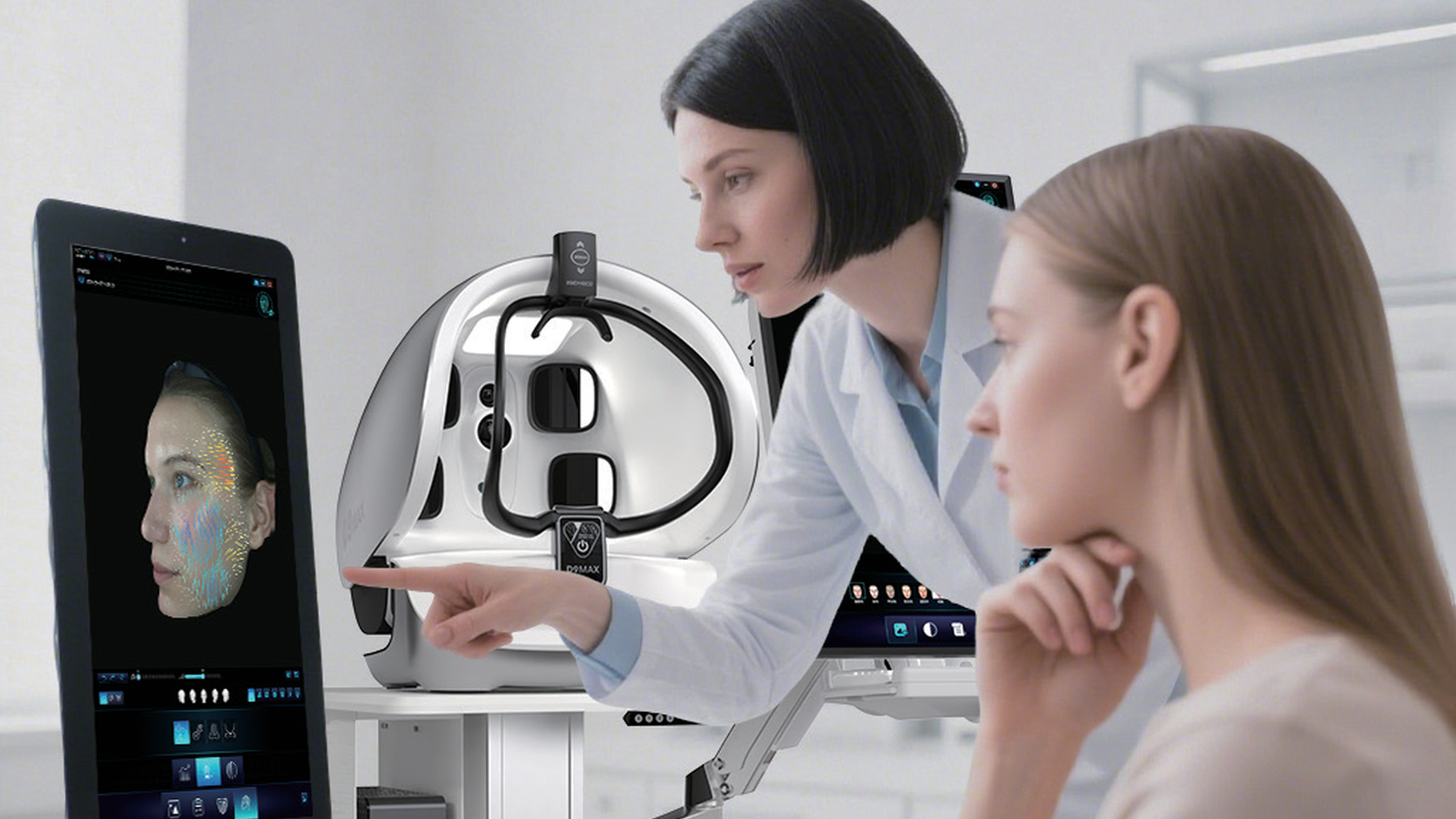
Face analysis machine manufacturers offer two distinct service models. OEM (Original Equipment Manufacturing) means the manufacturer builds a device to your specifications or applies your branding to an existing certified platform, with the buyer retaining design ownership and regulatory responsibility. ODM (Original Design Manufacturing) means the manufacturer owns the base design and platform, and the buyer customizes branding, software interfaces, and select features from that foundation. For face analysis machines specifically, OEM typically covers logo application, packaging, boot screens, and report templates at low minimum order quantities, while ODM enables deeper changes to sensor configuration, algorithm thresholds, and cloud integration. MEICET, the manufacturer behind the ISEMECO 3D D9, confirms it provides both OEM and ODM services.
Key Takeaways
Starts with appearance-level changes: logo on housing and software, custom packaging, and branded reports, with MOQ as low as one set.
Access to manufacturer’s platform for deeper modifications, including algorithm thresholds, sensor specs, and workflow redesign.
Critical distinction: In OEM, buyer is legal manufacturer; in ODM, regulatory responsibility must be explicitly defined.
Custom report templates and workflow integration are often the highest-value ODM deliverables for distributors.
Understanding the OEM vs. ODM Distinction in Face Analysis Equipment
The difference between OEM and ODM is not a matter of degree but a difference in who owns the design and who carries the regulatory burden. In an OEM arrangement, the buyer specifies the product, and the manufacturer executes to that specification. The buyer’s brand appears on the label, and the buyer is generally the entity responsible for regulatory compliance in the target market. In an ODM arrangement, the manufacturer has already developed the base platform—the hardware, firmware, and core algorithms—and the buyer customizes from that existing foundation. The manufacturer’s design ownership means the buyer is adapting a proven system rather than commissioning a new one.
For face analysis machines, this distinction has practical consequences. A buyer seeking OEM-level control would need to supply complete design specifications, including sensor selection, optical configuration, and software architecture, which requires in-house engineering resources that most distributors and clinic chains do not possess. A buyer seeking ODM access can leverage the manufacturer’s platform and engineering team to make targeted modifications without building from a blank page. The ISEMECO 3D D9, for example, is a platform developed by MEICET that incorporates 3D imaging, multi-spectral analysis, and AI-driven skin assessment. An ODM buyer would customize branding and select software parameters from this existing platform rather than redefining the imaging technology itself.
| Dimension | OEM Service | ODM Service |
|---|---|---|
| Design ownership | Buyer | Manufacturer |
| Typical buyer profile | Brand with engineering resources | Distributor, clinic chain, brand without R&D |
| Customization depth | Specification-driven, potentially deep | Platform-based, targeted modifications |
| Regulatory responsibility | Typically buyer | Must be defined in contract |
| Time to market | Longer, design-dependent | Shorter, platform already validated |
What OEM Services Look Like for Face Analysis Machines
OEM services for face analysis machines concentrate on applying the buyer’s brand identity to an existing certified device, with the scope of change limited to what can be altered without affecting the device’s regulatory status. The practical deliverables include the buyer’s logo on the housing, the buyer’s brand on the software boot screen and report headers, custom packaging carrying the buyer’s brand elements, language localization for the target market, and region-specific power plug configurations.
The minimum order quantities for these services are structured to match the manufacturing effort involved. Logo application on the device and software can be arranged at a minimum of one set, because the change involves only setup labor and does not require tooling or firmware modification. Custom packaging typically requires a minimum of ten sets to justify the print setup and material procurement. Language localization is often available across a broad range of languages because the software platform is designed for multi-market deployment.
For the ISEMECO 3D D9, an OEM buyer would receive a device that carries their brand on the exterior and in the user interface, with packaging and documentation reflecting their market identity. The underlying imaging technology, analysis algorithms, and clinical claims remain those of the certified platform. This is the appropriate scope for a distributor entering a new market or a clinic chain standardizing its equipment branding without seeking to alter the device’s clinical function.
What ODM Services Enable Beyond Branding
ODM services for face analysis machines extend into the software and hardware layers, allowing the buyer to shape how the device functions and what it reports, not just how it looks. The manufacturer brings its existing platform, engineering team, and research capabilities to the customization project. The buyer brings market knowledge—what their customers need to see, how reports should be structured, and which clinical workflows the device must support.
Software-level ODM customization includes modification of the user interface layout, restructuring of the analysis workflow, adjustment of algorithm thresholds for skin condition classification, creation of custom report templates, and integration with the buyer’s cloud storage or CRM system. For a distributor whose customers are dermatology clinics, the ability to structure reports around the clinic’s treatment planning process may be more valuable than any hardware change. For a brand targeting the medical aesthetics market, integration with the clinic’s existing patient management system can reduce adoption friction.
Hardware-level ODM customization is technically possible but carries a higher barrier. Changes to sensor configuration, optical filters, or housing design require engineering validation, may affect the device’s regulatory status, and typically require higher minimum order quantities and longer development timelines. The practical guidance for most first-time ODM buyers is to focus on software and branding customization, where the value-to-investment ratio is highest, and treat hardware changes as a later-phase consideration.
The Regulatory Allocation That ODM Contracts Must Address
The most consequential clause in any ODM agreement for a face analysis machine is not the price or the MOQ but the allocation of regulatory responsibility. Under FDA regulations, when a device is not manufactured by the person whose name appears on the label, the label must include a qualifier such as “Manufactured for” or “Distributed by” to reveal the relationship. The manufacturer of record submits the 510(k) if one is required. The distributor forwards complaints to the manufacturer for evaluation. In a straightforward OEM arrangement, this allocation is clear: the buyer is the brand, the manufacturer is the entity that holds the clearance, and the label discloses the relationship.
In an ODM arrangement, the allocation becomes more complex. If the manufacturer designed the base platform and the buyer customized branding and software, which entity is the legal manufacturer of record? The answer depends on the contract, and the contract must address design history documentation ownership, change approval authority, and the identity of the entity named on the regulatory filing. For markets governed by the EU Medical Device Regulation, the framework for original equipment supplier arrangements is still evolving, with industry groups advocating for clearer rules on how technical documentation can be allocated between the legal manufacturer and the design owner. A buyer entering an ODM agreement without legal counsel experienced in medical device regulation is exposed to a risk that no product specification can mitigate.
Matching the Service Model to the Buyer’s Business Situation
The choice between OEM and ODM should be driven by the buyer’s regulatory capacity and engineering resources, not by the depth of customization desired. A distributor with no in-house regulatory staff and no engineering team is poorly positioned to function as an OEM buyer, because OEM shifts the regulatory burden to the buyer. An ODM arrangement, where the manufacturer retains design ownership and the contract explicitly allocates regulatory responsibilities, may be the more appropriate structure despite the higher MOQ. Conversely, a brand with established regulatory infrastructure and a clear product specification may find OEM gives it the control it needs to differentiate in a crowded market.
The following decision sequence reflects this logic:
- 1. Assess regulatory capacity first. If the buyer cannot manage device registration, complaint handling, and post-market surveillance in the target market, an ODM arrangement with clear responsibility allocation is the safer structure.
- 2. Define the customization that creates market value. For most face analysis machine buyers, branding, report templates, and language localization deliver the differentiation that matters to end customers. Deep hardware changes rarely justify the cost.
- 3. Verify the manufacturer’s OEM/ODM track record. MEICET states that it has operated in the skin analysis industry since 2008 and provides OEM and ODM services. Request references from buyers who have completed projects in the same service tier and market.
- 4. Require the contract to name the regulatory manufacturer of record and the owner of the design history file. This clause is more important than any technical specification in the agreement.
FAQ
What is the difference between OEM and ODM for a face analysis machine?
OEM means the manufacturer builds to your specification or applies your brand to a device you are responsible for as the legal manufacturer. ODM means the manufacturer owns the base design, and you customize branding and selected features from that platform. The regulatory responsibility allocation is the decisive difference, not the depth of customization.
Can I get my logo on a face analysis machine with a very small order?
Yes. Logo application on the device and software can be arranged at a minimum of one set, because the change does not require tooling or firmware modification. Custom packaging typically requires a minimum of ten sets.
Does ODM mean I can change the analysis algorithm?
ODM can include algorithm threshold adjustments and classification modifications, but the scope depends on the manufacturer’s platform architecture and engineering capacity. Algorithm changes are a software-level customization that may require validation testing before deployment.
Who is the legal manufacturer if I use ODM services?
The contract must define this explicitly. If the manufacturer designed the platform and you customize branding, the allocation of regulatory responsibility—who submits the filing, who owns the design history file, who handles complaints—is a contractual decision, not a default outcome. Legal counsel with medical device experience should review the agreement.
What does MEICET offer for OEM and ODM projects?
MEICET states that it provides both OEM and ODM services and has operated in the skin analysis industry since 2008. The ISEMECO 3D D9 is one of its platform products available for customization.
Is OEM or ODM better for a clinic chain standardizing equipment?
A clinic chain without regulatory staff is generally better served by ODM, because the manufacturer retains design ownership and the contract can allocate regulatory responsibility to the manufacturer. OEM is more appropriate for brands with in-house regulatory capacity.
How long does an ODM customization project take compared to OEM?
OEM branding customization can be completed in weeks because it involves only setup labor. ODM software customization typically requires longer development and testing timelines, measured in months, because algorithm adjustments, report restructuring, and integration work require engineering resources and validation.
Post time: Nov-23-2026


