


Quick Answer:
There is no single minimum order quantity (MOQ) for OEM 3D skin analyzer projects—the threshold is tiered by customization depth. Logo-only OEM starts at 1 unit on an existing certified platform, because no tooling or firmware changes occur. Packaging and report-template customization typically requires 10 units, driven by print setup costs. Software modification or deeper ODM work begins at 100–200 units, because engineering time and mold amortization must be recovered. MEICET confirms OEM and ODM services are available across its product line, and its own published guidance states that OEM MOQs are negotiable for trial orders below the stated threshold.
Key Takeaways
- ✔
MOQ is a function of fixed cost: Logo application costs almost nothing per unit; a custom injection mold costs thousands and must be amortized across a minimum volume.
- ✔
Low Thresholds: The lowest verified MEICET-branded OEM threshold is 10 units for standard 3D AI facial scanner listings, while logo-only customization can be as low as 1 unit.
- ✔
Negotiable Samples: Sample orders below MOQ are routinely negotiable to validate partnerships before scaling.
- ✔
Regulatory Impact: A logo change requires no retesting, but housing changes require IEC 60601-1 verification, increasing the effective MOQ.
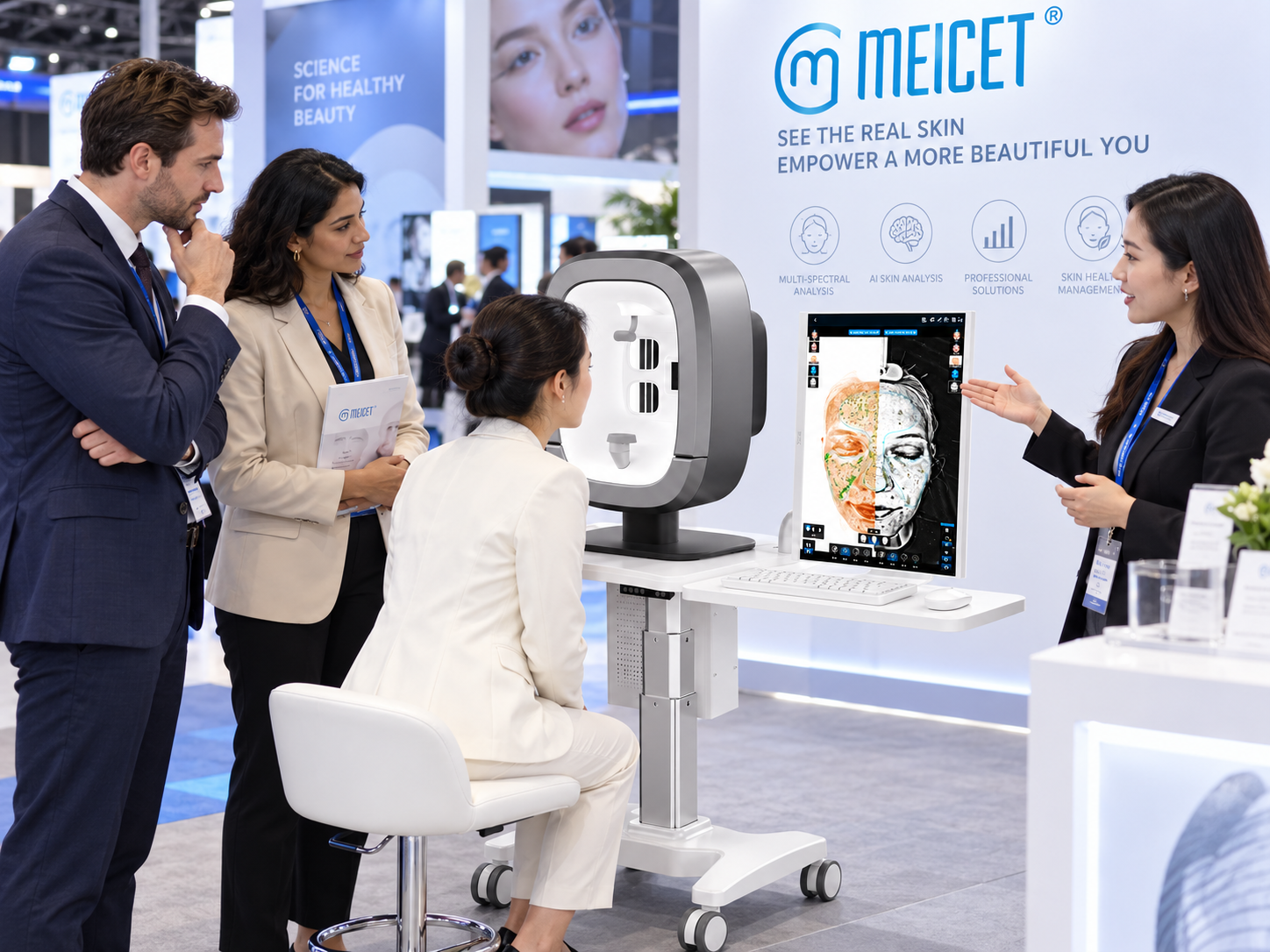
A distributor or clinic chain evaluating an OEM project for a 3D skin analyzer typically opens the conversation with a single question: “What is your MOQ?” The manufacturer’s answer reveals less about volume policy than about which customization layer the buyer is actually purchasing. A supplier quoting “1 unit” is describing logo printing on a finished device. A supplier quoting “200 units” is describing a project where the buyer’s specifications will alter the device’s physical or software configuration. The ISEMECO 3D D9MAX, with its 0.02mm modeling precision, 48MP full-face imaging, and 30-second AI report generation, is a platform that already carries MEICET’s hardware and software investment—making it the natural foundation for a branding-layer OEM project with the lowest possible entry threshold.
1. The Three MOQ Tiers and What Each Actually Purchases
OEM MOQ is not a single number because customization is not a single activity. The fixed costs associated with each customization layer determine the volume a manufacturer needs to break even on that layer. MEICET’s published analysis of OEM skin analyzer MOQs divides the market into three distinct tiers, each with a different cost driver.
MOQ: 1–10 units. No molds or firmware changes. Setup labor is the only primary cost. Some suppliers list MOQ as low as 1 set.
MOQ: 10–200 units. Custom boxes and branded templates introduce printing setup costs and software configuration time.
MOQ: 100–200+ units. Triggers Non-Recurring Engineering (NRE) costs and injection mold amortization.
| Customization Tier | What Changes | Typical MOQ Range | Primary Cost Driver |
|---|---|---|---|
| Logo only | Housing logo, boot screen | 1–10 units | Setup labor (minimal) |
| Packaging + report | Custom box, branded report | 10–200 units | Print setup, configuration |
| Software modification | UI, parameters, CRM integration | 100–200+ units | NRE engineering time |
| Hardware ODM | Custom housing, PCB, probe | 50–200+ units | Mold amortization, retesting |
2. Negotiating Below the Stated MOQ: The Sample Order Pathway
Published MOQs are starting positions. MEICET’s own guidance states that minimum order quantities are “negotiable” and that many manufacturers accept “sample orders” below the stated MOQ to validate a partnership before scaling. This reflects the economics of B2B manufacturing, where a buyer who commits to a 200-unit annual program has more leverage than a one-time purchaser.
3. Why the D9MAX Platform Lowers the Effective OEM Threshold
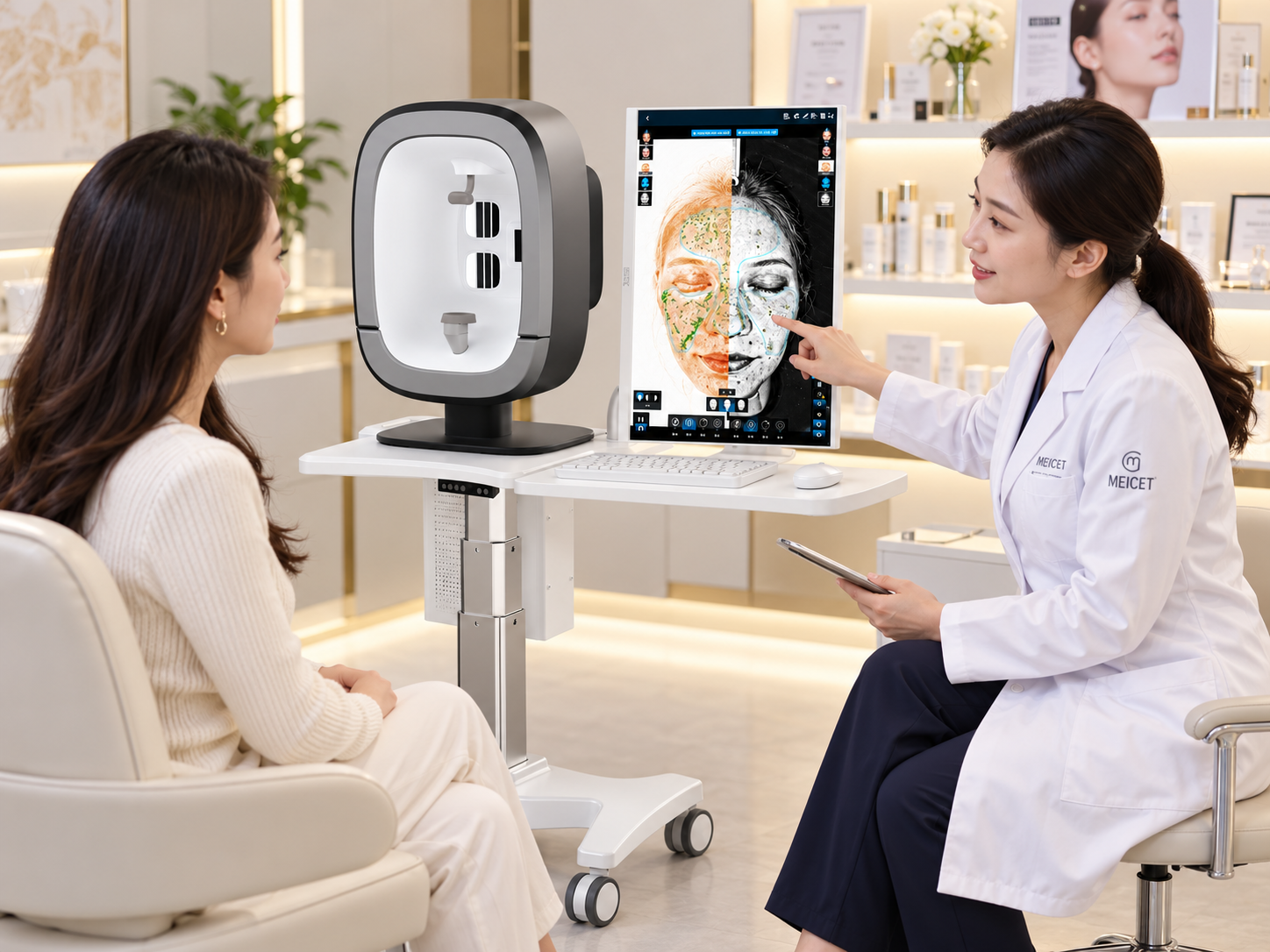
A flagship device that already holds certifications and has a defined software architecture is the lowest-friction starting point. The D9MAX’s published specifications—0.02mm 3D modeling, 48 million pixels, 30-second AI report—describe a device that has already completed the development cycle. An OEM project using this platform avoids funding hardware development or safety certification.
4. A Procurement Sequence for OEM MOQ Discussions
FAQ
Q1: What is the absolute lowest MOQ for an OEM 3D skin analyzer?
The lowest documented OEM MOQ for a 3D skin analyzer is 1 unit for logo-only customization on an existing platform. However, this is not a universal policy—some listings specify 10 units, and packaging customization raises the threshold to 20 units or more.
Q2: Does MEICET have a standard OEM MOQ across all products?
No. MEICET confirms OEM and ODM services are available but does not publish a single corporate MOQ. Guidance describes tiered MOQs ranging from 1 to 200+ units depending on customization depth.
Q3: Can I order a sample below the MOQ to test the OEM process?
Yes. MEICET’s guidance explicitly states that sample orders below the published MOQ are commonly accepted to validate a partnership before scaling.
Q4: Why does software customization require a higher MOQ than logo customization?
Software customization requires engineering time (NRE) to modify analysis parameters or UI logic. This cost is fixed, so the manufacturer must spread it across a minimum volume (approx. 200 sets).
Q5: Does a higher MOQ mean better quality or more support?
No. MOQ reflects the fixed costs the manufacturer needs to recover, not the quality of the device or the level of support.
Q6: What happens if I order below the MOQ and the project succeeds? Can I scale?
Yes. The sample order is designed to validate the relationship. Successful trials often convert to production orders at the standard MOQ or higher.
Q7: How does the D9MAX’s platform maturity affect OEM MOQ?
The D9MAX’s hardware and software are already developed and certified (CE/FDA). This absorbs the fixed costs that would otherwise drive the MOQ upward, making it suitable for the lowest tier of OEM customization.
Post time: Nov-04-2026


