


Quick Answer
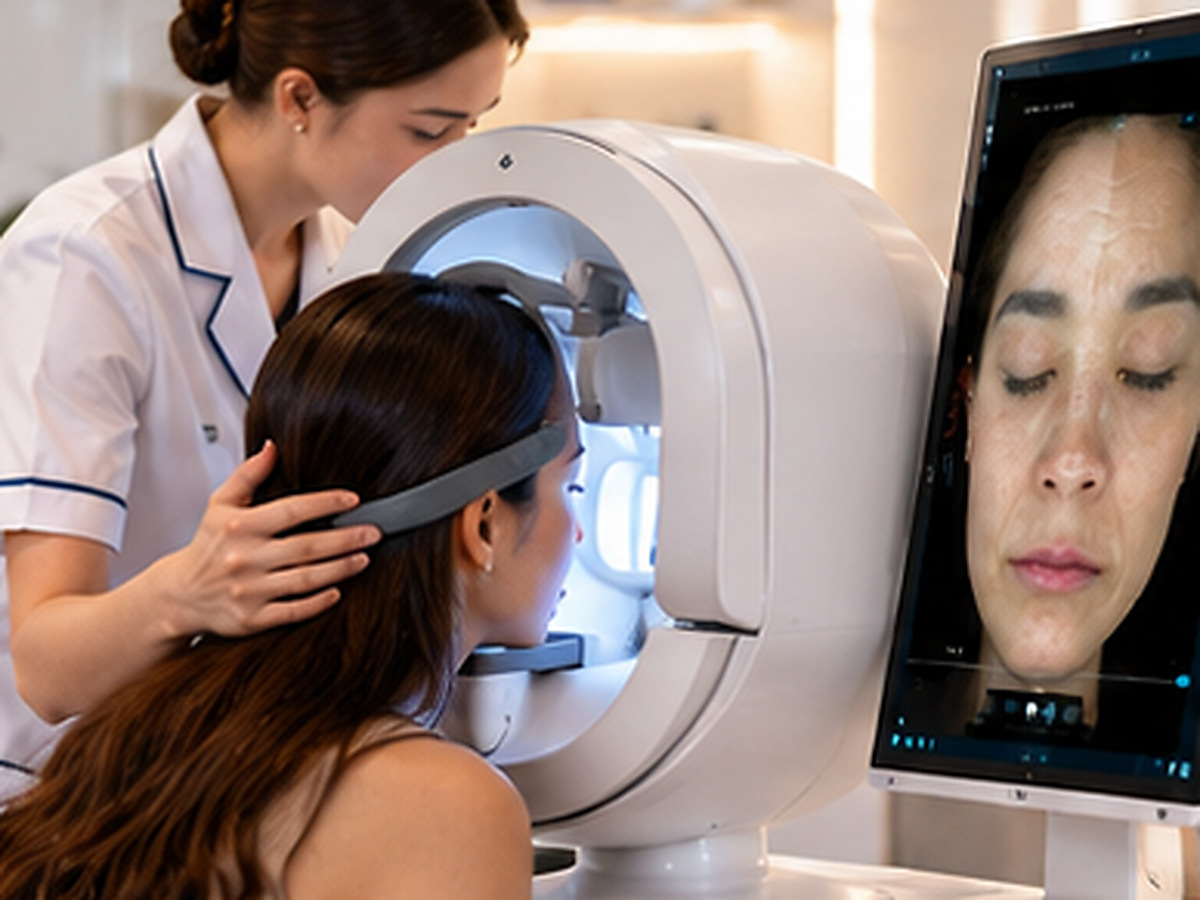
The choice between a portable and desktop skin analyzer depends on where the device will be used and what level of measurement consistency the business requires. Portable analyzers prioritize mobility and rapid client triage, making them suitable for mobile consultants, retail environments, and multi-site outreach where speed and portability outweigh imaging depth. Desktop analyzers deliver higher-resolution imaging, multispectral modules, and superior reproducibility because they use fixed illumination geometry and larger optics—essential for clinical diagnostics, longitudinal tracking, and treatment validation. The ISEMECO 3D D9 is a desktop system weighing 16.7 kg with 0.02 mm 3D modeling accuracy and four spectral modes, designed for in-clinic aesthetic and anti-aging consultations rather than mobile deployment.
Key Takeaways
Mobility: Portable analyzers trade depth for mobility. Best for point-of-sale consultations and initial screening.
Reproducibility: Desktop units offer fixed geometry and larger optics, critical for before/after treatment tracking.
D9 Class: A desktop-class instrument with 48-megapixel sensor and dual-grating structured light 3D camera.
Hybrid Strategy: Portable units for outreach; desktop systems for in-clinic follow-up and validation.
The Core Trade-Off: Mobility vs. Measurement Rigor
A skin analyzer’s value in a salon or clinic depends on consistency of measurement across visits. If the same patient is scanned under different lighting conditions, at different distances, or with different camera angles, the resulting data cannot reliably demonstrate change. Desktop systems address this by locking the imaging geometry—the camera position, illumination source, and subject positioning are fixed by the device frame. Portable systems rely on operator technique and environmental control, introducing variability that accumulates across longitudinal tracking.
This trade-off is not a matter of quality—it is a matter of fit to workflow. A mobile beauty consultant who visits clients at home cannot use a floor-standing 16.7 kg device. A dermatology-adjacent clinic tracking wrinkle severity over six months needs the reproducibility that only a fixed-geometry system provides.
Portable Analyzers: When Mobility Outweighs Depth
What Portable Systems Typically Offer
Portable skin analyzers are designed around battery life, weight, and rapid capture. The Threenh PS02, for example, weighs 88 grams, fits in a pocket, and outputs four colorimetric metrics (ITA°, Melanin Index, Erythema Index, CIE LAB) in one second per measurement. This type of device is not an imaging system in the same category as a desktop analyzer—it is a colorimetric measurement tool for skin tone quantification.
| Scenario | Why Portable Fits |
|---|---|
| Mobile beauty consultants | Device fits in a bag; no fixed installation |
| Retail skincare counters | Fast client triage; supports product recommendations |
| Multi-site brand standardization | Low per-unit cost enables deployment across chain stores |
| Event marketing and pop-ups | Portability enables on-site demonstrations |
Desktop Analyzers: When Reproducibility Justifies the Footprint
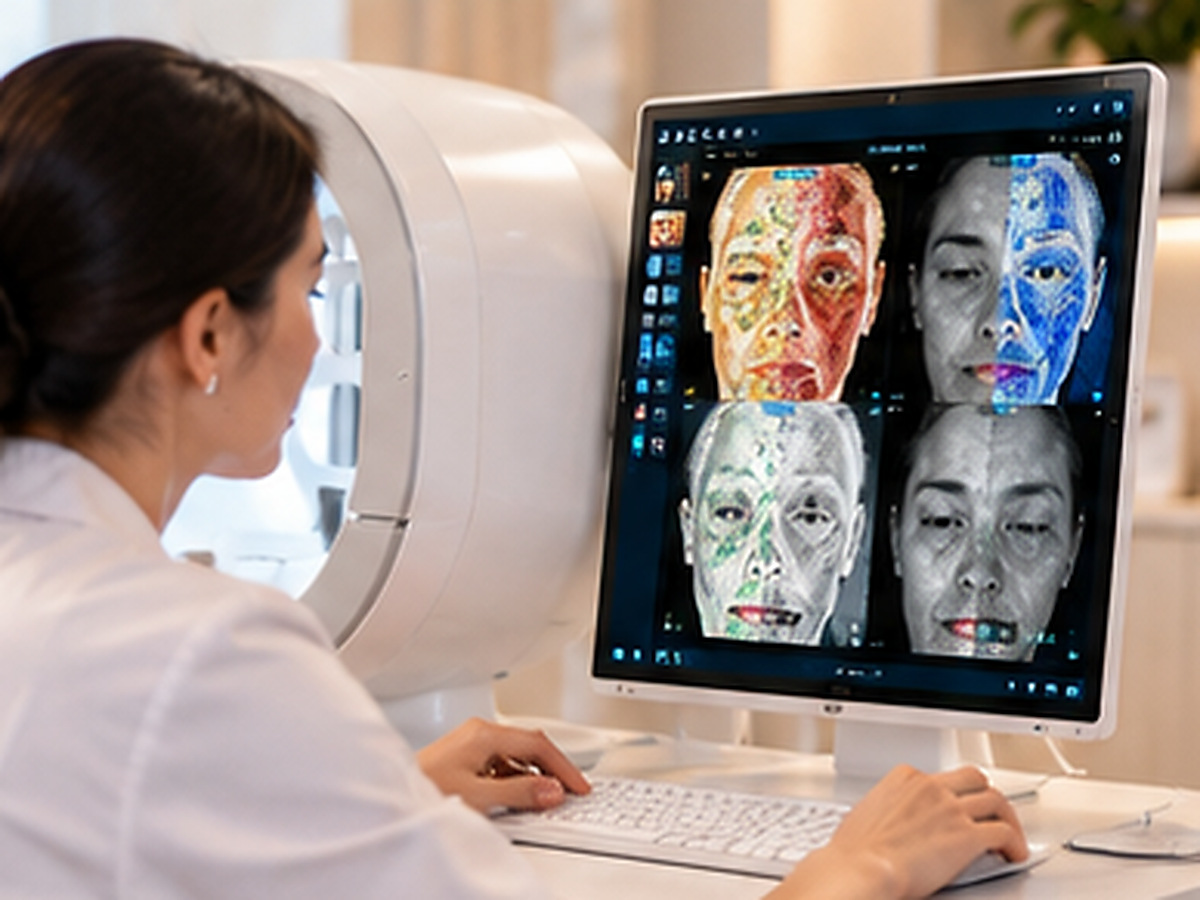
| Specification | D9 Value | Implication |
|---|---|---|
| Full-face resolution | 48 megapixels | Captures fine texture and small pigment spots |
| 3D modeling accuracy | 0.02 mm | Enables volume and contour measurement |
| Spectral modes | RGB, CPL, PPL, UV | Separates surface, vascular, and deep pigment signals |
Decision Framework: Matching Device Type to Business Model
| Business Scenario | Recommended Type | Rationale |
|---|---|---|
| Mobile consultant | Portable | Fixed installation impossible |
| Aesthetic clinic | Desktop | Volume measurement required for validation |
| Medical spa | Desktop | Longitudinal reproducibility essential |
FAQ
Q: Can a portable skin analyzer measure 3D volume changes?
No. Portable analyzers lack the structured light projection and fixed geometry required for volumetric measurement. The D9’s 0.02 mm 3D modeling capability depends on a dual-grating structured light camera mounted in a fixed frame.
Q: Is the ISEMECO 3D D9 suitable for a small salon?
The D9 weighs 16.7 kg and requires dedicated floor space. A small salon with limited area should verify the footprint (approx. 1,087 mm × 965 mm × 1,500 mm) before committing.
Q: What does “reproducibility” mean in practical terms?
Reproducibility means that measurements reflect actual skin change, not differences in camera angle, distance, or lighting. A desktop system with fixed geometry reduces the noise that obscures real change.
Q: Can I start with a portable analyzer and upgrade later?
Yes. However, baseline data from a portable device cannot be directly compared to data from a desktop system because the measurement methodology differs.
Post time: Nov-09-2026


