


 Quick Answer
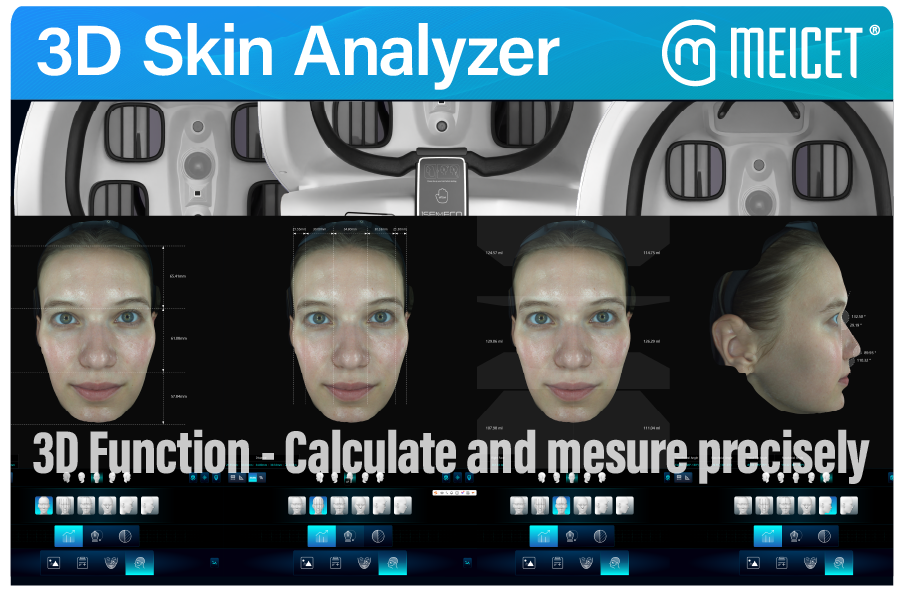
For most beauty businesses, a professional 3D skin analyzer is worth the investment only if it is deployed as a consultation and conversion engine, not a decorative device. The ISEMECO D9 platform illustrates the value proposition: its 0.1ml volume-difference calculation and 3D aesthetic simulation enable clinicians to show clients quantified treatment outcomes before committing, directly supporting treatment upsells and package sales. ISEMECO reports that its systems help institutions convert subjective consultations into data-backed treatment plans, with AI reports prioritizing the top 3 skin issues and linking them directly to the clinic’s own service menu . However, the return depends on utilization discipline: a device used for every relevant consultation generates measurable revenue impact, while one that sits idle becomes a depreciating asset.
Key Takeaways
The device pays for itself through consultation conversion, not scans: ISEMECO’s D9 links AI-identified skin issues directly to the institution’s treatment menu, creating a “analysis + solution” pathway .
3D simulation shortens the decision cycle: showing clients a visualized outcome before treatment reduces hesitation and expectation mismatch.
Quantified outputs (0.1ml volume precision) support premium pricing: objective evidence of change justifies higher treatment packages and rebooking.
Multi-terminal access increases throughput: ISEMECO’s D9 allows “scan-then-leave” workflow, freeing the device for the next client while consultation happens on an iPad or computer .
The investment is not for every business: a salon without treatment upsell pathways or consultation discipline will not capture the revenue the device enables.
The Revenue Mechanism: How a 3D Analyzer Converts to Money
A 3D skin analyzer does not generate revenue by producing scans. It generates revenue by changing the conversation from subjective recommendation to objective evidence.
ISEMECO’s case documentation describes the workflow explicitly. For a client presenting with nodular acne, the D9 captures red-zone imaging to locate deep inflammation and near-infrared imaging to assess skin barrier health. The AI report then prioritizes the top 3 issues, and the clinic’s own treatment menu—imported into the D9 backend—appears as recommended solutions . The client sees the problem visualized, sees the recommended treatment, and sees the expected outcome. The consultation becomes a data-backed decision rather than a sales pitch.
This mechanism directly affects average treatment value (ATV). Industry benchmarks for aesthetic clinics place ATV around $350 per appointment**, with top-performing practices reaching **$425 or more . A device that consistently converts consultations into multi-treatment plans moves a practice toward the higher end of that range.
The 0.1ml volume precision matters specifically for injectable and contouring services. When a clinician can state that a filler procedure added 0.6ml to the malar region, the outcome is documented, the client’s confidence increases, and the rebooking conversation becomes easier. The D9’s overlap comparison uses warm and cool color coding to visualize volume changes, turning an abstract result into a visible one.
The Operational Advantage: Multi-Terminal Access and Throughput
A common failure mode for skin analyzers is the consultation bottleneck: the device is occupied while the clinician discusses results with the client, and the next client waits. ISEMECO designed the D9’s multi-terminal system to address this.
The D9 allows the client to complete the scan and then leave the device, while the clinician views the images and data on a separate iPad or computer—landscape or portrait, local or remote. The next client can begin scanning immediately . ISEMECO describes this as “检诊分离” (scan-consultation separation), and positions it as a throughput multiplier: the device remains in use for capture, while consultation happens elsewhere.
For a high-volume clinic, this operational design determines whether the device is a bottleneck or an accelerator. A device that requires the clinician to stand at the machine for every consultation limits daily capacity. A device that separates capture from consultation allows the machine to run continuously.
What the ISEMECO D9 Provides for the Investment
The D9 platform’s published capabilities map to specific business outcomes:
Capability D9 Specification Business Relevance
3D modeling accuracy 0.2mm (standard); 0.02mm (D9 MAX) Quantifies contour and volume changes for treatment documentation
Volume precision 0.1ml Supports filler and injectable outcome claims
Aging analysis 8 dimensions, aging grade/ranking/prediction Structures anti-aging treatment packages
Spectral modes RGB, cross-polarized, UV, parallel-polarized UV and red-zone imaging reveal subsurface inflammation invisible to surface photography
AI report Top 3 issues prioritized, linked to clinic’s treatment menu Converts analysis into treatment recommendation automatically
Multi-terminal iPad/computer access, remote consultation Increases device throughput and clinician flexibility
MEICET/ISEMECO’s market presence includes participation in international exhibitions and a reported installed base of 5,000+ clinics globally. The D9 MAX brochure describes an AI skin large model that generates a report in 30 seconds and links findings to the institution’s products . These are capability claims that buyers should verify through demonstration and reference contacts.
When the Investment Is Not Worth It
The device is not worth the investment for businesses that lack three conditions:
No treatment upsell pathway. If the business sells only single-session facials without packages, memberships, or multi-treatment protocols, the analyzer’s conversion capability has no destination. The device produces information but no revenue mechanism.
No consultation discipline. A device that is used “when the client asks” will not generate returns. The revenue depends on scanning every relevant client as part of the standard consultation workflow. ISEMECO’s own materials emphasize that the D9 is designed for institutions seeking to move from “experience-based” to “data-backed” service logic . A business not ready for that shift will not capture the value.
No staff training investment. The AI report is a starting point, not a conclusion. Staff must be trained to interpret the red-zone map, the aging grade, and the volume calculation—and to translate those findings into treatment recommendations. A device without trained operators is a camera with software.
Table: Investment Decision Framework by Business Type
Business Type Likely ROI Critical Condition for Success Risk
Medical spa (injectables/energy devices) High Volume tracking used in every injectable consultation Requires clinician buy-in
Aesthetic clinic (anti-aging packages) High Aging grade/prediction used to structure treatment plans Requires treatment menu integration
Beauty salon (facial treatments) Moderate Scan integrated into every consultation; staff trained to upsell Without upsell discipline, ROI is limited
Single-service provider (e.g., waxing only) Low Not applicable No treatment pathway to convert
FAQ
Is a 3D skin analyzer worth the investment for a small beauty salon?
It depends on the salon’s treatment menu and consultation model. A salon selling only single-session services without packages or upgrades will struggle to generate ROI from a professional 3D analyzer. A salon that uses the scan to recommend multi-session treatment plans and product regimens can justify the investment through higher average transaction values and rebooking rates. The device is a conversion tool, not a diagnostic necessity for basic facials.
How does the ISEMECO D9 actually help increase revenue?
The D9 converts consultations from subjective recommendations to data-backed treatment plans. The AI report prioritizes the client’s top 3 skin issues and links them directly to the clinic’s own treatment menu, creating an “analysis + solution” pathway . The 0.1ml volume precision supports injectable outcome documentation, and the 3D aesthetic simulation lets clients preview results before committing. These capabilities reduce hesitation and support higher-value treatment packages.
What is the payback period for a professional 3D skin analyzer?
Payback depends on consultation volume and treatment conversion. A clinic performing 20 scan-led consultations monthly with a $150 average treatment value increase** generates **$3,000 in incremental monthly revenue, yielding payback on a $10,000 system in approximately 3.5 months. At 40 consultations monthly, payback compresses to under two months. The critical variable is whether the scan is used consistently in every relevant consultation.
What does the ISEMECO D9’s multi-terminal system do for a clinic?
The D9’s multi-terminal access allows the client to complete the scan and then leave the device, while the clinician reviews images and data on an iPad or computer. The next client can begin scanning immediately . This “scan-consultation separation” increases device throughput and reduces client waiting time, directly affecting daily consultation capacity.
Can the D9 help with treatment outcome documentation?
Yes. The 0.1ml volume-difference calculation quantifies changes in specific facial regions before and after treatment. The overlap comparison feature uses warm/cool color coding to visualize volume increase or decrease. These capabilities support objective outcome claims, which are valuable for client retention and for justifying premium pricing.
What training is required to use the D9 effectively?
Staff must learn to interpret the red-zone map (inflammation depth), the UV image (pigmentation and bacterial activity), the aging grade and ranking, and the volume calculation. ISEMECO provides on-site training and online sessions. The critical training outcome is the ability to translate findings into treatment recommendations using the clinic’s own service menu.
Does the D9 integrate with a clinic’s existing treatment menu?
Yes. ISEMECO’s case documentation describes importing the institution’s treatment projects into the D9 backend, so that the AI report directly recommends the clinic’s own services when it identifies corresponding skin issues . This integration is what connects the device’s analysis to the clinic’s revenue.
Post time: Oct-23-2026


