


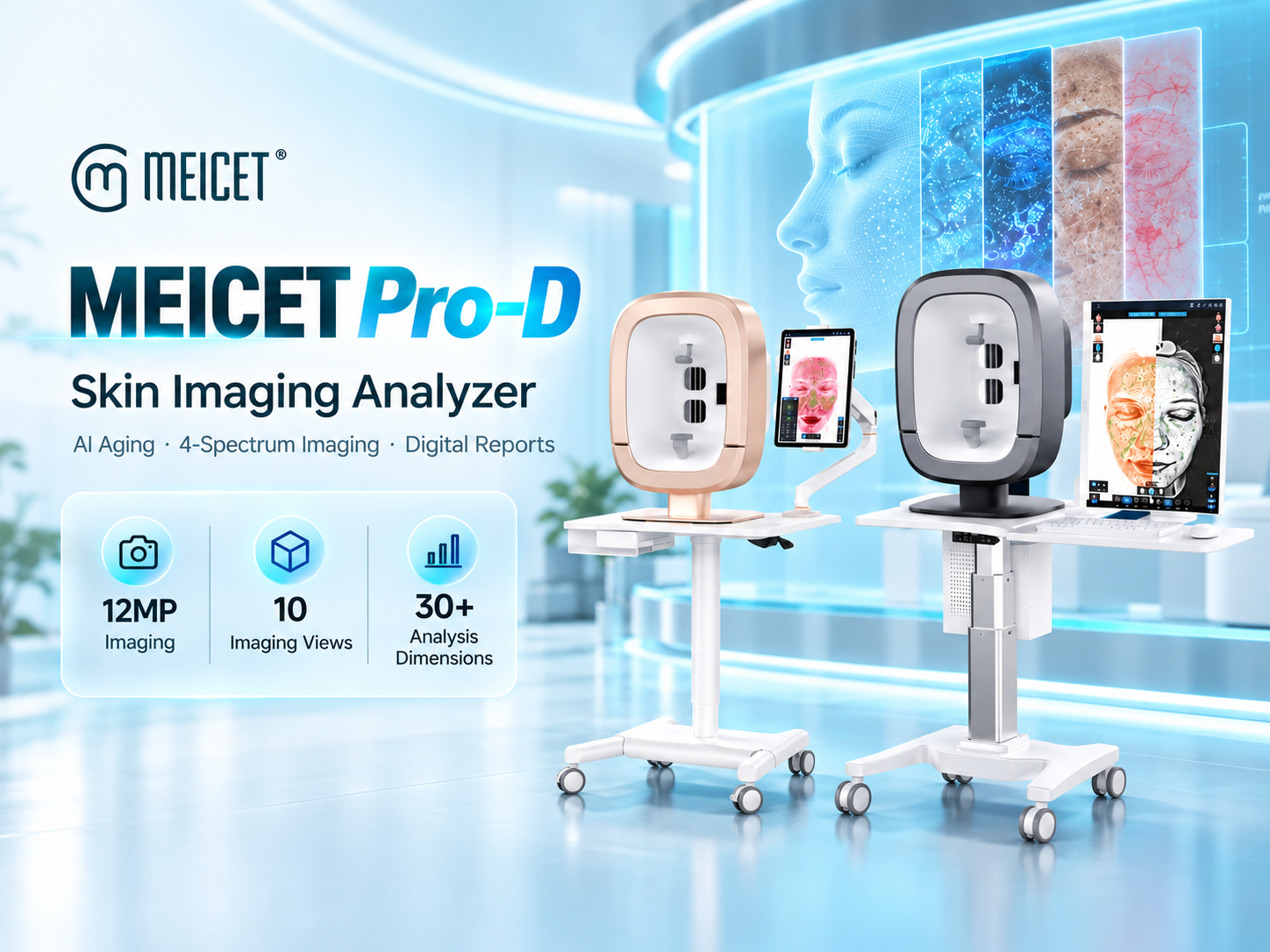
Quick Answer:
Choosing a reliable Chinese smart skin analyzer manufacturer requires verifying legal entity status, quality management system certification, product regulatory compliance, and manufacturing capability—not simply comparing product specifications or prices. The minimum verification set includes: a valid business license verifiable through China’s National Enterprise Credit Information System, ISO 13485:2016 certification naming the actual manufacturing entity, CE marking documentation (Class IIb under MDR for clinical-grade devices like the ISEMECO 3D D9, per MEICET’s claims), and evidence that the specific product has undergone appropriate safety testing (IEC 60601-1, IEC 62401-1-2). A manufacturer that cannot provide these documents in verifiable form—not as marketing screenshots—presents elevated risk regardless of product claims.
Key Takeaways
- ✓ Legal entity verification is the first filter: Search the manufacturer’s Chinese legal name and 18-digit registration number on Tianyancha or Qichacha before any technical discussion.
- ✓ ISO 13485 must name the factory, not a trading arm: A certificate issued to a sales entity or parent company does not demonstrate manufacturing quality control.
- ✓ CE claims require Notified Body documentation: For a Class IIb skin analyzer, a “CE certificate” from a testing lab is not equivalent to a Notified Body certificate under MDR 2017/745.
- ✓ Factory capability must be verified independently: Video walkthroughs, third-party inspection reports (SGS, TÜV, Intertek), and export license records are more reliable than platform badges.
- ✓ After-sales infrastructure signals long-term reliability: Response time to technical questions, software update history, and spare parts availability differentiate a manufacturer from a reseller.
Verify the Legal Entity Before Evaluating the Product
A Chinese manufacturer’s legal identity is the foundation of every other verification step. The supplier’s business license must be checked against China’s official corporate registry, and the legal entity name on the license must match the name on the ISO 13485 certificate, the export license, and the commercial invoice. A mismatch indicates either a trading intermediary or a documentation problem.
The verification workflow is straightforward. Request the supplier’s 18-digit Unified Social Credit Code (统一社会信用代码) and search it on Tianyancha (tianyancha.com) or Qichacha (qcc.com). These platforms display the company’s registered capital, establishment date, legal representative, business scope, and any administrative penalties or abnormal operation records. A manufacturer with less than three years of operation, registered capital inconsistent with its claimed production capacity, or a business scope that does not include “manufacture of medical devices” warrants scrutiny.
The business scope detail matters specifically for skin analyzers. A company whose registered scope covers only “sales of cosmetic equipment” or “technology development” but not “production of medical devices” or “manufacture of electronic equipment” may be a trading company rather than a factory. MEICET’s operating entity, Shanghai May Skin Information Technology Co., Ltd., is described in its own materials as a manufacturer of smart beauty equipment and proprietary software solutions, but the buyer should verify this against the registry rather than the supplier’s website.
Export license verification adds a second layer. A valid Chinese export license includes the company name, registration number, entity type, and a QR code linked to the National Enterprise Credit Information System. For orders above $10,000, requesting the export license is standard practice; a supplier that cannot produce one may be operating through a third-party trading company, adding cost and counterparty risk.
Quality Management System: ISO 13485 Is Necessary but Not Sufficient
ISO 13485:2016 certification is the baseline quality management requirement for medical device manufacturers in most jurisdictions. It specifies requirements for design, development, production, storage, distribution, installation, and servicing of medical devices. For a skin analyzer used in clinical or aesthetic assessment, the certificate demonstrates that the manufacturer has a documented quality system covering the product’s lifecycle.
The certificate review has two critical checks. First, the certified organization must be the actual manufacturing entity. A certificate issued to “MEICET” or “Shanghai May Skin” demonstrates quality system compliance for that entity; a certificate issued to a trading company does not transfer to the factory that actually built the device. Second, the scope must include design and manufacture, not merely “distribution” or “sales.” A distribution-scope certificate indicates a reseller, not a manufacturer.
The FDA’s Quality Management System Regulation (QMSR), effective February 2, 2026, incorporates ISO 13485:2016 by reference, meaning the standard now serves as the foundation for US market quality system compliance as well. A manufacturer without valid ISO 13485 certification faces structural gaps in both EU and US regulatory positioning.
Product Certification: What the Manufacturer Claims vs. What the Documents Show
A manufacturer’s claim of “CE and FDA certified” is marketing language until the underlying certificates and clearance numbers are verified. For a clinical-grade skin analyzer like the ISEMECO 3D D9, the relevant documents are specific and verifiable.
EU CE marking for a Class IIb device requires a Notified Body certificate under MDR 2017/745. MEICET states that the D9 holds Class IIb certification, and the company’s exhibition materials reference its presence at international aesthetic congresses including AMWC Dubai and IMCAS. These claims are consistent with a manufacturer that has pursued European regulatory approval, but consistency is not verification. The buyer should request the Notified Body certificate and the EU Declaration of Conformity, confirm that the device model is named, and verify the Notified Body’s designation status.
FDA status requires similar specificity. A 510(k) clearance number for a Class II skin analyzer under product code NQQ is the evidence of authorization to market in the US; “FDA registered” without a clearance number does not constitute clearance. MEICET states that its products are FDA certified, but the clearance number should be verified through the FDA’s public database.
Electrical safety and photobiological safety reports (IEC 60601-1, IEC 60601-1-2, IEC 62471) cover the D9’s active LED and structured-light components. These reports from ISO 17025-accredited laboratories demonstrate that the device has been independently tested for basic safety, electromagnetic compatibility, and light source hazards.
| Document | What It Proves | Verification Method | Red Flag |
|---|---|---|---|
| ISO 13485:2016 | Quality system for device design and manufacture | IAF CertSearch; certificate number lookup | Certificate for trading entity; distribution-only scope |
| EU Notified Body Certificate | Class IIb conformity under MDR 2017/745 | NANDO database for Notified Body status | No Notified Body certificate for a Class IIb claim |
| FDA 510(k) Clearance | Authorization to market Class II device in US | FDA 510(k) database; clearance number | “Registered” without clearance number |
| IEC 60601-1 / -1-2 Reports | Electrical safety and EMC | ISO 17025 lab accreditation check | Self-declaration without third-party testing |
| IEC 62471 Assessment | Photobiological safety of light sources | Accredited laboratory report | No UV/light safety documentation |
Manufacturing Capability: Beyond the Showroom
A reliable manufacturer’s production capability is visible in its factory, not only in its product catalog. The Chinese medical device market has grown substantially—reaching an estimated 1.22–1.44 trillion yuan in 2025—and the sector is shifting from cost-driven competition toward technology and brand strength. This shift means that genuine manufacturers invest in production facilities, quality control infrastructure, and research and development. Trading companies that source finished devices do not.
Verification approaches include:
- Live video walkthrough: Request a scheduled video call showing the production floor, assembly stations, testing equipment, and warehouse. A pre-recorded tour or a showroom-only view is insufficient.
- Third-party inspection reports: SGS, TÜV, and Intertek conduct factory audits that document facility conditions, employee count, production capacity, and compliance records.
- Export transaction history: A manufacturer with consistent export activity to regulated markets demonstrates experience with international compliance requirements.
MEICET’s participation in international trade events—the Canton Fair, AMWC Dubai, IMCAS—provides evidence of global market engagement and willingness to meet international buyers face-to-face. These are positive signals, but they do not replace factory verification.
The China Regulatory Context: What NMPA Compliance Tells You
A Chinese manufacturer’s domestic regulatory status provides indirect evidence of its quality discipline. The National Medical Products Administration (NMPA) regulates medical devices in China, and the revised Medical Device Production Quality Management规范 (Good Manufacturing Practice), effective November 1, 2026, strengthens requirements for quality management systems covering design, production, quality control, and post-market activities.
A manufacturer that holds NMPA registration for its skin analyzer products has undergone review of its technical documentation, quality system, and (where applicable) clinical evaluation. This registration is not directly transferable to other markets, but it demonstrates that the manufacturer operates within a regulated framework and has invested in the documentation and testing required for domestic market access.
FAQ
How do I verify a Chinese skin analyzer manufacturer’s legal status?
Request the 18-digit Unified Social Credit Code and search it on Tianyancha (tianyancha.com) or Qichacha (qcc.com). Confirm that the company name matches the ISO 13485 certificate, export license, and commercial invoice.
Is Alibaba Gold Supplier status sufficient to trust a manufacturer?
No. Gold Supplier status requires annual verification but is held by fewer than 10% of suppliers and does not guarantee that the company is a manufacturer rather than a trading company. Independent verification is necessary.
What ISO certification should a skin analyzer manufacturer hold?
ISO 13485:2016 is the baseline quality management system standard for medical device manufacturers. The certificate must name the actual manufacturing entity and cover design and manufacture.
How can I confirm a manufacturer’s CE claim for a Class IIb skin analyzer?
Request the Notified Body certificate and the EU Declaration of Conformity. Verify that the Notified Body is designated under MDR 2017/745 and listed in the EU’s NANDO database.
What red flags indicate a trading company posing as a manufacturer?
Business scope limited to sales; ISO 13485 issued to a different entity; reluctance to provide a live factory video; export license issued to a third-party; and pricing significantly below market.
Does NMPA registration mean the device is approved for my country?
No. NMPA registration authorizes marketing in China only. Each destination market has its own regulatory requirements.
What should I verify before placing a bulk order?
Legal entity status, ISO 13485 certificate naming the factory, product certification documents (CE/FDA), factory audit report, and a sample unit tested in your own environment.
Post time: Nov-16-2026


