


Quick Answer
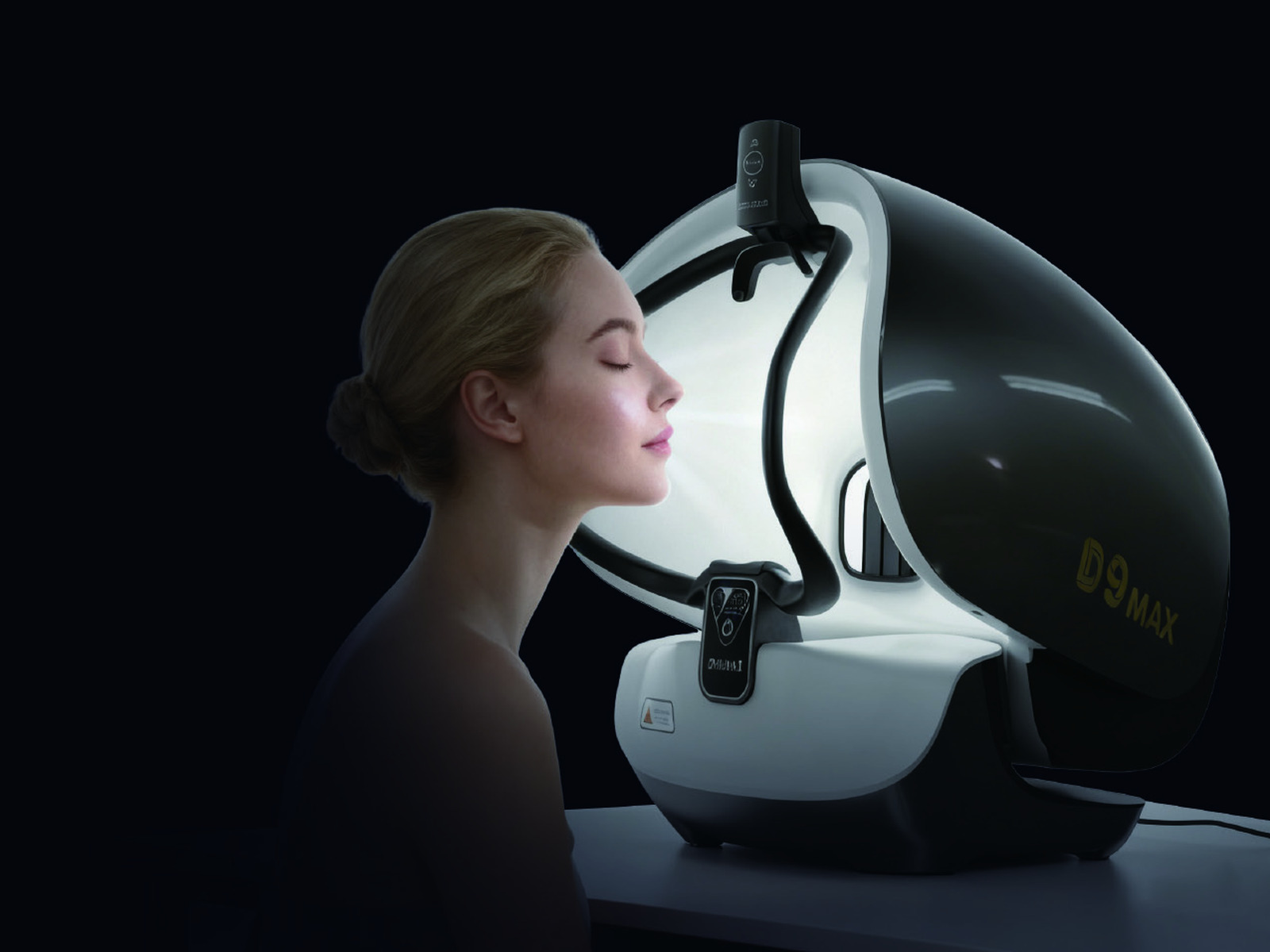
A professional-grade smart skin analyzer in 2027 typically ranges from $8,000 to $20,000+ for systems with true structured-light 3D capture and multi-spectral imaging. The ISEMECO D9, the reference system for this tier, falls within this band, with the standard model estimated at $10,000–$15,000 for hardware alone. Entry-level devices marketed as “3D” but relying on 2D interpolation can be found for $600–$2,500, but lack accuracy. Critical insight: purchase price is only 50–60% of the three-year total cost of ownership.
Key Takeaways
-
Professional structured-light systems cluster in the $8,000–$20,000 range in 2027.
-
The D9 features 42MP capture, 0.2mm 3D accuracy, and binocular grating structured light.
-
Three-year TCO for a professional system runs $14,300–$24,000.
-
Devices below $2,500 cannot perform true 3D volume measurement.
The 2027 Price Tiers: What Each Band Buys
Tier 1: Entry-Level (Under $2,500)
What you get: A visualization tool for consultations. Shows surface texture and pigmentation.
What you give up: Reproducibility and true geometric comparison. Unreliable for before/after tracking.
Tier 2: Mid-Range ($5,000–$8,000)
What you get: 24–36MP cameras, limited 3D contour visualization. Suitable for basic salons.
What you give up: Calibration stability and software depth required for medical-grade outcome tracking.
Tier 3: Professional ($8,000–$20,000+)
The ISEMECO D9 Standard. Reflects hardware precision and validated software algorithms.
Focus: Binocular grating structured light and 0.1 mL volume precision.
| Specification | D9 Standard | What It Enables | Why It Commands Price |
|---|---|---|---|
| 3D capture | Binocular grating structured light | True geometric measurement | Precision optics |
| Modeling accuracy | 0.2 mm | Detection of fine wrinkles | Structured-light engineering |
| Full-face pixels | 42 million | High-resolution texture | 1-inch CMOS sensor |
| Volume precision | 0.1 mL | Quantified filler tracking | Calibrated reconstruction |
Source: Meicet B2B Buyer’s Guide (October 2026)
Beyond Hardware: Three-Year Total Cost of Ownership
| Cost Category | Entry-Level | Mid-Range | Professional D9 Class |
|---|---|---|---|
| Hardware | $1,500 | $5,000 | $10,000–$15,000 |
| Three-Year TCO | $1,500–$2,300 | $6,200–$8,300 | $14,300–$24,000 |
Why Calibration Cannot Be Skipped
UV light sources degrade over time. Structured-light projectors drift. A professional system without annual calibration becomes a source of unreliable data—worse than no data, because it produces numbers that appear valid but are not.
What the D9’s Price Buys That Cheaper Systems Cannot
True Structured-Light 3D Measurement: The D9 uses binocular grating structured light with a 650nm laser band. This is geometric measurement, not software simulation. The result is 0.1 mL volume precision.
Validated AI Aging Model: The D9’s 8-dimension aging index is built on an AI model trained on large-scale skin imaging data, providing clinical-grade consistency.
Multi-Spectral Separation: Captures under four modes: RGB, cross-polarized, parallel-polarized, and UV to isolate vascularity, pigmentation, and texture separately.
Frequently Asked Questions
Is the ISEMECO D9 worth $10,000–$15,000 compared to a $2,000 alternative?
If the goal is quantified treatment outcome tracking (e.g., measuring 0.8 mL volume change), the D9′s precision justifies the price. A $2,000 device cannot produce these measurements.
What is the D9 MAX upgrade?
The MAX variant offers 0.02mm accuracy and 48MP resolution. It is designed for high-volume clinics where consultation efficiency and fine wrinkle detection are paramount.
Are there hidden costs?
Clarify cloud storage fees, on-site service visits, and replacement consumables. Always request an itemized three-year quotation.
Can I negotiate the price?
Yes, pricing varies by region and configuration. For multi-unit orders, volume pricing may be available. Ensure you compare equivalent scopes of hardware and software licenses.
Post time: Nov-09-2026


