


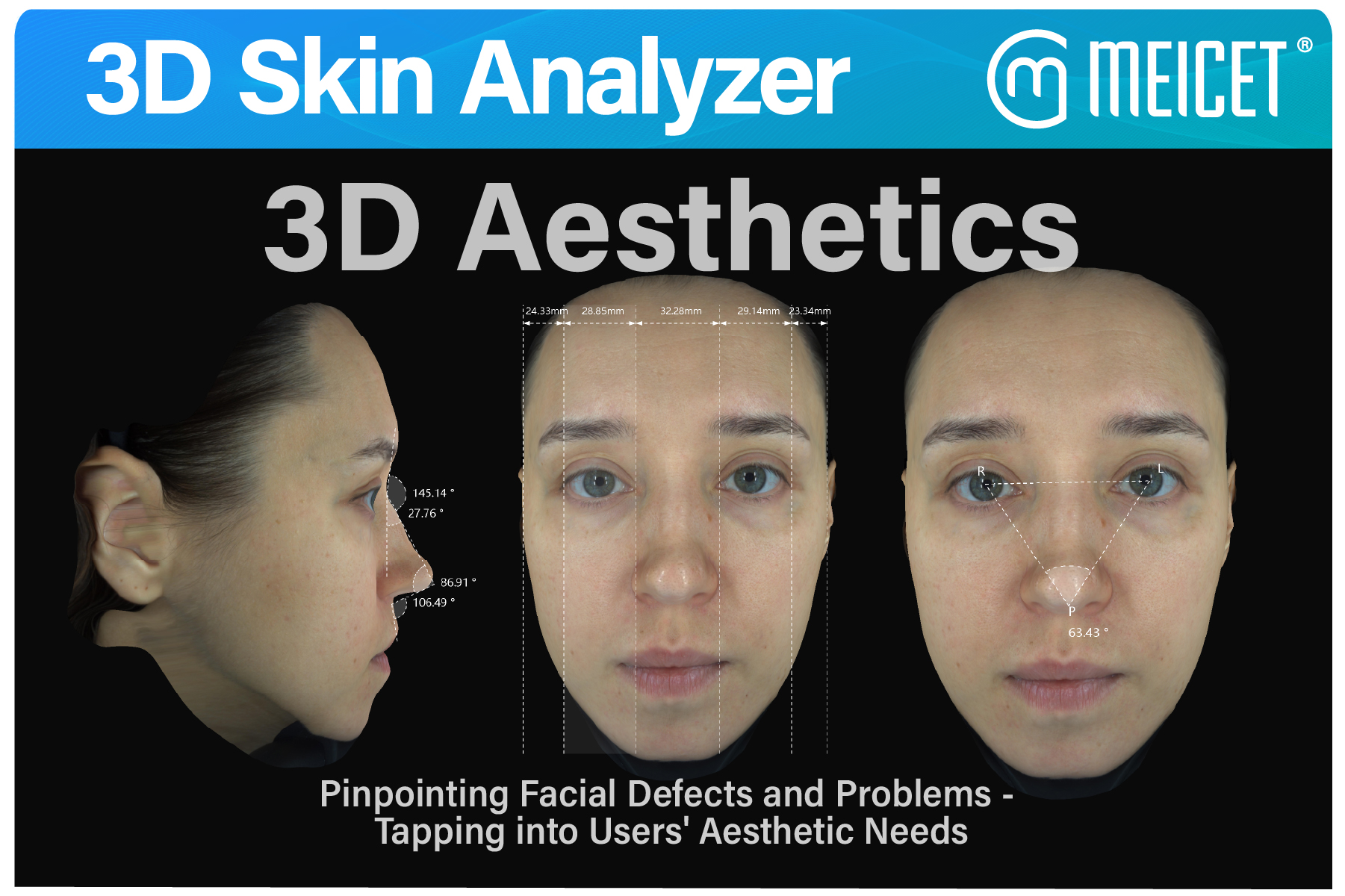
Choosing the right 3D skin analyzer requires matching four technical capabilities to your actual clinical workflow: true structured-light 3D capture (not simulated depth), spectral mode coverage (at least RGB, cross-polarized, and UV for subsurface assessment), quantified output precision (volume to 0.1ml, aging grading with defined scales), and software ecosystem fit (multi-terminal access, case database organization, report customization). The ISEMECO D9 platform exemplifies the professional tier with 0.2mm modeling accuracy, 42 million full-face pixels, four spectral modes, and an 8-dimension aging model . The decision should be driven by what questions your business needs the device to answer—volume tracking for filler clinics, pigmentation depth for dermatology practices, or consultation conversion for aesthetic salons—not by headline specifications alone.
Match depth capability: Volume tracking to 0.1ml requires true structured-light 3D; basic surface consultation does not.
Spectral modes: RGB alone captures surface; adding cross-polarized and UV reveals vascular patterns and pigmentation depth.
Software workflow: Multi-terminal access and case databases separate professional devices from basic ones.
Structured outputs: The D9’s 8-dimension aging model provides data for treatment planning, not just visual comparison.
Regulatory status: Verify CE and FDA; EU MDR Class IIb certification noted for D9 and pro-A systems.
The first decision is not “which device has the best specifications” but “what will this device actually be used for.” A 3D skin analyzer can serve three distinct business functions, each demanding different capabilities.
- • Volume and contour tracking: The D9 reports volume difference with 0.1ml precision, enabling statements like “this treatment added 0.6ml to the malar region”.
- • Skin condition assessment: For pigmentation or vascular focus, the D9 captures RGB, cross-polarized, parallel-polarized, and UV modes.
- • Consultation conversion: The D9’s customized report generation incorporates patient images and skincare plans into branded documents.
The ISEMECO D9 uses binocular grating structured light—a technique that projects a known pattern and calculates depth. The platform reports 0.2mm modeling accuracy, enabling detection of fine wrinkles.
The D9 captures all four modes and generates derived outputs including red area maps and sensitivity grading divided into mild, moderate, and severe categories.
Three output categories matter most:
- Quantified measurements: D9 reports volume changes to 0.1ml and symptom severity with area percentages.
- Structured aging analysis: Covers 8 dimensions including forehead lines, crow’s feet, and laugh lines.
- Before/after comparison: Uses warm/cool color coding to indicate volume changes automatically.
Workflow: The D9 supports multi-terminal access (iPads/PC) and local or remote synchronization. The case database is organized by symptom for rapid retrieval.
Regulatory: MEICET reports CE and FDA certifications. The D9 and pro-A systems received EU MDR Class IIb certification, ensuring high-tier compliance.
| Business Type | Primary Need | Critical Specifications | Software Priority |
|---|---|---|---|
| Filler clinic | Volume tracking | 0.1ml precision, structured light | Before/after, case database |
| Dermatology | Pigmentation/vascular | Cross-polarized and UV modes | Symptom severity grading |
| Aesthetic salon | Consultation conversion | Good surface imaging | Report customization |
| Multi-location | Standardization | Consistent capture, cloud sync | Multi-terminal access |
Post time: Oct-23-2026


