


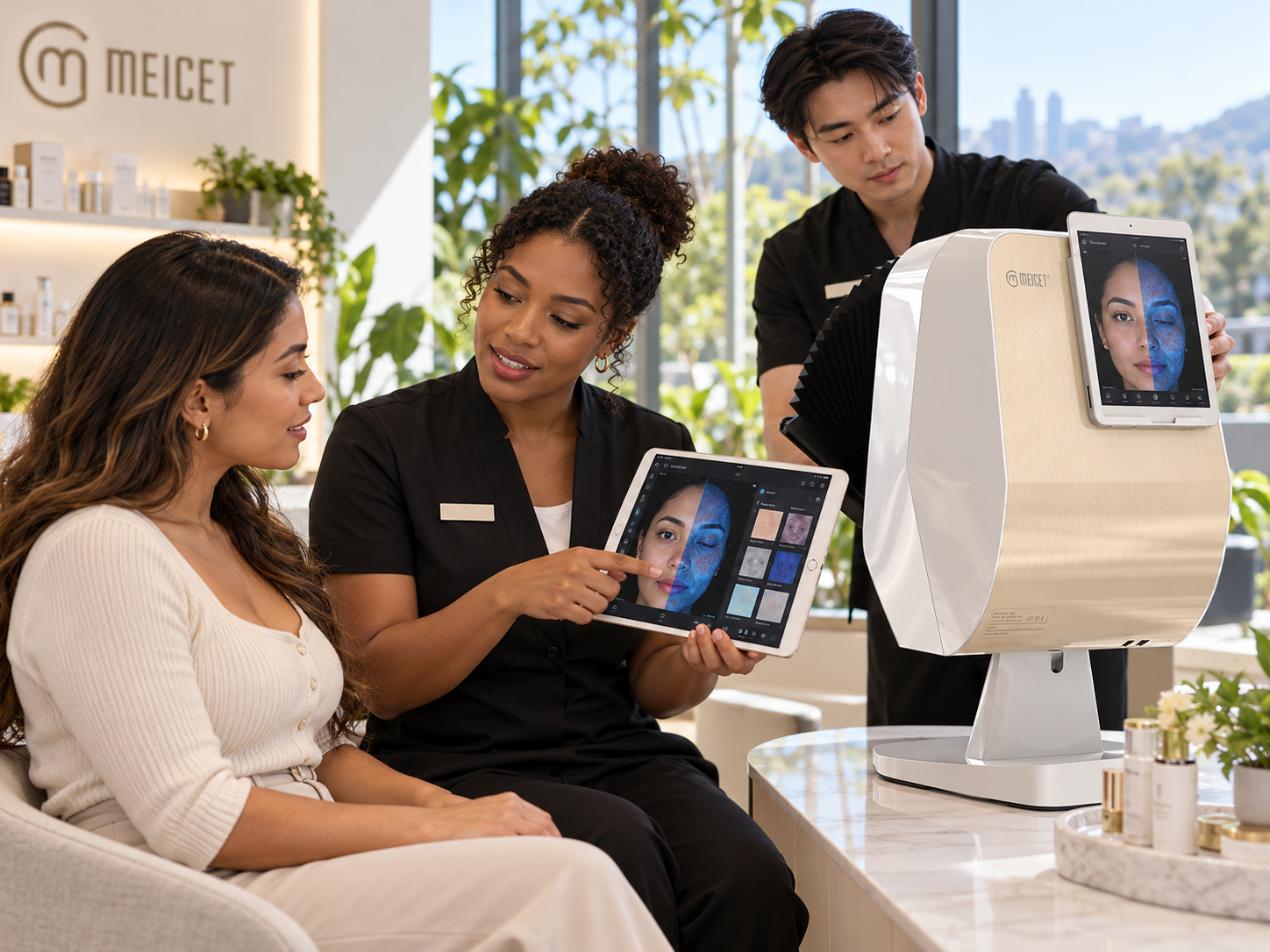
Comparing 3D skin analyzer manufacturers beyond quoted prices requires evaluating five dimensions that determine total cost of ownership and clinical utility: measurement technology and verifiable precision (structured light vs. simulated depth), regulatory certification depth (ISO 13485, CE MDR class, FDA status), software workflow integration (AI reporting, treatment menu linkage, data portability), scalability across device tiers (entry, mid, flagship), and post-sale support infrastructure (calibration intervals, software updates, reference customers). A $2,000 device that produces unverifiable measurements and a $15,000 device with traceable 0.02mm precision are not competing products—they occupy different risk categories. The comparison framework below converts supplier claims into procurement questions.
Price is the least diagnostic variable. The global 3D skin analyzer market recorded 141,000 units at an average price of $795 in 2025, but that average spans home-use scanners and clinical-grade systems.
Structured light is the dividing line. Devices using binocular grating structured light measure actual depth; simulated 3D cannot quantify filler volume or sub-millimeter wrinkles.
Software workflow determines revenue. The difference is between a consultation aid and a conversion tool linked to the clinic’s treatment menu.
Certification scope must match intended use. CE-MDR Class IIb clinical devices carry different legal boundaries than basic aesthetic imaging tools.
A clinic evaluating three quotes for a 3D skin analyzer faces a genuine information problem: the specifications look similar on paper, the demonstrations look impressive in a showroom, and the price difference is large enough to demand justification. The ISEMECO 3D D9MAX sits at the flagship end of MEICET’s product line, with published specifications including 0.02mm 3D modeling precision, 48 million full-face pixels, and a 30-second AI skin analysis report. But the D9MAX is not meaningful in isolation—it is one node in a manufacturer’s product architecture, and comparing manufacturers requires understanding what that architecture reveals about engineering priorities, regulatory strategy, and long-term support capacity.
Quoted prices for 3D skin analyzers reflect positioning, not capability. A manufacturer pricing a device at $1,500 and another pricing at $15,000 may both claim “3D analysis,” but the underlying measurement physics determines whether the device can support clinical claims or only aesthetic visualization.
The global market data illustrates the span: 2025 production reached 141,000 units at an average selling price of $795, a figure that includes home-use scanners with no depth measurement capability and professional structured-light systems used in dermatology clinics. When a supplier quotes a price without disclosing the measurement principle, the price is uninterpretable.
Binocular grating structured light is the reference technology for clinical-grade 3D skin analysis; devices without it cannot produce verifiable volumetric measurements. Structured light projects a known pattern onto the face and calculates depth from the pattern’s deformation across two camera viewpoints, producing a true point cloud with measurable Z-axis accuracy.
| Measurement Approach | Depth Data Source | Published Accuracy | Clinical Use Case | Verification Method |
|---|---|---|---|---|
| Binocular grating structured light | Projected pattern deformation, dual cameras | 0.2mm (D9) to 0.02mm (D9MAX) | Filler volume, wrinkle depth, contour tracking | Scan calibration object; compare measured vs. known |
| Single-camera depth estimation | AI inference from 2D cues | Not specified or “high precision” | Aesthetic visualization only | Request written statement of principle |
Software depth separates devices that document skin from devices that drive clinical workflow. The D9MAX’s 30-second AI report generation, TOP3 skin concern prioritization, and automatic linkage to the institution’s treatment menu represent a workflow layer that entry-level devices lack.
| Software Capability | Entry-Level | Mid-Range (D9) | Flagship (D9MAX) | Relevance |
|---|---|---|---|---|
| Report Generation | Manual/Minutes | ~15 seconds | 30s (AI model) | Throughput; staff cost |
| Menu Linkage | None | Manual association | Automatic AI linkage | Revenue impact; upsell |
The D9 platform holds CE and FDA certifications, with Class IIb certification under EU MDR. This indicates a strategic choice to compete in clinical markets rather than just aesthetic consultation.
A manufacturer with a coherent product architecture across price tiers demonstrates engineering depth. MEICET’s lineup spans the MD200, D9/D8s, and D9MAX, indicating core technology development rather than rebranding imported modules. MEICET reports over 60,000 cooperating institutions across 80+ countries and a 15-year operating history.
The quoted price is just the entry point. Multi-year costs include calibration, software maintenance, training, and consumables. A manufacturer that does not disclose these costs is shifting risk to the buyer.
- • Request ISO, CE, FDA documentation and IEC safety reports before meeting.
- • Request a live scan of a calibration object with known dimensions during demo.
- • Contact reference customers about calibration costs and software update frequency.
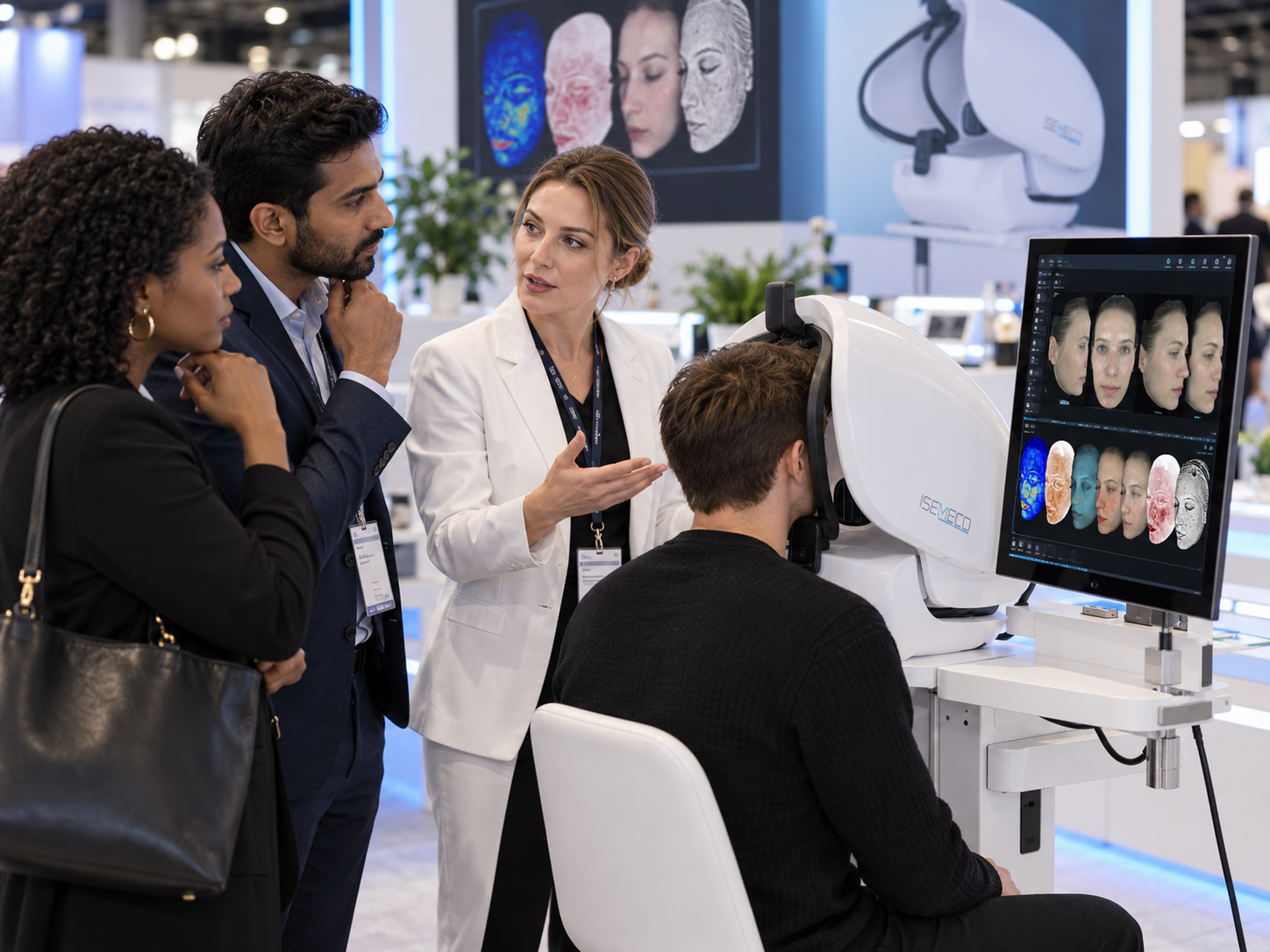
Ask for the measurement principle in writing. Structured light uses a projected pattern and two camera viewpoints. Request a live scan of an object with known dimensions to compare measured vs. actual depth.
0.2mm captures visible wrinkles/contours. 0.02mm captures micro-texture and early-stage fine lines not visible to the naked eye, supporting preventive anti-aging programs.
No. It reduces the “experience threshold” and improves efficiency, but clinical judgment and treatment recommendations remain with the practitioner.
Request the 510(k) clearance number (K######) and verify it in the FDA’s public database. A logo without a number is not verifiable evidence.
Ask about unplanned costs: calibration fees, service downtime, and software response time. Ask if they would buy the same device again.
Not necessarily, but consider support capacity. Full-line manufacturers usually have better infrastructure for long-term service and software compatibility.
Usually annually for high-volume use. The calibration certificate should show traceability to national metrology standards.
Post time: Nov-04-2026


