


Quick Answer
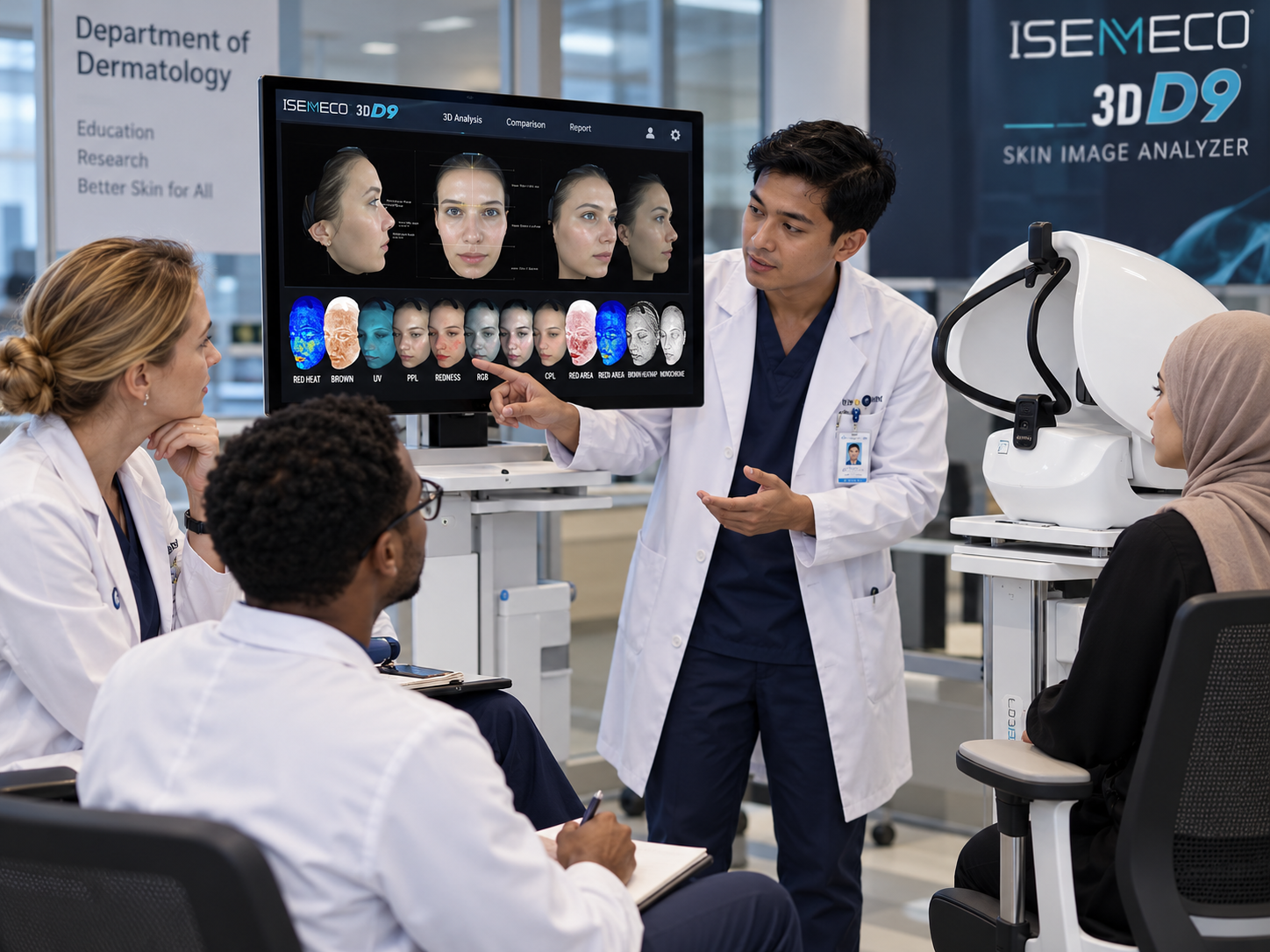
Yes, 3D skin analyzers can be customized through OEM and ODM manufacturing, but the scope of what is actually customizable is narrower than most buyers assume. OEM (Original Equipment Manufacturer) typically covers branding-layer changes—logo, packaging, UI color scheme, and report templates—with a turnaround of 4–8 weeks using an existing hardware platform. ODM (Original Design Manufacturer) extends to hardware modification—custom housing, PCB adjustments, or probe redesign—requiring 8–16 weeks plus additional regulatory retesting if electrical safety certifications are affected . The critical constraint is not production capability but regulatory liability: once a distributor places its own brand on a medical device, EU MDR Article 16 transfers manufacturer obligations to that distributor unless a written agreement specifies otherwise . MEICET’s FAQ confirms that both OEM and ODM services are available , and the MEICET 3D MD300 represents the type of existing platform that OEM branding projects would typically build upon.
Key Takeaways
OEM is branding, ODM is engineering. OEM customization changes how the device looks and is labeled; ODM customization changes what the device physically is. Confusing the two leads to timeline and cost miscalculations.
Cosmetic OEM timelines start at 4–8 weeks; full ODM hardware projects require 8–16 weeks for samples alone . Regulatory retesting (IEC 60601-1) adds 10 days to 2 weeks if the modification touches electrical safety.
Branding a device under your own name can make you the legal manufacturer. Under EU MDR Article 16, a distributor that markets a device under its own name assumes manufacturer obligations unless a written agreement designates the original manufacturer as responsible .
Software customization is the highest-leverage, lowest-risk ODM request. UI skinning, report template redesign, and treatment menu configuration do not trigger hardware recertification and can be executed on an existing platform.
MEICET’s product lineup—MD200, MD300, D9, D9MAX—indicates an existing platform architecture that OEM/ODM projects can leverage, reducing development time compared to building from scratch .
A clinic chain or distributor exploring OEM/ODM manufacturing for a 3D skin analyzer typically begins with a straightforward question: “Can we put our brand on this device?” The answer is yes—but the procurement decision requires understanding which layer of customization is being purchased and what regulatory obligations travel with each layer. The MEICET 3D MD300, with its 32 million full-face pixels, four spectral modes, and published specifications , is a concrete example of a platform that an OEM project could rebrand or an ODM project could modify. The distinction between these two paths determines cost, timeline, and legal exposure.
1. OEM vs. ODM: The Distinction That Determines Timeline and Liability
OEM customization modifies the device’s identity; ODM customization modifies the device’s engineering. The boundary between them is not marketing terminology—it is the physical and regulatory boundary that determines how long the project takes and who bears compliance responsibility.
OEM (branding-layer customization) applies to an existing, certified hardware platform. The manufacturer retains the core design, and the buyer selects cosmetic variables: logo application, packaging design, user interface color and branding, and report template layout. MEICET’s published guidance places simple cosmetic OEM projects at 4–8 weeks for sample delivery, with logo customization samples available in 2–7 days and bulk production in 15–20 days for certain device categories . This timeline reflects the absence of tooling changes and the absence of regulatory retesting, because the device’s electrical and photobiological safety characteristics are unchanged.
ODM (design-layer customization) applies when the buyer requires physical changes: a custom housing form factor, PCB modification, probe redesign, or a different sensor configuration. These changes trigger tooling (injection molds typically 4–6 weeks for production molds, 1–2 weeks for prototype molds) and may invalidate existing safety certifications, requiring retesting . MEICET’s guidance states that full ODM hardware projects, when built on an existing platform rather than designed from scratch, can deliver samples in 8–16 weeks .
| Customization Layer | What Changes | Typical Timeline | Regulatory Impact | Suitable For |
|---|---|---|---|---|
| Cosmetic OEM | Logo, packaging, UI branding, report template | 4–8 weeks | None—existing certifications remain valid | Distributors, clinic chains seeking brand identity |
| Software ODM | Treatment menu structure, AI report logic, data export format | 4–8 weeks (configuration) | Minimal—software changes may require documentation update | Clinics with specific workflow requirements |
| Hardware ODM (existing platform) | Housing, probe, PCB modification | 8–16 weeks for samples | IEC 60601-1 retesting required (10 days–2 weeks) | Buyers requiring differentiated physical design |
| Full ODM (new development) | Complete device architecture | 12–24+ months | Full regulatory submission required | Large distributors with multi-year volume commitments |
2. What Is Actually Customizable on a 3D Skin Analyzer
Software and workflow customization delivers the highest operational value at the lowest regulatory cost. The physical hardware—structured light projector, camera module, spectral LED array—is the most expensive and most regulated component. Modifying it triggers tooling costs and safety recertification.
Key Software Variables:
- Report template design: Branded output with custom layout.
- Treatment menu linkage: Configure AI recommendations to clinic service offerings.
- UI language and terminology: Align analysis categories with clinical vocabulary.
- Data export format: Integration with practice management or EHR systems.
Hardware customization carries a different value proposition and a different risk profile. A custom housing changes the device’s visual identity in the treatment room. Each hardware change requires verification that the optical path, calibration, and electrical safety characteristics remain within the certified envelope.
3. The Regulatory Consequence Most Buyers Overlook
Placing your brand on a medical device can make you the legal manufacturer in the EU. EU MDR Article 16(1) states that a distributor or importer that makes a device available under its own name or trademark assumes the obligations of the manufacturer, unless a written agreement designates the original manufacturer as responsible.
Procurement Checklist for Regulatory Clauses:
- Legal manufacturer of record under EU MDR.
- ISO 13485 and CE certificate coverage for OEM configurations.
- Responsibility for vigilance reporting and post-market surveillance.
- Change-notification obligations for platform modifications.
4. Platform Leverage: Why an Existing Product Line Reduces Customization Risk
A manufacturer with a multi-tier product line can execute OEM/ODM projects faster. MEICET’s current lineup includes the MD300 (32MP, four spectral modes, 3D grayscale diagnosis), the D9 platform, and the D9MAX, with shared software architecture and AI reporting capabilities .
When the OEM project builds on a platform that already holds IEC 60601-1 reports and a CE certificate, the validation burden has already been carried by the manufacturer. The OEM project only needs to verify that the cosmetic changes do not invalidate those certifications.
5. A Procurement Checklist for OEM/ODM Engagement
- Define the customization layer before requesting quotes. Specify whether the project requires branding only, software configuration, or hardware modification.
- Request the regulatory responsibility framework in writing. Clarify MDR Article 16 or 510(k) status for branded configurations.
- Verify the OEM scope against the manufacturer’s certifications. Confirm the manufacturing site is covered by the existing ISO 13485.
- Request a sample timeline with regulatory milestones. Include testing and registration steps in the project schedule.
- Include a change-control clause in the OEM agreement. Ensure advance notice for platform updates.
Frequently Asked Questions
Q1: What is the minimum order quantity for OEM customization of a 3D skin analyzer?
Minimum order quantities vary by manufacturer and by customization layer. For cosmetic OEM, some manufacturers accept orders in the tens of units; for hardware ODM, MOQs are typically higher due to mold costs. Request the MOQ in writing alongside the customization scope.
Q2: Does OEM branding affect the device’s CE certification?
Cosmetic changes typically do not affect safety or performance characteristics. However, under EU MDR Article 16, if the buyer’s brand appears as the manufacturer, they may assume manufacturer obligations unless a written agreement designates otherwise.
Q3: How long does software-only ODM customization take?
Software-only customization typically takes 2–4 weeks for design and configuration, with samples following the standard 4–8 week OEM sample timeline. It is the fastest route as it requires no hardware recertification.
Q4: Can I customize the AI analysis algorithm itself?
Algorithm customization is rare as it is core IP and requires revalidation. The practical alternative is to configure the output layer—which concerns what the algorithm prioritizes and how the report presents results.
Q5: What happens to my OEM-branded devices if the original manufacturer goes out of business?
This risk should be addressed in the agreement via software escrow, spare parts availability guarantees, and mandatory notice periods before ceasing platform support.
Q6: Is OEM/ODM only for large distributors, or can a single clinic chain use it?
A single clinic chain can use cosmetic OEM if volume justifies it. Branding-only has the lowest threshold. The decision should be based on a total cost of ownership comparison versus purchasing original-brand devices.
Q7: How do I verify that the OEM manufacturer’s quality system covers the customized version?
Request the ISO 13485 certificate and confirm the scope includes the customized configuration. For high-volume projects, request a quality agreement specifying conformity requirements and change notification obligations.
Post time: Nov-04-2026


