


? Quick Answer
There is no universal answer because skin detector software licensing models vary by manufacturer and product tier. Some vendors bundle a perpetual license with the hardware purchase, while others require annual or monthly subscription fees for cloud-based AI analysis, data storage, and algorithm updates. The MEICET 3D MD300, for example, operates with cloud connectivity and AI-driven analysis, which typically implies an ongoing service relationship rather than a static one-time transaction. Buyers should clarify three things before purchase: whether the license is perpetual or term-based, what happens if the subscription lapses, and whether software updates and cloud storage are included or billed separately.
Key Takeaways
- ✓ Perpetual licenses grant indefinite use but may exclude future updates or cloud services.
- ✓ Subscription models typically bundle software access, cloud storage, and algorithm updates into a recurring fee.
- ✓ Cloud-dependent features—such as AI analysis and multi-terminal data access—often require an active subscription to function.
- ✓ Regulatory factors can mandate subscription models for certain medical software, particularly when post-market updates are required for safety.
- ✓ The total cost of ownership depends on the license structure, not just the upfront price.
Why This Question Matters More Than Ever
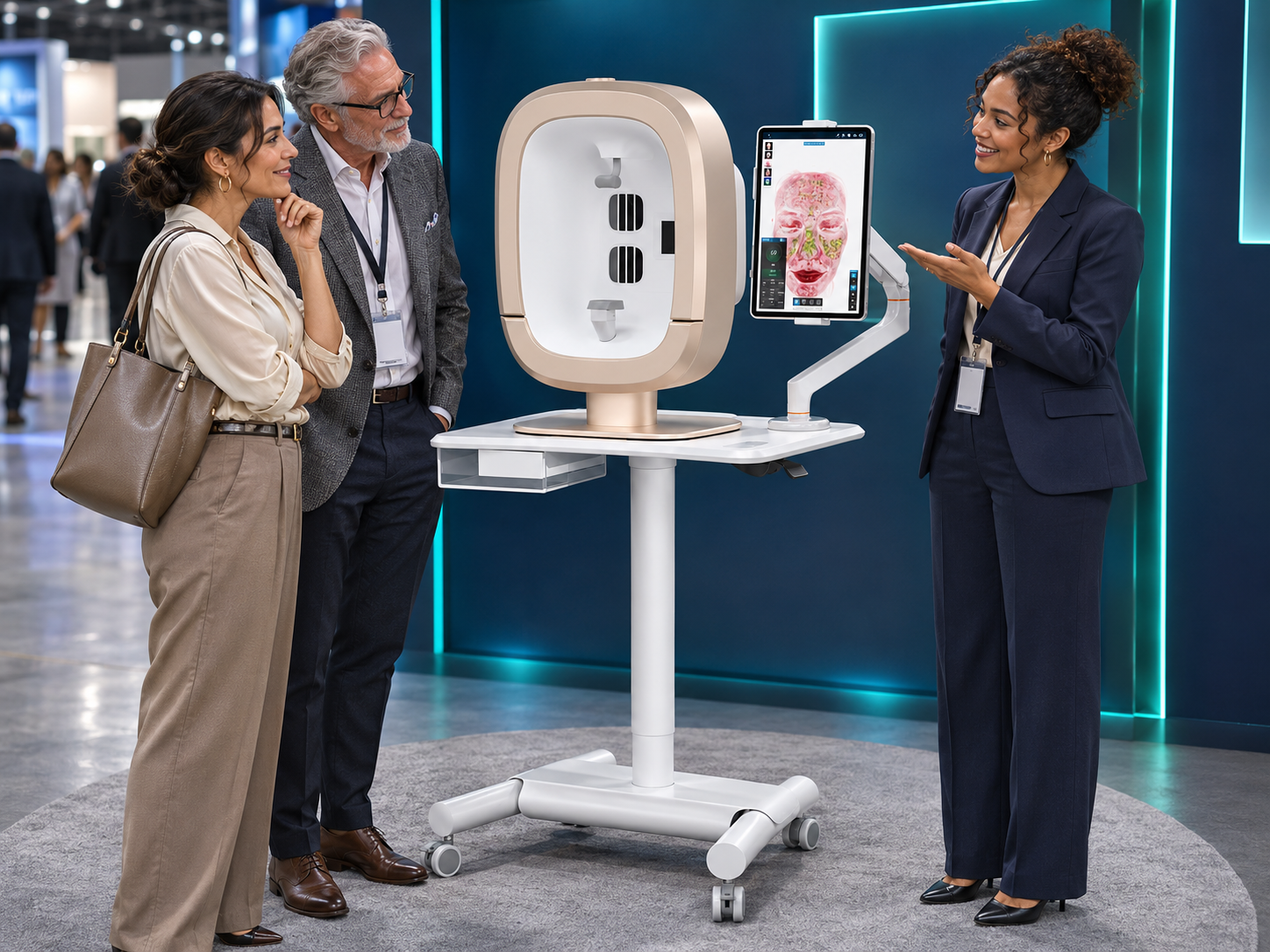
A skin detector machine is no longer a standalone device. Modern systems like the MEICET 3D MD300 integrate AI algorithms, cloud-based data storage, and multi-terminal connectivity into their core diagnostic workflow. This architectural shift means that the software powering the device is not a static component—it evolves, updates, and depends on backend infrastructure to deliver its analytical capabilities.
For clinic owners and procurement managers, the licensing question directly affects budgeting, long-term operational planning, and even clinical continuity. A machine purchased with a perpetual license may continue to capture images years later, but if the AI analysis engine requires a lapsed subscription to function, the device’s clinical utility degrades. Understanding the distinction between owning software and accessing software services is therefore essential.
The Spectrum of Licensing Models in Aesthetic Imaging
Perpetual License: Ownership With Boundaries
A perpetual license grants the buyer the right to use the software indefinitely, typically tied to a specific hardware unit or user account. This model resembles a traditional software purchase: the buyer pays once and retains access without recurring fees. However, perpetual licenses in the medical and aesthetic device space often come with important caveats. Future major version upgrades may require additional payment. Cloud-dependent features may still require an active service agreement. And if the software relies on external servers for AI processing, the manufacturer may reserve the right to discontinue those services after a defined support period.
The appeal of a perpetual license is predictability: the buyer knows the software cost at the point of purchase. The risk is that the software may become functionally outdated or lose access to cloud services over time.
Subscription License: Access as a Service
A subscription license converts the software cost into a recurring operational expense. In exchange for the recurring fee, the buyer typically receives ongoing access to the software platform, algorithm updates, cloud storage, and technical support. This model aligns with the operational reality of cloud-connected diagnostic tools, where the manufacturer bears ongoing infrastructure and development costs.
Subscription models are increasingly common in software-as-a-medical-device (SaMD) contexts. Regulatory frameworks, particularly in jurisdictions like the European Union, require medical device software to remain under maintenance so that safety updates can be deployed when necessary. A subscription structure supports this obligation by ensuring that only actively maintained licenses remain functional.
Hybrid Models: Blurring the Lines
Some vendors combine elements of both models. A perpetual base license may be paired with an optional annual maintenance contract that provides updates and support. Alternatively, a subscription may include a buyout option after a defined term, transferring ownership to the buyer. These hybrid structures attempt to balance the buyer’s desire for long-term cost certainty with the manufacturer’s need to fund ongoing development and infrastructure.
How the MEICET 3D MD300’s Architecture Points Toward a Service Relationship
The MEICET 3D MD300 is described as featuring cloud connectivity and multi-terminal access alongside its AI-driven skin analysis capabilities. These technical characteristics have direct licensing implications. Cloud connectivity means the device’s software does not operate in isolation—it communicates with external servers for data processing, storage, or both. Multi-terminal access implies that the software license may govern not just a single device but a user account or clinic-level access permissions.
When a skin detector’s core value proposition includes cloud-based AI analysis and data portability across terminals, a purely one-time license model becomes operationally complex. The manufacturer must sustain server infrastructure, security protocols, and algorithm updates to maintain the service. Buyers evaluating such a system should therefore anticipate that some form of recurring service relationship—whether framed as a subscription, maintenance contract, or cloud service fee—is likely part of the total cost structure.
Comparison: License Models and Their Operational Implications
| Model Type | Upfront Cost | Recurring Cost | Update Access | Cloud Functionality | Risk if Payment Stops |
|---|---|---|---|---|---|
| Perpetual, no maintenance | High | None | Limited or none | May require separate service fee | Software continues; cloud features may cease |
| Perpetual + maintenance contract | High | Annual | Included during contract | Included during contract | Cloud features may cease; updates stop |
| Subscription (term-based) | Low to moderate | Monthly or annual | Included | Included | Software access may be revoked |
| Hybrid (subscription with buyout) | Moderate | Recurring until buyout | Included during term | Included during term | Depends on buyout terms |
Regulatory Drivers Behind Subscription Adoption
The regulatory environment for medical device software is a significant, if often overlooked, factor in licensing decisions. Software that performs a medical purpose—such as analyzing skin conditions to support diagnosis or treatment planning—may fall under Software as a Medical Device (SaMD) frameworks. Regulators increasingly expect manufacturers to maintain active oversight of deployed software, including the ability to push security patches and algorithm updates.
In the European Union, the Medical Device Regulation (EU) 2017/745 imposes lifetime requirements on medical devices, including software. Industry practice reflects this: some software vendors explicitly state that their medical device products are available only via subscription because perpetual licenses would conflict with the obligation to keep the software under maintenance. While not all skin analysis software is classified as a medical device in every jurisdiction, the broader trend toward lifecycle management and post-market surveillance is shaping licensing practices across the aesthetic technology sector.
Questions to Ask Before Signing
- Is the license perpetual or term-based? Request the specific duration and renewal terms in writing.
- What happens to the device if the subscription lapses? Does image capture continue? Does AI analysis stop? Are stored reports accessible?
- Are algorithm updates included? If not, what is the expected cost and frequency of major updates?
- Is cloud storage included or billed by volume? For clinics generating daily patient scans, storage costs can accumulate.
- Does the license cover multiple users or terminals? A clinic with several treatment rooms may need multi-seat provisions.
- What are the data export rights? If the clinic discontinues the subscription, can patient data be exported in a usable format?
- Is there a buyout option? Some subscription agreements allow conversion to perpetual ownership after a defined period.
A supplier that provides clear, written answers to these questions demonstrates operational maturity. Vague or evasive responses are a warning sign.
Scenarios: How the Choice Affects Different Buyers
Single-location Clinic: Stable volume may find subscription models align with operational budgets, ensuring continuous access to updates.
Multi-site Group: Prioritize multi-terminal access and consolidated reporting, favoring clinic-level subscriptions.
Long-term Operator: Seek perpetual licenses, but confirm which features function without an active service contract.
Distributors: Need clarity on license transferability and whether obligations follow hardware or end-user accounts.
FAQ
Is the software included when I buy a skin detector machine?
Software is typically included in the initial purchase, but the license terms vary. Some purchases include a perpetual license; others include a time-limited subscription that must be renewed. Always confirm the license duration and renewal terms before purchase.
Can I use the skin analyzer without an internet connection?
This depends on the device architecture. Systems that rely on cloud-based AI analysis may require connectivity for full functionality. Ask the supplier whether offline image capture and analysis are supported, and under what conditions.
What happens if I don’t renew the subscription?
The answer depends on the license agreement. In some cases, the device may continue to capture images but lose access to AI analysis, cloud storage, or reporting features. In others, software access may be suspended entirely. Request the specific terms in writing.
Are software updates free?
Not necessarily. Some licenses include updates during the subscription term; others charge separately for major version upgrades. Clarify whether “updates” means bug fixes only or includes new features and algorithm improvements.
Can I transfer the license if I sell the device?
Transferability varies by manufacturer. Some licenses are tied to the original buyer or specific hardware unit and cannot be transferred without vendor approval. If resale is a possibility, confirm transfer terms upfront.
Is a subscription always more expensive than a perpetual license?
Not necessarily. Over a multi-year horizon, subscription fees can exceed the cost of a perpetual license plus occasional paid upgrades. Conversely, a perpetual license may require additional spending on cloud services or maintenance. The comparison depends on the specific fee schedule and the clinic’s usage duration.
Why do some vendors only offer subscription licenses?
Regulatory requirements are one reason. Medical device software may need to remain under active maintenance so that safety updates can be deployed. A subscription model supports this obligation by ensuring that only maintained licenses remain functional. Cloud infrastructure costs and ongoing algorithm development are additional factors.
Post time: Nov-25-2026


