


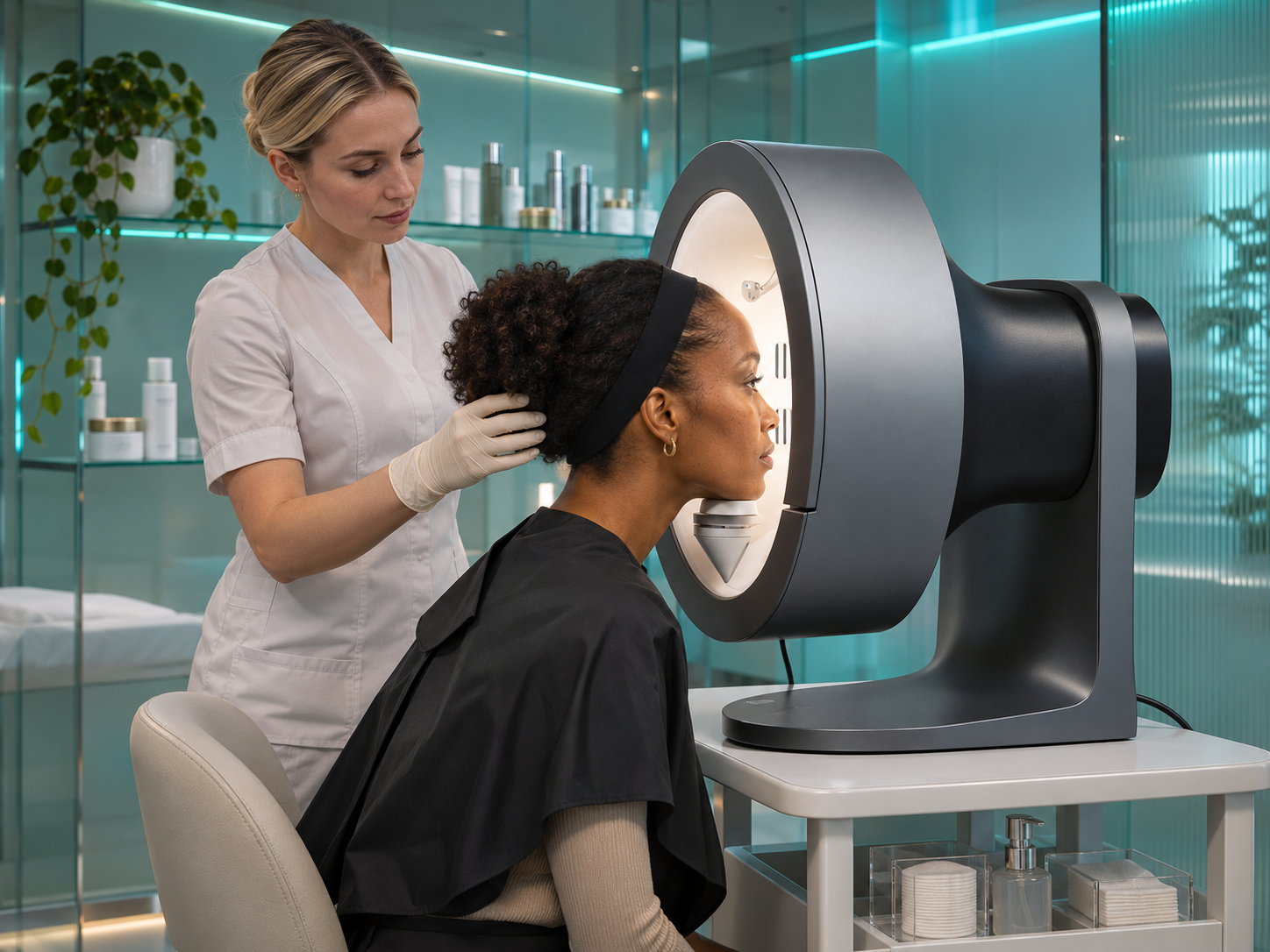
Yes, distributors can generally borrow a demo machine for local exhibitions, but it is rarely a simple “yes.” Manufacturers like MEICET routinely supply demo units to qualified distribution partners for trade shows, yet the arrangement is governed by written terms covering deposit, insurance, return freight, and permitted use. The more accurate question is not whether borrowing is possible, but which terms apply and what documentation the manufacturer requires before releasing a unit.
Key Takeaways:
- • Demo unit lending is standard practice in aesthetic device distribution, not an exception.
- • A written demo agreement should specify the unit’s serial number, exhibition dates, permitted use, insurance responsibility, and return conditions.
- • Regulatory constraints on demonstrating unregistered medical devices vary by market and must be confirmed before the show.
- • Manufacturers typically require advance notice—often several weeks—and may prioritize partners with active sales pipelines.
- • The borrowed unit’s condition, accessories, and calibration status should be documented at handover and return.
Why Manufacturers Lend Demo Units at All
Borrowing a demo machine for a local exhibition is not a favor granted casually. It is a calculated part of a manufacturer’s channel strategy. For a brand like MEICET, which positions its skin imaging analyzers as data-driven consultation tools rather than simple cameras, putting a working unit in front of clinic owners and distributors at a regional trade show is often more persuasive than a brochure. MEICET has exhibited its Pro A skin analyzer and related imaging systems at international events including Cosmoprof Asia and The Aesthetic Show UK, and the company maintains a distributor program that explicitly accounts for demonstration capabilities.
From the distributor’s side, the calculus is equally pragmatic. Purchasing a dedicated demo unit ties up capital that could go into inventory. Borrowing shifts the asset burden back to the manufacturer while still giving the distributor a physical conversation starter. The manufacturer, in turn, gets its technology into a market it may not directly reach, without opening a local office.
The friction arises because both parties want different things from the same asset. The distributor wants a unit that arrives on time, looks new, and does not create a liability nightmare. The manufacturer wants the unit returned in sellable or at least serviceable condition, with evidence that it was used for legitimate promotional purposes. A written demo policy is the mechanism that reconciles those interests.
What a Demo Unit Borrowing Agreement Should Cover
Industry demo programs for capital equipment share a common skeleton. Canon’s demo unit program for B2B distribution partners, for example, limits how many demo systems a partner can obtain per year, restricts their use to demonstration and showroom purposes for a minimum period, and prohibits resale before a defined window. Leica Biosystems’ loan terms go further, assigning the borrower responsibility for shipment costs, insurance, importation, storage, and reconditioning charges for damaged items.
For a skin imaging analyzer, the practical clauses that matter most are these:
Identification and tracking. The agreement should record the unit’s serial number, the named exhibition, the booth number if applicable, and the expected return date. A unit without a serial number in a written record is a unit that becomes difficult to trace if it is moved between clinics or warehouses after the show.
Permitted use. The distributor should be authorized to use the unit for demonstration and education at the specified event, and not for patient diagnosis or commercial scanning services. This distinction matters because a device demonstrated as a consultation aid occupies a different regulatory posture than one used to generate diagnostic outputs.
Condition at handover. The distributor should inspect the unit upon arrival and report defects within a short window, often three working days. For a device with optical components and calibration-sensitive software, photographing the unit and its accessories at unboxing is prudent.
Insurance and damage allocation. The agreement should state who insures the unit during transit and during the show, and what happens if the unit is damaged by a booth visitor, a power irregularity, or a shipping mishap.
Return logistics and cost. Who books the return shipment, who pays for it, and what packing materials are required. For a distributor, return freight is a real per-exhibition cost that belongs in the budget.
Conversion credit or demo sale. If the borrowed unit is later purchased by the distributor or sold to a clinic as a demo unit, the agreement should state whether any portion of the demo fees or freight is credited against the purchase.
Table 1: Typical Demo Unit Arrangements Compared
| Term | Borrowed Demo (Loan) | Purchased Demo (NFR) | Evaluation Unit |
|---|---|---|---|
| Ownership | Manufacturer retains title | Distributor owns after purchase | Manufacturer retains until conversion |
| Typical duration | Event-specific, days to weeks | 6–18 months of service | 2–4 weeks |
| Cost to distributor | Freight, insurance, deposit | Discounted purchase price | Often none, or shared freight |
| Permitted use | Exhibition demonstration only | Showroom, demos, trials | Specific prospect evaluation |
| Return obligation | Yes, by agreed date | No, unless resold | Yes, with accessory checklist |
Sources: industry demo program terms from Canon and Leica Biosystems; exhibition regulatory guidance from Malaysia MDA.
The Regulatory Layer Distributors Often Overlook
Borrowing a demo unit solves a commercial problem. It does not solve a regulatory one. A skin imaging analyzer may be classified as a medical device, a cosmetic assessment tool, or a general wellness product depending on its intended use claims and the market. MEICET’s own distributor guidance notes that classification determines whether the device requires registration, and that marketing language must stay within the cleared or exempted claims.
At an exhibition, the distributor is making claims about the device in public. If the device is not registered in that market, the safe position is to restrict booth activity to demonstration and education, avoid diagnostic claims, and label the unit accordingly.
Table 2: Pre-Exhibition Checklist
| Stage | Action | Why It Matters |
|---|---|---|
| 8–12 weeks before | Submit written request with exhibition details | Lead time for prep and shipping |
| 6–8 weeks before | Confirm demo agreement terms and insurance | Verbal assurances do not protect either party |
| At handover | Photograph unit, accessories, and serial number | Establishes condition baseline |
| Post-show | File return confirmation and damage report | Closes the loan cleanly |
What to Ask Before Agreeing to Borrow
“What is the unit’s condition and calibration history?”
“Who insures the unit during the show, and what does the policy exclude?”
“What accessories are included, and which are consumable?”
“What is the return freight process, and who bears the cost?”
“If the unit is damaged beyond repair, what is the distributor’s liability cap?”
“Does the manufacturer provide on-site technical support?”
A Note on MEICET’s Demo Support
MEICET’s public materials do not publish a standard demo unit borrowing form. However, the company’s distributor guidance acknowledges that demonstration units and marketing support are part of the manufacturer-distributor relationship. For a distributor targeting a local exhibition, the practical path is to contact the MEICET channel team with a specific request framed around a concrete commercial opportunity.
Frequently Asked Questions
Can any distributor borrow a demo unit, or only authorized partners?
Manufacturers typically restrict demo lending to active distribution partners with a signed agreement. A new prospect may be offered a purchased demo unit at a not-for-resale discount instead.
How far in advance should a distributor request a demo unit?
Four to eight weeks is a practical minimum for an international shipment and customs clearance.
Who pays for shipping the demo unit?
The allocation varies. Some manufacturers cover outbound freight and require the distributor to pay return freight; others require the distributor to cover both.
What happens if the demo unit is damaged at the show?
Liability depends on the agreement. Accidental damage may be chargeable at repair cost or depreciated value.
Post time: Nov-27-2026


